Imagine picking up a prescription for $5 instead of $150. For millions of Americans, this isn't just a dream; it's the result of complex policy decisions made at the state level. When you hear about generic prescribing incentives, you might picture a simple discount coupon. The reality is far more intricate. It involves a web of laws, financial rebates, and subtle psychological nudges designed to steer doctors, pharmacists, and patients toward lower-cost medications without compromising care.
These incentives are not new. They emerged from the Drug Price Competition and Patent Term Restoration Act of 1984, commonly known as the Hatch-Waxman Act. This legislation created the pathway for generic drugs to enter the market. But getting people to actually use them required states to step in with their own tools. Today, nearly every state uses some form of incentive structure to keep healthcare costs manageable. Understanding how these mechanisms work can help you navigate your own prescriptions and understand why your doctor or pharmacist might suggest a specific brand over another.
The Core Mechanisms: How States Nudge Behavior
States don't just hope people will choose generics. They build systems that make it the easiest, cheapest, and most logical choice. These systems generally fall into three categories: financial penalties for choosing brands, administrative hurdles for non-preferred drugs, and legal frameworks that empower pharmacists.
The most visible tool for patients is the copayment differential. If you have insurance, you likely pay a flat fee for generics and a higher fee for brand-name drugs. This direct financial hit to your wallet is a powerful motivator. According to data from the Kaiser Family Foundation, while the profit margin for pharmacies on generics has narrowed significantly since the late 1990s, the gap between what patients pay for brands versus generics has widened. This disparity forces consumers to consider the cost difference before insisting on a specific brand name.
Behind the scenes, states use Preferred Drug Lists (PDLs). Think of a PDL as a curated menu of approved medications. As of July 2019, 46 out of 50 states maintained PDLs for Medicaid fee-for-service prescriptions. If a doctor prescribes a drug not on this list, the patient often faces prior authorization-a process where the insurer must approve the prescription before it’s filled-or they simply pay a much higher copay. Most states rely on Pharmacy and Therapeutics (P&T) committees to decide which drugs make the cut. These committees review clinical data to ensure that the preferred options are therapeutically equivalent to their brand-name counterparts.
The Power of Pharmacist Substitution Laws
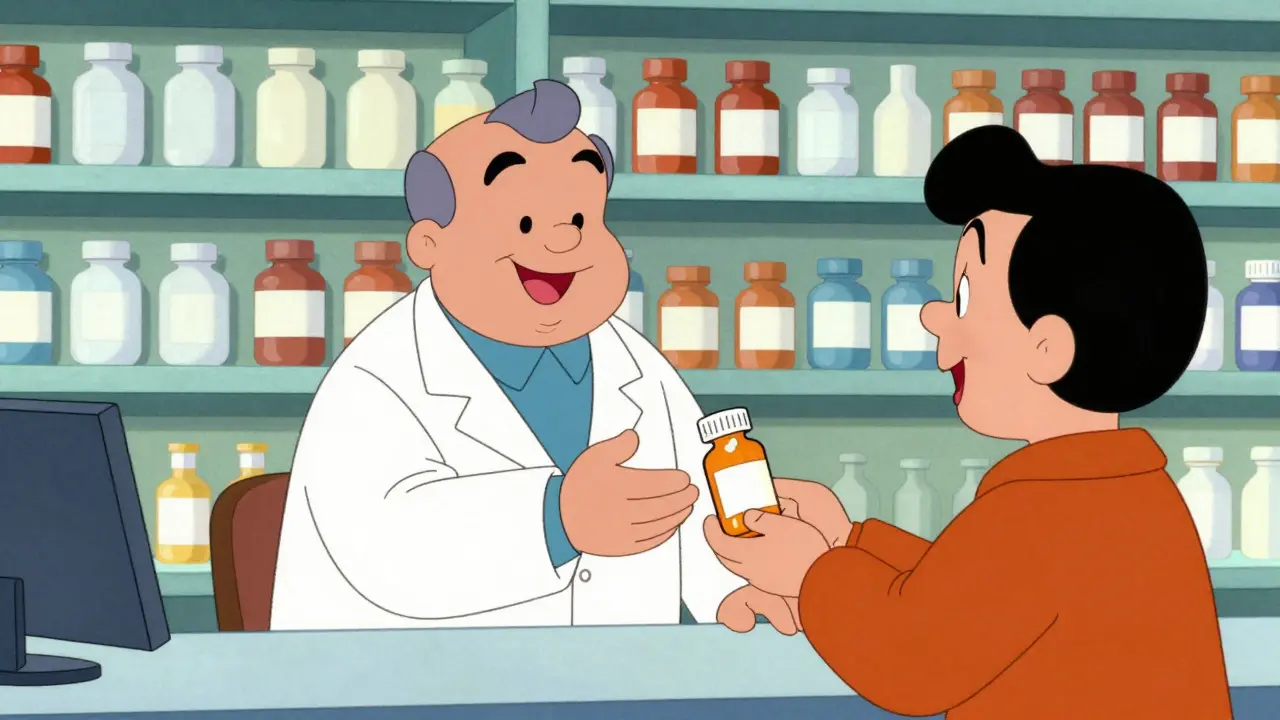
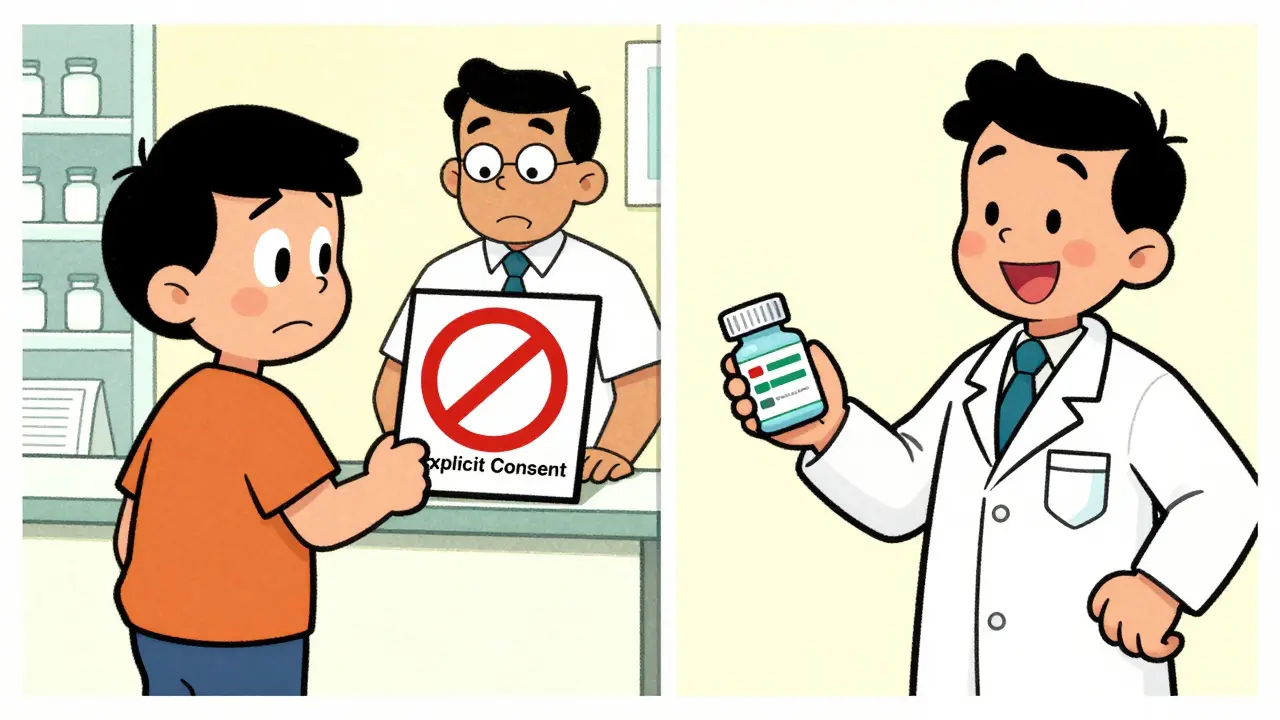
One of the most effective yet least understood incentives involves the pharmacist. When a doctor writes a prescription, does the pharmacist have the right to swap the brand-name drug for a generic? The answer depends entirely on state law. There are two main types of substitution policies: explicit consent and presumed consent.
In explicit consent states, the pharmacist must ask the patient if they want the generic version. If the patient says no, the pharmacist must dispense the brand. In presumed consent states, the pharmacist assumes the patient wants the generic unless they explicitly refuse. This small shift in default behavior has massive economic implications. A 2018 study published by the National Institutes of Health (NIH) found that presumed consent laws increase generic dispensing rates by 3.2 percentage points compared to explicit consent states.
| Policy Type | Patient Action Required | Impact on Generic Use | Estimated Savings Potential |
|---|---|---|---|
| Presumed Consent | Opt-out (say no to generic) | +3.2% increase in dispensing | $51 billion annually nationwide |
| Explicit Consent | Opt-in (say yes to generic) | Baseline rate | Lower adoption rates |
| Mandatory Substitution | None (automatic swap) | Statistically insignificant effect | Minimal additional impact |
The NIH researchers estimated that if all 39 states with explicit consent laws had adopted presumed consent frameworks, total prescription drug spending would drop from $297 billion to $246 billion annually. That is a staggering $51 billion in savings. Why does this work? Behavioral economics tells us that people tend to stick with the default option. By making the generic the default, states remove friction from the process. Interestingly, mandatory substitution laws-where pharmacists are forced to substitute regardless of patient preference-showed statistically insignificant effects. This suggests that giving patients the *choice* to opt-out is more effective than removing choice entirely, likely because pharmacists already have profit incentives to substitute generics anyway.
Medicaid Rebates and the Hidden Financial Engine
While copays and substitution laws affect individual behavior, the real money moves through the Medicaid Drug Rebate Program (MDRP). Established by the Omnibus Budget Reconciliation Act of 1990, this program requires manufacturers to provide a minimum 13% base rebate of the Average Manufacturer Price (AMP) for generic drugs to state Medicaid programs. This creates a foundational financial incentive that states build upon through supplemental rebate negotiations.
As of July 2019, 46 states negotiated supplemental rebates for preferred agents on their PDLs. This means that when a manufacturer wants their generic drug placed on a state’s preferred list, they often offer additional discounts beyond the federal minimum. This system aligns the interests of pharmaceutical companies with state budget goals. However, it also introduces complexity. Avalere Health’s 2022 analysis identified scenarios where generic manufacturers face Medicaid inflation rebates without increasing drug prices. For example, seasonal fluctuations or input cost increases that aren't reflected in the Consumer Price Index can trigger these rebates. In extreme cases, this can make products unprofitable in Medicaid, leading to product withdrawals and less competitive markets.
This tension highlights a critical challenge: states need to balance immediate cost savings with long-term market sustainability. If rebates are too aggressive, manufacturers may stop supplying certain generics, leaving patients with fewer options and potentially higher prices in the long run.
The Role of PBMs and the 340B Program
Pharmacy Benefit Managers (PBMs) act as intermediaries between insurers, pharmacies, and manufacturers. They play a crucial role in implementing generic incentives. Some PBMs offer higher dispensing fees for generic drugs to encourage pharmacies to push them. Others implement performance-based incentives, rewarding pharmacies that achieve high levels of generic utilization. This creates a multi-layered incentive structure where everyone involved-the patient, the pharmacist, the pharmacy, and the insurer-has a reason to favor generics.
Another key player is the 340B Drug Pricing Program, established in 1992. This program allows safety-net providers, such as community health centers and hospitals serving low-income populations, to purchase drugs at significant discounts, ranging from 20% to 50% off. According to a 2015 Government Accountability Office report, these savings enable covered entities to stretch their resources further. However, reimbursement for these drugs within Medicaid has been a point of contention. CMS regulations clarified that states must establish reimbursement policies based on actual acquisition cost (AAC), but ensuring that reimbursements do not exceed the 340B ceiling price adds another layer of administrative complexity for state agencies.
Challenges and Future Directions
Despite the success of these incentives, challenges remain. One major issue is the "brand bias" among some physicians and patients. Many still believe brand-name drugs are superior, even when clinical evidence shows otherwise. Education campaigns and clear communication from healthcare providers are essential to overcoming this perception. Additionally, the rise of biosimilars-generic versions of biologic drugs-presents new opportunities and complexities. States are beginning to apply similar incentive structures to biosimilars, but the regulatory landscape is still evolving.
Looking ahead, the Centers for Medicare & Medicaid Services (CMS) is developing the Medicare $2 Drug List Model. This initiative aims to standardize cost sharing for low-cost generics, creating a simple, easy-to-understand option for Medicare Part D beneficiaries. While currently voluntary, this model could serve as a template for states looking to simplify their own generic access programs. The goal is to reduce confusion and make low-cost options more accessible to seniors and other vulnerable populations.
For patients, understanding these incentives can empower you to make informed decisions. Ask your pharmacist if a generic is available. Check your insurance plan’s preferred drug list. And remember that choosing a generic doesn’t mean settling for lesser quality-it means participating in a system designed to keep healthcare affordable for everyone.
What is a Preferred Drug List (PDL)?
A Preferred Drug List (PDL) is a curated list of medications approved by a state’s Medicaid program or private insurer. Drugs on this list typically have lower copayments. If a prescribed drug is not on the PDL, patients may need prior authorization from their doctor or face higher out-of-pocket costs. As of 2019, 46 states used PDLs for Medicaid fee-for-service prescriptions.
How do presumed consent laws affect my prescriptions?
In states with presumed consent laws, pharmacists are allowed to automatically substitute a generic drug for a brand-name one unless you explicitly refuse. This policy has been shown to increase generic dispensing rates by 3.2 percentage points. If you prefer a brand-name drug, you must inform your pharmacist at the time of filling the prescription.
Why do states negotiate supplemental rebates?
Supplemental rebates are additional discounts offered by drug manufacturers to states in exchange for placing their drugs on Preferred Drug Lists. These rebates help states save money on Medicaid spending. However, overly aggressive rebate demands can sometimes lead to drug shortages or reduced competition if manufacturers find the products unprofitable.
Are generic drugs as effective as brand-name drugs?
Yes. The FDA requires generic drugs to be bioequivalent to their brand-name counterparts, meaning they contain the same active ingredients, strength, dosage form, and route of administration. They must meet the same strict quality standards. The primary differences are usually in inactive ingredients (like dyes or fillers) and price.
What is the Medicare $2 Drug List Model?
The Medicare $2 Drug List Model is an initiative by CMS to standardize cost sharing for low-cost generic drugs in Medicare Part D plans. The goal is to create a simple, predictable out-of-pocket cost for beneficiaries, encouraging the use of affordable generics. While currently focused on Medicare, it serves as a potential model for state-level reforms.