
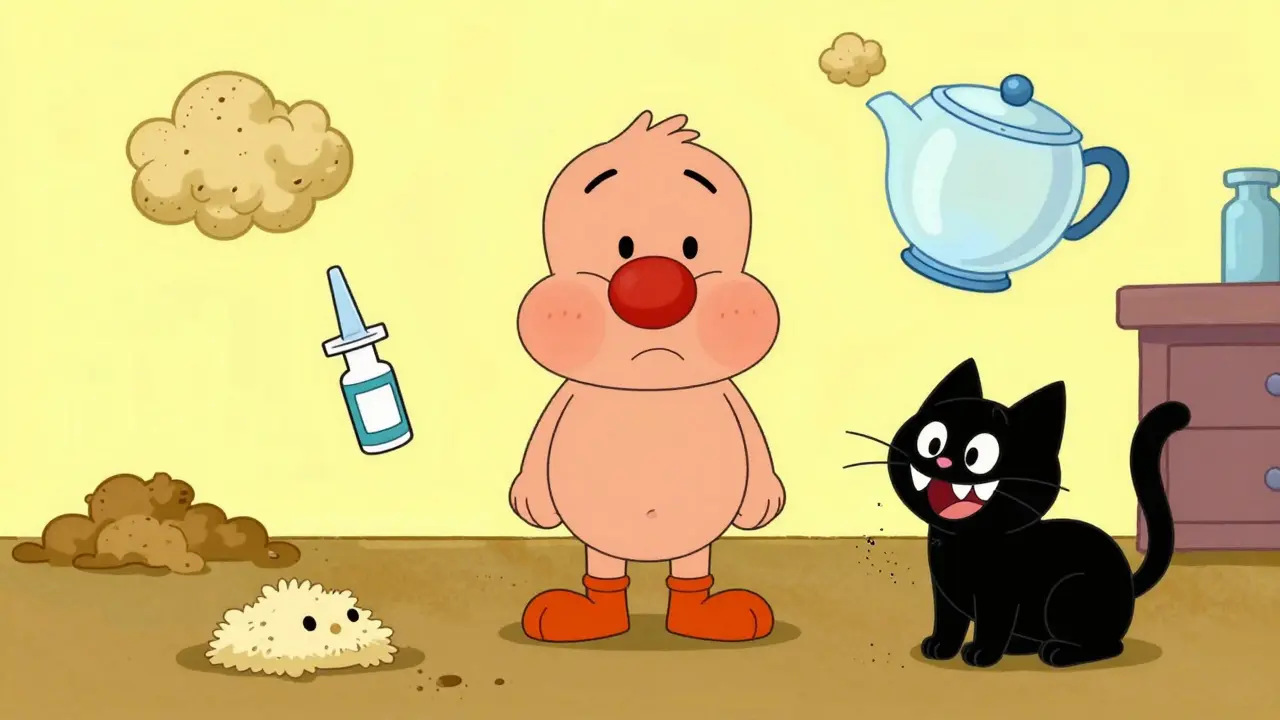
When your nose is constantly stuffed up, your face feels heavy, and your headaches won’t go away-even after taking antihistamines-it might not just be allergies. For millions of people with allergic rhinitis, persistent sinus inflammation turns seasonal sniffles into a year-round battle. This isn’t just a bad cold that won’t quit. It’s allergy-related sinusitis, a condition where your immune system’s overreaction to pollen, dust, or mold triggers lasting swelling in your sinuses, making them prone to infection, blockage, and pain.
Unlike a typical viral sinus infection that clears in 7-10 days, allergy-driven sinusitis lingers for weeks or months. And treating it like a regular infection? That’s like trying to put out a fire by pouring water on the gasoline. You need to stop the fuel source-the allergy-while also calming the inflammation. Otherwise, you’re stuck in a loop: allergens trigger swelling, swelling traps mucus, trapped mucus breeds bacteria, and the cycle repeats.
Why Allergies Make Sinusitis Worse
Allergic rhinitis doesn’t just cause sneezing and itchy eyes. It changes the very lining of your nasal passages. When you’re exposed to something like ragweed or cat dander, your body releases histamine and other chemicals that make the tissues swell. That swelling blocks the tiny openings that drain your sinuses. Mucus gets trapped. Bacteria grow. Inflammation stays locked in.
Studies show that 65-75% of people with chronic sinusitis also have allergic rhinitis. And here’s the kicker: if you don’t treat the allergy, even the best sinus meds won’t fully work. A 2021 study found that nasal corticosteroids reduced symptoms by 65% in allergy sufferers who also avoided triggers-but only 42% in those who kept being exposed. The allergy isn’t just a trigger; it’s the engine driving the whole problem.
First-Line Treatment: Nasal Sprays and Saline Rinse
For most people, the first step isn’t antibiotics-it’s nasal corticosteroids. These aren’t the same as the steroids athletes use. They’re local anti-inflammatories that reduce swelling right where it’s happening. Common brands include Flonase (fluticasone), Nasonex (mometasone), and Rhinocort (budesonide). One spray in each nostril, once or twice a day, is usually enough.
But here’s what most people don’t know: these sprays take time. You won’t feel better after one day. It takes 2-4 weeks of daily use for them to reach full effect. And if you stop after a week because “it’s not working,” you’re setting yourself up for failure. One study showed that by week four, only 35-40% of patients were still using their spray consistently. That’s why sticking with it matters more than the brand.
Pair that with daily saline irrigation. Use a neti pot or squeeze bottle with distilled or boiled water (never tap water-CDC reports rare but deadly brain infections from contaminated water). Mix in a pre-measured saline packet. Tilt your head, pour it through one nostril, let it drain out the other. Do it once or twice a day. It flushes out allergens, mucus, and irritants. It’s cheap, safe, and proven to cut symptom severity by up to 50% when done right.
When Antibiotics Actually Help (and When They Don’t)
Antibiotics are often overprescribed for sinusitis. In fact, up to 70% of acute sinus infections are viral and don’t need them at all. But in allergy sufferers, the story changes. When mucus is trapped for weeks, bacteria can move in. About 0.5-2% of allergy-related sinusitis cases develop a bacterial superinfection.
So how do you know if you need one? Look for these signs: thick yellow or green mucus lasting more than 10 days, worsening symptoms after initial improvement, or a fever over 101°F. If those are present, amoxicillin is the go-to first choice-500mg three times a day for 5-10 days. If you’ve had recent antibiotics or the infection keeps coming back, amoxicillin-clavulanate (Augmentin) may be used instead.
But here’s the truth: antibiotics alone fix only 35-45% of allergy-driven sinusitis cases. Without controlling the underlying inflammation and allergen exposure, the infection will return. Antibiotics treat the symptom, not the cause.

When Medications Aren’t Enough: Immunotherapy and Biologics
If you’re on nasal sprays, saline rinses, and antihistamines-and still having flare-ups every few weeks-it’s time to think bigger. Allergy immunotherapy (allergy shots or tablets) targets the root cause. By gradually exposing your body to tiny amounts of your triggers, you retrain your immune system to stop overreacting.
It’s not quick. You start with weekly injections for 4-6 months, then switch to monthly shots for 3-5 years. But the payoff? A 60-70% drop in sinusitis episodes after treatment ends. That’s far better than medication alone, which only gives you 25-30% long-term improvement.
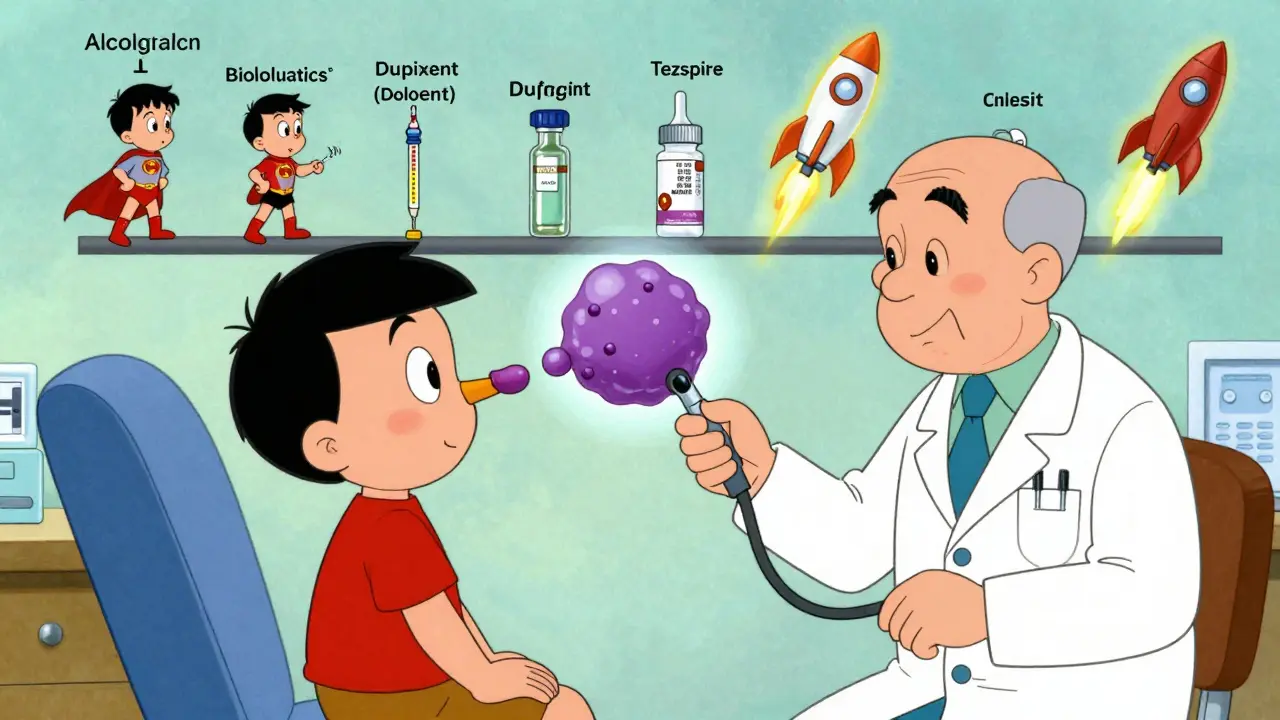
For those with nasal polyps and severe, uncontrolled symptoms, biologics are a game-changer. Dupilumab (Dupixent) blocks key inflammatory pathways. In trials, it reduced nasal polyp size by 73% and cut sinus infections by nearly half. Omalizumab (Xolair) and mepolizumab (Nucala) work similarly. But there’s a catch: these cost about $3,500 a month without insurance. They’re reserved for cases where everything else has failed.
And yes-there’s a new option. Tezepelumab (Tezspire), approved in 2023, shows promise for severe chronic sinusitis with polyps, reducing flare-ups by 56% in trials. It’s not yet widely used, but it’s coming.
When to See an ENT Specialist
You don’t need to wait until you’re in agony. If you’ve tried the basics for 4-6 weeks and still have symptoms, it’s time to refer. Here’s when you should see an ear, nose, and throat (ENT) doctor:
- Nasal polyps (visible or confirmed by endoscopy)
- Four or more sinus infections per year
- Symptoms lasting more than 12 weeks despite treatment
- Signs of complications: vision changes, severe headaches, swelling around the eyes
- Suspected fungal sinusitis (common in people with long-term allergies and mold exposure)
ENTs use a thin, lighted scope (endoscope) to look inside your sinuses. They can see blocked openings, polyps, or pus that you can’t feel. They’ll also check for structural issues like a deviated septum that make drainage harder. If needed, they can perform minimally invasive surgery to open up the sinuses. Success rates are high-around 85%-but in allergy sufferers, recurrence is still 20-30% within five years. That’s why surgery alone isn’t enough. You still need to manage the allergy.
The Hidden Triggers You Might Be Missing
Not all allergens are obvious. Mold in damp basements, dust mites in old mattresses, pet dander clinging to couches-even perfumed candles or air fresheners-can keep your sinuses inflamed. A 2022 study found that people who cleaned their homes thoroughly and used HEPA filters saw a 40-60% drop in sinus flare-ups.
Another overlooked factor: aspirin-exacerbated respiratory disease (AERD). About 10-15% of people with chronic sinusitis and nasal polyps react badly to aspirin and other NSAIDs. This isn’t just an allergy-it’s a full-blown inflammatory reaction that can trigger severe sinus attacks. If you’ve noticed your symptoms worsen after taking ibuprofen or aspirin, tell your doctor. Specialized desensitization programs exist for this.
What’s on the Horizon
Research is moving fast. Scientists are studying how the microbiome-your body’s natural bacteria-plays a role in sinus health. Early trials show that restoring healthy nasal bacteria can reduce antibiotic-resistant infections by up to 45%. Personalized treatments based on your unique microbial profile could be available within five years.
Also, new guidelines from the AAAAI in early 2024 now support intranasal antifungals for people in high-mold areas. And long-term projections suggest that integrated allergy-sinus care could cut severe complications by 25-30% by 2030.
But access remains a problem. Rural patients wait 30-40% longer to see a specialist than city dwellers. And cost barriers keep biologics out of reach for many. The goal isn’t just better drugs-it’s better systems that deliver them.
Managing allergy-related sinusitis isn’t about one magic pill. It’s about stacking smart habits: daily rinses, consistent sprays, avoiding triggers, and knowing when to ask for help. Most people can get control. But only if they treat the allergy-not just the congestion.
Can allergies cause chronic sinusitis?
Yes. Allergies are one of the most common causes of chronic sinusitis. When your immune system reacts to allergens like pollen or dust, it triggers inflammation in your nasal passages and sinuses. This swelling blocks drainage, traps mucus, and creates an environment where infections can persist. Up to 75% of people with chronic sinusitis also have allergic rhinitis.
Do I need antibiotics for allergy sinusitis?
Usually not. Most sinusitis in allergy sufferers is caused by inflammation, not bacteria. Antibiotics only help if there’s a secondary bacterial infection-signs include thick yellow/green mucus lasting over 10 days or worsening symptoms after initial improvement. Even then, antibiotics alone won’t fix the root cause. Without managing the allergy, the infection will likely return.
How long do nasal steroid sprays take to work?
It takes 2-4 weeks of daily use to see full results. Many people stop too early because they don’t feel better right away. But these sprays work by slowly reducing inflammation, not by instantly clearing congestion. Consistency is more important than the brand you choose.
Is saline irrigation safe?
Yes-if done correctly. Always use distilled, sterile, or previously boiled (and cooled) water. Tap water can contain tiny organisms like Naegleria fowleri, which can cause rare but deadly brain infections. Use pre-packaged saline packets or make your own with 1/4 tsp salt and 1/4 tsp baking soda per 8 oz of safe water.
When should I see an ENT for sinusitis?
See an ENT if symptoms last more than 12 weeks despite treatment, you have nasal polyps, you get four or more infections per year, or you notice complications like facial swelling, vision changes, or high fever. ENTs can perform endoscopy to see what’s blocking your sinuses and determine if surgery or advanced treatments like biologics are needed.
Can allergy shots prevent sinusitis?
Yes. Allergy immunotherapy (shots or tablets) trains your immune system to stop overreacting to triggers. After 3-5 years of treatment, 60-70% of patients see a major drop in sinusitis episodes. It’s the only treatment that can change the long-term course of allergy-driven sinusitis.




Phoebe McKenzie
January 3, 2026 AT 03:10You people are so naive. You actually think nasal sprays and saline rinses are the answer? Please. The real issue is that Big Pharma doesn’t want you to know that allergens are just a distraction - the real culprit is the government’s secret chemical spraying program. They’ve been poisoning our air for decades to keep us dependent on meds. I’ve seen the documents. It’s not allergies, it’s bioweapons. And now they’re pushing ‘biologics’ so you’ll keep paying $3,500 a month while they laugh all the way to the bank. Wake up.
gerard najera
January 3, 2026 AT 21:55Truth is, inflammation is the enemy. Not bacteria. Not viruses. Not even pollen. The body’s response is the problem. Treat the response, not the symptom.
Stephen Gikuma
January 5, 2026 AT 17:22So you’re telling me I should trust some doctor who says to spray chemicals up my nose? I’ve lived in this country my whole life and never needed ‘Flonase’ until they started telling me to. Meanwhile, my grandpa used salt water and a handkerchief and lived to 92. This is just another way to make Americans weak. They want us hooked on pills so we don’t question the system. I don’t care what your ‘study’ says - I believe in real medicine. Fresh air. Clean water. No sprays.
Bobby Collins
January 5, 2026 AT 21:44okay so i just read this whole thing and i think the real problem is mold?? like i cleaned my basement last week and suddenly my sinuses stopped feeling like a swamp?? also i think the government is putting fluoride in the water to make us more susceptible to allergies?? idk just a thought lol
Layla Anna
January 6, 2026 AT 10:40Thank you for writing this 🙏 I’ve been struggling with this for years and no one ever explains it like this. I started the saline rinse last month and honestly?? It’s been a game changer. I still have bad days but I feel like I’m not just surviving anymore. Also i never knew about AERD - my headaches got worse after ibuprofen and i thought i was just sensitive but now i get it 😭
Heather Josey
January 7, 2026 AT 03:11This is one of the most comprehensive and clinically accurate summaries I’ve seen on this topic. The distinction between treating symptoms versus addressing root causes is critical, and you’ve articulated it with precision. I particularly appreciate the emphasis on immunotherapy as a long-term solution - too many patients are misled into believing that temporary relief equals cure. Thank you for highlighting the systemic barriers to care as well. Access should not be a privilege.
Donna Peplinskie
January 7, 2026 AT 08:44Oh my gosh, thank you so much for sharing this!! I’ve been doing the saline rinse for three months now and I can’t believe how much better I feel - I actually woke up yesterday and didn’t feel like my head was stuffed with cotton!! I’ve been telling all my friends to try it, and I just ordered a neti pot for my mom too!! I also started avoiding scented candles - I didn’t realize how much they were making me worse!! You’re right - it’s not just one thing, it’s stacking the habits!! ❤️
Olukayode Oguntulu
January 8, 2026 AT 02:25One must interrogate the epistemological framework underpinning this discourse. The medical-industrial complex, in its neocolonial hegemony, has pathologized natural immune responses and commodified physiological dysregulation as ‘chronic sinusitis.’ The proposed interventions - corticosteroids, biologics, immunotherapy - are not therapies but mechanisms of biopolitical control, designed to perpetuate dependency on pharmaceutical capital. The real cure lies in decoupling from the Cartesian dichotomy of body/mind and returning to ancestral somatic wisdom - which, incidentally, was erased by colonial medicine. Also, your citation of a 2021 study is statistically insignificant. I’ve read five papers on this. You’re missing the point.
jaspreet sandhu
January 8, 2026 AT 04:35I don't know why people keep talking about sprays and rinses like they're magic. I had this problem for ten years and nothing worked until I just stopped caring about allergies completely. I mean, why fight your body? It's just trying to tell you something. I started eating spicy food every day, stopped washing my face, and now I'm fine. The whole thing is overblown. Everyone's too scared of germs now. Back in my village in Punjab, we didn't have nasal sprays. We just breathed through our noses and drank hot tea. If you're still sick after that, maybe you're just weak. Also, I think the government is hiding the real cause. It's not pollen, it's 5G.
Dusty Weeks
January 9, 2026 AT 14:00bro i tried the saline rinse and i think i almost died?? like i choked and my ear hurt for a week?? now i just take zyrtec and pretend it’s not happening 😅 maybe i’m just lazy but idk man i’m tired of all this
Heather Josey
January 11, 2026 AT 00:26It’s understandable to feel overwhelmed - the sheer number of recommendations can be paralyzing. But consistency, not perfection, is what matters. Even doing the rinse three times a week instead of daily still yields measurable improvement. And if you’re not ready for the spray yet, that’s okay too. Start with one habit. Build from there. You’re not failing - you’re learning.