

Symptom Analyzer: Side Effect vs. Adverse Reaction
How does the symptom present?
Awaiting Input
Select options above to determine if your symptom aligns more with a predictable Side Effect or an unpredictable Adverse Drug Reaction.
You take your morning pill, and within an hour, you feel nauseous. Is this a normal side effect, or have you experienced a dangerous adverse drug reaction? Most people use these terms interchangeably, but in the world of medicine, the difference is massive. It’s the difference between an expected annoyance and a potential medical emergency.
Understanding this distinction isn’t just academic jargon for doctors. It directly impacts your health decisions. If you know what to expect, you might stick with a life-saving medication despite minor discomfort. But if you mistake a rare, serious reaction for a common side effect, you could be putting yourself at risk. Let’s clear up the confusion once and for all.
The Core Definitions: What Are We Actually Talking About?
To understand the difference, we first need to look at how experts define these terms. The World Health Organization (WHO) has had a formal definition since 1972. They define an Adverse Drug Reaction (ADR) as a response to a drug which is noxious and unintended and which occurs at doses normally used in man for prophylaxis, diagnosis, or therapy of disease.
That sounds complicated, so let’s break it down. An ADR is harm caused by the drug itself when taken correctly. It’s not an overdose. It’s not taking the wrong pill. It’s the drug doing something bad to your body that wasn’t intended.
Now, where do Side Effects fit in? Think of side effects as a specific subset of adverse events. According to the Association of Health Care Journalists, a side effect is an adverse effect that has been determined as a direct result of the intervention. In simpler terms, a side effect is a predictable, secondary outcome of the drug’s mechanism. When you take a sedative, sleepiness is the primary effect. Dry mouth might be the side effect. Both are related to how the drug works, but only one is why you took it.
| Feature | Side Effect | Adverse Drug Reaction (ADR) |
|---|---|---|
| Predictability | Predictable based on drug mechanism | Can be predictable (Type A) or unpredictable (Type B) |
| Dose Dependence | Usually dose-dependent | Type A is dose-dependent; Type B is not |
| Causality | Confirmed causal link via clinical trials | Established causal link, but broader scope |
| Severity | Often mild to moderate | Can range from mild to life-threatening |
| Example | Drowsiness from antihistamines | Liver failure from acetaminophen toxicity |
Type A vs. Type B: The Hidden Complexity
Not all adverse drug reactions are created equal. Medical professionals, relying on resources like NCBI’s StatPearls, classify ADRs into two main categories: Type A and Type B. This classification helps explain why some reactions are expected while others come out of nowhere.
Type A Reactions account for about 85-90% of all ADRs. These are "Augmented" reactions. They are predictable because they stem from the drug’s known pharmacological properties. If a drug lowers blood pressure, taking too much will lower it too much. That’s a Type A reaction. Many side effects fall into this category because they are simply exaggerated versions of the drug’s intended action. For example, gastritis from NSAIDs (like ibuprofen) is a Type A reaction because NSAIDs inhibit prostaglandins that protect the stomach lining.
Type B Reactions are different. These are "Bizarre" or idiosyncratic reactions. They are unpredictable and usually unrelated to the dose. You can take a tiny amount or a huge amount, and the reaction happens or doesn’t based on your unique biology. Allergic reactions are classic Type B events. If you have a penicillin allergy, even a microscopic exposure can trigger anaphylaxis. This isn’t about the drug’s standard mechanism; it’s about your immune system’s specific, unusual response.
Why Confusing Terms Leads to Bad Decisions
You might wonder, "Why does this semantic debate matter to me?" The answer lies in patient behavior. Dr. Michael Cohen, President of the Institute for Safe Medication Practices, points out that conflating adverse events with side effects leads to inappropriate risk-benefit assessments.
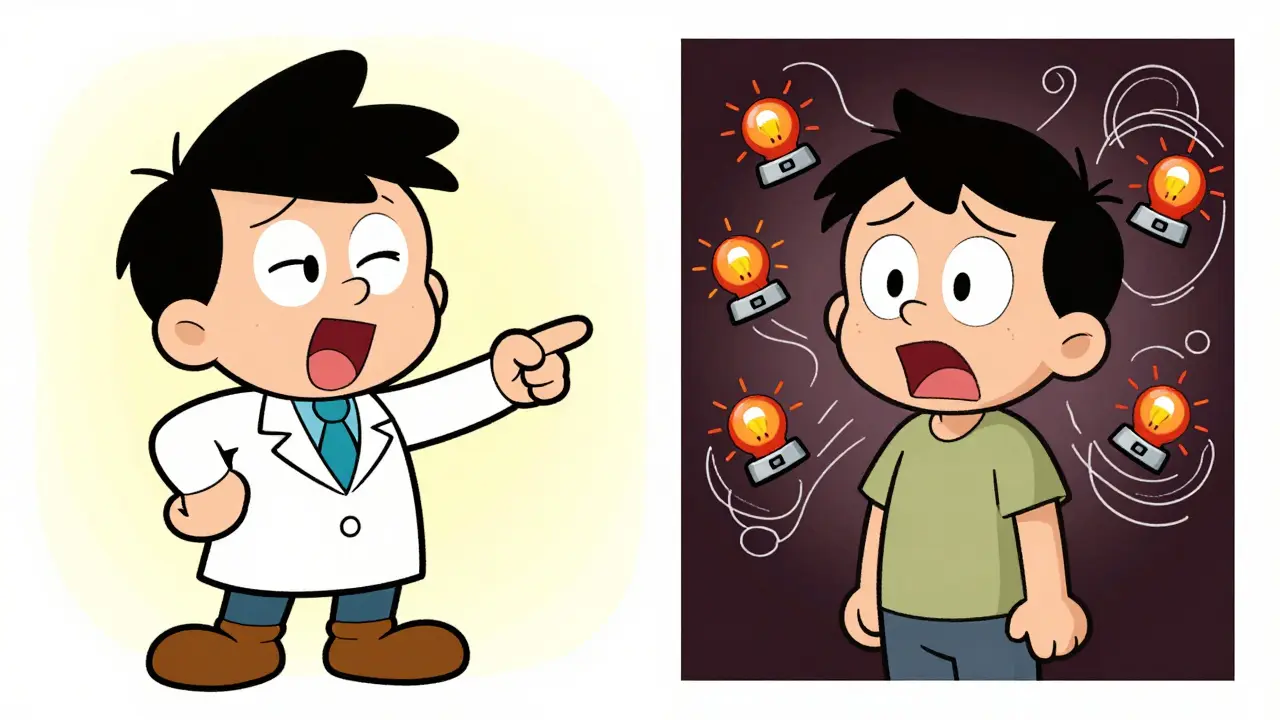
Here is the scenario: You start a new medication for depression. Within a week, you get a headache. Was this caused by the drug? Or did you just drink less water that day? If you assume every negative feeling is a guaranteed "side effect," you might stop the medication prematurely. A 2021 study found that 43% of patients discontinued life-saving medications because they misinterpreted temporary adverse events as unavoidable side effects.
Conversely, if you dismiss a serious symptom as "just a side effect" when it’s actually a sign of a severe Type B reaction, you could end up in the hospital. The FDA defines serious side effects as those resulting in death, life-threatening conditions, hospitalization, disability, or birth defects. Knowing the difference helps you ask the right questions: "Is this expected?" vs. "Is this dangerous?"
How Doctors Determine Causality
In clinical trials, researchers don’t just guess if a symptom is linked to the drug. They use rigorous statistical methods. The Association of Health Care Journalists explains that a side effect is confirmed when the proportion of a certain adverse event is significantly higher in the group receiving the drug compared to the control group (placebo).
For instance, in a 2020 JAMA study of the anticoagulant apixaban, researchers observed headaches in both the treatment group (12.3%) and the placebo group (11.8%). Since the rates were similar, headaches were classified as an adverse event, not a side effect of the drug. However, major bleeding occurred in 2.1% of the apixaban group versus only 0.5% in the placebo group. This significant difference established major bleeding as a confirmed side effect.
This level of analysis doesn’t happen in your living room. As a patient, you experience symptoms. Your doctor’s job is to apply the Dechallenge/Rechallenge Evaluation. Did the symptom go away when you stopped the drug (dechallenge)? Did it return when you started it again (rechallenge)? This process, often supported by databases like Micromedex, helps distinguish coincidence from causation.
The Role of Technology and Genetics
We are moving into an era where predicting these reactions is becoming more precise. The FDA’s Modernization Act 2.0 requires AI algorithms in pharmacovigilance to distinguish between adverse events and adverse reactions with documented causality assessments by late 2025. This means software will increasingly help flag whether your reaction is likely a known side effect or a novel adverse event.
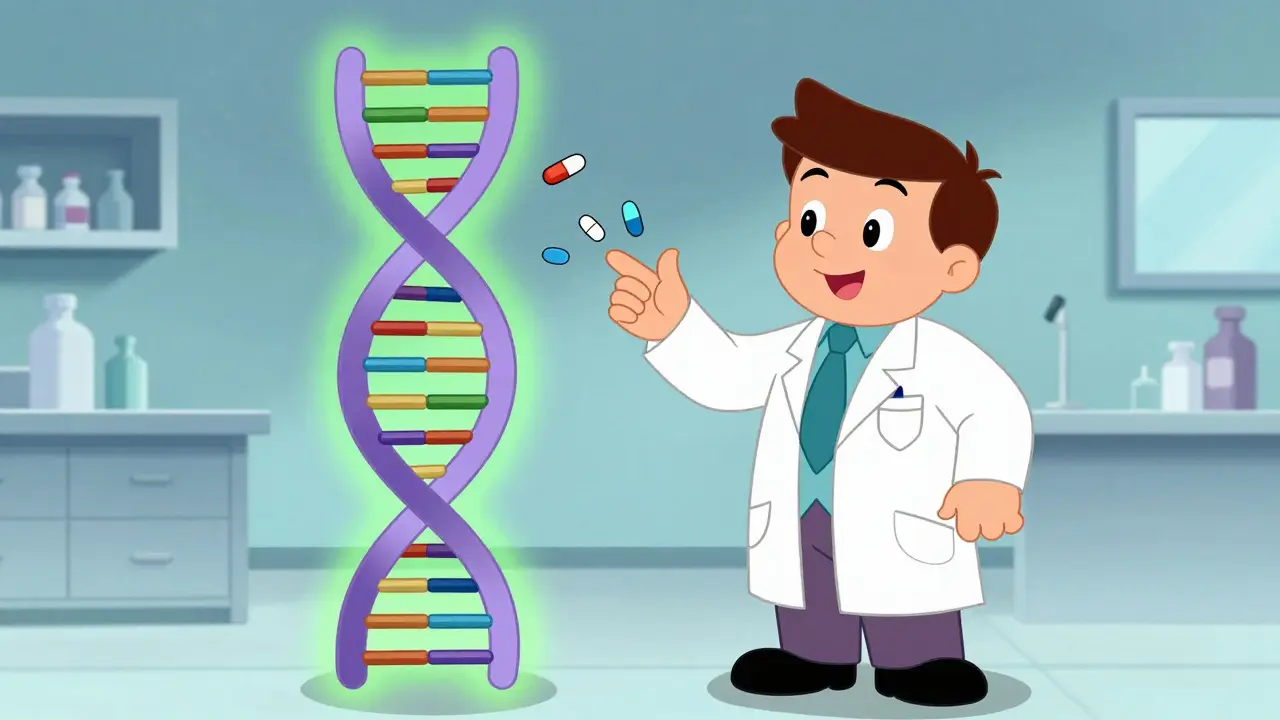
Furthermore, Pharmacogenomics is changing the game. A 2023 Nature Medicine study showed that genetic testing can predict individual susceptibility. Patients with specific CYP2C19 genotypes had an 8.7 times higher risk of clopidogrel-related gastrointestinal bleeding. This isn’t just a general side effect; it’s a genetically predetermined adverse reaction for a specific subgroup. Understanding your genetic profile could soon tell you exactly which drugs carry high risks for your body specifically.
What Should You Do If You Feel Unwell?
So, you’re taking a new med, and something feels off. Here is a practical approach:
- Check the Label: Look for the "Common Side Effects" section. If your symptom is listed there (e.g., dizziness, dry mouth), it’s likely a predictable Type A reaction. Monitor it. Often, these subside as your body adjusts.
- Assess Severity: Is it manageable, or is it interfering with your daily life? Mild nausea might be tolerable. Difficulty breathing is not.
- Don’t Stop Abruptly: Unless you are having a severe allergic reaction (swelling, trouble breathing), do not stop prescribed medications without consulting your doctor. Sudden cessation can cause withdrawal symptoms or rebound effects that mimic adverse reactions.
- Report It: Use systems like the FDA’s MedWatch. Reporting helps build the data that confirms whether an event is a true side effect. Your report contributes to the collective knowledge that protects future patients.
The goal isn’t to fear medication. It’s to respect the complexity of how drugs interact with human biology. By understanding that not every bad feeling is a guaranteed side effect, and not every side effect is harmless, you become an active partner in your own healthcare. You can make informed decisions rather than reactive ones.
Are all side effects harmful?
Not necessarily. While side effects are unwanted, many are mild and temporary, such as drowsiness from antihistamines or mild nausea from antibiotics. However, some side effects can be serious or lead to long-term issues if ignored, such as liver damage from certain painkillers. Always consult your healthcare provider to assess the severity of any side effect.
Can an adverse drug reaction happen even if I take the correct dose?
Yes. Adverse Drug Reactions (ADRs) occur at doses normally used for therapy. Type B reactions, such as allergic responses, are unpredictable and can happen regardless of dose. Even with perfect adherence to dosage instructions, individual biological differences can trigger adverse reactions.
What is the difference between an adverse event and an adverse reaction?
An adverse event is any negative health occurrence that happens while taking a medication, regardless of whether the drug caused it. An adverse reaction is a specific type of adverse event where a causal relationship between the drug and the harm has been established. For example, getting a cold while on medication is an adverse event, but developing a rash specifically linked to the drug is an adverse reaction.
How can I reduce my risk of adverse drug reactions?
You can reduce risk by maintaining an updated list of all medications and supplements you take, sharing this with every healthcare provider. Discuss your family history of drug allergies or sensitivities. Consider pharmacogenomic testing if you frequently experience unexpected reactions. Finally, never adjust your dosage without professional guidance, as this can turn a safe medication into a toxic one.
Should I report mild side effects to the FDA?
Yes. Reporting mild side effects helps regulatory agencies like the FDA identify patterns and confirm causal relationships. Data from millions of reports allows them to distinguish between random adverse events and true side effects, leading to updated warnings and safer drug labeling for everyone.


Paul Diamond
July 6, 2026 AT 14:22The dichotomy presented herein suggests a fundamental misunderstanding of the human condition itself, for we are not merely vessels for chemical inputs but complex tapestries of experience where the boundary between side effect and adverse reaction is often blurred by the subjective nature of suffering itself, implying that perhaps the true adversary is not the drug but the expectation of perfection from imperfect tools.
Sydney Jarrett
July 6, 2026 AT 19:45You people really need to get your heads out of your collective asses because the distinction between Type A and Type B reactions isn't just some academic trivia for med students to memorize before they go back to their rich parents' estates; it's about survival, you morons. If you don't understand that a dose-dependent augmented reaction is fundamentally different from a bizarre idiosyncratic immune response, you deserve to end up in the ICU with liver failure because you thought 'nausea' was just a suggestion from the manufacturer. The FDA MedWatch data is screaming at you, but you're too busy scrolling through cat videos to notice the statistical significance of adverse events versus confirmed causal links in clinical trials.
Dawn Renee
July 7, 2026 AT 17:56I have been researching this for years and the truth is that big pharma wants you to confuse these terms so they can hide the real death tolls behind the label of 'side effects' which are supposedly normal when in fact they are covering up massive coverups involving government agencies like the FDA who are paid off to ignore the Type B reactions that are clearly linked to genetic predispositions that they refuse to test for because it would cost them money. I know this because I read a blog post once that said so and no one can convince me otherwise even though my spelling might be bad because I type fast on my phone while hiding from the agents.
Anna Bartle
July 9, 2026 AT 17:32Great breakdown! It’s super helpful to see the table comparing predictability and severity. Just remember to always talk to your doctor before stopping anything!
Mohit Patil
July 11, 2026 AT 12:50they dont want you to know the truth about these drugs its all a conspiracy to control the population with mind altering chemicals that cause brain damage but they call it side effects to make you feel stupid if you complain i say fight back and never take another pill unless you want to be a zombie for the elite class who profit from your ignorance
Ben Murphy
July 12, 2026 AT 12:18One must reflect deeply on the moral implications of such semantic distinctions, for to dismiss a severe allergic reaction as merely a 'side effect' is to engage in a profound ethical failing that disregards the sanctity of life itself, suggesting that those who suffer from Type B reactions are somehow less deserving of attention than those who experience the mundane discomforts of Type A, a perspective that reveals a troubling lack of empathy and a dangerous complacency towards pharmaceutical negligence that plagues our society today.
Amrithaa Thayaparan
July 12, 2026 AT 23:44u r all idiots if u cant tell the diff betwen a side effect and an adverse reaction its obvious to anyone with a brain that the system is rigged against us and only the elite know how to navigate this minefield of toxic chemicals that they force upon us under the guise of healthcare which is really just a scam to keep us weak and dependent on their mercy
Lorena Suarez
July 13, 2026 AT 12:39i guess its good to know the difference but honestly most people just take what the doc says and hope for the best so maybe keeping it simple is better for everyone involved
Chandan Sharma
July 15, 2026 AT 02:33The nuanced interplay between pharmacogenomics and the traditional classification of adverse events represents a fascinating paradigm shift in our understanding of therapeutic efficacy, wherein the once monolithic view of drug response is fractured into a kaleidoscope of individual susceptibilities, revealing that what may be a benign side effect for one demographic could be a catastrophic adverse reaction for another, thus necessitating a more sophisticated approach to medical ethics and patient care that transcends the simplistic binaries of current literature.
Katie Dixon
July 16, 2026 AT 23:42We need to stand up for our rights as American citizens to demand transparency from these foreign-influenced pharmaceutical companies that are trying to undermine our sovereignty by pushing these confusing definitions on us, because when you don't know if you're having a side effect or an adverse reaction, you're vulnerable to manipulation, and that's unacceptable in a free society where we value clarity and strength above all else, so let's rally together and demand better labeling now!
Chris Munton
July 18, 2026 AT 03:59The assertion that patients frequently misinterpret temporary adverse events as unavoidable side effects is a critical observation that underscores the urgent need for comprehensive health literacy initiatives, for without such education, individuals remain perpetually vulnerable to the subtle yet devastating consequences of pharmaceutical misinformation, thereby compromising not only their personal well-being but also the integrity of public health systems that rely on accurate reporting and informed consent to function effectively in an increasingly complex medical landscape.
Isis Fleming
July 18, 2026 AT 07:30It is imperative to consider the formal protocols established by regulatory bodies such as the FDA when evaluating the causality of adverse events, as these frameworks provide a structured approach to distinguishing between coincidental occurrences and genuine pharmacological reactions, thereby ensuring that patient safety remains paramount in the ongoing dialogue surrounding medication management and risk assessment.
Fred Stone
July 20, 2026 AT 00:43pretty cool info here i think its important to know whats normal and whats not so u dont freak out over nothing but also dont ignore something serious yeah thats basically it
Peter Sverla
July 20, 2026 AT 03:00I find myself contemplating the intricate web of causality that binds the patient to the prescriber, wondering how the subjective experience of discomfort intersects with the objective data of clinical trials, and whether the very act of categorizing these reactions serves to empower the individual or merely to contain their anxiety within the rigid boundaries of medical terminology, leaving me to ponder the true nature of healing in a world where every pill carries the potential for both relief and ruin.