Imagine opening your medicine cabinet and not being able to tell which pill is which. The bottles all look the same-white, oval, no markings you can read. You remember taking your blood pressure pill in the morning, but this one feels familiar. You swallow it. Later, you realize it was your sleeping pill. This isn’t a rare mistake. It happens to thousands of people every year who live with low vision or hearing loss.
Medication errors aren’t just inconvenient-they’re dangerous. People with visual impairments are 1.67 times more likely to make a medication mistake than those with full sight. For those with hearing loss, missing instructions from a pharmacist in a noisy pharmacy can mean taking the wrong dose, at the wrong time, or even the wrong drug entirely. And most of these errors are preventable.
Why Standard Prescription Labels Fail
Most prescription labels are designed for people with perfect vision. Tiny fonts-often 7 to 10 points-are impossible to read without magnifiers. The text is printed in gray ink on white paper, creating almost no contrast. Some labels even use glossy finishes that reflect light, making reading even harder. And the symbols? A red dot for morning? A blue stripe for night? Those only work if you can see them clearly.
For people with low vision, this isn’t a matter of inconvenience-it’s a safety risk. A 2007 poll by the American Foundation for the Blind found that 65% of visually impaired respondents worried they couldn’t identify their medications correctly. That number hasn’t dropped. In fact, a 2022 study showed only 32% of U.S. pharmacies consistently make any effort to adjust labels for accessibility.
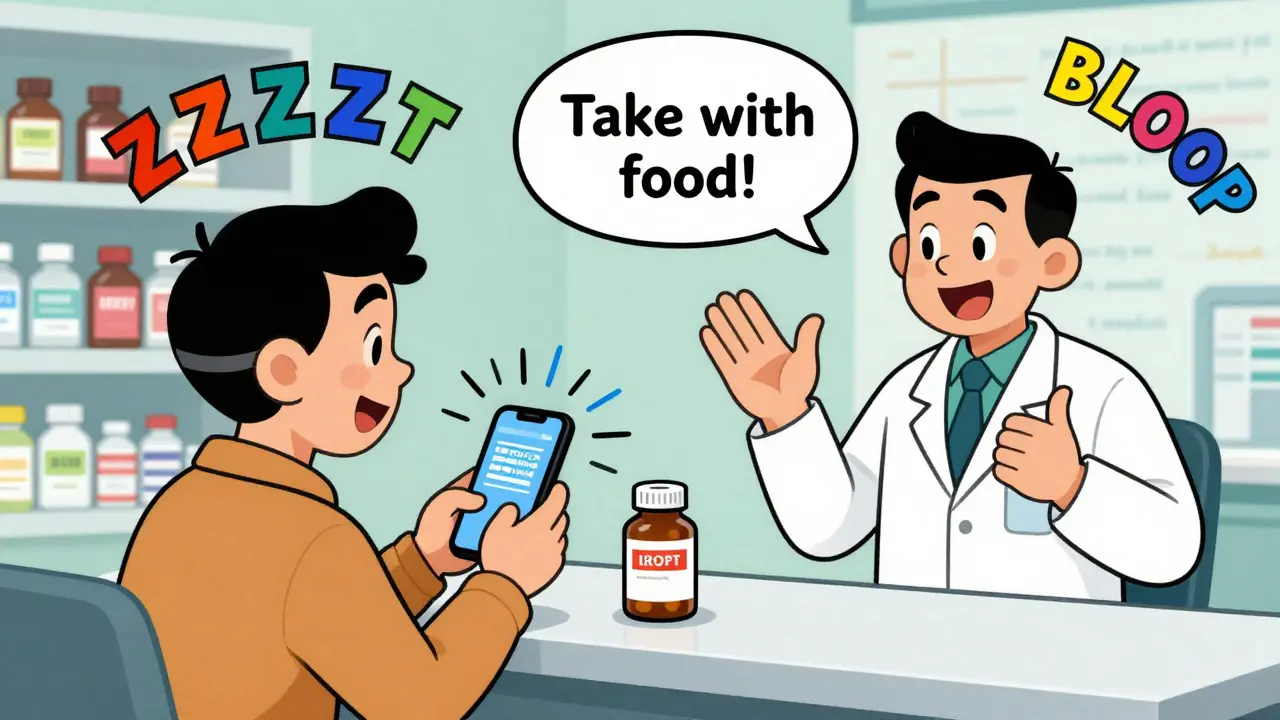
For people with hearing loss, the problem starts before they even get to the pharmacy. Many rely on verbal instructions from pharmacists. But if the pharmacy is loud, if the pharmacist speaks too fast, or if the person doesn’t use hearing aids well in noisy environments, critical details get lost. Did the pharmacist say take it with food? Twice a day? Before bed? Missing one detail can lead to overdose, underdose, or dangerous interactions.
What Works: Real Solutions That Reduce Errors
There are solutions-and they’re not all high-tech. Some of the most effective tools cost less than a coffee.
- Color-coding by time of day: Use colored rubber bands or stickers. Red for morning, blue for evening, green for bedtime. A 2015 survey of pharmacists found this method was 78% effective at preventing mix-ups.
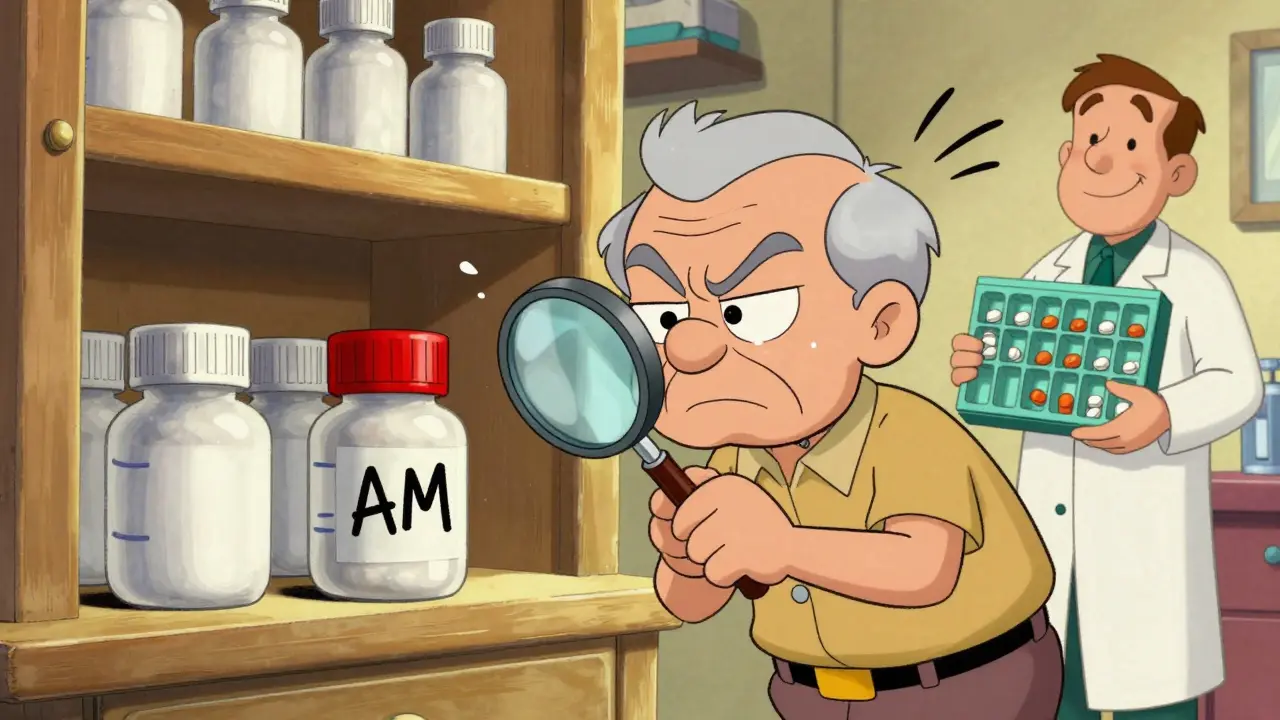
- High-contrast labels: Use a black permanent marker to write AM/PM directly on the bottle. Or ask your pharmacist to print a new label with 18-point font, bold letters, and dark ink on a white background. The American Foundation for the Blind recommends this as a minimum standard.
- Braille labels: For those who read braille, this is a game-changer. But here’s the catch: only about 15% of adults who lose vision later in life learn braille. So while it’s 85% effective for those who use it, it’s not a universal fix.
- Talking pill dispensers: Devices like the Talking Rx or Hero Health box can speak the name of the medication, the dose, and the time to take it. One study showed 92% of users improved adherence with these devices. The downside? They cost $30 to $200. Insurance rarely covers them.
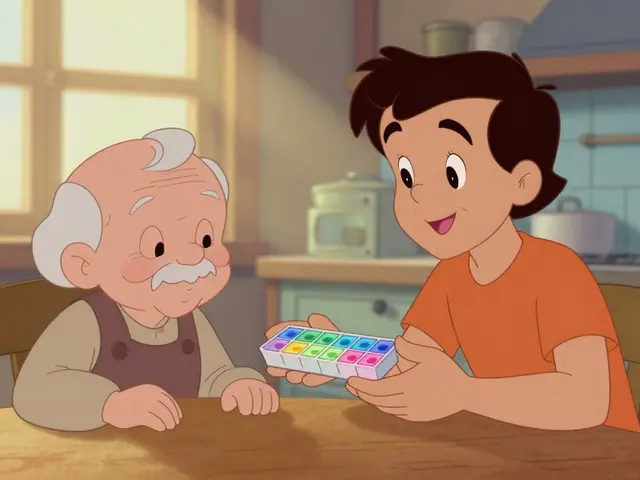
- Blister packs with large print: Pre-sorted weekly or monthly packs with clearly labeled slots help reduce confusion. But they only work for simple regimens. If you take 10 different pills at different times, even blister packs can become overwhelming.
One user on Reddit shared: “Last week I almost took my blood pressure meds at bedtime because the pharmacy gave me a new generic that’s the same color as my sleeping pill-both white ovals, no distinguishing marks.” That’s not an isolated story. A Guide Dogs UK survey found that 58% of visually impaired people couldn’t tell their medicine bottles apart. And 41% had accidentally taken expired pills.
The Hidden Problem: People Don’t Ask for Help
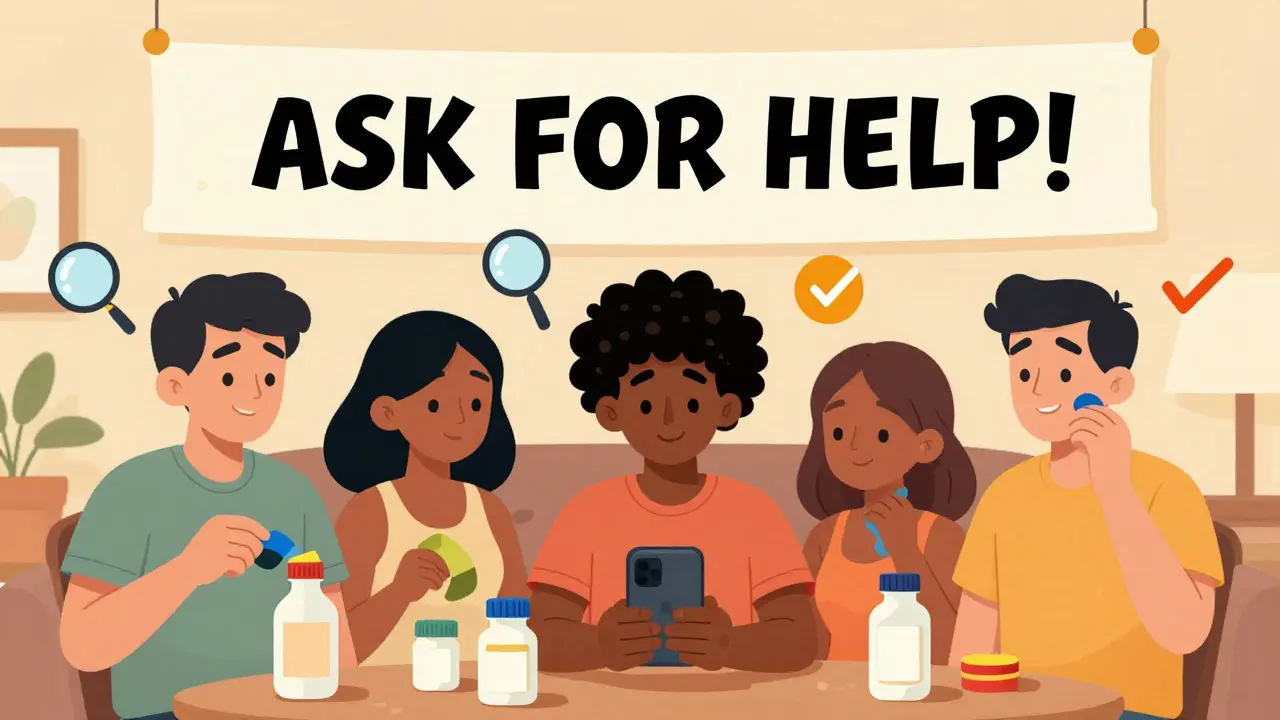
Here’s the most dangerous part: most people with vision or hearing loss don’t tell their doctors or pharmacists about their struggles. In one study, 68% of participants never mentioned their difficulty reading labels or hearing instructions. Why? Shame. Fear of being seen as a burden. Belief that nothing can be done.
But that silence is deadly. Pharmacists can’t fix what they don’t know is broken. If you can’t read your label, say so. If you missed instructions because of background noise, speak up. You’re not being difficult-you’re protecting your life.
Doctors and pharmacists need training too. A 2021 report by the Royal National Institute of Blind People found that most healthcare workers lack basic knowledge about how to communicate with people who have sensory impairments. They don’t know what “18-point font” looks like. They don’t know how to use a talking pill dispenser. They assume everyone can read the label or hear the instructions.
What You Can Do Right Now
You don’t need to wait for the system to change. Here’s what you can do today:
- Ask for large-print labels: When picking up a new prescription, say: “Can you print this label in 18-point font with high contrast?” Most pharmacies can do it-they just need to be asked.
- Request a pill organizer: Ask your pharmacist for a color-coded or talking pill box. Some pharmacies offer them for free or at low cost.
- Use your phone: Use the camera app on your smartphone to zoom in on labels. Or use voice assistants like Siri or Google Assistant to scan and read the label aloud.
- Label your bottles yourself: Use bright colored tape or stickers. Write “AM” or “PM” in thick black marker. Add a rubber band around the cap for each daily dose.
- Bring a helper: If you can, have a family member or friend come with you to the pharmacy. They can listen, ask questions, and double-check the label.
It only takes 30 seconds to write “Take in morning” on a bottle. But that 30 seconds could save you from a hospital visit.
Why the System Isn’t Fixed Yet
There’s a reason this problem still exists: no one is forced to fix it.
The Americans with Disabilities Act says pharmacies must provide “reasonable accommodations.” But it doesn’t define what that means for medication labels. The FDA has no mandatory rules for font size, contrast, or braille on prescription bottles. In the UK, the Medicines and Healthcare products Regulatory Agency admits current packaging “doesn’t go far enough.”
Pharmacies also don’t get paid extra to spend extra time helping patients with disabilities. Medicare pays pharmacies about $15 per prescription. That’s not enough to cover 5 extra minutes of personalized counseling.
As a result, only 17% of major chain pharmacies have any standardized protocol for accessibility. The rest are left to guess what works.
What’s Changing-and What’s Coming
Change is slow, but it’s happening.
The American Foundation for the Blind released updated labeling guidelines in 2021, including standards for digital labels and braille translations. The Royal National Institute of Blind People is developing a standardized labeling system set to roll out in 2025. Some pharmacies are testing voice-enabled apps that let patients scan a QR code on their bottle to hear instructions.
But without federal or state mandates, progress will stay patchy. The real solution? Make accessibility a legal requirement-not a courtesy.
Until then, the responsibility falls on you. Speak up. Ask for help. Use the tools that work. And don’t let silence put your health at risk.
Frequently Asked Questions
Can pharmacies legally refuse to give me a large-print label?
No. Under the Americans with Disabilities Act, pharmacies must provide reasonable accommodations. A large-print label is considered a reasonable accommodation. If a pharmacy refuses, ask to speak with the manager or file a complaint with the U.S. Department of Justice’s ADA hotline.
What if I can’t read braille? Are there other options?
Yes. Braille is only useful if you’ve learned it. For most people who lose vision later in life, other options work better: talking pill dispensers, color-coded labels, smartphone apps that read labels aloud, or even simple rubber bands around bottles. Ask your pharmacist for a list of low-tech tools-they often have samples you can try.
How do I know if my medication has expired if I can’t read the date?
Ask your pharmacist to write the expiration date on the bottle in large, dark marker. You can also use a smartphone app like “Expiration Date Scanner” or ask a trusted person to help you check. Never guess-expired medications can lose effectiveness or become unsafe.
Are talking pill dispensers covered by insurance?
Most insurance plans, including Medicare Part D, do not cover talking pill dispensers. But some nonprofit organizations and state programs offer them for free or at a discount. Contact your local Area Agency on Aging or the American Foundation for the Blind for assistance.
Can I get help sorting my pills if I live alone?
Yes. Many home health agencies and community organizations offer medication management services for people with disabilities. Some provide weekly visits to sort pills into labeled containers. Ask your doctor for a referral, or call 211 (a free national helpline) to find local support.