

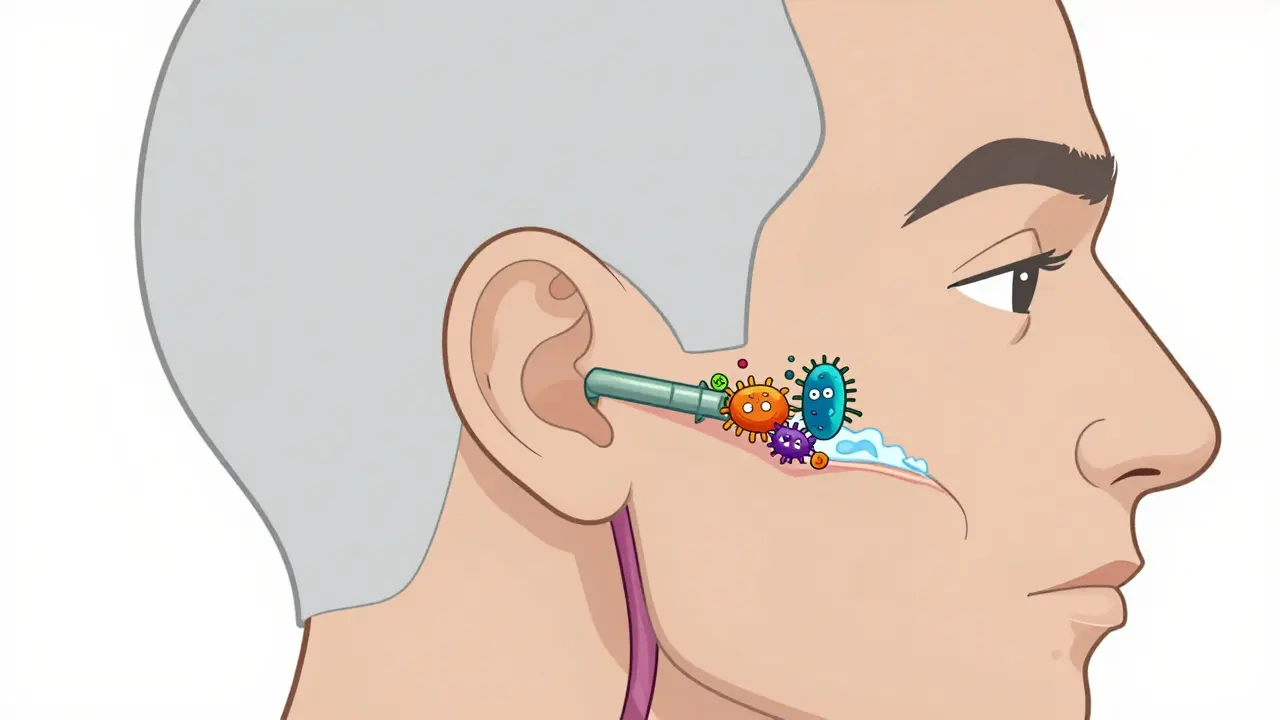
That sharp, stabbing pain behind the ear is unmistakable. It often strikes at night, turning a quiet evening into a sleepless ordeal for both child and parent. You might notice your toddler tugging at their ear, crying more than usual, or seeming unable to hear you clearly. This is likely otitis media, commonly known as a middle ear infection. It is an inflammation of the air-filled space behind the eardrum, caused by bacteria or viruses trapped in that pocket.
You are not alone in this struggle. More than 80 percent of children experience at least one episode by age three. The peak incidence hits between three months and three years old. Why so young? It comes down to anatomy. Children’s Eustachian tubes are shorter, narrower, and more horizontal than adults’. These tubes connect the middle ear to the back of the throat. Their job is to drain fluid and equalize pressure. When they are immature, they clog easily during a cold or allergy flare-up. Fluid gets trapped. Bacteria grow. Pain follows.
Understanding the Mechanics of Middle Ear Infections
To treat the problem effectively, you need to understand what is happening inside the ear. Otitis media is not just one condition; it presents in different forms. The most common and painful is acute otitis media (AOM). This is the sudden onset of infection with swelling, pus accumulation, and significant pain. It usually accompanies fever and irritability.
Then there is otitis media with effusion (OME). This occurs after the acute infection clears up, but fluid remains behind the eardrum. There is no active infection, no pain, and no fever. However, the fluid causes conductive hearing loss. Your child might seem distracted or ask you to repeat yourself. This "glue ear" can last for weeks or even months. It resolves on its own in most cases, but it requires monitoring to ensure it does not impact speech development.
The culprits behind AOM are specific pathogens. The most frequent bacterial offenders are Streptococcus pneumoniae, Haemophilus influenzae (non-typeable), and Moraxella catarrhalis. Viruses like rhinovirus, influenza, and respiratory syncytial virus (RSV) also trigger the inflammation that leads to secondary bacterial growth. Understanding these agents helps explain why antibiotics work for some cases but not others.
Risk Factors: Who Is Most Vulnerable?
While genetics play a role, environmental factors heavily influence susceptibility. If your child attends daycare, their risk increases two to three times compared to those cared for at home. Daycare centers are hubs for viral circulation. More colds mean more swollen Eustachian tubes.
Exposure to secondhand smoke is another major risk factor. Studies show that household smoking increases the risk of otitis media by 50 percent. Smoke irritates the lining of the Eustachian tube, causing swelling and reducing drainage efficiency. Breastfeeding offers protective benefits due to antibodies passed from mother to child and the upright feeding position, which reduces fluid reflux into the ears. Bottle-feeding while lying flat increases the likelihood of milk entering the middle ear space.
Seasonality matters too. Incidence peaks in late fall and winter when respiratory viruses circulate widely. Allergies also contribute year-round by causing chronic nasal congestion and Eustachian tube blockage.
Diagnosis: Beyond the Visual Check
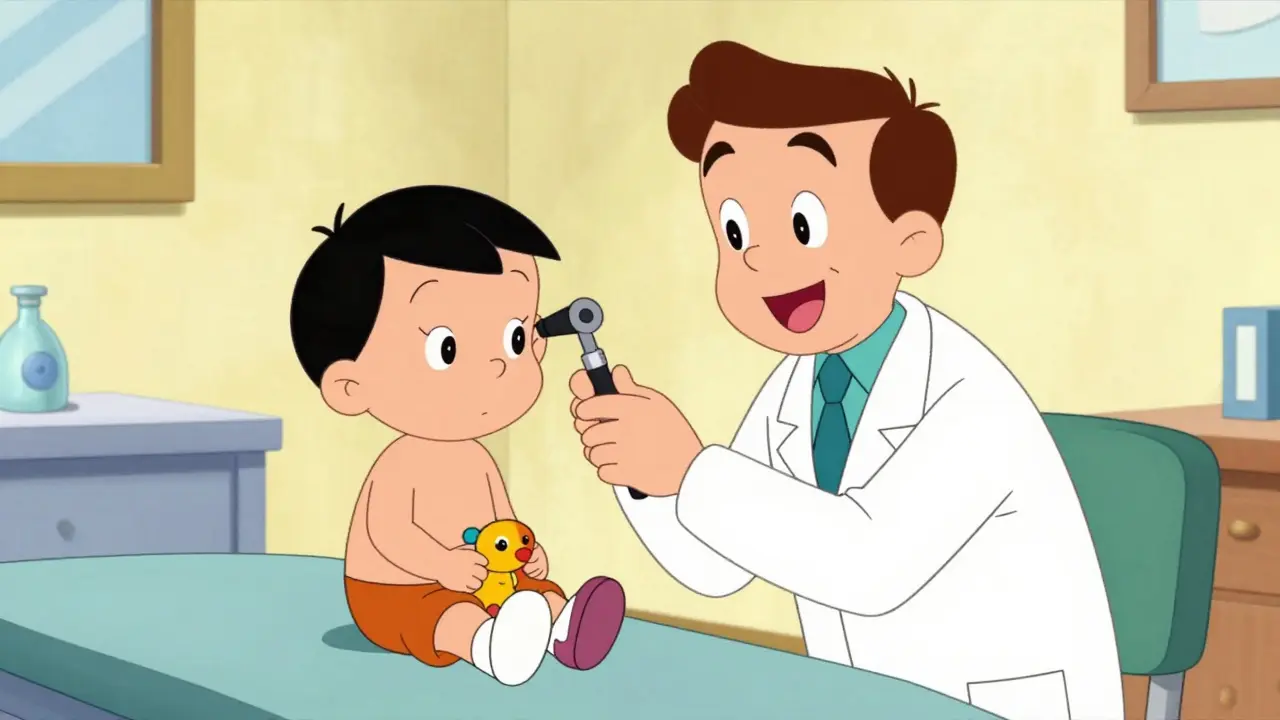
A red eardrum does not always mean infection. Crying alone can make an eardrum look red. Diagnosis relies on pneumatic otoscopy. The doctor uses a speculum with a rubber bulb to puff air into the ear canal. They watch how the eardrum moves. In a healthy ear, the drum vibrates freely. In acute otitis media, the drum is bulging and immobile due to fluid pressure. This immobility is the key diagnostic sign.
Tympanometry provides objective data. It measures the compliance of the eardrum. A flat tympanogram indicates fluid presence. Audiometric testing may reveal conductive hearing loss ranging from 15 to 40 decibels during active infection. For recurrent cases, audiograms help determine if permanent damage has occurred.
New technology aids diagnosis. Smartphone attachments like the CellScope Oto allow parents to capture high-resolution images of the eardrum. Studies show 85 percent accuracy compared to in-person exams. This tool facilitates remote assessment, especially useful in rural areas or during office closures.
Antibiotic Treatment Guidelines: To Prescribe or Not?
The approach to antibiotics has shifted dramatically over the last decade. We now prioritize antibiotic stewardship. Overprescribing drives resistance. According to CDC data, 30 to 50 percent of Streptococcus pneumoniae isolates in the U.S. show some penicillin resistance. High-dose amoxicillin remains effective against most strains, but misuse accelerates the emergence of superbugs.
The American Academy of Pediatrics (AAP) and American Academy of Family Physicians (AAFP) provide clear guidelines. Age and severity dictate the strategy.
- Children under 6 months: Always prescribe antibiotics for definite AOM. Immune systems are too immature for safe observation.
- Children 6 to 23 months: Prescribe antibiotics for bilateral AOM (both ears) or severe symptoms (fever ≥39°C/102.2°F, severe pain lasting ≥48 hours). For unilateral mild-to-moderate cases, watchful waiting is an option.
- Children 24 months and older: Watchful waiting is appropriate for mild-to-moderate unilateral or bilateral AOM. Reserve antibiotics for severe symptoms.
If antibiotics are necessary, amoxicillin is the first-line therapy. The recommended dose is 80-90 mg/kg/day divided into two doses. For children under two with bilateral AOM, the course lasts ten days. For children aged two to five with severe symptoms, seven days suffice. Older children with mild symptoms may only need five to seven days.
For penicillin-allergic patients, alternatives include ceftriaxone (single IM injection), cefdinir, or azithromycin. Azithromycin is convenient due to its short five-day course, but resistance rates are higher. Amoxicillin-clavulanate (Augmentin) is used if amoxicillin fails or if the child has recent antibiotic exposure.
| Drug | Dosing Strategy | Duration | Best For |
|---|---|---|---|
| Amoxicillin | 80-90 mg/kg/day | 5-10 days | First-line, uncomplicated cases |
| Amoxicillin-Clavulanate | High dose | 5-10 days | Failed amoxicillin, recent antibiotics |
| Ceftriaxone | 50 mg/kg IM | Single dose | Vomiting, non-compliance, severe cases |
| Azithromycin | 10 mg/kg day 1, then 5 mg/kg | 5 days | Penicillin allergy |
Watchful Waiting: Managing Pain Without Antibiotics
Watchful waiting is not neglect. It is an active management strategy. About 80 percent of uncomplicated AOM cases resolve spontaneously within three days. Antibiotics do not significantly reduce pain in the first 24 hours. Pain control is the immediate priority.
Use acetaminophen (10-15 mg/kg/dose) or ibuprofen (5-10 mg/kg/dose) every four to six hours. Ibuprofen often provides superior relief for ear pain due to its anti-inflammatory properties. Warm compresses applied to the outer ear can soothe discomfort. Otic analgesic drops like Auralgan offer additional relief, but never use them if you suspect eardrum perforation (drainage of pus).
During the observation period, monitor for red flags. Seek immediate care if:
- Fever exceeds 104°F (40°C)
- Pain becomes unmanageable despite medication
- Drainage of pus or blood from the ear (possible rupture)
- Dizziness, facial weakness, or severe lethargy
If symptoms worsen or fail to improve after 48 to 72 hours, start antibiotics. Parents report mixed experiences. Some appreciate avoiding side effects like diarrhea (which affects 10-25 percent of children on amoxicillin). Others regret delaying treatment when fevers spiked. Open communication with your pediatrician is essential.
Prevention and Long-Term Management
Vaccination is a powerful preventive tool. The pneumococcal conjugate vaccine (PCV13 and PCV15) has reduced vaccine-type pneumococcal AOM by 34 percent. Ensure your child stays up to date with immunizations. Annual flu shots also help, as influenza often precedes ear infections.
Address underlying allergies. Chronic nasal congestion blocks Eustachian tubes. Antihistamines or nasal steroids may help, though evidence for preventing AOM is mixed. Avoid exposing children to cigarette smoke. Keep bottles upright during feeding. Consider pacifier weaning after six months, as prolonged use is linked to increased OME risk.
For recurrent cases (three episodes in six months or four in a year), discuss surgical options. Tympanostomy tubes (ear tubes) ventilate the middle ear and prevent fluid buildup. Adenoidectomy may be recommended if enlarged adenoids block the Eustachian tube opening. These procedures significantly reduce recurrence rates and improve quality of life.
Economic and Healthcare Impact
Otitis media carries a heavy economic burden. It accounts for 15.5 million annual physician visits in the United States. Direct healthcare costs exceed $2.89 billion yearly. Antibiotic prescriptions for AOM represent 15 million annual scripts, making it the second most common reason for pediatric antibiotic use after strep throat.
The push for stewardship has yielded results. Inappropriate prescribing dropped from 68 percent in 2010 to 59 percent in 2016. However, regional variation persists. Rural clinics still prescribe antibiotics more frequently than urban centers. Education campaigns targeting both providers and parents continue to drive change.
Future developments promise targeted therapies. Point-of-care bacterial identification tests could guide precise antibiotic selection, reducing broad-spectrum use by 30-40 percent within five years. Enhanced vaccines like Vaxneuvance (15-valent) show promise in further lowering incidence rates.
How long does a middle ear infection last without antibiotics?
Most acute otitis media cases resolve spontaneously within 3 to 7 days without antibiotics. About 80 percent of uncomplicated infections improve within 3 days. Pain typically subsides faster with proper analgesic management. Fluid behind the eardrum (OME) may persist for weeks or months but usually resolves on its own.
Can a middle ear infection cause permanent hearing loss?
Temporary conductive hearing loss is common during active infection, ranging from 15 to 40 decibels. Permanent sensorineural hearing loss is rare and usually results from complications like mastoiditis or chronic suppurative otitis media. Recurrent infections can delay speech development in toddlers, necessitating early audiological evaluation.
What are the signs that my child needs ear tubes?
Consider tympanostomy tubes if your child has recurrent acute otitis media (3+ episodes in 6 months or 4+ in a year), persistent otitis media with effusion affecting hearing or speech, or structural eardrum damage. Tubes ventilate the middle ear, reduce infection frequency, and improve hearing clarity.
Is it safe to fly with a middle ear infection?
Flying with acute otitis media is painful and risky. Pressure changes can exacerbate pain and potentially rupture the eardrum. Wait until symptoms resolve completely. If travel is unavoidable, consult your doctor about decongestants or antihistamines to open the Eustachian tube before takeoff and landing.
Do probiotics help prevent ear infections?
Current evidence is inconclusive. A 2022 Cochrane review of 13 trials found no significant reduction in acute otitis media incidence with probiotic use. While generally safe, they should not replace proven preventive measures like vaccination and smoke avoidance.



Gary Helminiak
May 24, 2026 AT 02:02Look, I've been dealing with this stuff for years as a dad of three, and let me tell you, the watchful waiting part is where it gets tricky because nobody wants to see their kid in pain but we also don't want to contribute to superbugs 🦠. The article mentions high-dose amoxicillin being first-line, which is totally accurate based on current guidelines, but what people forget is that compliance is huge here 💊. If your kid throws up half the dose or refuses to take it all the way through, you're basically feeding the bacteria just enough resistance to make them stronger. I always keep a syringe handy and mix it with a tiny bit of juice if allowed, though you gotta check with the doc first. Also, the part about Eustachian tubes being horizontal in kids is such a key anatomical detail that parents overlook; it's not just 'bad luck,' it's physics! 📉 So yeah, use ibuprofen for the inflammation specifically, not just acetaminophen, because the swelling is what causes the pressure buildup behind the drum. And please, for the love of everything holy, stop smoking around the kids if you value their hearing 👂. It’s not just a suggestion, it’s a major risk factor that actually changes the mucosal lining function.
Tim Reynolds
May 25, 2026 AT 20:37Big Pharma loves this narrative. They want you to believe that without antibiotics, your child will go deaf. It is a lie. A calculated, profit-driven lie. The immune system is designed to handle these minor invasions. We are weakening our children by medicating them at every sneeze. Do your own research. Look into the history of ear infections before 1940. Did they die? No. They survived. The 'guidelines' are written by people who get paid by the very companies selling the drugs. Wake up.
Groman Neta
May 26, 2026 AT 05:42This article is painfully basic. Any parent who has dealt with recurrent otitis media knows that 'watchful waiting' is often just code for 'we don't want to deal with the paperwork.' The distinction between AOM and OME is critical, yet most pediatricians rush to prescribe without proper pneumatic otoscopy. They just look with an otoscope and see red, then write a script. It is lazy medicine. Furthermore, the section on prevention glosses over the significant role of adenoid hypertrophy in older toddlers. If you are ignoring structural issues, no amount of vaccination will save you from surgery eventually.
Frank Arlyss
May 26, 2026 AT 10:54I don't know why everyone is so obsessed with avoiding antibiotics when they work. My neighbor's kid had a ruptured eardrum because they waited too long to treat it. Now he has permanent damage. You people think you know better than doctors. It's annoying. Just give the kid the meds and stop complaining about side effects. Diarrhea is temporary, hearing loss isn't. Why do you have to be so difficult about simple medical advice?
Ryan Jones
May 28, 2026 AT 06:14the whole concept of 'resistance' is blown out of proportion to scare you into buying more expensive treatments later. i mean sure maybe some bugs get smarter but really? my cousin swears by putting garlic oil in the ears and it worked every time. doctors hate that because they can't patent garlic. it's all about control. they want you dependent on the system. watchful waiting is fine but only if you trust your gut not the corporate guidelines. honestly the painkillers are worse for the liver than the antibiotics anyway. just saying.
irine sabrina
May 28, 2026 AT 17:17I completely agree with the emphasis on pain management! As a mother, seeing my son cry in pain was heartbreaking, and using ibuprofen made such a difference in his comfort level while we waited to see if the infection would resolve on its own. It is so important to remember that we are treating the child, not just the chart. The article does a great job explaining that antibiotics don't necessarily reduce pain in the first 24 hours, which is a fact many parents aren't aware of. We need more compassionate approaches that empower parents to manage symptoms safely at home while monitoring for those red flags. Let's support each other in making informed decisions rather than judging those who choose different paths!
Michael Schurmann
May 29, 2026 AT 02:54The average person cannot comprehend the nuance of pneumococcal resistance patterns. This article simplifies complex microbiological data to appease the masses. Amoxicillin-clavulanate is not merely an 'alternative'; it is the superior choice for any case with recent antibiotic exposure, yet general practitioners continue to underutilize it due to cost concerns. It is pathetic how healthcare economics dictates clinical outcomes. If you are treating otitis media, you should understand the MIC breakpoints for Streptococcus pneumoniae. Most readers here probably couldn't even identify a tympanogram. Educate yourselves before commenting on medical protocols.
Christina Mitchell
May 31, 2026 AT 00:12There is a profound wisdom in understanding the body's natural rhythms. The ear is not isolated; it is connected to the throat, the mind, and the environment. When we rush to suppress symptoms with chemicals, we ignore the deeper message of imbalance. Perhaps the recurrence of infections is a sign of environmental toxicity or emotional stress within the household. We must look beyond the immediate symptom to the root cause. Healing is a journey of alignment, not just eradication of bacteria. Consider the holistic impact of smoke, diet, and air quality on the delicate structures of the head.
Christopher Laver
May 31, 2026 AT 08:18Boring. Too much text. Just tell me if I need to go to the doctor or not. My kid has a fever and is pulling his ear. Is it an emergency? The article says wait 48 hours but my wife wants to go now. Ugh. Decisions are hard. Maybe just give him Tylenol and hope for the best. Or maybe not. Whatever. This post is too long for a quick answer.
Russell Russell
May 31, 2026 AT 20:25Let us reframe this challenge as an opportunity for empowerment. Understanding the anatomy of the Eustachian tube gives us the knowledge to advocate for our children effectively. We are not passive recipients of care; we are active participants in health management. The guidelines provided are tools, not shackles. Use them to ask better questions of your provider. Ask about the benefits of the pneumococcal vaccine. Ask about the risks of secondhand smoke. Knowledge is power. Let us build a community that supports evidence-based parenting while respecting individual choices. Together, we can navigate these health hurdles with confidence and clarity.
Naresh Chandra
June 2, 2026 AT 17:42In India, we often face different challenges with access to care, but the principles remain similar. However, I must emphasize the importance of hydration and rest alongside medical treatment. The immune system requires energy to fight off pathogens. Parents should ensure adequate fluid intake. Also, the cultural practice of keeping the head elevated during sleep can significantly help with drainage. It is a simple, non-invasive method that complements medical advice. We must respect local practices while integrating modern science. The synergy between traditional care and biomedical intervention is crucial for optimal outcomes.
Cyburg Adeoye
June 3, 2026 AT 09:42From a Nigerian perspective, the burden of disease is often compounded by limited resources, making prevention even more critical. Vaccination coverage is paramount. We must advocate for increased access to PCV vaccines in underserved communities. The economic impact mentioned in the article is staggering, but in developing nations, the indirect costs of missed school days and parental absenteeism are equally devastating. Community health workers play a vital role in educating families about hygiene and smoke avoidance. Let us collaborate globally to reduce the incidence of otitis media through equitable healthcare distribution.
Joseph Teichman
June 3, 2026 AT 13:37hey man good info here. i usually just give tylenol and wait it out. works for me. dont overthink it. if they look real sick go to dr. otherwise chill. probiotics might help idk but i try em sometimes. stay healthy bro.
dane thorp
June 5, 2026 AT 10:32I appreciate the detailed breakdown of diagnostic methods. Pneumatic otoscopy is indeed the gold standard, yet it is frequently skipped in busy clinics. Parents should insist on a proper examination if symptoms persist. It is important to maintain clear communication with healthcare providers and ask specific questions about the mobility of the eardrum. This ensures that treatment decisions are based on objective findings rather than subjective impressions alone.
Ramanath Rao
June 6, 2026 AT 22:20You people are missing the point entirely! In our culture, we understand that health is communal. But let me tell you, the antibiotic resistance crisis is real and it is accelerating. Your casual dismissal of stewardship is dangerous. I have seen patients in rural areas who no longer respond to first-line treatments because of misuse. Stop acting like you are above the science. Follow the guidelines. If the AAP says watchful waiting for mild cases, then do it. But do not come crying to me when your child develops mastoiditis because you trusted a blog post over a doctor. Respect the protocol!