
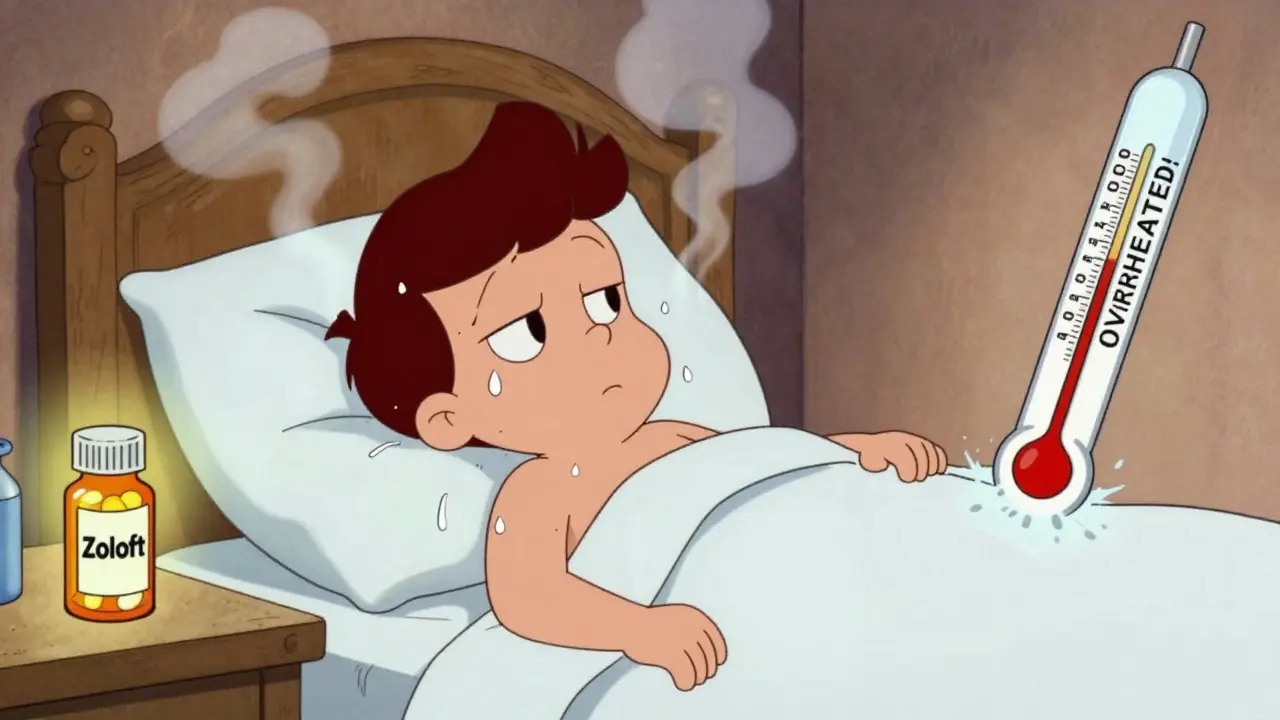
Feeling drenched in sweat at 3 a.m. or suddenly flushed in the middle of a meeting? You’re not alone. More than 14.8% of people taking certain medications experience sweating or hot flashes as a side effect - and many don’t even realize it’s the drug causing it. This isn’t just discomfort. For many, it’s enough to make them quit their prescription entirely. A 2021 study found that nearly 29% of patients stopped taking essential meds like antidepressants, hormone therapies, or painkillers simply because they couldn’t handle the sweating. That’s dangerous. If you’re dealing with this, you need practical, science-backed solutions - not just advice to "stay cool."
Which Medications Cause Sweating and Hot Flashes?
It’s not just one drug. Over 120 prescription medications across 15 different classes can trigger these symptoms. Some are obvious - like hormone treatments for breast cancer - but others sneak up on you. Here’s what’s most likely to cause trouble:- Antidepressants - Especially SSRIs like sertraline (Zoloft) and escitalopram (Lexapro). About 22% of users report excessive sweating, often at night. This happens because these drugs boost serotonin, which messes with your brain’s thermostat.
- ADHD stimulants - Adderall and Ritalin activate your fight-or-flight system. Up to 35% of users sweat heavily, especially during the day.
- Opioid pain meds - Oxycodone and morphine trigger histamine release, leading to flushing and sweating in 41% of users.
- Corticosteroids - Prednisone throws off your hormone balance. Around 18% of people on long-term steroids get hot flashes.
- Breast cancer drugs - Tamoxifen, anastrozole, exemestane - these lower estrogen, which directly affects your body’s heat control. Up to 78% of patients get daily hot flashes.
The key difference between drug-induced sweating and natural hyperhidrosis? It’s tied to when you take the pill. If the sweating started after you began a new med - and got worse when you increased the dose - it’s likely the drug.
Why This Happens (And Why It’s Not Just "Being Hot")
Your body keeps its temperature steady through a tiny control center in your brain called the hypothalamus. Medications disrupt this system in different ways:- SSRIs overstimulate serotonin receptors, tricking your brain into thinking you’re overheating - even when you’re not.
- Stimulants like Adderall crank up your sympathetic nervous system, making your sweat glands go into overdrive.
- Hormone blockers like anastrozole remove estrogen, which normally helps your body regulate heat. Without it, your thermostat gets hypersensitive.
- Opioids trigger mast cells to release histamine, causing blood vessels to widen and sweat to pour out.
This isn’t just a nuisance. Night sweats can wreck your sleep. Hot flashes can make you avoid social situations. And if you stop your medication because of it, you risk your primary health condition getting worse. That’s why managing this isn’t optional - it’s part of your treatment plan.
What Actually Works: Evidence-Based Relief Strategies
Forget home remedies that don’t hold up. These are the methods backed by clinical studies and used by top specialists:1. Prescription Antiperspirants (The First Line of Defense)
Over-the-counter deodorants won’t cut it. You need something stronger: aluminum chloride hexahydrate at 12-20% concentration. Brands like Drysol or Xerac AC are prescription-only but widely available. Apply it to clean, dry skin at bedtime, 2-3 nights a week. Most people see results in 7-10 days. One 2023 review found it reduces sweating by 68% in patients with drug-induced hyperhidrosis. It’s safe, non-invasive, and works on armpits, hands, feet - even the chest.2. Timing Your Dose
This is simple but powerful. If your medication causes night sweats, take it in the morning. A 2022 Cleveland Clinic study showed that shifting antidepressants from nighttime to morning reduced night sweats by 55%. Same goes for stimulants - taking Adderall earlier in the day cuts afternoon sweating episodes by nearly half.3. Low-Dose Anticholinergics for Severe Cases
If antiperspirants and timing aren’t enough, doctors may prescribe glycopyrrolate. This is a mild nerve blocker that reduces sweat production. A typical dose is 0.5-1 mg daily. Clinical trials show it cuts sweat episodes by 73%. Side effects are mild - dry mouth, occasional blurred vision - and often fade after a few weeks. It’s not for everyone, but for those with severe sweating, it’s life-changing.4. For Breast Cancer Patients: Non-Hormonal Options
Hormone replacement therapy is off-limits for most breast cancer survivors. But there’s good news: paroxetine (a low-dose SSRI at 10 mg daily) reduces hot flashes by 62% without interfering with cancer treatment. It’s now recommended as first-line by the American Society of Clinical Oncology. Other proven options include gabapentin (300-900 mg daily) and venlafaxine (37.5-75 mg daily). These aren’t antidepressants for mood - they’re used here strictly for temperature control.5. Behavioral and Environmental Tweaks
You can’t control your meds - but you can control your environment.- Layer your clothing. Wear cotton or moisture-wicking undershirts under loose outer layers. That way, you can peel off a layer when you feel a flash coming.
- Keep your bedroom under 65°F. A 2023 survey of breast cancer patients found this simple step reduced night sweats by 84%.
- Cognitive behavioral therapy (CBT). Not just for anxiety - CBT designed for hot flashes teaches you to recognize triggers, breathe through episodes, and reframe your response. In trials, it cut symptom severity by 50-60% after 6-8 weekly sessions.
- Cooling vests. The Arctic Heat Cool Vest, tested at UC Davis, reduced sweat episodes by 44% when worn for two hours a day. It’s not glamorous, but it works.
What Doesn’t Work - And Why
There’s a lot of misinformation out there. Avoid these:- Herbal supplements like black cohosh. No solid evidence they help with drug-induced sweating. Some even interact dangerously with cancer meds.
- Deodorants instead of antiperspirants. Deodorants mask odor. Antiperspirants block sweat. Big difference.
- Just drinking more water. Hydration helps overall, but won’t stop the sweat glands from firing.
- Waiting it out. If the med is the cause, symptoms won’t fade on their own - they’ll keep getting worse.
When to Talk to Your Doctor - And What to Say
Don’t wait until you’re ready to quit your meds. Bring this up at your next appointment. Say something like:“I’ve noticed I’ve been sweating a lot since I started [medication name]. It’s happening [time of day], and it’s affecting my sleep/quality of life. I’d like to explore options - could we look at adjusting the dose, switching meds, or adding a treatment like glycopyrrolate or paroxetine?”
Most doctors don’t screen for this. A 2022 study found only 42% of primary care physicians routinely ask about sweating side effects. So you have to lead the conversation.

Insurance and Access Issues
Here’s the frustrating part: many of the best treatments aren’t covered. Only 33% of private insurance plans pay for prescription antiperspirants. Glycopyrrolate is usually covered, but paroxetine might require prior authorization if it’s being used off-label for hot flashes. Ask your pharmacist about patient assistance programs. Some drugmakers offer free samples of antiperspirants or co-pay cards for low-dose SSRIs.What’s New in 2025
The field is moving fast. In December 2023, the FDA approved Brimonidine Gel 0.33% (Mirvaso) for generalized hyperhidrosis - the first topical treatment approved specifically for this use. Early data shows a 67% reduction in sweat episodes. Also, a major NIH study launched in January 2024 is looking at genetics - some people may have a gene variant (HLA-DQB1) that makes them 3.2 times more likely to sweat from meds. This could lead to personalized treatment down the line.Wearable tech is coming too. The SweatTech Smart Patch, now in Phase 2 trials, detects sweat before it starts and activates cooling. It’s not available yet - but it’s coming.
You’re Not Alone - And There’s Hope
One 56-year-old woman on anastrozole had 15-20 hot flashes a day. She tried everything - until she switched to exemestane, started using a cooling vest, and did CBT. Within two months, her flashes dropped to 3-4 per day. She’s still on her cancer treatment. She’s sleeping again. She went back to her book club.Drug-induced sweating is common. It’s treatable. And it doesn’t mean you have to choose between your health and your comfort. With the right approach, you can manage the side effect - without giving up the medication that’s saving your life.
Can antidepressants cause night sweats?
Yes. About 22% of people taking SSRIs like sertraline or escitalopram experience night sweats. This happens because these drugs affect serotonin, which disrupts the brain’s temperature control. Taking the medication in the morning instead of at night can reduce nighttime episodes by over 50%.
Is sweating from medication dangerous?
The sweating itself isn’t usually dangerous, but the consequences can be. Many people stop taking essential medications - like antidepressants or cancer drugs - because the sweating feels unbearable. This can lead to relapse, worsening symptoms, or disease progression. That’s why managing the side effect is part of your treatment plan, not an afterthought.
Can I use over-the-counter antiperspirants for medication-induced sweating?
Regular deodorants won’t help. Over-the-counter antiperspirants usually contain only 5-10% aluminum salts - not enough for drug-induced sweating. You need prescription-strength antiperspirants with 12-20% aluminum chloride hexahydrate, which are proven to reduce sweating by nearly 70%.
Why do breast cancer drugs cause hot flashes?
Drugs like anastrozole and tamoxifen lower estrogen levels. Estrogen helps regulate your body’s thermostat. When it drops, your hypothalamus becomes hypersensitive - even small changes in temperature trigger a hot flash. Up to 78% of women on these drugs experience them, often severely.
Should I stop my medication if I’m sweating too much?
No - not without talking to your doctor. Stopping essential medications can be risky. Instead, ask about alternatives: adjusting the dose, switching to a different drug in the same class, adding a treatment like glycopyrrolate or low-dose paroxetine, or using behavioral strategies. Most cases can be managed without quitting the drug.
Are there any new treatments for drug-induced sweating in 2025?
Yes. In late 2023, the FDA approved Brimonidine Gel 0.33% (Mirvaso) for generalized hyperhidrosis, showing a 67% reduction in sweat episodes. Also, a major NIH study is investigating genetic factors that make some people more prone to this side effect. Wearable tech like the SweatTech Smart Patch is in clinical trials and could be available within the next few years.


Paige Shipe
December 31, 2025 AT 04:23It's fascinating how serotonin dysregulation directly impacts thermoregulation. The neuropharmacology here is non-trivial. SSRIs don't just alter mood-they rewire autonomic output. The 22% statistic is underreported in clinical literature. Most physicians miss this because they're trained to treat depression, not side effects. This needs to be in every prescribing guideline.
Tamar Dunlop
January 1, 2026 AT 16:54I am writing from Vancouver, where the winters are long and the heating systems are notoriously inefficient. I have witnessed firsthand the devastation that night sweats can inflict upon a person's dignity and sleep architecture. The suggestion of a cooling vest is not merely practical-it is profoundly humane. Thank you for acknowledging the quiet suffering that accompanies these side effects.
David Chase
January 3, 2026 AT 11:59OMG YES. I was on Zoloft for 18 months and I was SOAKING through my shirts by 10 a.m. 🤯 My boss thought I was doing drugs. I went to my doc and they said "just drink more water". Like I'm a fucking plant? I switched to Wellbutrin and my sweat glands went on vacation. Glycopyrrolate? I'm trying it next if this fails. Also, brimonidine gel is a GAME CHANGER. FDA approved?? Finally. USA FTW 🇺🇸
Emma Duquemin
January 3, 2026 AT 18:18Okay, I need to scream this from the rooftops: YOU ARE NOT WEIRD. You are not broken. You are not lazy. You are not "overreacting." Your body is responding to a chemical assault-your brain thinks it’s 105°F when it’s 72. That’s not anxiety, that’s neurochemistry. I’ve been on tamoxifen for 5 years. I used to hide in bathroom stalls at work. Now? I wear a cooling vest under my blazer, take my meds at 7 a.m., and do 10 minutes of CBT breathing before bed. I’m not cured-I’m empowered. And if you’re reading this? You can do this too. You’ve got this. 💪
Kevin Lopez
January 5, 2026 AT 09:45SSRIs → 5-HT2C agonism → hypothalamic thermoregulatory dysfunction. Standard. Antiperspirants: aluminum chloride hexahydrate >12% is gold standard. Glycopyrrolate: M3 antagonist. Dose: 0.5-1mg QD. Paroxetine 10mg: CYP2D6 inhibitor, lowers estrogen metabolism. Valid. All other options: anecdotal. Stop with the black cohosh.
Samar Khan
January 7, 2026 AT 06:05Bro I was on Adderall and sweating so bad I had to change shirts 3x a day 😭 My mom said it's "just heat"... I told her I was in a freezer with a space heater on my chest. Then I switched to Vyvanse and it got better. But still... I wish docs would just LISTEN. I'm not crazy. I just sweat like a faucet.
Russell Thomas
January 7, 2026 AT 16:09So let me get this straight-you’re telling me that instead of just enduring this, we’re supposed to wear a vest, time our meds, take anticholinergics, and do CBT? Sounds like a full-time job. Meanwhile, the drug companies are making billions. Who’s really benefiting here? The patient? Or the pharma-industrial complex that sells you the antiperspirant after they made you sweat in the first place?
Joe Kwon
January 8, 2026 AT 23:22Great breakdown. I’ve been on prednisone for 8 months and the hot flashes were brutal. Tried the Drysol-worked like magic after 5 nights. Took it in the AM. Used a fan. Did CBT breathing. No more panic attacks when I feel a flush coming. The key is combining strategies. No single fix, but layered interventions? That’s the model. Also, thanks for mentioning insurance. That’s the real barrier. We need advocacy.
Nicole K.
January 10, 2026 AT 00:36People need to stop blaming their meds. I know someone who stopped her antidepressants because she was sweating. Now she’s depressed again. Maybe she just needs to stop being so dramatic. Sweat happens. Just wear a towel. Or take a shower. Simple.
Amy Cannon
January 11, 2026 AT 03:17As someone who has lived in three continents and experienced this phenomenon across cultures, I must say: the medical neglect of drug-induced hyperhidrosis is not unique to the United States. In India, patients are often told to drink coconut water. In Germany, they prescribe homeopathic remedies. Here, we have science-but we lack systemic awareness. This post is a beacon. I have shared it with my university’s pharmacology department. We must institutionalize this knowledge.
Himanshu Singh
January 11, 2026 AT 14:16Hey, I’m on Ritalin and sweating like crazy. This post saved me. I started taking it at 7am instead of 8 and now I’m not drenched by lunch. Also tried Drysol-yes it stings but it works. I’m not giving up my meds. Thanks for the hope. 🙏
Alex Ronald
January 12, 2026 AT 17:00Just wanted to add: if you’re on tamoxifen and considering paroxetine, check your CYP2D6 status. Some variants metabolize it poorly, which can reduce tamoxifen’s efficacy. Talk to your oncologist about genetic testing. This isn’t just about sweating-it’s about survival.
Teresa Rodriguez leon
January 13, 2026 AT 01:28I’ve had night sweats for 3 years. I thought it was menopause. Turns out it was sertraline. I cried when I read this. Finally, someone gets it. I’m trying the antiperspirant tonight.
Duncan Careless
January 14, 2026 AT 06:51Thank you for this meticulously researched and clinically grounded overview. The distinction between deodorant and antiperspirant is frequently misunderstood, and the emphasis on evidence-based interventions-particularly the inclusion of CBT and wearable technology-is commendable. I shall be distributing this to my colleagues in primary care.
Henriette Barrows
January 14, 2026 AT 11:02My mom had hot flashes from anastrozole. She tried everything. Then she got a cooling vest. She said it felt like a hug from a glacier. She’s back to knitting and going to the library. I’m so glad we found this. Thank you for writing this. It’s not just medical info-it’s a lifeline.