
Imagine losing your ability to hear a child’s laughter or a partner’s whisper because of the job you do every day. It sounds like a distant fear, but for millions of workers, it is a quiet reality. Noise-Induced Hearing Loss (NIHL) is a permanent, irreversible condition caused by prolonged exposure to hazardous noise levels in occupational settings. Unlike a cold that clears up with rest, NIHL destroys the delicate hair cells in your inner ear forever. These cells do not regenerate. Once they are gone, they are gone.
The good news? This damage is nearly 100% preventable. The bad news? Most workplaces still treat hearing protection as an afterthought rather than a critical safety requirement. If you work in construction, manufacturing, mining, or agriculture, you are likely at risk. Understanding how noise damages your ears and what legal protections exist can save your hearing for decades to come.
How Noise Damages Your Ears
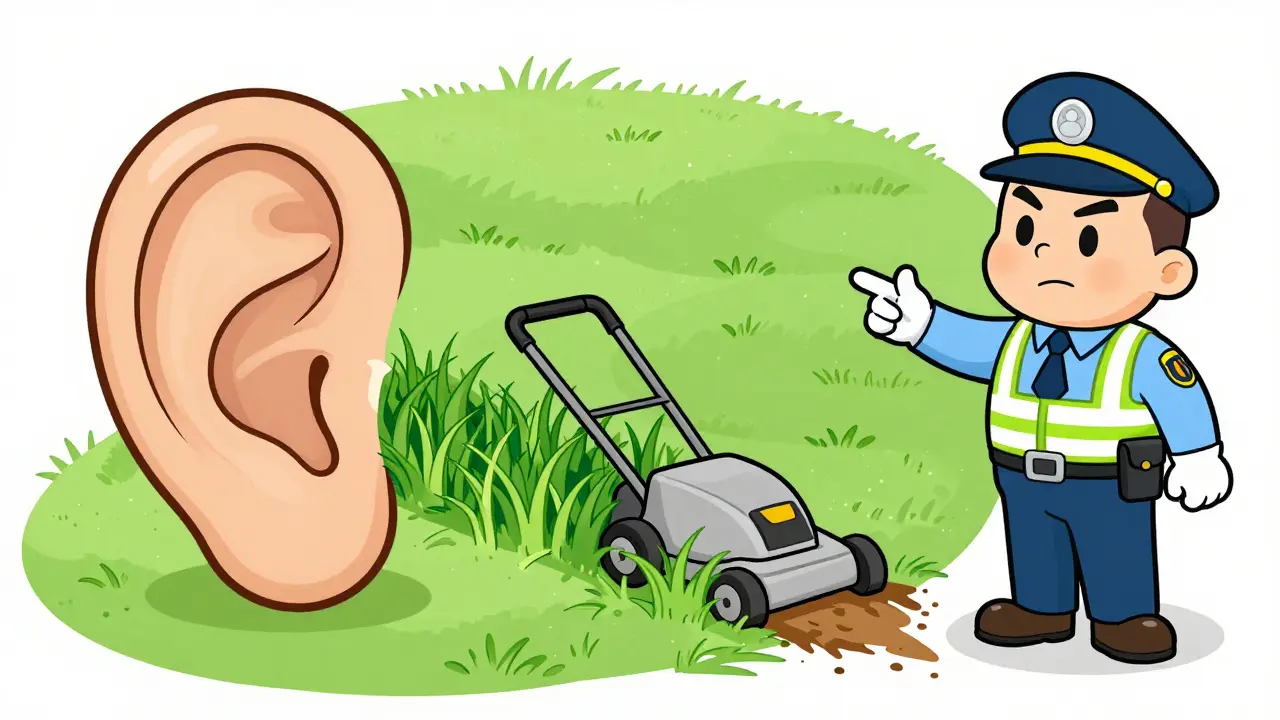
Your ears are designed to handle everyday sounds-conversations, traffic, birds chirping. But industrial noise is different. When sound pressure exceeds safe limits, it physically tears apart the tiny stereocilia (hair cells) inside the cochlea. Think of these cells like grass on a lawn mower path; once cut down, they don’t grow back. Over time, this damage leads to difficulty understanding speech, especially in noisy environments, and often causes tinnitus-a constant ringing or buzzing in the ears.
Damage doesn't happen overnight for everyone. It is cumulative. You might not notice hearing loss until years have passed. By then, the injury is permanent. The Centers for Disease Control and Prevention (CDC) estimates that 22 million U.S. workers are exposed to potentially damaging noise annually. According to the Bureau of Labor Statistics, NIHL remains the second most common occupational illness in the United States.
| Symptom | What It Feels Like | When to Act |
|---|---|---|
| Tinnitus | Ringing, buzzing, or hissing in ears after shift | Immediately report to supervisor |
| Muffled Hearing | Sound seems dull or distant, like being underwater | Seek audiometric testing |
| Speech Difficulty | Understanding words in noisy rooms becomes hard | Consult an audiologist |
| Earmuff Effect | Feeling like others are mumbling even when speaking normally | Check HPD fit and hearing status |
Understanding Decibels and Exposure Limits
You’ve probably heard the number 85 dBA thrown around in safety meetings. But what does it actually mean? Decibels (dB) measure sound intensity. Because human hearing is logarithmic, small increases in dB represent huge jumps in energy. A 3-dB increase doubles the noise energy. That’s why exposure time must be halved for every 3-dB rise.
Here’s where regulations get tricky. The Occupational Safety and Health Administration (OSHA) sets the permissible exposure limit (PEL) at 90 dBA for an 8-hour workday. However, OSHA requires hearing conservation programs starting at 85 dBA. The National Institute for Occupational Safety and Health (NIOSH), which provides scientific recommendations, argues 90 dBA is too high. NIOSH recommends an 85 dBA limit with a 3-dB exchange rate. This means if noise hits 88 dBA, your maximum safe exposure drops to just 4 hours.
Dr. Thais Morata, a leading audiologist at NIOSH, warns that "occupational noise exposure limits do not prevent NIHL." Even at 85 dBA, some workers will experience hearing damage over a career. The European Union takes this seriously, setting action values at 80 dBA under Directive 2003/10/EC. California recently amended its Title 8 regulations in 2023 to require engineering controls before relying solely on personal protective equipment.
The Hierarchy of Controls: What Actually Works
Many companies rely heavily on earplugs. While better than nothing, personal protective equipment (PPE) is the least reliable method in the hierarchy of controls. Why? Because people forget to wear them, insert them incorrectly, or remove them to talk to coworkers. Studies show only 38% of workers in high-noise industries consistently wear hearing protection throughout their shift.
Effective prevention starts higher up the ladder:
- Elimination/Substitution: Remove the noise source entirely. Replace loud machinery with quieter models. NIOSH’s "Buy-Quiet" initiative lists over 1,200 low-noise equipment alternatives that reduce exposure by 3-15 dBA.
- Engineering Controls: Isolate the noise. Use acoustic enclosures, sound barriers, or dampening materials. In mining operations, enclosing drilling equipment reduced noise from 98 dBA to 82 dBA, significantly lowering worker fatigue and improving concentration.
- Administrative Controls: Limit exposure time. Rotate workers so no one spends more than a few hours in high-noise zones. Maintain equipment regularly-loose parts create unnecessary vibration and noise.
- PPE (Last Resort): When other methods aren’t feasible, use Hearing Protection Devices (HPDs). Custom-molded earplugs provide consistent 25-30 dB attenuation. Foam plugs often fail in real-world use due to improper insertion, yielding only 15-20 dB despite lab ratings of 30+ dB.
Building a Hearing Conservation Program
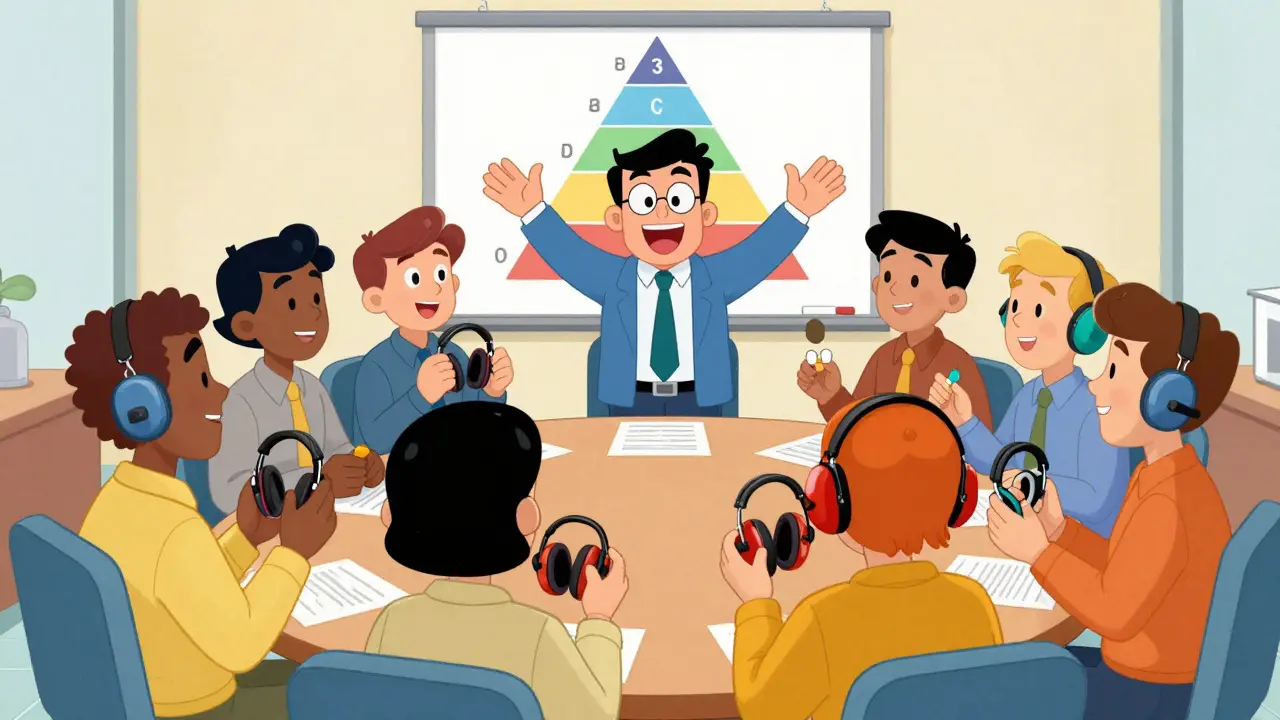
If your workplace averages 85 dBA or higher, OSHA mandates a comprehensive hearing conservation program. This isn’t just about handing out foam plugs. It requires five key steps:
- Noise Monitoring: Use calibrated Type 2 sound level meters to map noise levels across the facility. Update maps whenever new equipment is installed.
- Audiometric Testing: Conduct baseline hearing tests within six months of initial exposure. Annual follow-ups test frequencies at 500, 1000, 2000, 3000, 4000, and 6000 Hz. A "standard threshold shift"-defined as a 10 dB worsening at 2000, 3000, and 4000 Hz-triggers mandatory retesting and medical referral.
- Hearing Protection Provision: Offer multiple types of HPDs. Fit-test each employee using Real Ear Attenuation at Threshold (REAT) measurements to ensure proper seal.
- Training: Spend 10-15 minutes teaching proper insertion techniques. Research shows 75% of workers initially insert foam earplugs incorrectly. Training should cover how noise damages hearing, how to use devices, and the purpose of audiometry.
- Recordkeeping: Maintain logs of noise measurements, audiograms, and training sessions for at least two years.
Management commitment is crucial. Data from the CDC shows 92% of successful programs feature active leadership involvement. Workers who participate in selecting their preferred HPDs show an 87% success rate in compliance. Conversely, cheap, uncomfortable plugs lead to discomfort complaints in 67% of users, driving non-compliance.
Emerging Technologies and Future Standards
Technology is changing how we monitor and protect hearing. Smart HPDs like the 3M PELTOR TS3+ now record exposure data automatically, helping employers prove compliance without manual logs. Some devices allow ambient sound passthrough so workers can hear warnings while still protecting against harmful peaks.
Research at the University of Southern California suggests biomarkers may soon detect early-stage NIHL before traditional audiograms show changes. This could revolutionize screening, catching damage before it becomes permanent. Meanwhile, regulatory pressure is mounting. OSHA’s 2023 National Emphasis Program targets construction, manufacturing, and agriculture sectors with thousands of inspections focused on hearing conservation gaps.
The economic argument for prevention is strong. Companies spend $150-$300 per employee annually on full hearing programs. Yet NIOSH calculates a $5.50 return for every dollar invested through reduced workers’ compensation claims. With average claim costs reaching $14,700, prevention pays for itself quickly.
Is noise-induced hearing loss covered by workers' compensation?
Yes, in most jurisdictions, NIHL is compensable if linked to occupational exposure. However, proving causality can be difficult without documented baseline audiograms and consistent monitoring records. Employers who maintain thorough hearing conservation program documentation make claims processing smoother for injured workers.
Can earplugs completely prevent hearing loss?
Properly fitted custom-molded earplugs can reduce noise exposure by 25-30 dB, bringing many hazardous environments below dangerous thresholds. However, standard foam plugs often provide less protection due to incorrect insertion. Earplugs alone are insufficient if engineering controls are ignored. They work best as part of a layered approach including administrative controls and regular audiometric testing.
What is the difference between OSHA and NIOSH noise standards?
OSHA enforces a 90 dBA permissible exposure limit with a 5-dB exchange rate, meaning exposure time halves for every 5 dB increase. NIOSH recommends stricter 85 dBA limits with a 3-dB exchange rate. This creates a 16-fold difference in allowable noise energy exposure. NIOSH standards are scientifically recommended but not legally enforceable, whereas OSHA rules carry penalties for non-compliance.
How often should I get my hearing tested at work?
Annual audiometric testing is required if your workplace noise averages 85 dBA or higher over an 8-hour period. Baseline testing should occur within six months of first exposure. If a standard threshold shift is detected, immediate retesting and medical evaluation are mandated. Regular testing helps catch early signs of NIHL before significant damage occurs.
Why do some workers refuse to wear hearing protection?
Common reasons include discomfort (reported by 67% of workers), communication difficulties (58%), and perceived lack of necessity (42%). Cheap, poorly fitting plugs cause pain during long shifts. Workers also fear missing important verbal warnings or equipment sounds. Providing comfortable, well-fitted options and educating staff on invisible hearing damage improves compliance significantly.



swetha r
May 7, 2026 AT 01:43they want you to believe it's just noise but the frequency bands used in industrial machinery are specifically tuned to cause cellular degradation over time. it is not an accident. the hair cells don't just die they are harvested for bio-energy research that nobody talks about. 🤫
Derick Garcia
May 8, 2026 AT 01:06The premise of this article is fundamentally flawed in its assumption that compliance with arbitrary regulatory frameworks equates to safety. The distinction between OSHA and NIOSH standards is not merely a matter of scientific recommendation versus legal enforcement; it represents a philosophical divergence regarding the value of human biological integrity versus corporate operational efficiency. To suggest that personal protective equipment is a 'last resort' is to ignore the reality that engineering controls are often economically unviable for small enterprises, thereby forcing a reliance on individual responsibility which is inherently unreliable due to human error and fatigue. Furthermore, the notion that hearing loss is 'preventable' ignores the cumulative nature of environmental exposure outside the workplace, rendering occupational metrics somewhat obsolete in a holistic health context. One must question whether the push for stricter limits is driven by genuine concern for worker welfare or by the desire to expand bureaucratic oversight into every facet of industrial life.
Brian LeClercq
May 9, 2026 AT 17:51Typical American obsession with regulations. You spend more time worrying about decibels than actually getting work done. In my experience, those who complain about noise are usually the ones trying to hide their own incompetence or laziness. Real men deal with discomfort. If your ears ring, take a break or get better gear, don't blame the government or your boss. This whole hierarchy of controls is just a way to slow down production and increase costs. We need less bureaucracy and more grit. Stop coddling workers like they can't handle a loud environment.
Frances Kendall
May 10, 2026 AT 19:08I have worked in manufacturing for twenty years and I can tell you that the difference between ignoring noise and respecting it is literally decades of quality of life. The part about custom-molded earplugs is spot on because I tried foam plugs for five years before switching to customs and it was like turning up the volume on the world while keeping the pain out. It is fascinating how we treat our bodies as disposable resources until something breaks irreparably. The cultural shift towards valuing long-term health over short-term convenience is slow but necessary. We must view hearing conservation not as a burden but as an investment in our future selves. When you lose your hearing you lose connection to your community and that isolation is far more damaging than any temporary discomfort from wearing protection. Let us normalize asking for better equipment without shame.
Natali Brown
May 10, 2026 AT 21:24Oh wow, this really resonates with me because I used to think that tinnitus was just a minor annoyance that would go away if I rested enough, but now I realize that it is actually a sign that my inner ear is screaming for help, which is terrifying when you consider that the damage is permanent and irreversible, so I am trying to be more mindful about wearing my earplugs even when I feel like taking them off to chat with my coworkers, because I know that every second counts in preserving what little hearing I have left, and I hope that others reading this will also start to see the importance of these small daily actions that can make such a huge difference in their long-term well-being, especially since the technology is improving and there are so many options available now that are comfortable and effective, so there is really no excuse anymore for neglecting this aspect of occupational health, and I encourage everyone to talk to their supervisors about getting proper fit tests because it can change your life. 😊✨
Abhimanyu Pandey
May 11, 2026 AT 14:54You are all naive!;; The real reason companies resist engineering controls is not cost;; it is control;; They want you dependent on their cheap foam plugs;; which fail consistently;; creating a cycle of injury;; then compensation claims;; then more data collection;; Do you not see the pattern?;; The audiometric testing is a surveillance tool;; tracking your biological decline;; to predict when you will become a liability;; It is a conspiracy to keep workers docile;; afraid of losing their jobs;; rather than demanding true safety;; Wake up!!;
David Rangkhal
May 12, 2026 AT 18:49interesting points here. i think we should focus on mutual respect in the workplace. if someone asks you to lower the noise please listen. peace is important. 🙏
Sarah Kwiatkowski
May 13, 2026 AT 02:49This is such a vital conversation! I love how the article highlights that prevention is nearly 100% possible. It gives me hope that we can create safer environments for everyone. As someone who coaches teams on wellness, I always emphasize that small habits compound over time. Wearing ear protection might seem like a tiny step, but it protects your ability to connect with loved ones later in life. Let’s encourage each other to prioritize our health without judgment. You are doing great by even reading this and thinking about your safety! 💪
Kelsey Thomas
May 14, 2026 AT 22:28Hey everyone! 👋 Just wanted to add that smart HPDs are a game changer. I started using ones that log my exposure and it takes the guesswork out of compliance. It feels good to know I’m protecting myself properly. Has anyone else tried the newer models with passthrough? It helps so much with communication on site. Let’s keep supporting each other in staying safe! 🌟👂