
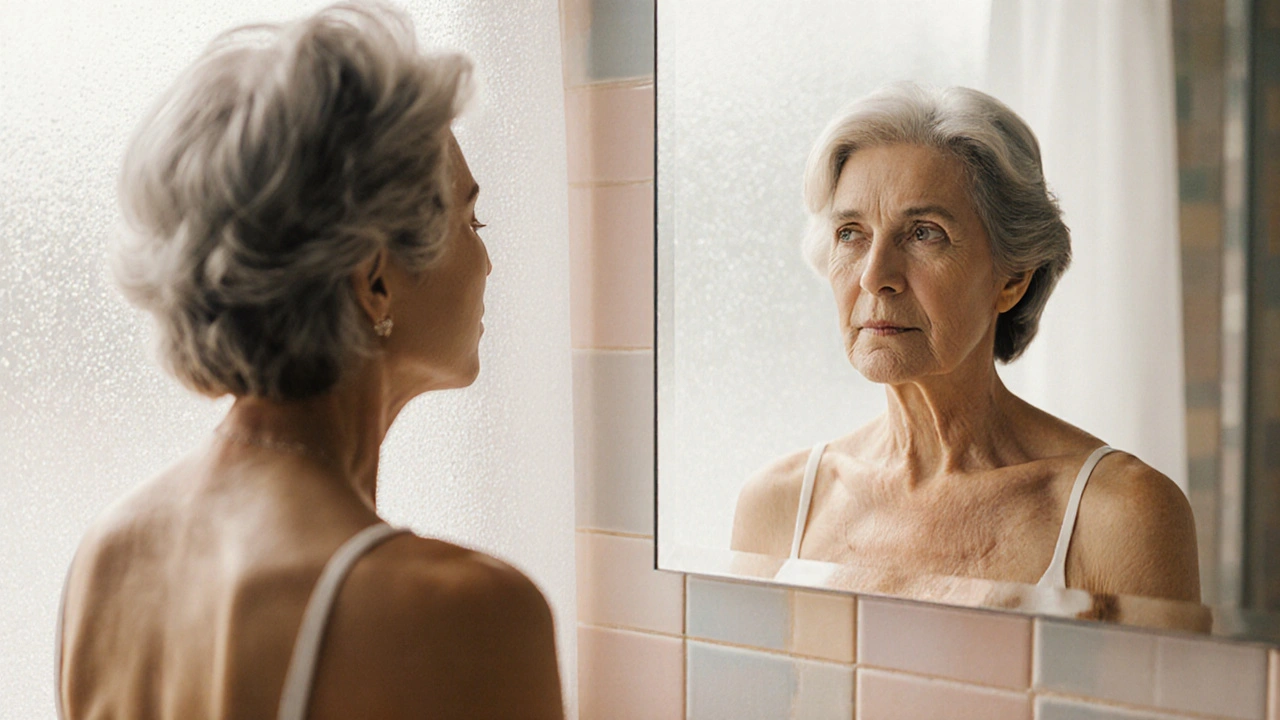
When Menopause begins, hormone shifts ripple through every part of the body, the skin is often the first place people notice the change. Skin is the body’s outer barrier and a visual indicator of internal health loses elasticity, dries out, and may develop fine lines faster than before. Understanding why these changes happen and what practical steps you can take will let you keep that fresh, radiant look well into the next decade.
Key Takeaways
- Estrogen decline reduces collagen and natural moisture, causing dryness and loss of firmness.
- Focus on gentle cleansing, barrier‑boosting moisturizers, and daily sunscreen.
- Ingredient power‑houses for this stage include hyaluronic acid, antioxidants, retinol, and peptide‑based serums.
- Hydrating foods, regular exercise, and stress‑management are as vital as any cream.
- Consult a dermatologist if you notice sudden pigmentation, persistent irritation, or want personalized product advice.
How Menopause Changes Your Skin
During the reproductive years, estrogen helps the skin stay plump by stimulating Collagen the structural protein that gives skin its firmness. As menopause approaches, estrogen levels can drop up to 80%, and three key skin‑related processes feel the impact:
- Reduced collagen synthesis - skin becomes thinner, lines deepen faster.
- Decreased natural lipids - the barrier loses moisture, leading to roughness and itching.
- Lower antioxidant defense - free‑radical damage piles up, accelerating age spots.
These physiological shifts explain why many women notice a dull complexion, sagging jawline, or increased sensitivity right around the 45‑55 age window.
Build a Menopause‑Friendly Skincare Routine
Think of your routine as a three‑step shield: cleanse, hydrate, protect. Each step should use ingredients that counteract the hormonal loss described above.
1. Gentle Cleanser
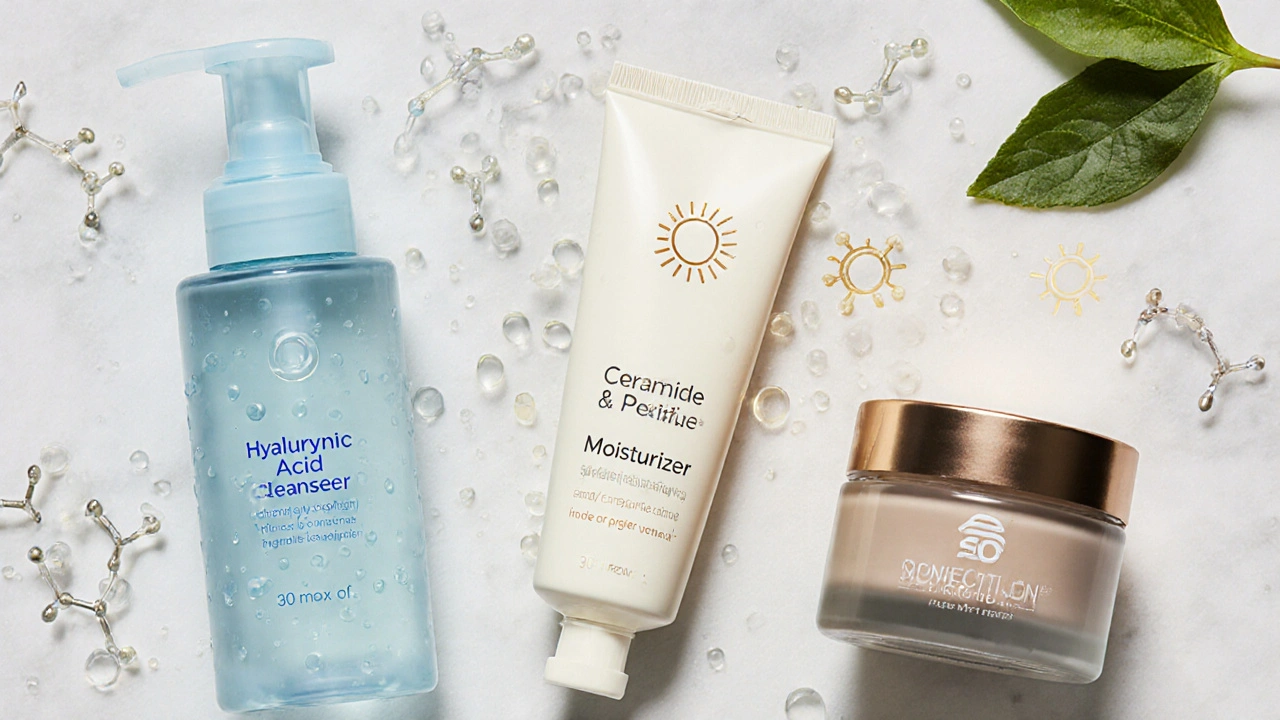
Skip harsh foaming bars that strip the skin’s natural oils. Opt for a sulfate‑free, pH‑balanced cleanser that contains Hyaluronic Acid a humectant that draws water into the epidermis. This keeps the skin hydrated even after rinsing.
2. Barrier‑Boosting Moisturizer
Look for ceramide or peptide blends. Ceramides restore the lipid matrix, while peptides signal cells to produce more collagen. A good rule of thumb: the cream should melt into the skin within 30 seconds and leave a subtle, non‑sticky finish.
3. Targeted Treatments
- Retinol (or bakuchiol for sensitive skin) - stimulates collagen turnover, smooths fine lines. Start with 0.3mg/ml two nights a week and build up.
- Antioxidant serums - vitamin C, niacinamide, or green‑tea extract neutralize free radicals caused by lower estrogen‑driven defenses.
- Peptide boosters - copper‑peptide or argireline can improve firmness without irritation.
4. Sun Protection - The Non‑Negotiable
UV radiation accelerates collagen breakdown. Use a broad‑spectrum sunscreen with SPF30 or higher every morning, regardless of cloud cover. Mineral options (zinc oxide, titanium dioxide) are less likely to irritate dry, sensitive skin.
Nutrition & Lifestyle Habits that Boost Glow
Skincare products work best when your internal environment supports them. Here are evidence‑backed habits:
- Hydrate - Aim for at least 2L of water daily; herbal teas (rooibos, chamomile) add antioxidants.
- Eat skin‑loving foods - fatty fish (omega‑3s), berries (anthocyanins), nuts (vitaminE), and leafy greens (vitaminK) all reinforce collagen and barrier function.
- Limit sugar spikes - high glycemic foods trigger advanced glycation end‑products (AGEs) that stiffen collagen fibers.
- Exercise regularly - improves circulation, delivering nutrients and oxygen to skin cells.
- Manage stress - cortisol spikes can increase oil production and break down collagen; mindfulness, yoga, or short walks help keep levels in check.
When to See a Dermatologist
If you notice any of the following, it’s time to schedule a professional appointment:
- Sudden hyperpigmentation or melasma that won’t fade with sunscreen.
- Persistent itching, burning, or rash that over‑the‑counter moisturizers don’t soothe.
- Visible loss of elasticity that feels unusually rapid.
- Desire for prescription‑strength retinoids, hormonal therapy, or laser treatments.
A dermatologist can run a skin‑type analysis, suggest targeted prescription serums, or discuss hormone‑balancing options that might complement your topical routine.
Quick Comparison of Top Ingredients for Menopausal Skin
| Ingredient | Key Benefit | How It Works | Typical Concentration |
|---|---|---|---|
| Hyaluronic Acid | Intense hydration | Draws up to 1,000× its weight in water, plumping the dermis | 0.5‑2% |
| Retinol (or Bakuchiol) | Collagen stimulation, wrinkle reduction | Promotes cell turnover and boosts fibroblast activity | 0.3‑1% |
| Peptides (Copper, Argireline) | Firmness, reduced sagging | Signal skin cells to produce new collagen and elastin | 2‑5% |
| Vitamin C (L‑Ascorbic Acid) | Brightening, antioxidant protection | Neutralizes free radicals and inhibits melanin formation | 10‑20% |
| Niacinamide | Barrier repair, even tone | Boosts ceramide production and reduces inflammation | 4‑10% |
Frequently Asked Questions
Why does my skin get drier during menopause?
Estrogen helps the skin retain moisture by supporting natural lipids. When estrogen drops, the skin barrier loses those lipids, making it harder to keep water in. A hyaluronic‑acid‑rich moisturizer can fill that gap.
Can hormone replacement therapy (HRT) improve my skin?
Some studies show low‑dose estrogen can modestly increase collagen density and improve hydration. However, HRT isn’t right for everyone; discuss risks and benefits with your doctor before starting.
Is retinol safe for sensitive menopausal skin?
Retinol can cause irritation if you’re not used to it. Start with a low concentration (0.3mg/ml) once or twice a week, pair it with a barrier‑repair moisturizer, and gradually increase frequency. Bakuchiol offers a gentler botanical alternative.
Do I need a separate night cream?
A night cream that combines ceramides, peptides, and a low‑dose retinoid can boost repair while you sleep. If your daytime moisturizer already contains these, a simple hydrating mask may be enough.
What lifestyle changes make the biggest difference?
Consistent sunscreen use, nightly hydration, a diet rich in omega‑3s and antioxidants, and regular low‑impact exercise together preserve collagen and keep the skin barrier strong. Small habits add up fast.


Shannon Amos
October 13, 2025 AT 18:59So basically my face is just a dry desert now and I’m supposed to buy 12 new creams? 😅
Wendy Edwards
October 13, 2025 AT 20:33i just started using hyaluronic acid and my skin is literally glowing like i got a free spa day from the universe 🙌 no joke, my husband asked if i got a new face lol. also, drink water like its your job. i used to hate it but now i carry a giant bottle and i feel like a hydrated queen. also, stop eating donuts. it’s not a lifestyle, it’s a crime against collagen.
Gina Banh
October 14, 2025 AT 00:19Retinol is not optional. If you’re skipping it because your skin stings, you’re using too much too fast. Start with 0.3% twice a week, layer a ceramide cream over it, and wait 3 weeks. Your skin will thank you. Also, sunscreen isn’t a suggestion-it’s your skin’s seatbelt. Skip it and you’re just speeding toward wrinkles.
Ryan C
October 15, 2025 AT 06:45Actually, bakuchiol isn’t a true retinol alternative-it doesn’t activate the same nuclear receptors. You’re just trading efficacy for less irritation. Also, SPF 30 is a minimum. If you’re not using SPF 50+, you’re wasting your time. And no, ‘mineral’ doesn’t mean ‘safe’-some zinc oxide formulations are comedogenic. Check the particle size.
Dan Rua
October 16, 2025 AT 23:24Love this breakdown! I’ve been using niacinamide for 6 months and my redness is gone. Also, I started walking 30 mins every morning-my skin looks like it got a glow-up from the inside. Small changes, big results. 🙏
Mqondisi Gumede
October 17, 2025 AT 15:11Why are we all just accepting this as normal? Women in my village in South Africa still have glowing skin at 70. This is a capitalist scam to sell you overpriced serums. The real solution? Stop eating processed food and get outside. No cream fixes a life lived indoors.
Douglas Fisher
October 19, 2025 AT 06:16Hydration isn’t just about water-it’s about electrolytes. I started adding a pinch of sea salt to my water, and my skin stopped flaking. Also, magnesium glycinate at night helps with cortisol. And yes, I’ve tried everything. This is science.
Albert Guasch
October 19, 2025 AT 21:19It is imperative to recognize that the physiological downregulation of estrogenic signaling cascades directly impacts dermal fibroblast activity, thereby compromising structural integrity. Consequently, a multimodal intervention strategy encompassing topical bioactive agents, systemic nutritional optimization, and photoprotection is not merely advisable-it is clinically indicated.
Michael Collier
October 20, 2025 AT 07:02Thank you for this thoughtful and well-researched guide. As someone who works with women over 45 in wellness coaching, I’ve seen how overwhelming this transition can be. Many feel like their skin has betrayed them. The key is not perfection-it’s consistency. Even just three steps-gentle cleanse, moisturize, SPF-can make a measurable difference over time. And please, don’t let the noise of 20-step routines make you feel like you’re failing. You’re not.
Deirdre Wilson
October 20, 2025 AT 11:27I tried the peptide serum and now my jawline looks like it remembered it had a shape. Like, I caught myself in the mirror and went ‘wait, is that me?’ It’s weird to feel like your face is suddenly your friend again. Also, I eat berries like they’re candy now. No regrets.
Cynthia Boen
October 22, 2025 AT 02:44Ugh, another ‘menopause glow’ article. I’m 52 and my skin looks like crumpled parchment. None of this works. Just admit it-aging sucks and no cream fixes that.
Amanda Meyer
October 22, 2025 AT 23:03What about the psychological toll? I’ve spent years trying to ‘fix’ my skin, but the real issue is feeling invisible. Maybe the glow isn’t in the serum-it’s in the self-acceptance. Just saying.
Damon Stangherlin
October 23, 2025 AT 05:26Just wanted to say I used to hate sunscreen because it felt greasy, but I switched to a tinted zinc one and now I don’t even notice it. Also, I started drinking green tea instead of coffee in the afternoon and my skin stopped breaking out. Small wins, right?
hannah mitchell
October 23, 2025 AT 06:37My dermatologist said to use ceramides and I thought it sounded like a cereal. Turns out it’s magic. My skin hasn’t been this calm in 10 years. Also, I stopped washing my face with hot water. Game changer.
stephen riyo
October 24, 2025 AT 12:34Why are we all just buying into this? I’ve been using olive oil on my face since I was 16 and I’m 58. No one told me I needed ‘peptides’ or ‘retinol’-I just ate good food, slept, and didn’t stress. Also, I’ve never worn sunscreen and I’m not dead yet.
Bethany Buckley
October 24, 2025 AT 19:38Let’s be honest-most of these ‘expert’ recommendations are funded by L’Oréal. Bakuchiol? It’s a plant extract with one 2017 pilot study. Retinol? Irritating and unstable. The real breakthrough? Estrogen patches. But no one wants to talk about that because it’s not ‘natural.’
Stephanie Deschenes
October 24, 2025 AT 23:15Don’t forget: consistency > complexity. One good moisturizer with ceramides + daily SPF + drinking water > 7 serums you use once and forget. And if you’re feeling overwhelmed, start with just one thing. Just one. You’ve got this.
Jesús Vásquez pino
October 25, 2025 AT 23:47Why do all these guides assume we’re white women with disposable income? My cousin in Texas uses coconut oil and a $5 moisturizer from Walmart and her skin looks better than mine after spending $300 on ‘medical-grade’ stuff. This isn’t about science-it’s about marketing.
Ginger Henderson
October 26, 2025 AT 07:54So… you’re telling me I need to stop eating cake to keep my skin from looking like a raisin? Okay, I’ll just keep my cake and my wrinkles. Worth it.
Jaspreet Kaur
October 27, 2025 AT 07:16Life is a cycle and skin is just a mirror. When I stopped chasing youth and started honoring my body’s changes I found peace. The glow isn’t in the bottle-it’s in the breath you take when you look in the mirror and say thank you not fix