
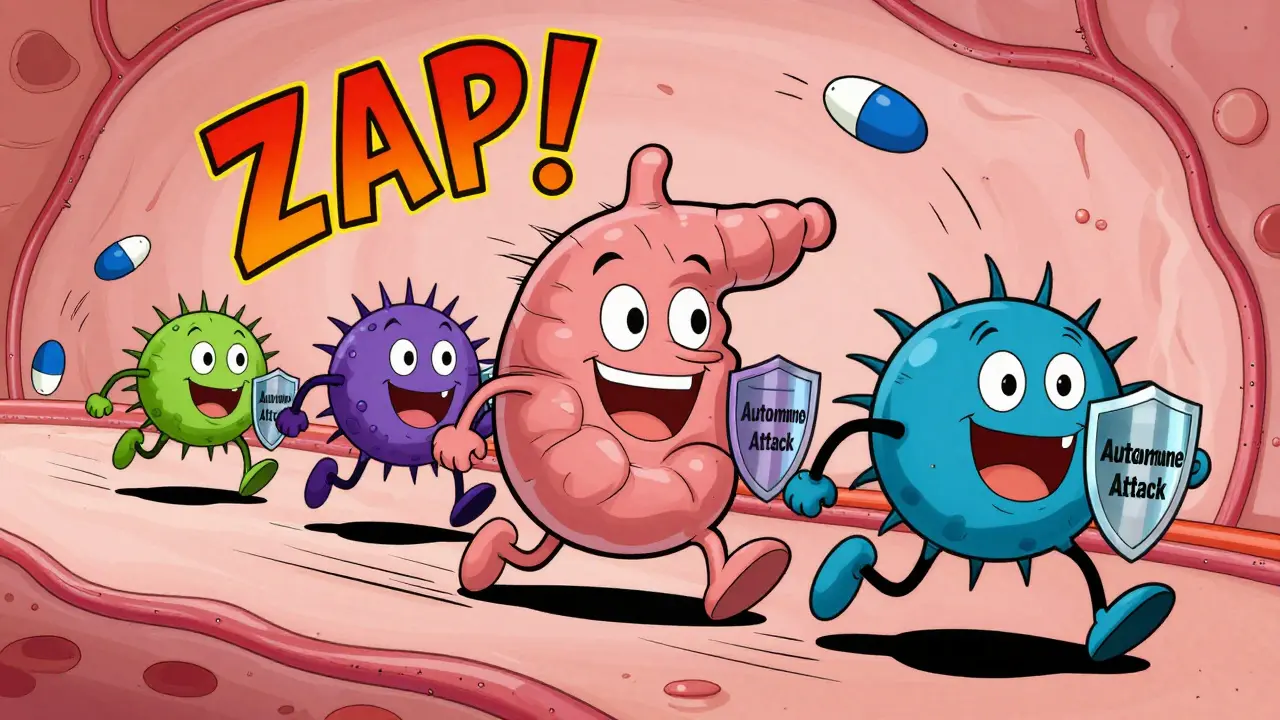
Type 1 diabetes isn't just about high blood sugar. It's an autoimmune war happening inside the pancreas, where the body's own immune system attacks and kills the insulin-producing beta cells. This isn't a slow decline-it's a targeted destruction that leaves the body with almost no ability to make insulin. Without insulin, glucose can't enter cells for energy, and the body starts breaking down fat, leading to dangerous conditions like diabetic ketoacidosis. This isn't a lifestyle issue. It's not caused by eating too much sugar. It's an autoimmune disease, and managing it means understanding the biology behind the attack.
How the Immune System Turns Against the Pancreas
The pancreas doesn’t just make insulin. It has clusters of cells called islets, and inside those islets are beta cells. These cells are the only ones in the body that produce insulin. In type 1 diabetes, the immune system misidentifies these beta cells as foreign invaders. T-cells, which are supposed to protect you from viruses, instead swarm the islets and destroy them. This process, called insulitis, can start years before anyone notices symptoms.Researchers have found specific targets the immune system goes after: insulin itself, GAD65, IA-2, and ZnT8. These are proteins inside the beta cells. When the body makes antibodies against them-called islet autoantibodies-it’s a clear sign the autoimmune attack is underway. Blood tests for these antibodies can detect type 1 diabetes before symptoms appear. That’s why some kids with a family history get screened. Finding these antibodies early means you might catch the disease in Stage 1 or Stage 2, before full-blown diabetes kicks in.
Genetics play a big role. People with HLA-DR3 or HLA-DR4 gene variants have a 20 to 30 times higher risk. But genes alone don’t cause it. Something triggers the attack. Viruses, especially coxsackievirus B, are suspected culprits. Studies show people who later develop type 1 diabetes often had enterovirus infections months before diagnosis. Environmental factors like diet, gut health, and even vitamin D levels might influence how the immune system reacts. The exact trigger isn’t known yet, but the evidence points to a mix of genes and environment.
Stages of Type 1 Diabetes: Before Symptoms Show
Type 1 diabetes doesn’t just appear overnight. The TrialNet consortium defined three clear stages:- Stage 1: Two or more autoantibodies are present, but blood sugar is still normal. No symptoms. This stage affects about 0.4% of the general population.
- Stage 2: Autoantibodies are still there, but now blood sugar is starting to rise. Still no symptoms. About 0.15% of people are here.
- Stage 3: Symptoms appear-excessive thirst, frequent urination, weight loss. Blood sugar is high. Insulin is now required.
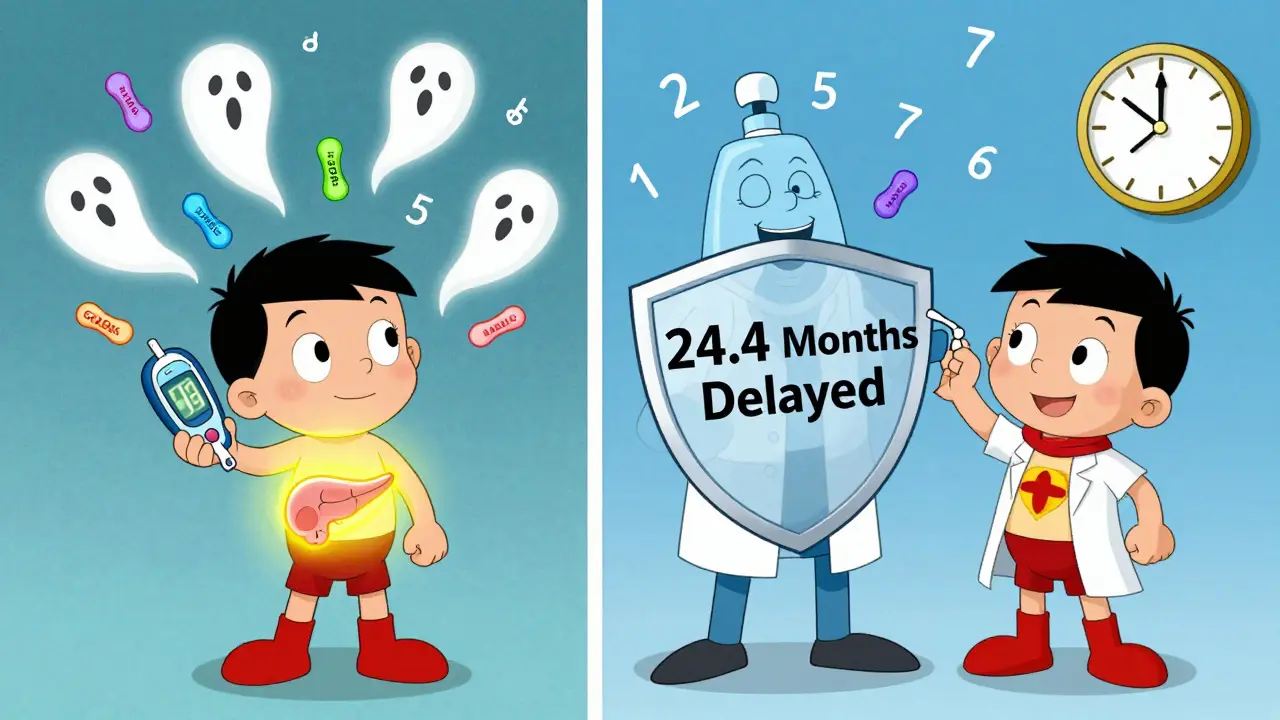
This staging system changes everything. It means you can intervene before someone needs insulin. That’s where teplizumab (Tzield) comes in. It’s the first FDA-approved drug that can delay the onset of Stage 3. In the PROTECT trial, it pushed back diagnosis by nearly 2.5 years on average. That’s not a cure, but it’s a massive win. More time without insulin means more time for the body to hold onto its own beta cells.
Why Insulin Alone Isn’t Enough
People with type 1 diabetes need insulin. That’s non-negotiable. But insulin therapy doesn’t fix the autoimmune attack. It just replaces what’s been lost. That’s why many people still struggle with blood sugar swings, hypoglycemia, and long-term complications.Modern insulin therapy is far more precise than it used to be. Rapid-acting analogs like insulin aspart or lispro mimic meals better. Long-acting insulins like glargine U-300 last longer and have fewer peaks. Most people now use multiple daily injections (MDI) or insulin pumps. But even the best insulin can’t perfectly mimic a healthy pancreas. That’s why continuous glucose monitors (CGMs) like the Dexcom G7 are now standard. These devices give real-time data, alerting you when blood sugar is dropping or rising too fast. Studies show CGMs reduce HbA1c by 0.4% to 0.6% and cut hypoglycemic events by nearly half.
Then there’s the closed-loop system-the “artificial pancreas.” Devices like Tandem’s Control-IQ automatically adjust insulin delivery based on CGM readings. In one 2022 JAMA study, users spent 71-74% of their time in the target glucose range (70-180 mg/dL). That’s a huge jump from 51-55% with traditional pumps. For parents of kids with type 1, this means fewer nighttime alarms and more sleep. For adults, it means less mental load.
The Hidden Connection: Autoimmune Pancreatitis and Type 1 Diabetes
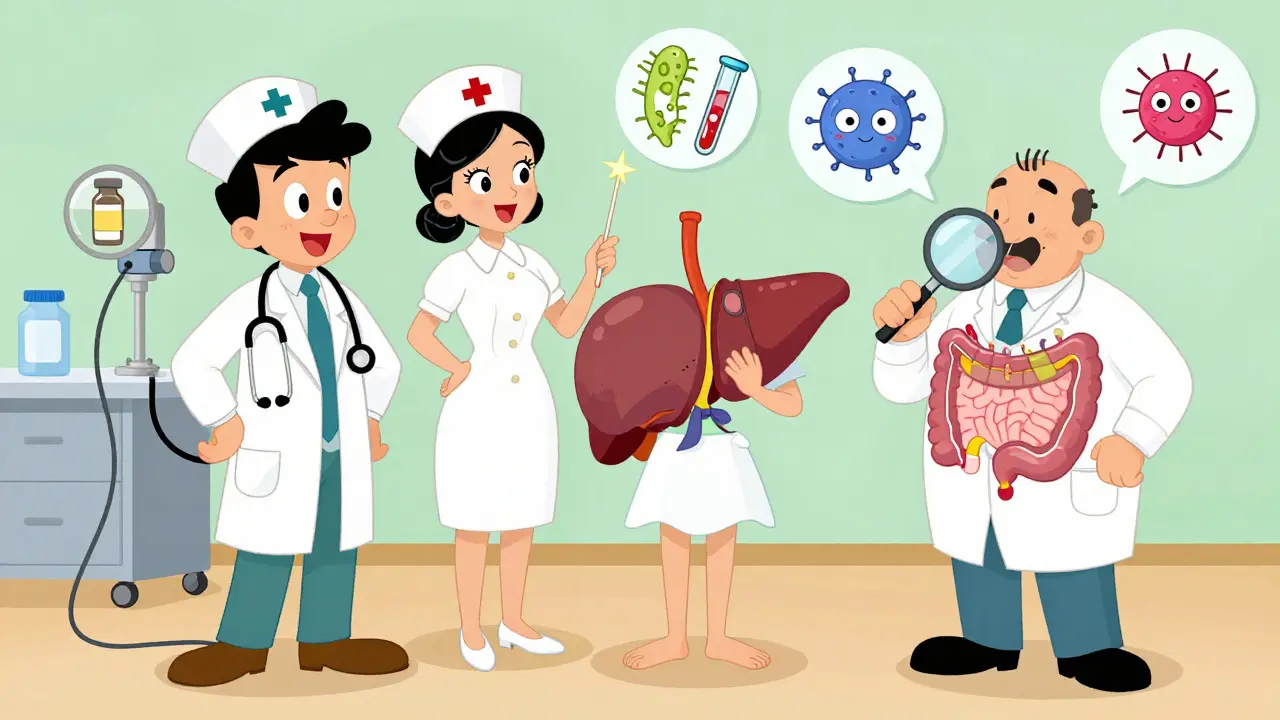
Most people don’t realize type 1 diabetes can be part of a bigger autoimmune picture. In rare cases-about 1 in 300-people with type 1 diabetes also develop autoimmune pancreatitis (AIP). This is a different condition. Instead of attacking the insulin-producing islets, the immune system attacks the exocrine pancreas-the part that makes digestive enzymes.AIP has two types. Type 1 is linked to high levels of IgG4 antibodies and often responds well to steroids. Type 2 is tied to inflammatory bowel disease. When both conditions happen together, it’s a red flag. The patient might have abdominal pain, bloating, or malabsorption-symptoms that look nothing like typical diabetes. If a person with type 1 diabetes suddenly has trouble digesting food or losing weight despite eating enough, doctors need to check for AIP. A simple blood test for IgG4 and an MRI of the pancreas can reveal it.
Managing both conditions is tricky. Steroids used for AIP can spike blood sugar, sometimes requiring a 30-50% increase in insulin doses. That’s why endocrinologists and gastroenterologists need to work together. The 2023 ADA guidelines now recommend checking for pancreatic enzyme deficiency in type 1 patients with persistent GI symptoms. About 5-10% of long-term type 1 patients develop this. Enzyme replacement therapy can restore digestion and prevent nutrient loss.
Emerging Therapies: Beyond Insulin
The future of type 1 diabetes isn’t just better insulin-it’s stopping the immune attack and saving beta cells.Teplizumab was the first breakthrough, but it’s only for Stage 2. Other drugs are in the pipeline. Abatacept, originally used for rheumatoid arthritis, slowed beta-cell decline by 59% in recent-onset type 1 patients over two years. Verapamil, a blood pressure medication, showed surprising promise in a 2022 Cell Metabolism trial: patients preserved 30% more of their own insulin production after 12 months. It’s not a miracle cure, but it’s a step.
Then there’s stem cell therapy. Vertex Pharmaceuticals’ VX-880 trial gave 12 people with type 1 diabetes lab-grown islet cells. At 90 days, 89% were insulin-free. Not all of them stayed that way long-term, but it’s proof the body can accept new, functional beta cells. The next phase will test larger groups and longer outcomes.
Even the gut microbiome is getting attention. A 2022 Nature Microbiology study found that people with type 1 diabetes have less of a beneficial gut bacteria called Faecalibacterium prausnitzii. This bug produces butyrate, which helps calm inflammation. Early trials are testing probiotics and fiber supplements to see if changing gut bacteria can slow disease progression.
What This Means for Daily Life
Managing type 1 diabetes today is more complex than ever-but also more manageable. You need to think beyond blood sugar numbers. You need to consider:- Is your insulin delivery system working? Are you using a CGM or pump?
- Have you been tested for autoantibodies if you’re at risk?
- Do you have unexplained GI symptoms? Could it be autoimmune pancreatitis?
- Are you aware of new therapies like teplizumab if you’re in Stage 2?
- Is your care team including both an endocrinologist and, if needed, a gastroenterologist?
Insulin is still the foundation. But now, the goal is to preserve what’s left of the pancreas, delay complications, and improve quality of life. That means staying informed, asking questions, and working with a team that understands the full scope of this autoimmune disease.
Key Numbers to Remember
- 1.25 million Americans live with type 1 diabetes (2023 ADA data).
- Less than 5% of normal insulin production remains at diagnosis.
- Teplizumab delays diagnosis by 24.4-29.8 months on average.
- CGMs reduce HbA1c by 0.4-0.6% and cut hypoglycemia by 40-50%.
- Artificial pancreas systems achieve 71-74% time-in-range.
- 89% of participants in Vertex’s VX-880 trial became insulin-free at 90 days.
- 5-10% of long-term type 1 patients develop pancreatic enzyme deficiency.
Can type 1 diabetes be reversed?
No, type 1 diabetes cannot be reversed yet. The immune system has already destroyed most of the insulin-producing beta cells. However, new therapies like teplizumab can delay progression, and stem cell transplants have restored insulin production in some patients. These aren’t cures, but they’re steps toward functional recovery. The focus now is on preserving remaining beta cells and protecting new ones.
Is type 1 diabetes the same as autoimmune pancreatitis?
No. Type 1 diabetes attacks the endocrine pancreas (islet cells that make insulin). Autoimmune pancreatitis attacks the exocrine pancreas (cells that make digestive enzymes). They are separate diseases, but they can happen together in rare cases. When they do, it’s called a broader autoimmune pancreatic syndrome. Diagnosis requires different tests: autoantibodies for type 1 diabetes, IgG4 levels and imaging for autoimmune pancreatitis.
Why do some adults with type 1 diabetes get misdiagnosed as type 2?
Because type 1 diabetes in adults-sometimes called LADA (Latent Autoimmune Diabetes in Adults)-progresses slowly. These patients may still produce a little insulin, look overweight, and respond to oral meds at first. But they’ll eventually need insulin. Studies show 12% of adults with type 1 are initially misdiagnosed as type 2, leading to delayed insulin therapy. Testing for autoantibodies (GAD65, IA-2) can prevent this mistake.
How do I know if I’m in Stage 1 or Stage 2 of type 1 diabetes?
You need a blood test. Stage 1 means you have two or more islet autoantibodies (like GAD65 or ZnT8) but normal blood sugar. Stage 2 means those same antibodies are present, but your blood sugar is starting to rise-still no symptoms. These stages are usually found in people with a family history of type 1 diabetes or through research programs like TrialNet. Routine screening isn’t common, but if you’re at risk, ask your doctor about antibody testing.
Can diet or supplements cure type 1 diabetes?
No. No diet, supplement, or alternative therapy can cure type 1 diabetes. While a healthy diet helps manage blood sugar, and some studies look at vitamin D or omega-3s for immune modulation, none have proven to stop the autoimmune attack. Be wary of claims that promise a cure. The only proven treatments are insulin, CGMs, insulin pumps, teplizumab (for Stage 2), and emerging therapies like stem cell transplants-all under medical supervision.
Greg Scott
February 20, 2026 AT 03:49Man, I wish I’d known about Stage 1 and 2 years ago. My sister got diagnosed in Stage 3 after passing out at work. If they’d tested her when her cousin got it, maybe she’d still have some beta cells left. Teplizumab sounds like a game-changer for families with history.
Courtney Hain
February 21, 2026 AT 08:37Let me tell you something they don’t want you to know. The pharmaceutical industry is *literally* funding the entire Type 1 narrative because insulin is a $100 billion market. They don’t want a cure - they want lifelong customers. Teplizumab? A placebo with a fancy label. Stem cell trials? Only funded because they can charge $500k per patient later. And don’t get me started on how the FDA ignores natural immune modulators like vitamin D, zinc, and turmeric because they can’t be patented. This whole system is rigged. I’ve been tracking antibody studies since 2017 - they’ve been suppressing the real data. The real cause? GMOs, fluoride, and 5G. It’s all connected. Read the studies from the 80s. They knew. They just buried it.
Tommy Chapman
February 23, 2026 AT 05:39Why are we even talking about this? If you’re too lazy to eat right and take care of yourself, don’t blame the immune system. Type 1 is just type 2 with a fancy name. People need to stop being soft. I’ve seen kids with this condition run marathons. You think insulin is hard? Try being a soldier in Afghanistan with no meds. We’re coddling people here.
Marie Crick
February 23, 2026 AT 23:09This isn't science. It's a marketing brochure.
Irish Council
February 24, 2026 AT 16:12Coxy B virus? Nah. It's the vaccines. I saw the data. They inject the spike protein into kids' pancreases. The antibodies? They're not autoantibodies. They're anti-vaccine antibodies. The CDC buried the graphs. I have screenshots.
Ellen Spiers
February 25, 2026 AT 07:59The semantic precision of this article is commendable, yet its structural coherence is undermined by a persistent conflation of pathophysiological mechanisms. The assertion that 'insulin therapy doesn't fix the autoimmune attack' is tautological, as substitution therapy, by definition, cannot modulate etiology. Moreover, the invocation of 'autoimmune pancreatitis' as a comorbid entity lacks epidemiological nuance - IgG4-related disease is not a systemic autoimmune phenomenon in the classical sense, and its association with T1D remains anecdotal. The statistical framing of '89% insulin-free' in the VX-880 trial is misleading without qualification of transient engraftment and immunosuppressive burden. One might posit that this piece functions less as a clinical update and more as a venture capital prospectus.
aine power
February 26, 2026 AT 04:17Teplizumab? Cute. But let’s be real - it’s not a cure. It’s a Band-Aid with a price tag.
Arshdeep Singh
February 27, 2026 AT 13:25You know what this whole thing proves? That humans are just biological machines. The immune system is like a corrupted algorithm. Beta cells? Just code. Insulin? A faulty API. We're all just data points in a broken system. And the fact that we’re still using needles and pumps in 2024? That’s not medical progress - that’s spiritual regression. You think you’re managing diabetes? Nah. You’re just delaying the inevitable collapse of your biological firmware. The real cure? Consciousness. Meditation. Energy alignment. Once you stop seeing your body as a machine, the body stops breaking down. I’ve been in remission for 12 years. No insulin. Just vibes.
John Cena
February 27, 2026 AT 18:22I’ve got a buddy with T1D who’s been on a pump and CGM for 8 years. He’s got an A1c of 5.8, sleeps through the night, and still hikes in the Rockies. It’s not perfect, but tech + discipline = way better life than people think. Also, his doc tested him for autoantibodies when his mom got it. That’s how he caught it in Stage 1. Smart move. We should all be doing this.
Ashley Paashuis
March 1, 2026 AT 12:26Thank you for this comprehensive overview. It is refreshing to encounter a piece that not only elucidates the biological underpinnings of Type 1 Diabetes but also contextualizes emerging therapeutic interventions within a framework of clinical staging. The inclusion of Stage 1 and Stage 2 criteria, alongside the recognition of autoimmune pancreatitis as a potential comorbidity, represents a significant advancement in patient-centered care. The data supporting teplizumab’s delay of clinical onset - while not curative - underscores the importance of early intervention. Furthermore, the integration of continuous glucose monitoring and closed-loop systems as standard of care is both evidence-based and transformative. I would only suggest that future iterations include a brief discussion of psychosocial support structures, as the cognitive burden of chronic disease management is often underappreciated in clinical literature.
Maddi Barnes
March 1, 2026 AT 22:52Okay but can we talk about how wild it is that we’re now at the point where we can transplant lab-grown pancreas cells and people go insulin-free for months? 🤯 I mean, I had a cousin who got diagnosed at 12 and now she’s got a CGM that texts her mom when her sugar dips. And her doc told her to try a probiotic because her gut bacteria were trash. Like… we went from ‘inject or die’ to ‘here’s a pill that might calm your immune system and a robot that does your insulin for you’. I’m not crying, you’re crying. 😭 But seriously - if you’re at risk and your family has T1D, GET TESTED. It’s not scary. It’s just a blood draw. And if you’re already living with it? You’re not alone. The science is moving. We’re not stuck anymore. 💪
Jeremy Williams
March 2, 2026 AT 14:52As someone raised in a household where diabetes was treated as a moral failing, I’m deeply moved by the precision of this piece. The distinction between endocrine and exocrine autoimmune processes is not merely academic - it is the difference between misdiagnosis and survival. In my native country, the stigma still clings to Type 1 like smoke. But here, in this space, I see clarity. The fact that we now have tools to delay Stage 3… it’s not just science. It’s dignity. Thank you for writing this. I will share it with my community.
Jonathan Rutter
March 4, 2026 AT 11:43Look I’ve been through this for 15 years and I’ve seen every single one of these therapies. The problem isn’t the science - it’s the people. I had a doctor tell me to ‘just cut out sugar’ and ‘lose weight’ like I was some lazy junkie. Then I got diagnosed with autoimmune pancreatitis and my insulin dose went up 40% overnight. No one warned me. No one asked if I had bloating or pain. They just kept pushing more insulin. I’ve had 3 ER visits because my enzymes were off and they thought it was keto. This isn’t about tech. This is about doctors who don’t connect the dots. I’m not asking for a cure. I’m asking for someone to listen. And if you’re reading this and you have unexplained GI issues? Get your IgG4 checked. Don’t wait until you’re throwing up bile. I did. You don’t want to.
Benjamin Fox
March 6, 2026 AT 09:50USA is the only country that actually gives a damn about T1D. Other countries just let people die. Teplizumab? We got it first. Stem cells? We funded it. CGMs? Made here. If you're not in the US you're basically playing Russian roulette with your pancreas. #AmericaFirst #InsulinFreedom
Jana Eiffel
March 6, 2026 AT 22:10The reductionist framing of Type 1 Diabetes as a purely biological phenomenon obscures its deeper existential dimensions. The pancreas, as a site of both metabolic and symbolic sacrifice - the altar of insulin - invites contemplation on the human body as a temple of self-destruction. To treat it as a mere malfunction is to ignore the metaphysical rupture that occurs when the immune system, the very guardian of the self, turns against its own architecture. In this light, teplizumab is not merely a drug - it is a pause in the divine withdrawal. The question is not whether we can restore beta cells, but whether we can restore the covenant between self and body.