
Symptom Checker: Myopathy vs. Neuropathy
Disclaimer: This tool is for educational purposes and does not provide a medical diagnosis. Always consult your physician before changing your medication.
1. Where is the discomfort located?
2. What does the sensation feel like?
You start a cholesterol medication to protect your heart, but a few weeks later, your legs feel heavy or you're waking up to sharp muscle cramps. It's a common enough experience that it can feel alarming. When you tell your doctor, they might mention statin-associated muscle symptoms, but here is the tricky part: not all muscle pain is created equal. Some of it comes from the muscle tissue itself, while some comes from the nerves controlling those muscles. Telling the difference isn't just a medical curiosity-it completely changes how your doctor manages your treatment.
If you're feeling the ache, you need to know if you're dealing with a muscle problem (myopathy) or a nerve problem (neuropathy). While they can feel similar, they have different triggers, different locations in the body, and very different outlooks for recovery.
The Basics: What are Statins doing?
First, let's clarify the tool we're talking about. Statins is a class of HMG-CoA reductase inhibitors used to lower LDL cholesterol and reduce the risk of heart attacks and strokes. Since the FDA approved lovastatin back in 1987, these drugs have become a cornerstone of cardiovascular health. However, because they change how your body handles lipids, they can occasionally interfere with how your muscles and nerves function.
The problem is that skeletal muscle is roughly 40 times more sensitive to these changes than your liver cells. This sensitivity is why some people experience muscle-related side effects while others feel nothing at all. Depending on who you ask, between 7% and 29% of people in real-world clinical settings report some form of muscle ache while on these meds.
Statin-Associated Myopathy: The Muscle Origin
When we talk about myopathy, we are talking about a direct impact on the muscle fibers. This isn't just a "sore feeling"; it's a physiological change. One of the main culprits is mitochondrial dysfunction. Statins can drop your production of Coenzyme Q10 (also known as ubiquinone) by as much as 40% within the first month of use. Since CoQ10 is like fuel for your cell's power plants, your muscles can struggle to produce energy, leading to pain and weakness.
How do you spot myopathy? Look for these hallmarks:
- Location: It usually hits the "proximal" muscles. This means the large muscle groups closer to the center of your body, like your thighs, hips, and shoulders.
- Sensation: A general aching, heaviness, or a feeling of weakness when trying to stand up from a chair or climb stairs.
- The CK Test: Doctors check your Creatine Kinase (CK) levels. If CK is more than 4 times the upper limit of normal, it's a strong signal that muscle cells are actually breaking down.
In severe, though very rare, cases, this can escalate to rhabdomyolysis, where muscle breakdown is so intense it leaks proteins into the bloodstream and can damage the kidneys. This is why monitoring CK levels is so critical for patients at higher risk, such as those over 65 or women, who are reported to experience these symptoms at a 2:1 ratio compared to men.
Peripheral Neuropathy: The Nerve Origin
Now, let's look at the other side. Peripheral Neuropathy is a condition where the nerves that send messages to your brain are damaged, leading to sensory distortions. Unlike myopathy, which is about the "engine" (the muscle), neuropathy is about the "wiring" (the nerves).
The evidence on whether statins actually cause neuropathy is a bit of a tug-of-war in the medical community. Some reports suggest long-term use leads to nerve damage, while other large studies-like one conducted by Warendorf in 2019-actually suggested statins might *decrease* the risk of certain nerve issues. Regardless, when it does happen, it feels very different from a muscle cramp.
Common signs of neuropathy include:
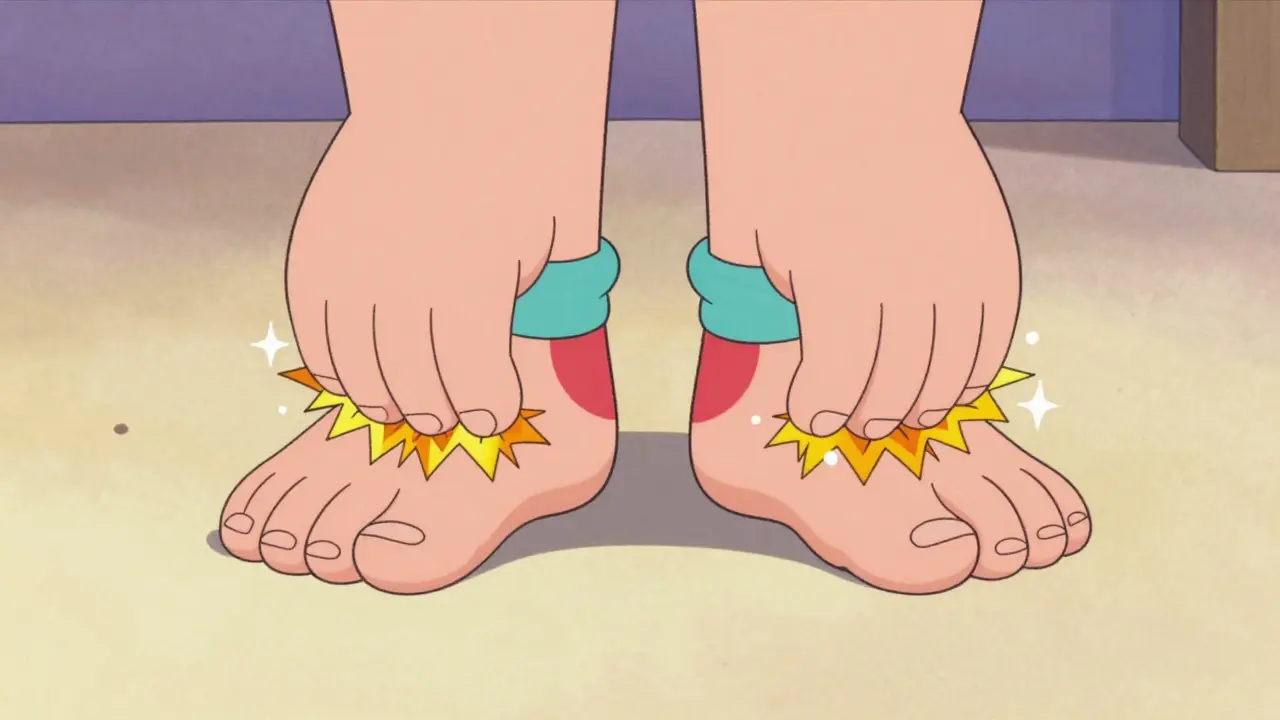
- Location: It's "distal," meaning it hits the ends of your extremities. Think toes, fingertips, and ankles.
- Sensation: Instead of a dull ache, you feel "positive sensory symptoms." This includes burning, tingling, numbness, or a "pins and needles" sensation.
- The Distribution: It often follows a "stocking-glove" pattern, meaning the numbness starts at the feet and hands and moves upward.
The theory here is that because cholesterol is a key part of nerve cell membranes, disrupting cholesterol levels might mess with the integrity of those membranes. Additionally, since LDL transports vitamin E, lowering your LDL might inadvertently lower the vitamin E your nerves need to stay healthy.
How to Tell Them Apart: The Comparison
If you're trying to figure out what's happening, it helps to look at the specific differences in how these two conditions behave. Your doctor will likely use a combination of your symptoms and lab tests to make the call.
| Feature | Statin Myopathy | Peripheral Neuropathy |
|---|---|---|
| Primary Location | Proximal (Thighs, Shoulders) | Distal (Hands, Feet) |
| Type of Pain | Dull ache, soreness, weakness | Burning, tingling, numbness |
| CK Blood Levels | Often Elevated | Typically Normal |
| Key Diagnostic Tool | Blood test (CK) / Clinical exam | Nerve Conduction Study (EMG) |
| Response to Stopping | Usually resolves quickly | May persist or be unrelated |
The Diagnostic Process: Getting to the Truth
It's not always a straight line. Sometimes, a patient might have a slow decline in their balance or walking ability and just assume they're "getting old." In reality, they might have a mild myopathy that's gone unnoticed because their doctor didn't specifically test their muscle strength. In some extreme cases, statin myopathy can even mimic other serious conditions, like Guillain-Barré Syndrome, which is why a professional diagnosis is non-negotiable.
If you suspect a problem, the process usually looks like this:
- Rule out the mimics: Your doctor will check if you have hypothyroidism or if you've been drinking more alcohol than usual, as both can cause muscle pain that looks exactly like statin side effects.
- The Washout: If symptoms are strong, the statin is usually stopped. If it's true myopathy, the pain should disappear within a few weeks.
- The Rechallenge: To prove the drug was the cause, some doctors try a different statin. For example, switching from a lipophilic statin to a hydrophilic one (like pravastatin or rosuvastatin) works for about 60% of people who had issues with the first drug.
- Electrodiagnostics: If the pain is in the feet and hands and doesn't go away after stopping the drug, a neurologist will perform nerve conduction studies. This is the only way to definitively confirm if a nerve is damaged and whether it's an axonal or demyelinating issue.
Managing the Fallout and Staying Protected
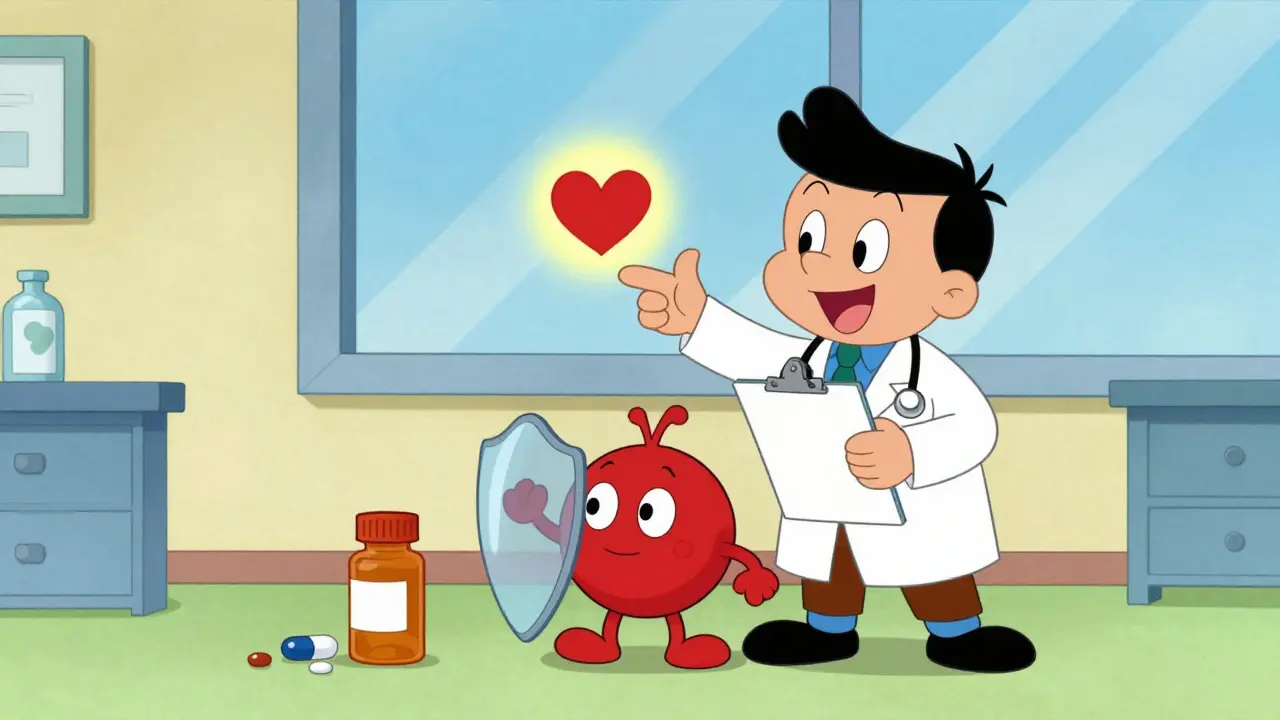
The biggest danger here isn't actually the muscle cramp-it's the risk of stopping your cholesterol treatment entirely. Every 1.0 mmol/L drop in LDL cholesterol reduces the risk of major vascular events by about 25%. You can't just walk away from that protection.
If you are confirmed to be statin-intolerant, the modern approach is to find a "maximally tolerated dose" and fill the gap with other tools. You might see Ezetimibe or PCSK9 Inhibitors used as alternatives. These work through different mechanisms than statins and generally don't cause the same muscle breakdown.
As for supplements, many people reach for CoQ10. While it makes sense on paper-replacing what the statin depletes-the evidence is mixed. A study in JAMA involving 44 statin-intolerant patients found that CoQ10 didn't actually perform significantly better than a placebo. It's not harmful, but it's not a magic cure for everyone.
Will the muscle pain go away if I stop taking my statin?
In most cases of statin-associated myopathy, the symptoms resolve once the medication is discontinued. However, if the cause is actually peripheral neuropathy or an unrelated neurological disorder, the symptoms may persist even after the drug is gone. This is why it's important to have a doctor track your recovery over 2-3 months.
Are all statins likely to cause these cramps?
No. Some people find that switching to hydrophilic statins (like rosuvastatin or pravastatin) eliminates the pain because these drugs don't penetrate muscle cells as easily as lipophilic statins. About 60% of people who experience myopathy with one statin can tolerate a different one.
Is there a genetic test for statin intolerance?
Yes, research has identified the SLCO1B1 gene variant, which can increase the risk of myopathy-particularly with simvastatin-by up to 4.5 times at higher doses. While not every clinic offers this test, it helps explain why some people are far more sensitive to these medications than others.
Can I take CoQ10 to stop the muscle aches?
Many people try CoQ10 because statins decrease its production in the body. While some patients report feeling better, clinical trials (including a notable study in JAMA) have shown that it may not be significantly more effective than a placebo for all patients. It's worth discussing with your doctor, but it may not replace the need for a dosage adjustment.
What is the difference between myalgia and myopathy?
Myalgia is simply muscle pain or aching without evidence of muscle damage. Myopathy is more serious; it involves actual muscle weakness and is often accompanied by an increase in Creatine Kinase (CK) levels in the blood, indicating that muscle fibers are breaking down.
Next Steps for Patients
If you're experiencing these symptoms, don't just stop your medication-that can leave your cardiovascular system vulnerable. Instead, start a symptom log. Note exactly where the pain is (fingers vs. thighs) and what it feels like (burning vs. aching). Bring this to your next appointment.
If you have diabetes or a history of alcohol use, mention this to your doctor, as these conditions often cause neuropathy that can be mistaken for a statin side effect. If your symptoms don't improve after a few months of stopping the medication, insist on a referral to a neurologist for a nerve conduction study to get a definitive answer.
Bob Collins
April 18, 2026 AT 08:31Really useful breakdown of the difference between the two. Most people just panic and stop their meds without understanding what's actually happening.
Shalika Jain
April 18, 2026 AT 09:28Honestly this is all a bit too simplistic. The nuance of mitochondrial dysfunction is far more complex than just saying CoQ10 drops by 40 percent. It's almost quaint how we try to distill pharmacokinetics into a table for the masses. I've read papers that suggest the interplay is far more volatile depending on your baseline metabolic rate. Also the 'stocking-glove' pattern is such a cliché medical school description that hardly applies to the erratic nature of actual patient presentations. Let's actually talk about the epigenetic factors instead of just listing drugs.
Valorie Darling
April 19, 2026 AT 00:20imagine thinking a pill fixes everything lol. just eat a salad and walk more maybe your legs wont feel like lead then
Mike Beattie
April 19, 2026 AT 16:46The systemic dysregulation of HMG-CoA reductase inhibitors often manifests as a multifaceted metabolic cascade. We are seeing a significant divergence in patient outcomes based on the lipophilicity of the molecule. If the pharmacokinetic profile doesn't align with the patient's specific SLCO1B1 genotype, you're essentially inviting myopathic exacerbation. It's an elementary oversight in many primary care settings to ignore the mitochondrial respiratory chain's vulnerability during the initial titration phase.
Aaron McGrath
April 19, 2026 AT 21:20STOP OVERTHINKING THE BIOCHEMISTRY AND JUST HIT THE GYM! If you're feeling weak you need more intensity in your training to push through the plateau! Optimize your macros and stop letting these minor side effects kill your gains! Get a high-dose CoQ10 supplement and crush your workouts! Don't let a little leg heaviness stop you from hitting a new PR in the squat rack! Full send or no send!
Lucy Kuo
April 21, 2026 AT 15:32It is truly heart-rending to consider the anxiety patients must endure when experiencing such perplexing physical sensations. We must embrace a holistic approach to healing, ensuring that every individual feels seen and supported in their journey toward cardiovascular wellness. May we all find a path to health that preserves both the body and the spirit in perfect harmony!
Grace Grace
April 22, 2026 AT 14:19I am so sorry you're goign through this!! It is laandmarkly importnat to follow the doctor's advise and not just quit your medicaton. Please be gentel with your muscles while you figgure this out! You are so brave for managin your heart health!
dallia alaba
April 23, 2026 AT 12:32For those struggling to tell the difference, keep a very specific journal of when the pain occurs. Myopathy often feels worse during activity like climbing stairs, whereas neuropathy can be a constant buzz or tingle even at rest. It's also worth mentioning that vitamin D deficiency can mimic some of these muscle aches, so it's a good idea to have that checked alongside your CK levels.
julya tassi
April 24, 2026 AT 04:38This is so helpful! I always wondered why my toes felt tingly but my thighs felt heavy :) Thanks for clearing that up! :D