
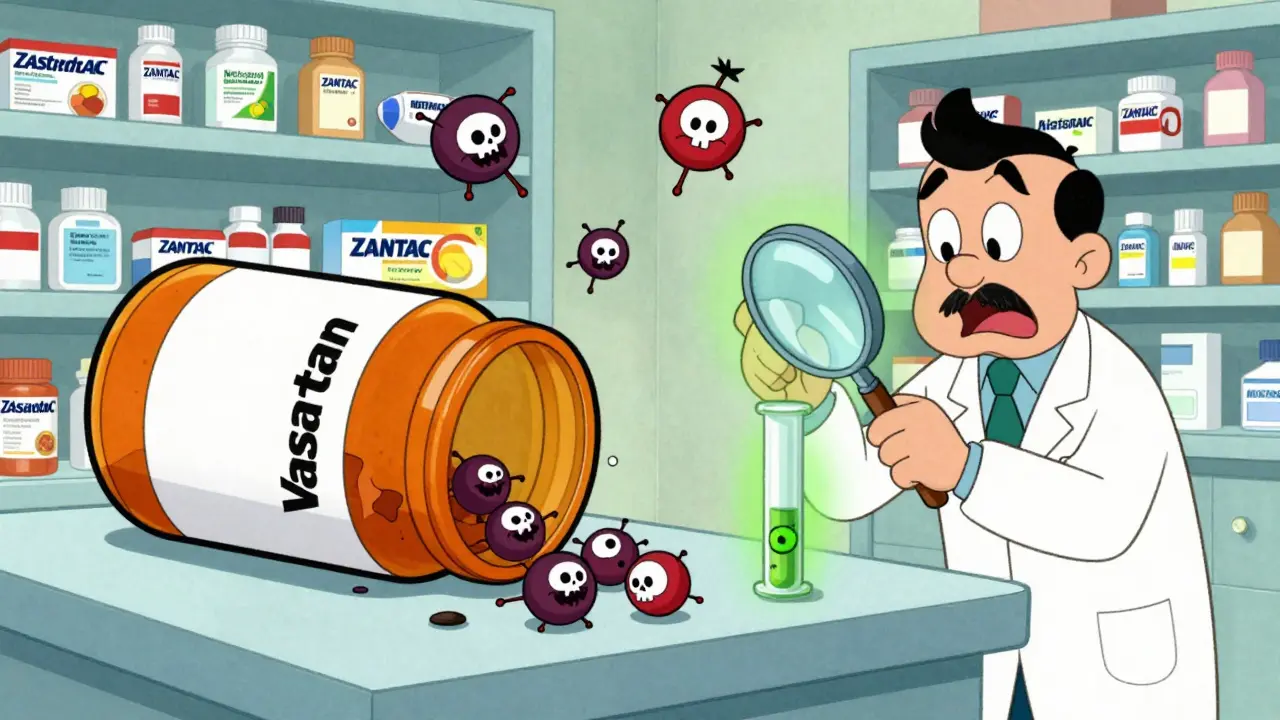
Since 2018, a quiet but dangerous problem has shaken the generic drug industry: nitrosamine contamination. These are not random impurities. They are potent carcinogens-chemicals that can damage DNA and increase cancer risk-even at levels measured in nanograms per day. What started with a single recall of valsartan, a common blood pressure medication, has spiraled into one of the largest drug safety crises in modern history. Over 40 drug products have been pulled from U.S. shelves since then, and more than 500 recalls have been issued by the FDA for nitrosamine levels that exceed safety limits. This isn’t a one-time glitch. It’s an ongoing systemic issue affecting dozens of generic medications, from diabetes pills to antidepressants, and it’s forcing manufacturers to completely rethink how drugs are made.
What Are Nitrosamines and Why Do They Matter?
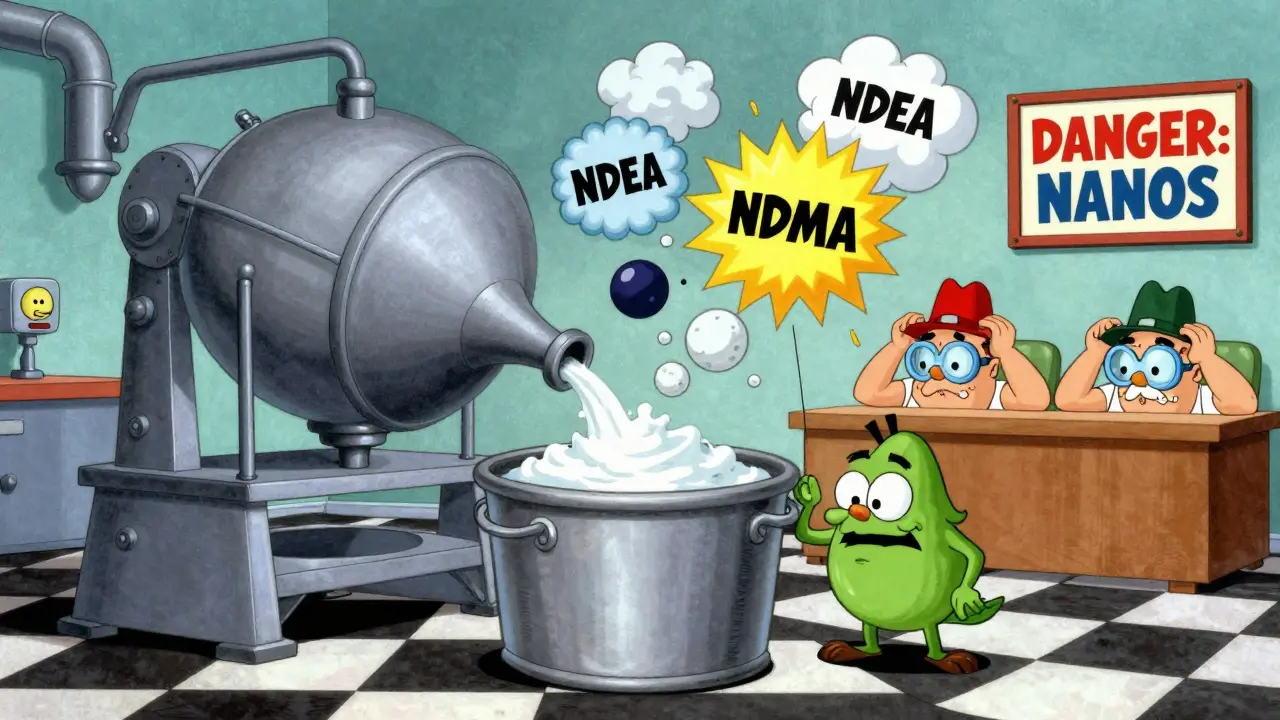
Nitrosamines are a family of chemical compounds that form when certain amines-common building blocks in drugs-react with nitrites or other nitrosating agents under heat, pressure, or during storage. The most infamous ones include NDMA (N-nitrosodimethylamine), NDEA (N-nitrosodiethylamine), and a growing list of nitrosamine drug substance-related impurities (NDSRIs) like N-nitroso-varenicline and N-nitroso-duloxetine. The International Agency for Research on Cancer classifies many of these as probable human carcinogens. The FDA doesn’t treat them like ordinary impurities. Even tiny amounts, below what most labs could detect just five years ago, are considered unsafe.
For example, the acceptable daily intake for NDMA is just 96 nanograms. That’s less than one grain of salt in a swimming pool. For NDEA, it’s even lower: 26.5 nanograms. These aren’t arbitrary numbers. They’re based on lifetime cancer risk models. If you take a contaminated pill every day for years, the odds of developing cancer rise. And because generic drugs are taken by millions of people-often for life-this isn’t a risk that can be ignored.
Which Drugs Have Been Affected?
The list of affected medications keeps growing. It started with ARBs (angiotensin II receptor blockers) like valsartan, losartan, and irbesartan-medications used to treat high blood pressure and heart failure. Then came ranitidine (Zantac), the once-popular heartburn drug pulled from shelves worldwide in 2020. After that, it spread to metformin (a cornerstone diabetes treatment), duloxetine (an antidepressant), varenicline (Chantix, for smoking cessation), and even antibiotics like rifampin.
What’s alarming is how unpredictable the pattern has been. One batch of metformin might be clean, while another from the same factory, made weeks later, tests positive. The same goes for ARBs. It’s not always about the active ingredient. Sometimes, the problem comes from excipients-inactive ingredients like magnesium stearate or colorants in capsules. In 2024, the FDA confirmed that packaging materials, such as blister films and bottle liners, can release nitrosating agents over time. That means a drug could be perfectly safe when made, but become contaminated during storage.
How Did This Happen?
The root causes are messy and varied. In many cases, manufacturers used cheaper raw materials or changed suppliers without fully testing for nitrite impurities. Some used solvents containing trace amines, or recycled water that had been contaminated. Others relied on high-temperature drying processes that triggered nitrosamine formation. In one documented case, a supplier’s magnesium stearate contained nitrite levels 10 times higher than allowed. That single change led to NDEA contamination in three different ARB products across two countries.
For generic manufacturers, the pressure to cut costs is intense. Profit margins are thin, and competition is fierce. Many companies didn’t have the resources or expertise to test for nitrosamines before 2018. When the FDA first raised the alarm, some firms assumed it only applied to a few ARBs. They didn’t realize the same chemistry could be happening in their metformin or duloxetine lines. By the time they tested, it was too late. Recalls followed.
The FDA’s Response: From Panic to Policy
The FDA’s response has evolved dramatically. In 2018, they acted fast-pulling drugs, warning patients, and demanding immediate testing. By 2023, they released detailed guidance setting specific acceptable intake limits for each nitrosamine. They required manufacturers to use advanced analytical methods-like liquid chromatography-tandem mass spectrometry (LC-MS/MS)-to detect levels as low as 0.3 nanograms per milliliter. They also demanded root cause analyses and control strategies, including reformulating products, changing suppliers, or redesigning manufacturing processes.
But by 2025, it became clear that the pace of compliance was unsustainable. Small manufacturers couldn’t afford $2 million in testing and reformulation costs. Stability studies took over a year. Supply chains were disrupted. In June 2025, the FDA quietly shifted its stance. Instead of enforcing a hard August 1, 2025 deadline for NDSRI compliance, they now accept progress reports. Companies must submit detailed plans showing how they’re addressing contamination, but they don’t need to have fully fixed everything by the deadline.
This isn’t a retreat. It’s a recognition that nitrosamine control isn’t a checkbox. It’s a long-term commitment. The FDA still requires all drugs to meet safety standards. But they now understand that fixing this problem takes time, money, and expertise.
Who’s Being Hit the Hardest?
Smaller generic manufacturers are bearing the brunt. A mid-sized company in Ohio spent 18 months and over $2 million just to fix nitrosamine issues in their metformin line. They had to revalidate every step of production, switch to new excipients, and install new testing equipment. Many couldn’t afford it. Some shut down. Others sold out to larger players.
Meanwhile, big companies like Teva, Fresenius Kabi, and Sun Pharma invested early. They built internal labs, hired chemists, and redesigned processes before the FDA demanded it. Now, they’re not just compliant-they’re preferred suppliers. The FDA gives them faster review times. Pharmacies trust their products. Patients don’t fear recalls.
The market is changing. Generic drug pricing is no longer just about who can make it cheapest. It’s about who can prove it’s safest. Nitrosamine compliance is now a competitive advantage.
What Should Patients Do?
If you take a generic medication, don’t panic. The FDA hasn’t recalled every batch of every affected drug. Most products on the market today are safe. But you should stay informed.
- Check the FDA’s official nitrosamine updates page for recalls related to your medication.
- Don’t stop taking your medicine without talking to your doctor. The risk from an uncontrolled condition-like high blood pressure or diabetes-is often greater than the risk from trace nitrosamines.
- If your pharmacy switches your generic brand, ask if it’s the same formulation. Some manufacturers reformulated after recalls. Others didn’t.
- Report any unusual side effects to your doctor or through the FDA’s MedWatch program.
There’s no need to switch to brand-name drugs unless your doctor recommends it. Brand-name versions aren’t immune to contamination either. The difference is that brand manufacturers usually have deeper pockets to invest in safety upfront.
What’s Next?
The nitrosamine crisis isn’t over. The FDA is now looking at other drug classes-like antivirals, antifungals, and even over-the-counter medications-for potential contamination. They’re also studying whether nitrosamines can form during manufacturing in countries with less stringent oversight.
Manufacturers are responding by building better quality systems. Some are using AI to predict which chemical reactions are most likely to form nitrosamines. Others are switching to nitrite-free excipients or using cold-process manufacturing to avoid triggering reactions.
For patients, the takeaway is simple: trust your doctor. Stay informed. Don’t assume all generics are the same. And know that the system is slowly getting better-not because of a single fix, but because thousands of scientists, regulators, and manufacturers are working to make sure no one has to choose between affordability and safety.
Are all generic drugs at risk of nitrosamine contamination?
No. Only specific batches of certain drugs have been found to contain nitrosamines. The contamination is not universal. Most generic medications on the market today are safe. The FDA regularly tests products and removes those that exceed safety limits. If your drug hasn’t been recalled, it’s likely safe to take. Always check the FDA’s official recall list for updates.
Can I test my medication at home for nitrosamines?
No. Detecting nitrosamines requires highly specialized lab equipment, like LC-MS/MS, that can measure parts per billion. Home test kits don’t exist and won’t work. Even pharmacies can’t test for these impurities. If you’re concerned, contact your pharmacist or check the FDA’s recall database. Do not stop taking your medication without medical advice.
Why did it take so long for the FDA to act?
Nitrosamines weren’t detectable at safe levels until recent advances in analytical technology. Before 2018, labs couldn’t measure nanogram amounts reliably. Once they could, contamination was found in multiple drugs across different manufacturers. The FDA moved quickly once the risk was confirmed, but identifying the source and fixing it took years because the problem was hidden in complex chemical reactions, not simple contamination.
Is it safer to take brand-name drugs instead of generics?
Not necessarily. Brand-name drugs can also contain nitrosamines. The difference is that brand manufacturers often have more resources to test and reformulate early. Generic manufacturers, especially smaller ones, faced tighter margins and less access to advanced testing. But today, many generics are just as safe-especially those from manufacturers who invested in compliance. The key is to check for recalls, not the brand name.
What should I do if my medication was recalled?
Contact your doctor or pharmacist immediately. Do not stop taking your medication unless instructed. Your provider can help you switch to a safe alternative. If you can’t get a replacement right away, they may advise you to continue taking the recalled batch temporarily while waiting for a safe version. The risk from untreated conditions like high blood pressure or diabetes often outweighs the small cancer risk from short-term exposure to trace nitrosamines.
Final Thoughts
Nitrosamine contamination isn’t a failure of regulation-it’s a failure of assumptions. For decades, the generic drug industry assumed that if a drug met chemical purity standards, it was safe. But nitrosamines showed us that safety isn’t just about what’s in the pill. It’s about how it’s made, stored, and packaged. The system is learning. Manufacturers are adapting. Patients are being protected. It’s not perfect, but it’s moving in the right direction. The goal isn’t zero risk. It’s risk so low it’s negligible-and that’s exactly what the FDA is working toward.
ryan Sifontes
January 28, 2026 AT 13:37Laura Arnal
January 29, 2026 AT 21:09your health matters more than fear.
Robin Keith
January 31, 2026 AT 20:28kabir das
February 2, 2026 AT 19:09Keith Oliver
February 4, 2026 AT 04:47Kacey Yates
February 4, 2026 AT 13:25Paul Adler
February 4, 2026 AT 14:48Pawan Kumar
February 5, 2026 AT 08:10