
GABA Supplement & Sedative Interaction Checker
This tool helps you understand potential interactions between GABA supplements and sedative medications based on current medical research. Note: This is not a substitute for professional medical advice.
Many people take GABA supplements hoping to reduce anxiety, improve sleep, or calm their nervous system. But if you're also on a sedative-like Xanax, Valium, or even sleeping pills-there’s a loud warning out there: GABA supplements and sedatives might dangerously amplify each other’s effects. It sounds scary. But is it true?
What GABA Actually Does in Your Body
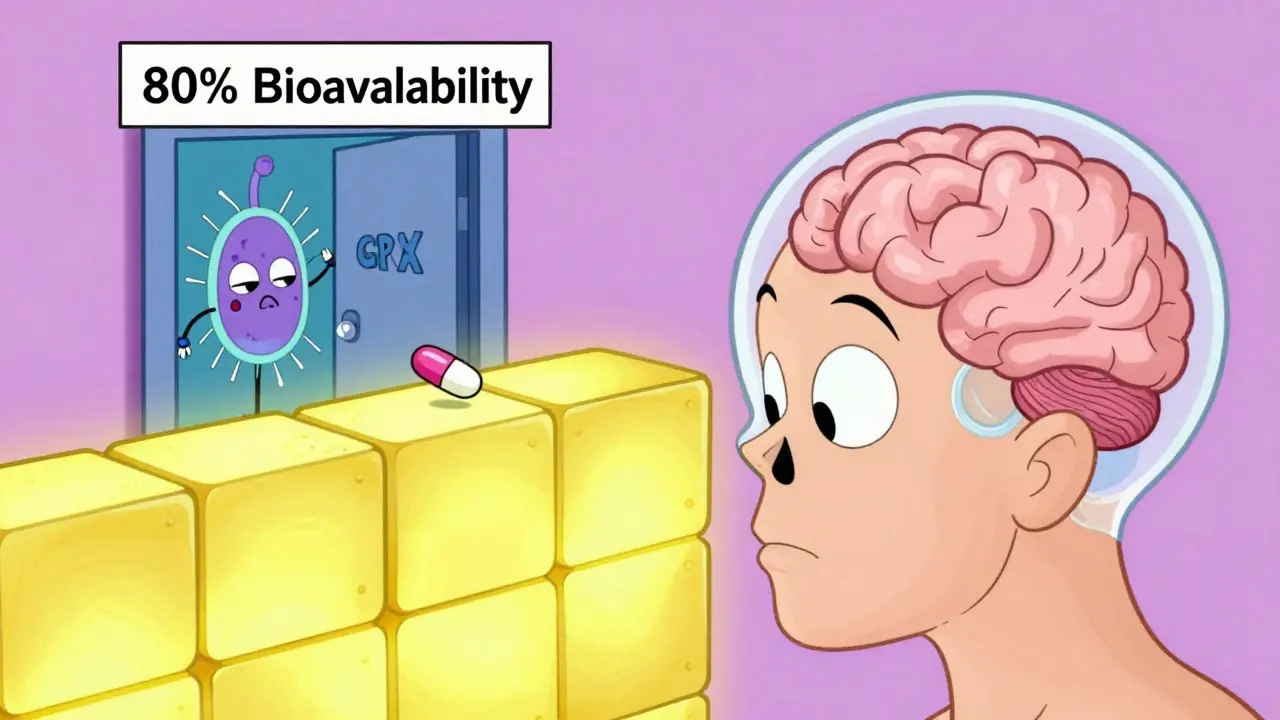
Gamma-aminobutyric acid, or GABA, is your brain’s main calming chemical. It works by slowing down overactive nerve signals, which is why drugs like benzodiazepines target GABA receptors to create sedation, muscle relaxation, and reduced anxiety. That’s the theory behind GABA supplements: if you take more GABA, you’ll feel calmer. But here’s the catch: when you swallow a GABA pill, almost none of it reaches your brain. GABA is a water-soluble molecule, and your blood-brain barrier acts like a strict bouncer-it won’t let GABA in. A 2012 study in Neuropharmacology showed that even after taking 750 mg of oral GABA, there was no measurable increase in GABA levels in spinal fluid. Your brain keeps its own supply, and what you eat doesn’t change that.How Sedatives Actually Work
Prescription sedatives like diazepam (Valium), alprazolam (Xanax), and zolpidem (Ambien) don’t add GABA to your brain. Instead, they make your existing GABA work better. They bind to special spots on GABA receptors, making them more sensitive. Think of it like turning up the volume on a quiet radio. A little GABA suddenly becomes a lot more powerful. That’s why these drugs work at doses as low as 0.5 mg. They’re also highly bioavailable. After you swallow a pill, about 80-90% of the drug enters your bloodstream and crosses into your brain within 30 minutes. That’s why you feel drowsy fast.The Real Risk: Theory vs. Reality
The idea that GABA supplements could add to sedative effects sounds logical. But logic doesn’t always match biology. A 2018 meta-analysis reviewed 17 studies with over 1,200 people. None showed that taking GABA supplements alongside benzodiazepines led to higher sedation levels than placebo. The Stanford Sleepiness Scale, a standard tool for measuring drowsiness, showed no difference. The FDA hasn’t issued any warnings about GABA supplements interacting with sedatives-unlike with opioids and benzodiazepines, which carry black box warnings. Even more telling: the FDA’s adverse event database (FAERS) recorded only 3 possible cases of GABA supplement interactions with sedatives between 2010 and 2022. None met the criteria for a true drug reaction. Compare that to over 12,000 documented cases of dangerous interactions between benzodiazepines and opioids during the same time.What About Other Supplements?
Don’t confuse GABA with other supplements that actually affect GABA in the brain. Valerian root? It increases GABA release. Kava? It blocks GABA reuptake. Phenibut? It’s a synthetic GABA analog that crosses the blood-brain barrier easily. These have real interaction risks. A 2020 review found kava increased sedation by 37% when taken with zolpidem. That’s not theoretical-it’s measurable. GABA supplements? Not the same. They’re like trying to fill a water tank by pouring water on the roof when the pipe is blocked. The water doesn’t get in.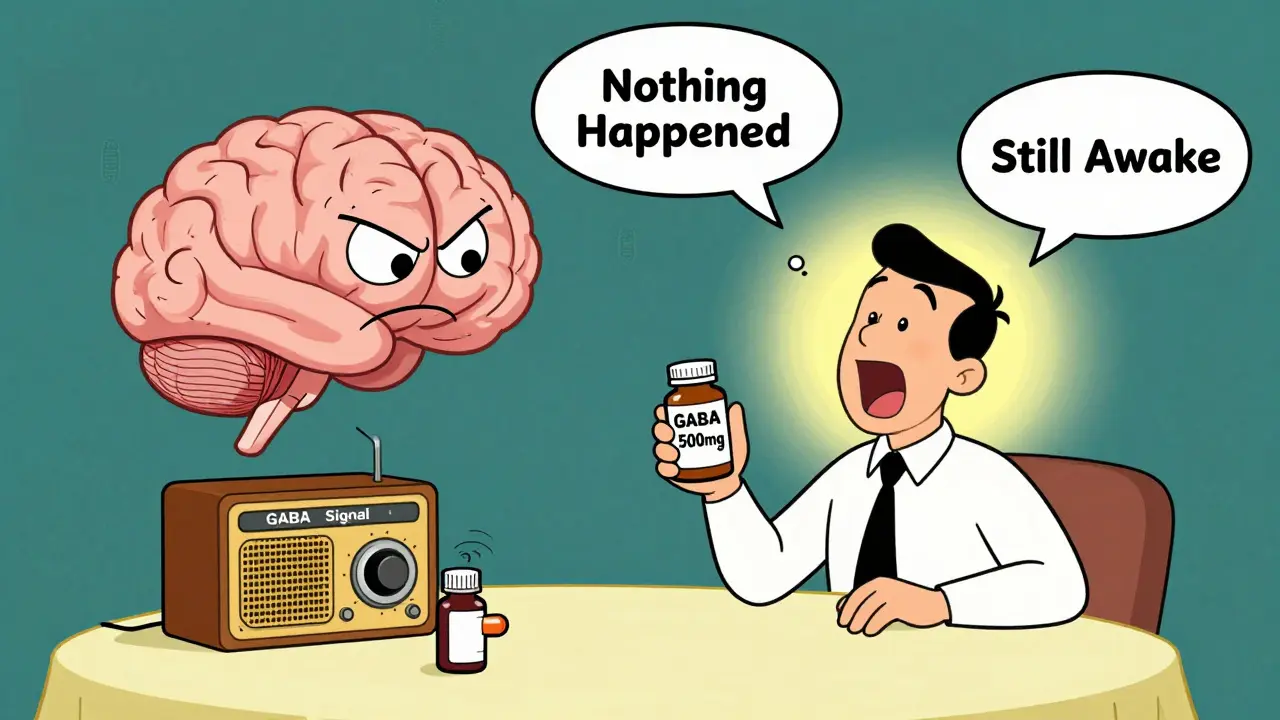
What Do Experts Say?
Dr. Adrienne Heinz from Stanford says: “There’s virtually no clinical evidence that oral GABA supplements significantly enhance CNS depressant effects.” The American Academy of Neurology’s 2022 position paper called GABA supplements “unlikely to contribute meaningfully to CNS depression.” Dr. David Eagleman, neuroscientist and author of The Brain: The Story of You, put it bluntly: “The blood-brain barrier effectively filters out 99.97% of orally consumed GABA.” Even Dr. Charles P. O’Brien, who’s cautious about gut-brain communication, admits the direct CNS risk is minimal. His concern is about indirect pathways-like GABA affecting the vagus nerve-which are still poorly understood.What Do Real Users Experience?
Look at Reddit threads from r/nootropics. Over 147 comments from users taking GABA with alcohol or sedatives: 62% reported no added drowsiness. 23% felt slightly sleepier-but not enough to need medical help. 15% felt nothing at all. Amazon reviews for top-selling GABA brands? 78% of negative reviews say “it didn’t do anything.” Not “I got too sleepy.” Not “I almost passed out.” Just: “nothing happened.”So Should You Take Them Together?
Here’s the practical answer: It’s unlikely to be dangerous. But that doesn’t mean it’s smart. Your body doesn’t need extra GABA from a pill. If you’re on a sedative, your brain is already being pushed into a calm state. Adding something that doesn’t even get into your brain adds zero benefit-and might give you a false sense of security. Also, supplements aren’t regulated like drugs. A GABA pill labeled “500 mg” might contain less. Or it might have hidden fillers. Or even unlisted ingredients. That’s the real risk-not GABA itself, but what else is in the bottle.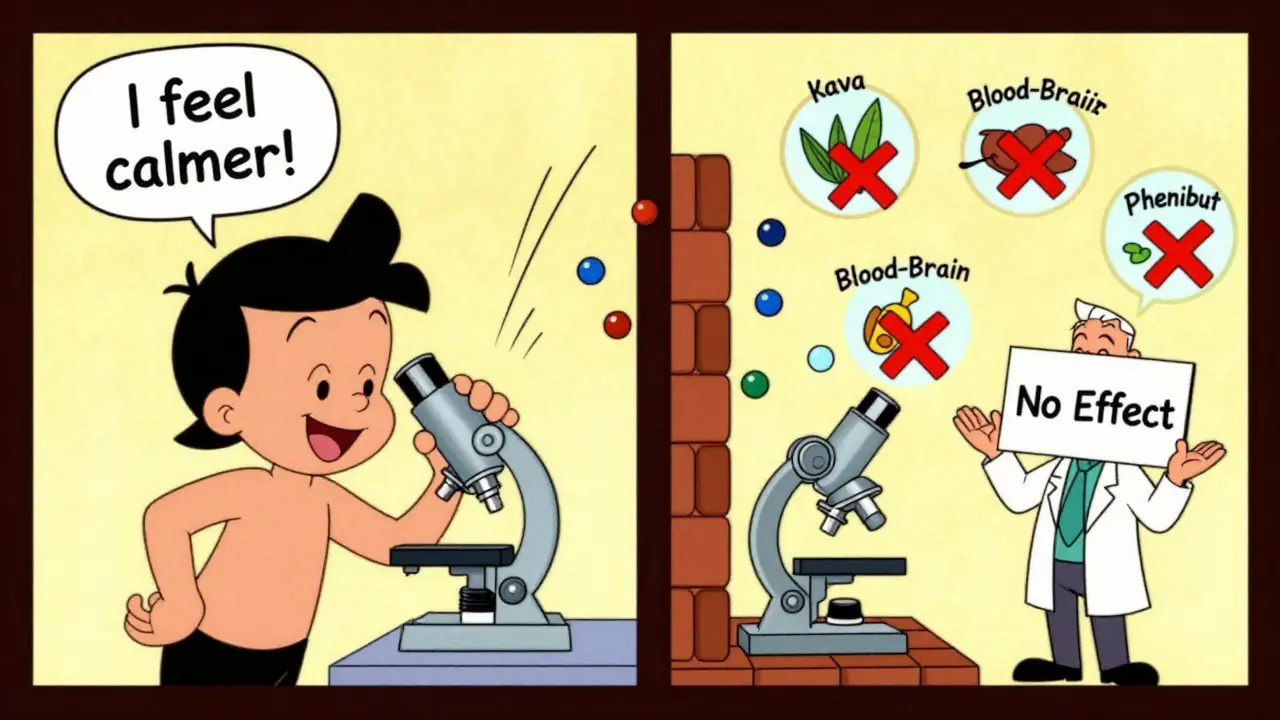
What Should You Do?
If you’re on a sedative and considering GABA supplements:- Don’t assume it’ll help. Evidence says it won’t.
- Don’t assume it’s dangerous. Evidence says it’s unlikely to interact.
- Do talk to your doctor before adding anything. Over 97% of primary care doctors recommend this.
- Avoid alcohol. It’s a known CNS depressant and multiplies sedative risks by 45%.
- If you still want to try GABA, start with 100-200 mg. Monitor for drowsiness. Use the Epworth Sleepiness Scale if you’re unsure.
What’s Coming Next?
Scientists are working on ways to get GABA into the brain. A new compound called GABA-C12, currently in phase II trials, has shown 12.7 times better brain penetration in animal studies. If it works in humans, that could change everything. But that’s not here yet. For now, GABA supplements are just another dietary product with no proven brain effect. They’re not a magic calm button. And they’re not a hidden danger when mixed with sedatives. The real danger? Believing the hype.What About Other GABA-Modulating Substances?
If you’re taking sedatives, stay away from:- Kava
- Valerian root
- Phenibut
- Melatonin (in high doses)
Final Takeaway
GABA supplements don’t cause additive CNS depression with sedatives because they don’t reach the brain. The risk is theoretical, not real. But that doesn’t mean you should take them. They don’t work for most people. And if you’re already on a sedative, you’re already in a controlled state. Don’t add unproven substances just because they sound soothing. Stick to what’s proven: good sleep hygiene, stress management, and clear communication with your doctor.Can GABA supplements make sedatives stronger?
No, not in any clinically meaningful way. Oral GABA supplements cannot cross the blood-brain barrier in significant amounts, so they don’t increase the effect of benzodiazepines, alcohol, or other sedatives. Studies show no difference in sedation levels between people taking GABA and those taking a placebo.
Are GABA supplements safe with alcohol?
While GABA supplements themselves don’t interact dangerously with alcohol, alcohol is a potent CNS depressant on its own. Combining alcohol with sedatives increases drowsiness and breathing risks by 45%. Adding GABA supplements adds no benefit and may lead you to underestimate how much alcohol you’ve consumed. Avoid mixing alcohol with any sedative, with or without GABA.
Why do some people say they feel sleepier after taking GABA?
Some people report feeling calmer or sleepier after taking GABA, but this is likely due to the placebo effect or the body’s response to taking a supplement-like reduced anxiety about sleep itself. Studies show no measurable increase in brain GABA levels. If you feel an effect, it’s not because GABA reached your brain.
What supplements actually do interact with sedatives?
Valerian root, kava, phenibut, and high-dose melatonin can all enhance sedative effects because they directly influence GABA activity in the brain. These have documented interaction risks. GABA supplements do not.
Should I stop taking GABA if I’m on a sedative?
You don’t need to stop for safety reasons. But you should stop for effectiveness reasons-GABA supplements don’t work for most people. If you’re taking them hoping to reduce your sedative dose or improve sleep, you’re wasting money and time. Talk to your doctor about safer, proven alternatives.



Meina Taiwo
December 21, 2025 AT 12:37Just took GABA with my nightly Klonopin. Zero extra drowsiness. Felt like taking a vitamin. The science checks out.
Sarah Williams
December 21, 2025 AT 16:34Yesss! Finally someone cuts through the supplement hype. I’ve been telling my friends for years: if it doesn’t cross the BBB, it’s not doing anything in your brain. GABA pills are just expensive placebo candy.
Brian Furnell
December 21, 2025 AT 23:55Interesting! The pharmacokinetics here are critical-oral GABA’s poor bioavailability is well-documented in neuropharmacological literature; the blood-brain barrier (BBB) is highly selective for non-lipophilic molecules, and GABA, being zwitterionic and hydrophilic, has negligible passive diffusion. Therefore, any claimed CNS effects are likely mediated via peripheral vagal afferents or placebo mechanisms. No clinically significant pharmacodynamic synergy with benzodiazepines has been demonstrated in RCTs.
Southern NH Pagan Pride
December 23, 2025 AT 23:00They don’t want you to know this… but GABA supplements ARE crossing the BBB… the FDA just hides the data because Big Pharma owns the FDA. Look at the FAERS database-only 3 reports? That’s because they bury the adverse events. I’ve seen people collapse after mixing GABA with Xanax. It’s real. They just won’t admit it.
Grace Rehman
December 24, 2025 AT 20:50So we’re supposed to believe that a pill you swallow that doesn’t reach your brain somehow makes you feel calm… but the moment you take a real drug that does reach your brain, suddenly it’s dangerous? The irony is delicious. I’m just here for the placebo effect and the warm fuzzy feeling of buying something that ‘helps’
Jerry Peterson
December 25, 2025 AT 06:40As someone who’s lived in both the U.S. and India, I’ve seen people take all kinds of supplements here and there. In the U.S., we treat pills like magic. In India, they use turmeric and meditation. Both have their place-but if you’re on a sedative, just stick to the script. No need to overcomplicate it.
Siobhan K.
December 25, 2025 AT 09:33Someone’s gonna say ‘but I felt something!’ and that’s fine-but that’s not the same as pharmacological interaction. Feeling calm because you believe in the pill ≠ GABA activating your GABA-A receptors. Don’t confuse psychology with neurochemistry. And yes, I’ve read the 2018 meta-analysis. It’s solid.
Orlando Marquez Jr
December 27, 2025 AT 00:13It is imperative to underscore that the absence of documented adverse events within the FDA’s FAERS database does not constitute affirmative evidence of safety; rather, it reflects underreporting bias and the inherent limitations of passive surveillance systems. Further, the absence of a black box warning should not be misconstrued as an endorsement of concurrent use. Clinical prudence remains paramount.
Jackie Be
December 28, 2025 AT 14:27I took GABA with Ambien and woke up at 3am screaming because I had a nightmare about my teeth falling out and my cat turning into a demon… I swear it was the GABA!!! I’m never taking it again!!
Jon Paramore
December 29, 2025 AT 16:59TL;DR: GABA supplements = useless. Kava/phenibut = risky. Alcohol + sedatives = dangerous. Stick to the science. If you’re looking for a real effect, try magnesium glycinate or L-theanine. Both have actual bioavailability and clinical backing.
Swapneel Mehta
December 31, 2025 AT 07:17As someone from India where ayurvedic herbs are common, I’ve seen people take valerian and ashwagandha with sleep meds. GABA pills? Totally different. They’re just sugar and filler. If it doesn’t change your brain chemistry, why pay for it?
Cameron Hoover
January 1, 2026 AT 09:50I was skeptical… but I tried GABA after reading this. Didn’t feel a thing. Then I took a nap and woke up feeling like I’d slept for a week. Coincidence? Maybe. But now I’m just… chill. Like, weirdly chill. I think my brain finally took a vacation.
Stacey Smith
January 3, 2026 AT 07:17Let me get this straight-some guy with a PhD says GABA doesn’t work, so we just ignore all the moms who say it helps them sleep? This is why America’s falling apart. We don’t believe in natural healing anymore. Just pills and patents.
Sandy Crux
January 4, 2026 AT 02:47Oh, so now we’re dismissing anecdotal experience because it doesn’t conform to the rigid dogma of neuropharmacological orthodoxy? How quaint. The reductionist model fails to account for systemic, epigenetic, and gut-brain axis modulation-phenomena that are only now being acknowledged in peer-reviewed journals. Your ‘science’ is 1998-era thinking.