
MAOI Dietary Safety & Tyramine Calculator
1. Meal Tyramine Estimator
Select the foods you plan to eat in a single sitting. The tool estimates total tyramine load against the 25mg safety threshold.
2. Blood Pressure Emergency Checker
Enter your current reading to determine if you are in a hypertensive crisis zone (Systolic > 180 mmHg).
3. Quick Food Safety Reference
| Food Category | Risk Level | Guideline |
|---|
Imagine biting into a slice of aged cheddar or sipping a craft beer, only to feel a sudden, pounding headache and a racing heart. For people taking Monoamine Oxidase Inhibitors, commonly known as MAOIs, this isn't just a bad reaction; it's a potential medical emergency called a hypertensive crisis. While these powerful antidepressants are often a last resort for treatment-resistant depression, they come with a strict dietary rulebook that many patients find overwhelming. The good news? Modern food science has changed the game. You don't need to eat like a monk from 1960. With the right knowledge, you can navigate these restrictions safely without giving up your favorite meals entirely.
Why the Diet Matters: The Tyramine Connection
To understand what you can and cannot eat, you first need to know why the restriction exists. Your body naturally produces an enzyme called monoamine oxidase (MAO). This enzyme breaks down tyramine, a compound found in certain foods, before it can affect your blood pressure. When you take an irreversible MAOI like phenelzine (Nardil) or tranylcypromine (Parnate), the medication blocks this enzyme. Without the enzyme working, tyramine builds up in your bloodstream. If enough accumulates, it forces your blood vessels to constrict sharply, spiking your blood pressure to dangerous levels.
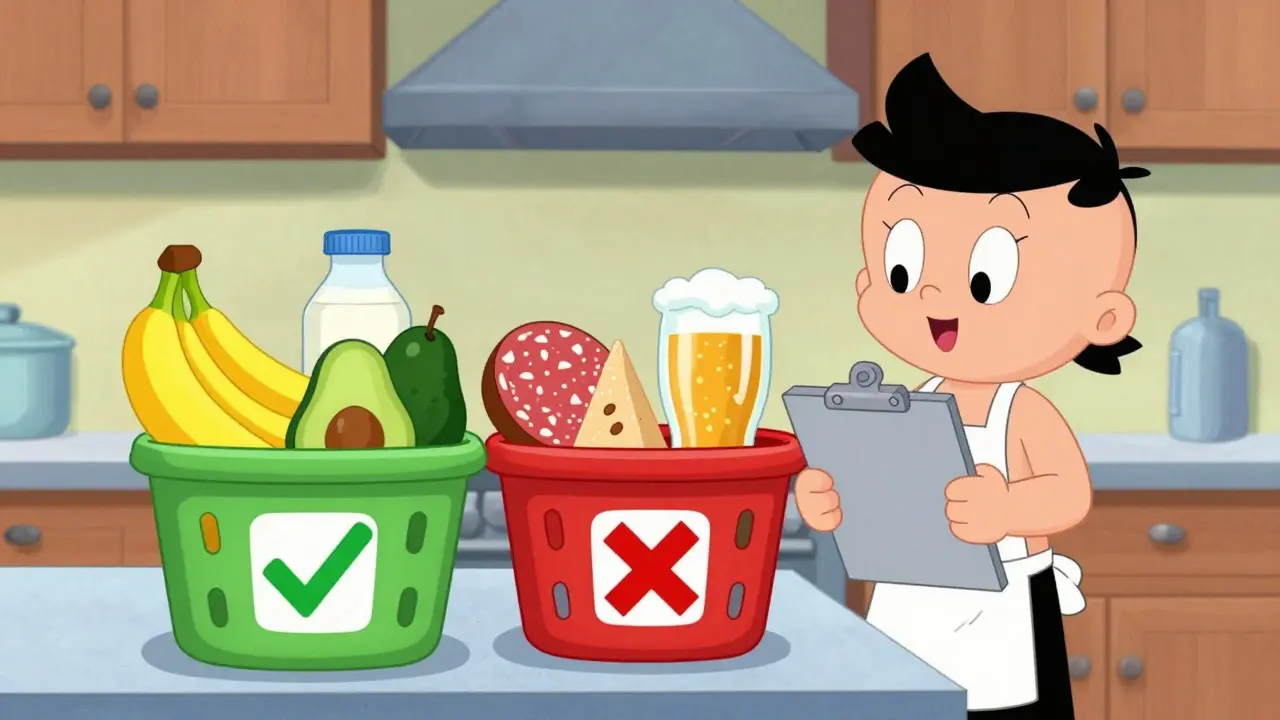
The danger threshold is generally considered to be consuming more than 25 mg of tyramine in a single sitting. That sounds like a lot, but it’s surprisingly easy to reach if you combine several moderate-tyramine foods in one meal. For example, eating a large serving of dry fermented sausage alongside a glass of tap beer could push you over the limit. The risk isn't just discomfort; severe spikes can lead to stroke or heart attack. That’s why the FDA places black box warnings on all MAOIs regarding dietary interactions.
High-Risk Foods: What to Avoid or Limit
Not all foods are created equal when it comes to tyramine. Some are consistently high-risk, while others depend heavily on how they are stored. Here is a breakdown of the categories you need to watch closely:
- Aged Cheeses: Fresh cheeses like mozzarella, cottage cheese, and cream cheese are usually safe. However, hard cheeses aged for more than six months, such as sharp cheddar, gouda, or parmesan, can contain over 20 mg of tyramine per 100g. If you crave cheese, stick to fresh varieties or limit aged cheese to small portions no more than once every three days.
- Processed Meats: Dry-cured sausages like salami, pepperoni, and bologna are major offenders due to their fermentation process. A single serving can contain anywhere from 25 to 150 mg of tyramine. Freshly cooked meats, poultry, and fish are much safer options.
- Alcohol: Tap beer and unpasteurized beers are high in tyramine, ranging from 5 to 35 mg per 100g. Wine and spirits are generally lower in tyramine, but moderation is key. Avoid home-brewed beverages entirely, as they lack quality control and can have unpredictable tyramine levels.
- Soy Products: Soy sauce is a hidden trap, with tyramine levels ranging from 10 to 118 mg per 100g. Tofu varies widely, so check labels or opt for firm tofu in small portions. Fermented soy products like tempeh should be approached with caution.
- Leftovers and Improperly Stored Food: This is the most overlooked risk. Tyramine increases exponentially as food ages. Meat stored at room temperature or even in a warm fridge for more than 48 hours can see tyramine levels jump tenfold. Always consume fresh foods within 24 hours of preparation during your first month on the medication.
Foods That Are Actually Safe
It’s easy to fall into the trap of thinking you must avoid everything processed or fermented. But modern refrigeration and production standards have made many traditional “forbidden” foods much safer. Dr. John H. Krystal, Editor of the American Journal of Psychiatry, noted that the traditional MAOI diet has been unnecessarily restrictive for decades. Here are some common foods that are generally safe in reasonable amounts:
- Fruits: Bananas (especially the pulp), raspberries, and avocados maintain low tyramine levels even after storage. Half an avocado contains only about 0.5 to 1.2 mg of tyramine, making it a healthy snack option.
- Chocolate: Up to 30g of chocolate is considered safe for most patients. Dark chocolate tends to have slightly higher levels than milk chocolate, so keep portions modest.
- Fresh Fish: Properly stored smoked fish is generally acceptable, but avoid any fish that looks or smells off. Freshly caught or frozen fish is your best bet.
- Yogurt and Milk: Plain yogurt and milk are low in tyramine and provide essential nutrients without the risk.
Building Your Personal Safety Plan
Knowing the rules is one thing; applying them to your daily life is another. A structured approach helps reduce anxiety and prevents accidental slips. Start by keeping a 7-day food diary when you begin your new medication. Record everything you eat, along with your blood pressure readings before and two hours after meals. This baseline helps you identify any personal sensitivities.
Invest in a home blood pressure monitor. Checking your pressure regularly gives you immediate feedback on how your body is responding to different foods. If your systolic blood pressure exceeds 180 mmHg, it’s time to act. The standard emergency protocol involves taking sublingual nifedipine (0.2-0.4 mg) and seeking immediate medical attention. Carry an MAOI identification card at all times, especially if you travel or dine out, so healthcare providers know exactly what you’re taking.
When dining out, ask servers specific questions. Instead of asking "is there anything with tyramine?" which might confuse staff, ask about aging processes. For example, "Is this cheese fresh or aged?" or "Is this sausage dry-cured?" Most restaurants are happy to help if you explain the medical necessity simply.

Special Considerations: Selegiline and Reversible Inhibitors
Not all MAOIs require the same level of dietary vigilance. Transdermal selegiline (Emsam) works differently than oral MAOIs. At doses of 6 mg/24 hours or less, it primarily inhibits MAO-B in the peripheral tissues, leaving MAO-A in the gut intact to metabolize tyramine. This means patients on low-dose Emsam patches have significantly fewer dietary restrictions compared to those on Nardil or Parnate. However, if the dose exceeds 6 mg/24 hours, the full dietary precautions apply.
Another option gaining traction is moclobemide, a reversible MAO-A inhibitor available outside the US. Because it dissociates from the enzyme quickly, it allows tyramine metabolism to resume faster. Clinical trials show that even with a 100 mg tyramine challenge, blood pressure rises only 12-15 mmHg with moclobemide, compared to 60-80 mmHg with irreversible MAOIs. If you are struggling with the strict diet, ask your psychiatrist whether switching to a reversible inhibitor might be a viable option for your specific case.
Transitioning Off MAOIs
What happens when you stop taking your MAOI? The enzyme doesn't restart immediately. It takes approximately 2 to 3 weeks for monoamine oxidase activity to fully regenerate after discontinuing an irreversible MAOI. During this window, you must continue following the dietary restrictions. Stopping the diet too early is a common mistake that can still trigger a crisis. Work with your doctor to create a tapering schedule that includes a clear end-date for dietary restrictions, usually 14 to 21 days after your final dose.
Can I eat bananas while on MAOIs?
Yes, bananas are generally safe. Studies show that banana pulp maintains low tyramine levels (less than 1.5 mg/100g) even after prolonged storage. You can enjoy them as part of a balanced diet without significant risk.
How long do I need to follow the diet after stopping my medication?
You should continue the dietary restrictions for 14 to 21 days after your last dose of an irreversible MAOI. This allows your body’s monoamine oxidase enzymes to regenerate fully. Consult your doctor for a personalized timeline based on your specific medication.
Is wine safe to drink with MAOIs?
Moderate consumption of wine is typically considered safe, as it contains lower tyramine levels than tap beer. However, individual sensitivity varies. It’s best to start with small amounts and monitor your blood pressure to ensure you tolerate it well.
What should I do if my blood pressure spikes after eating?
If your systolic blood pressure exceeds 180 mmHg, take 0.2-0.4 mg of sublingual nifedipine if prescribed, and seek immediate medical attention. Keep an MAOI identification card with you at all times to inform emergency responders of your condition.
Are leftovers really that dangerous?
Yes, especially meat and fish. Tyramine levels increase significantly as food ages. To be safe, consume fresh foods within 24 hours of cooking during the first four weeks of treatment. After that, you can gradually reintroduce properly refrigerated leftovers while monitoring your response.