
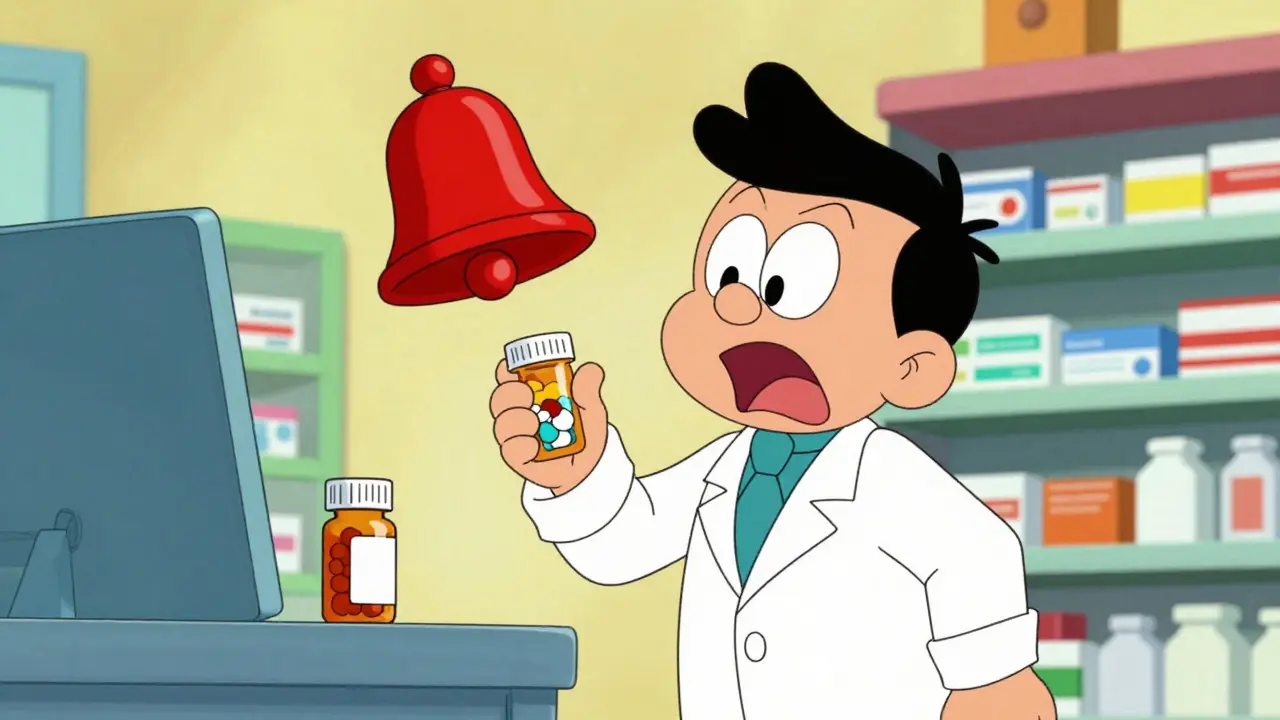
Imagine checking your medicine cabinet and realizing the heart medication you've been taking for months was flagged as dangerous three weeks ago. For patients, this is a nightmare; for pharmacists, it's a high-stakes race against the clock. pharmacy-level recall notifications are the formal alarms sent by manufacturers or regulators to pull defective drugs off the shelves before they reach a patient. But how does a pharmacy actually "check" for these? It isn't as simple as checking a single website.
To keep patients safe, pharmacies can't rely on a single source. If a critical notice gets buried in a spam folder or a certified letter arrives late, the consequences can be fatal. This guide breaks down the exact systems used to monitor recalls, how to verify if a specific batch is dangerous, and the protocols needed to ensure no patient is left at risk.
Quick Guide: Where to Find Recall Alerts
If you are a pharmacy professional or a concerned patient, these are the primary channels where recall data lives. Because the FDA is the federal agency responsible for protecting public health by ensuring the safety and efficacy of drugs, they are the gold standard for this information.
| Channel | Delivery Speed | Reliability | Best For |
|---|---|---|---|
| Integrated Pharmacy Systems | Real-time (Hourly) | Very High | Immediate inventory matching |
| FDA MedWatch Emails | Fast | High | Official regulatory alerts |
| Wholesaler Alerts | Fast | Moderate | Supply chain updates |
| Enforcement Reports | Weekly (Wednesdays) | High | Comprehensive auditing |
| Certified Mail/Fax | Slow (Days) | Low | Legal documentation |
Understanding Recall Classes: Which Ones Need Immediate Action?
Not every recall is a crisis. The FDA uses a three-tiered classification system to tell pharmacies how fast they need to move. Understanding these classes is the first step in checking for notifications because it determines your deadline.
- Class I: The most urgent. These involve a reasonable probability that the drug will cause serious adverse health consequences or death. Per FDA policy, these usually require action within 24 hours.
- Class II: The most common (roughly 67% of all recalls). These might cause temporary or medically reversible health problems.
- Class III: Low risk. The drug is unlikely to cause adverse health consequences, but it might violate a labeling law or have a minor packaging defect.
For a pharmacy, a Class I notification isn't just a "check"; it's an emergency. The goal is 100% patient notification for Class I, while Class II targets 80% and Class III around 50%.
How to Verify Recalls Using Pharmacy Management Systems
Manual checking is dead. Most modern pharmacies use Pharmacy Management Systems (PMS) like PioneerRx, QS/1, or FrameworkLTC. These tools automate the "check" by cross-referencing FDA data feeds with the pharmacy's actual inventory.
Here is how the automated process works in a high-efficiency environment:
- Data Feed Ingestion: The PMS pulls hourly updates from the FDA.
- Automatic Matching: The system looks for matching National Drug Code (NDC) and lot numbers within the pharmacy's digital stock.
- Alert Generation: Instead of a generic email, the pharmacist gets a report showing exactly which bottles on the shelf are affected.
- Patient Linking: The system scans dispensing records to identify every patient who received a dose from that specific lot.
According to data from the ASHP, pharmacies using these integrated systems cut their processing time from over 7 hours down to about 1.4 hours. If you are still checking recalls via a weekly PDF, you're risking a significant gap in patient safety.
The Multi-Channel Verification Protocol
Relying on one system is a gamble. A technical glitch or a missed email could lead to a "near miss"-a situation where a recall was issued but the medication stayed on the shelf. To prevent this, experts recommend a redundant, three-pronged approach.
1. The Regulatory Layer
Register for FDA MedWatch is the FDA's safety information and adverse event reporting program alerts. This is the official source. Additionally, checking the FDA Enforcement Reports every Wednesday ensures that no small-scale recall slipped through the cracks.
2. The Supply Chain Layer
Wholesalers like McKesson or Cardinal Health send their own notifications. While these are fast, they can sometimes produce "false positives" if batch numbers are slightly off. Always verify a wholesaler's alert against the official FDA notice before panic-pulling stock.
3. The Internal Audit Layer
Implement a strict verification timeline. The Cleveland Clinic suggests a 12-step protocol that includes confirming the recall class within one hour and verifying patient records within four hours for critical alerts. This ensures the "check" turns into "action" immediately.
Common Pitfalls in Recall Monitoring
Even with the best software, things go wrong. One of the biggest blind spots today is medication synchronization programs. When patients get a 90-day supply of multiple drugs at once, they are often missed by standard recall checks because the dispensing date was so long ago. Research indicates that nearly 43% of Class I recalls miss these "sync" patients.
Another issue is the "alert fatigue" experienced by pharmacy techs. In high-volume stores, receiving 20 generic notices a week-most of which don't apply to the local inventory-leads to staff ignoring the alerts. The key is to move toward systems that only alert the staff when a match is actually found in their specific stock.
Future-Proofing Your Safety Checks
The way we check for recalls is changing. By the end of 2025, the FDA is mandating structured electronic data using HL7 standards. This means the end of manual data entry and the start of truly automated matching. We are also seeing the rise of blockchain-based verification through projects like MediLedger, which allows a pharmacy to trace a drug's journey from the factory to the patient in seconds.
For now, the safest bet is a combination of an integrated PMS, an active MedWatch subscription, and a dedicated Recall Response Team that knows exactly who is responsible for pulling stock and calling patients when the alarm goes off.
How often should a pharmacy check for new recall notifications?
For Class I recalls, verification should happen almost immediately-ideally within 4 hours of notification. For general monitoring, pharmacists should review official FDA Enforcement Reports every Wednesday and monitor integrated PMS alerts in real-time throughout the business day.
What is the difference between a market withdrawal and a recall?
A recall is a formal action to remove a product that violates the law or is dangerous. A market withdrawal occurs when a product has a minor problem (like a labeling error) and the manufacturer removes it from the market without a formal FDA recall classification.
What should a pharmacy do if they find a recalled drug in their inventory?
Immediately quarantine the affected lot numbers to prevent further dispensing. Then, identify all patients who received the medication from that lot, notify them based on the recall class (100% for Class I), and follow the manufacturer's instructions for returning or destroying the product.
Are wholesaler notifications enough to satisfy regulatory requirements?
No. Regulatory bodies like the ASHP and FDA recommend redundant systems. Sole reliance on wholesalers or the postal service is generally considered insufficient for high-risk Class I recalls.
How long must a pharmacy keep records of recall verifications?
Per FDA 21 CFR 203.24, pharmacies are generally required to maintain recall verification records for at least 3 years. Most modern pharmacies use electronic audit trails within their PMS to meet this requirement.
Next Steps for Pharmacy Staff
- Audit your alerts: Ensure you are registered for MedWatch and that your wholesaler's notification email is not going to a junk folder.
- Test your PMS: Run a mock recall using a known old NDC to see how quickly your system identifies the affected stock and patients.
- Update your team: Train technicians on how to recognize the difference between a Class I and Class III alert so they can escalate urgent issues immediately.

Ben Jima
April 25, 2026 AT 18:43This is a great breakdown for pharmacy staff. It's so important to have those redundant layers because software glitches are more common than people think. I've seen a few cases where the PMS lagged and the manual MedWatch check saved the day!
Sharyl Foster
April 27, 2026 AT 16:23Actually, the 1.4 hour processing time claim is just marketing fluff from the software companies. In a real-world pharmacy with understaffed techs, it takes way longer to actually pull the stock and call people regardless of how fast the computer finds the NDC.
Jaclyn Vo
April 29, 2026 AT 07:22Ugh, the alert fatigue part is SO real! 🙄 I literally cannot stand how many meaningless notifications we get just to find out it's some random drug we don't even stock. It's a nightmare! 💅
Edwin Perez
April 29, 2026 AT 23:30Funny how they only tell you about the recalls after the drugs have been in the system for weeks. The FDA probably knows about the defects way before they send out a PDF. Just another way to keep the public in the dark while the big pharma companies protect their profits.
Anand Mehra
April 30, 2026 AT 21:21blockchain is overkill here. simple databases work fine. just bad management
Daniel Runion
May 2, 2026 AT 20:40OH PLEASE!!! Blockchain is a TOTAL joke in healthcare... a complete disaster waiting to happen!!! Who actually thinks putting medical data on a public ledger is a good idea??? Absolutely absurd!!!!
James Harrison
May 2, 2026 AT 23:28It's interesting to think about the ethical weight a pharmacist carries here. The gap between a Class I and Class III recall isn't just a category, it's a fundamental difference in the risk to human life.
Michael Deane
May 4, 2026 AT 10:27We need to stop relying on these globalized supply chains and start making everything right here in the USA because then we wouldn't have to deal with these sketchy lot numbers from overseas and we could actually trust the medicine we put in our bodies without needing a 12-step verification process just to make sure we aren't being poisoned by a foreign factory mistake!
Hayley Redemption
May 5, 2026 AT 02:22The mention of medication synchronization programs is the only part of this that shows actual insight. Most professionals ignore the sync patients because it requires a manual audit of historical dispensing records, which is simply too tedious for the average pharmacy technician to handle properly.
William Zhigaylo
May 6, 2026 AT 04:42The blatant disregard for the severity of Class I recalls in some of these comments is absolutely abhorrent. One must realize that a failure in this protocol is not a mere "glitch" but a potential catalyst for patient mortality, and the lack of professional rigor displayed here is frankly disgusting.
Elle Torres Sanz
May 6, 2026 AT 06:30Let's try to keep things positive and focus on how we can help the techs who are feeling that alert fatigue. Maybe we can find a way to streamline the process together so everyone feels supported!