
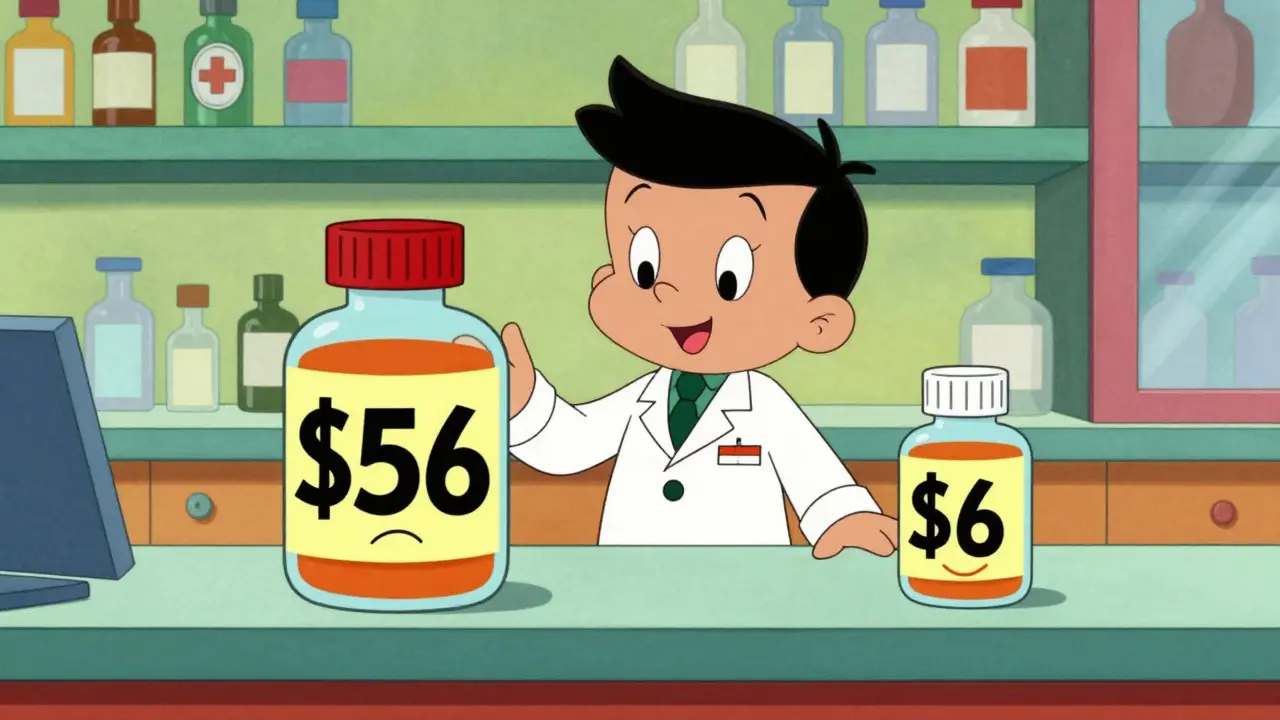
Imagine walking into a pharmacy and seeing a price tag of $56 for a medication you need every day, only to find out that a nearly identical version costs just over $6. For millions of low-income Americans, this isn't just a hypothetical scenario-it's the difference between staying healthy and skipping doses. The secret to this massive price gap lies in how Medicaid is a joint federal and state program that provides health coverage to eligible low-income adults, children, pregnant women, elderly adults, and people with disabilities handles generic medications.
While the system can feel like a maze of paperwork and approvals, the core goal is simple: getting the most effective medicine for the lowest possible price. By leaning heavily on generics, the program keeps costs manageable for both the government and the patients.
The Massive Impact of Generic Medications
To understand why generics are the backbone of the system, you have to look at the volume. Roughly 90% to 91% of all prescriptions filled through Medicaid are for Generic Drugs, which are medications created to be the same as an existing brand-name drug in dosage, safety, strength, and quality. If almost every single prescription is a generic, you'd think they would drive most of the spending, right? Actually, it's the opposite.
Despite making up the vast majority of prescriptions, generics only account for about 18% of total Medicaid drug spending. This means the program is moving a huge volume of medicine while spending a relatively small amount of money. For a patient, this translates to a manageable copay. On average, a Medicaid beneficiary pays about $6.16 for a generic, compared to $56.12 for a brand-name version. That's nearly nine times the cost for a drug that does the same job.
| Feature | Generic Medications | Brand-Name Medications |
|---|---|---|
| Average Copay | $6.16 | $56.12 |
| Prescription Volume | ~90-91% | ~9-10% |
| % of Total Spending | ~18% | ~82% |
| Affordability (< $20) | 93% of prescriptions | 59% of prescriptions |
How the Government Lowers the Price
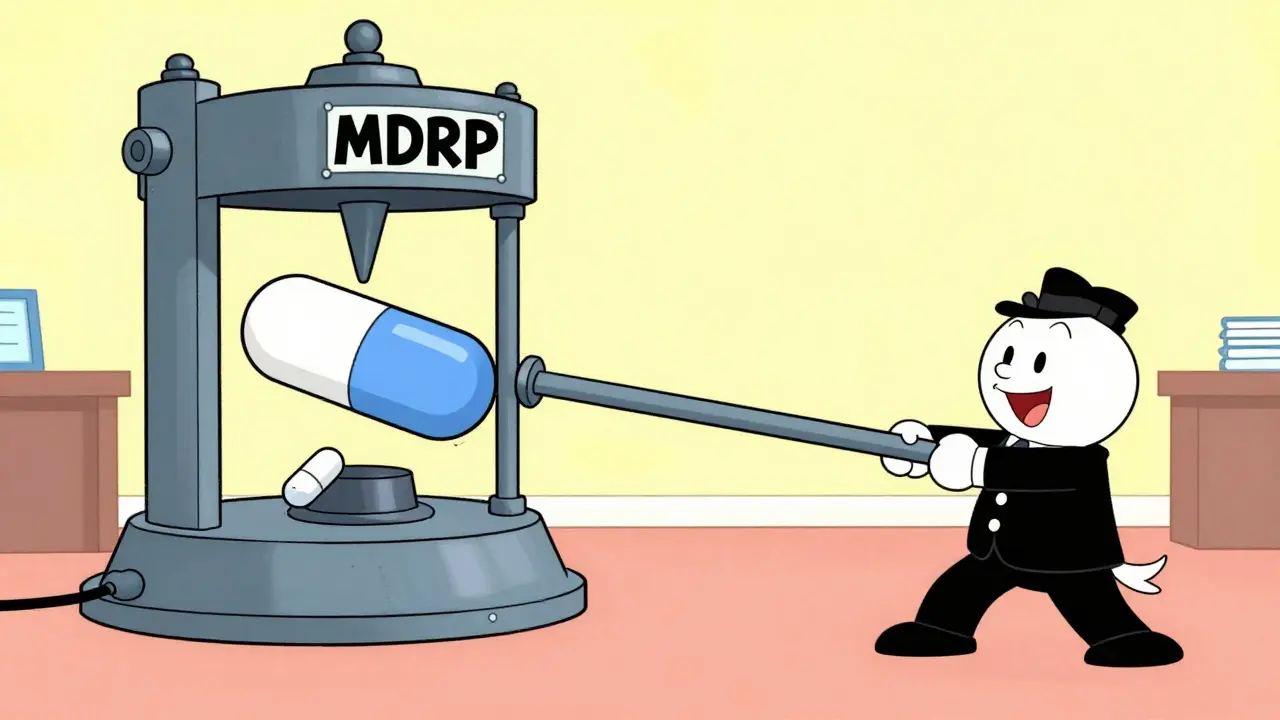
The low cost isn't just because generics are cheaper to make; it's because of the Medicaid Drug Rebate Program (MDRP). This is a deal between the government and drug companies: the companies agree to give Medicaid a big discount (a rebate) in exchange for having their drugs covered by the program. It's a powerful lever that ensures Medicaid often gets the lowest prices of any federal program, even beating out the Department of Veterans Affairs in some cases.
In 2023, these rebates slashed gross spending by over 51%, saving the system about $53.7 billion. When it comes to non-specialty generics, the government sometimes secures rebates equal to 86% of the retail price. Essentially, the program uses its massive buying power to force prices down, which in turn keeps the out-of-pocket costs low for the person at the pharmacy counter.
The Hidden Hurdles: PBMs and Prior Authorizations
If the drugs are so cheap, why does it sometimes feel hard to get them? The problem often lies in the "middlemen" known as Pharmacy Benefit Managers (PBMs). PBMs manage the drug lists (formularies) and negotiate with pharmacies. However, some reports show that PBMs can take significant fees-up to 31% on certain generic drug volumes-which doesn't necessarily lower the cost for the patient or the state.
Then there is the issue of Prior Authorization. This is when your doctor has to get a "thumbs up" from the insurance provider before they will pay for a specific drug. While this helps prevent waste, it can be a nightmare for patients. Imagine needing an asthma inhaler but waiting three weeks and making five phone calls just to get approval for a generic version that costs three dollars. It's a systemic bottleneck that can delay care even when the medication itself is affordable.
The Rising Threat of Specialty Drugs
While generics are saving the day for basic health needs, a new challenge is emerging: high-cost specialty drugs. These are complex medications used for rare diseases or advanced cancers. In 2021, drugs that cost over $1,000 per claim made up less than 2% of the prescriptions but more than half of all Medicaid spending. This is where the budget is leaking.
Because of this, the Centers for Medicare & Medicaid Services (CMS) launched the GENEROUS Model in 2024. The goal is to find new ways to reduce costs and manage how these expensive drugs are used without hurting the patients who truly need them. The hope is that Biosimilars-which are essentially generic versions of complex biologic drugs-will soon do for specialty medicine what generics did for basic medicine, potentially saving another $100 billion annually by 2027.
Tips for Patients to Maximize Savings
Navigating Medicaid is different for everyone because 48 states use Managed Care Organizations (MCOs) to handle their pharmacy benefits. This means your experience in Ohio might be totally different from someone's in Florida. Here is how to make sure you are getting the lowest price possible:
- Ask for the Generic: While pharmacies usually substitute automatically, always double-check that you're receiving the generic version.
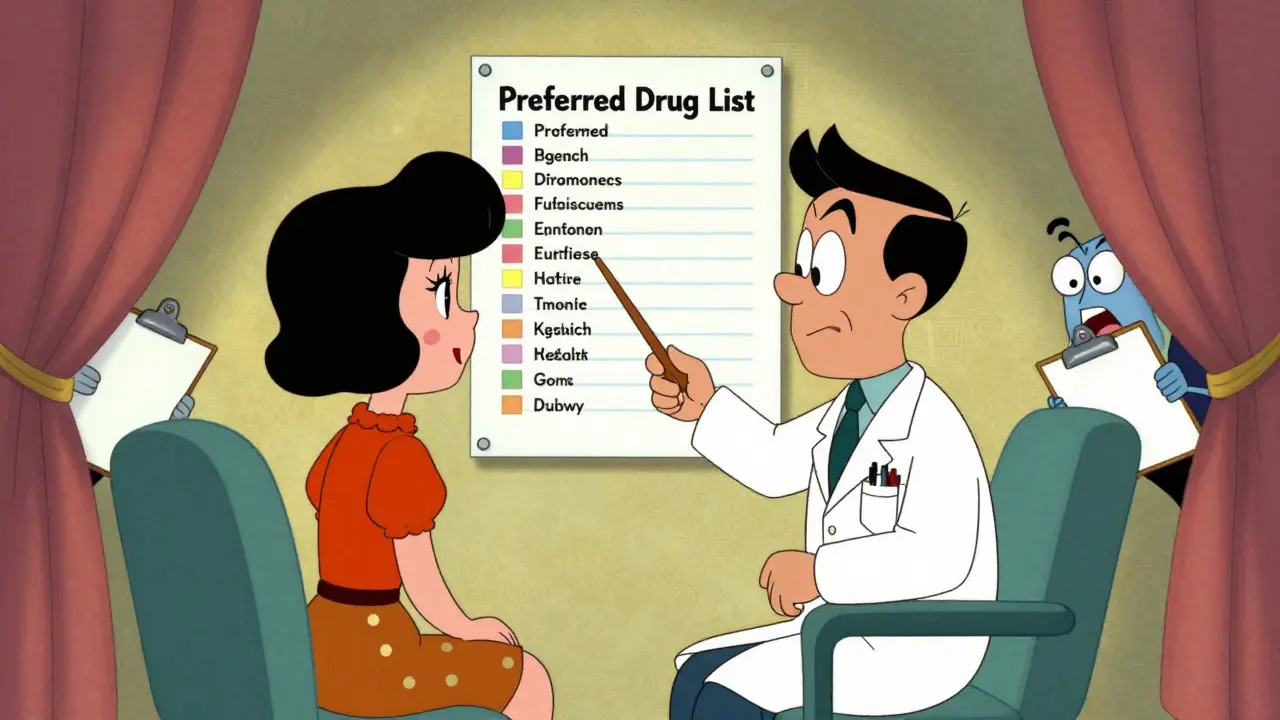
- Review Your Formulary: Every state Medicaid program has a "preferred drug list." If your medication isn't on it, your copay might be higher. Ask your doctor if there is a preferred generic alternative.
- Plan for Prior Authorization: If you are starting a new medication, ask your doctor's office if it requires prior authorization immediately. This prevents the "pharmacy shock" of finding out your drug isn't covered while you're standing at the counter.
- Check for Biosimilars: If you use a high-cost biologic drug, ask your specialist if a biosimilar version is available and covered by your state's plan.
Why is my generic drug copay still high if the drug is cheap?
This happens because some state programs have fixed copay tiers. Even if the manufacturer drops the price of the generic drug, the state may not lower the copay for the patient. This creates a disconnect where the government saves money, but the patient's cost stays the same.
Are generic drugs as effective as brand-name drugs?
Yes. By law, generic drugs must have the same active ingredients, strength, dosage form, and route of administration as the brand-name drug. They are designed to provide the same clinical benefit.
What is the difference between a generic and a biosimilar?
Generics are chemical copies of simple drugs. Biosimilars are nearly identical versions of complex, large-molecule biologic drugs (made from living cells). Because biologics are more complex, biosimilars are "highly similar" rather than exact copies, but they provide the same therapeutic result.
How do I know if my drug requires prior authorization?
The best way is to check your state's Medicaid pharmacy manual or ask your pharmacist. Your doctor's office can also see this through the electronic prescribing system when they send the order to the pharmacy.
Can I use other discount programs with Medicaid?
Generally, no. Medicaid is a primary insurance program, and using other third-party discount cards or pharmaceutical coupons at the same time is often prohibited by federal law.
What to Do if Your Medication is Too Expensive
If you find that your copays are becoming unaffordable, don't just stop taking your medicine. Start by talking to your doctor about "therapeutic alternatives." This means switching to a different drug in the same class that is on a lower cost tier in your state's Medicaid plan.
If the drug is a necessity and you can't afford the copay, you can request a Medical Necessity Waiver. This requires your doctor to provide evidence that the brand-name drug is the only option that works for you, which can sometimes lead the state to cover it at the generic price point. Lastly, if you're dealing with a Managed Care Organization (MCO), you have the right to file a grievance or appeal if a medication is denied or if the cost is an undue burden on your health.


Tama Weinman
April 18, 2026 AT 08:14Sure, they tell you the prices are lower, but just follow the money to the PBMs and the government contracts. It's all a curated shell game to keep the population dependent on a system that decides who gets the 'good' stuff and who gets the scrap generics while the elites laugh in their boardrooms. Just a coincidence that the 'savings' always seem to benefit the bureaucracy more than the actual sick person.
Anna BB
April 19, 2026 AT 11:33It's so heartening to see these options for people who are struggling!!! Medicaid really is a lifeline for so many families... though the paperwork is just a nightmare sometimes!!!
Randall Barker
April 19, 2026 AT 19:33The real issue here isn't the price of the drug, it's the utter failure of a system that allows corporate greed to dictate healthcare access in the first place. We shouldn't be praising a system for making a drug $6 when the brand name is $56; we should be asking why the hell it's $56 in a civilized society. It's a moral bankruptcy masquerading as a fiscal victory.
Anmol Garg
April 21, 2026 AT 00:32It is interesting to see how the US handles this compared to other systems. The focus on generics is a practical bridge, but the human element-the stress of the prior authorization-is where the real suffering happens. We must remember that behind every statistic is a person just trying to breathe or sleep.
Josephine Wyburn
April 22, 2026 AT 14:03Omg I literally cannot even imagine the stress of waiting three weeks for an inhaler while you're like actually struggling to breathe 😭 it's just so unfair that our healthcare system is designed to make us beg for basic survival 💔 and don't even get me started on the phone calls to the insurance company where they put you on hold for an hour just to tell you they don't cover the one thing that actually works for your body 🙄 honestly it's just a total nightmare and I'm so exhausted just thinking about it!!!! 😫
Ben Ferguson
April 23, 2026 AT 19:49I must say, the sheer audacity of the brand-name pricing is simply breathtaking, and while I find the generic solution to be a wonderful piece of administrative ingenuity, I cannot help but feel that the journey through the Medicaid maze is like trying to navigate a labyrinth while blindfolded and wearing heavy boots, which is just absolutely tragic when you consider the vulnerability of the patients involved in this grander scheme of American medicine!
Cheryl C
April 25, 2026 AT 16:38USA best! 🇺🇸 gotta love those generics keepin it cheap for the folks who need it!! just gotta deal with the red tape lol 🤣
Adele Shaw
April 27, 2026 AT 04:46This is exactly why we need to put America first and stop letting these global pharma companies bleed us dry. The government finally using its buying power is the only way to keep our citizens from going broke just to stay alive.
Heer Malhotra
April 28, 2026 AT 09:16The systemic inefficiencies described here are typical of Western administrative failures. It is a matter of basic human right to have affordable medicine without the interference of parasitic middle-men who prioritize profit over the sanctity of life.