
Quick Summary: The Safety Gap
- Error Rates: Hospitals have much higher absolute error rates (up to 20%), but retail pharmacies have a higher chance of the error actually reaching the patient.
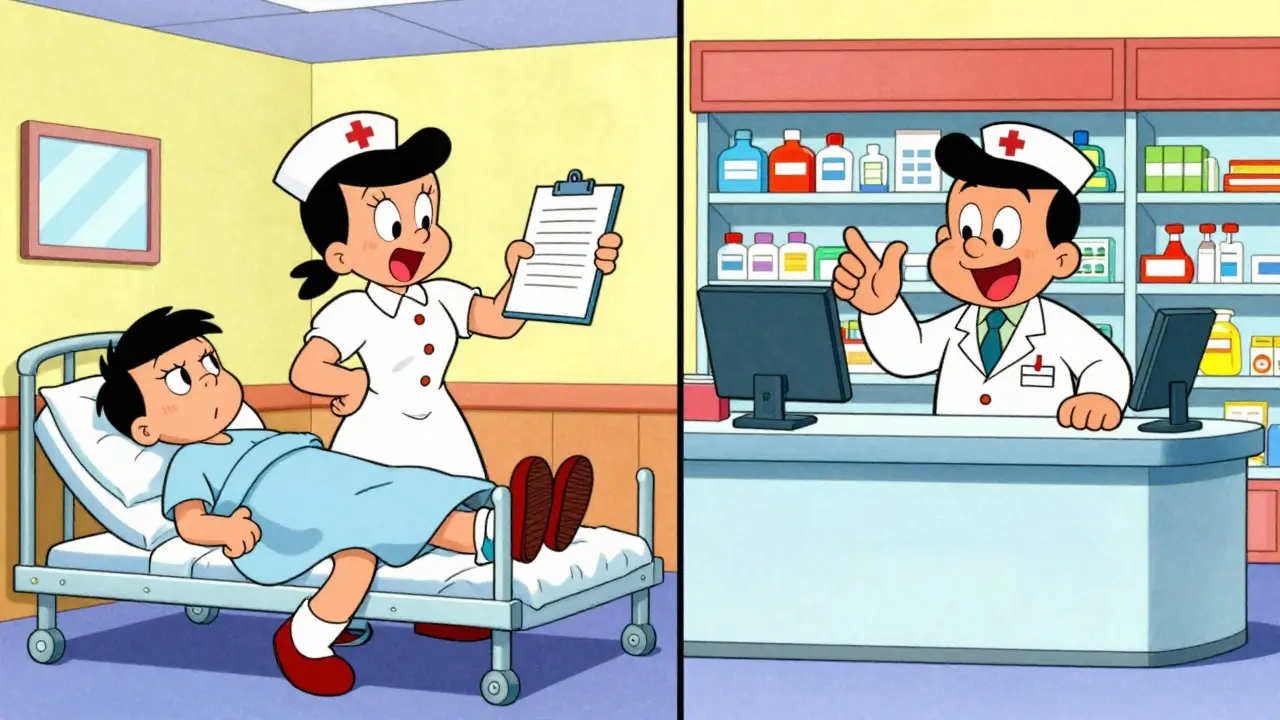
- The "Last Line": In hospitals, nurses act as a safety buffer; in retail, the patient is the final checkpoint.
- Common Mistakes: Retail errors often involve wrong doses or directions, while hospital errors frequently involve timing and administration.
- Impact: Medication errors cost the U.S. economy over $177 billion annually in total misadventures.
The Hidden Danger: How Retail and Hospital Risks Differ
When we talk about dispensing errors, we're looking at two completely different worlds. In a hospital, the environment is fast-paced and high-stakes. Patients are often critically ill, and medications are administered multiple times a day by different staff members. Because of this complexity, the sheer volume of errors is higher. Research from JAMA Internal Medicine found that in some facilities, nearly 1 in 5 doses contained some form of error. However, hospitals have something retail pharmacies don't: a layered defense. Before a drug ever touches a patient, it usually passes through a pharmacist and then a nurse. This means that while mistakes are common, they are often caught before they cause harm. Retail pharmacies, like the one on your street corner, operate differently. The error rate is much lower-roughly 1.5% according to meta-analyses in the Journal of Patient Safety. But here is the scary part: once that bottle leaves the pharmacy counter, there is no one left to double-check it except you. If the pharmacist puts the wrong strength of a drug in the bottle, you are the last line of defense. This makes retail errors potentially more dangerous because they are more likely to reach the patient unchecked.Breaking Down the Numbers: Error Rates Compared
To get a better sense of the scale, let's look at the data. In the U.S., community pharmacies dispense about 3 billion prescriptions a year. Even with a low error rate, that adds up to millions of mistakes. Some estimates suggest about four errors a day in a typical pharmacy that fills 250 prescriptions.| Feature | Hospital Setting | Retail (Community) Pharmacy |
|---|---|---|
| Estimated Error Rate | High (up to 20% of doses) | Low (approx. 1.5%) |
| Primary Checkpoint | Nursing Staff (Administration) | The Patient |
| Common Error Type | Timing, Dosage, Administration | Transcription, Wrong Drug/Dose |
| Detection System | Closed-loop/Integrated EHR | Manual checks/CDSS software |
| Economic Impact | $3.5B+ in direct medical costs | Contributes to $77B morbidity cost |
Where the Mistakes Actually Happen
Not all errors are created equal. In a retail setting, a huge chunk of the problem is transcription. This is where a pharmacist or technician misreads a doctor's handwriting or enters the wrong data into the computer. For example, a prescription for estradiol meant to be taken "twice per week" might be typed as "twice per day." That's a massive difference that can lead to an immediate overdose. In hospitals, the errors are more fragmented. They happen during prescribing, transcribing, dispensing, and finally, administration. Administration is the danger zone. This is where a nurse might give a drug at the wrong time or to the wrong patient. Because hospital patients are often more unstable, a timing error with a potent medication can lead to a crisis much faster than a mistake in a retail setting would.What Causes These Slips?
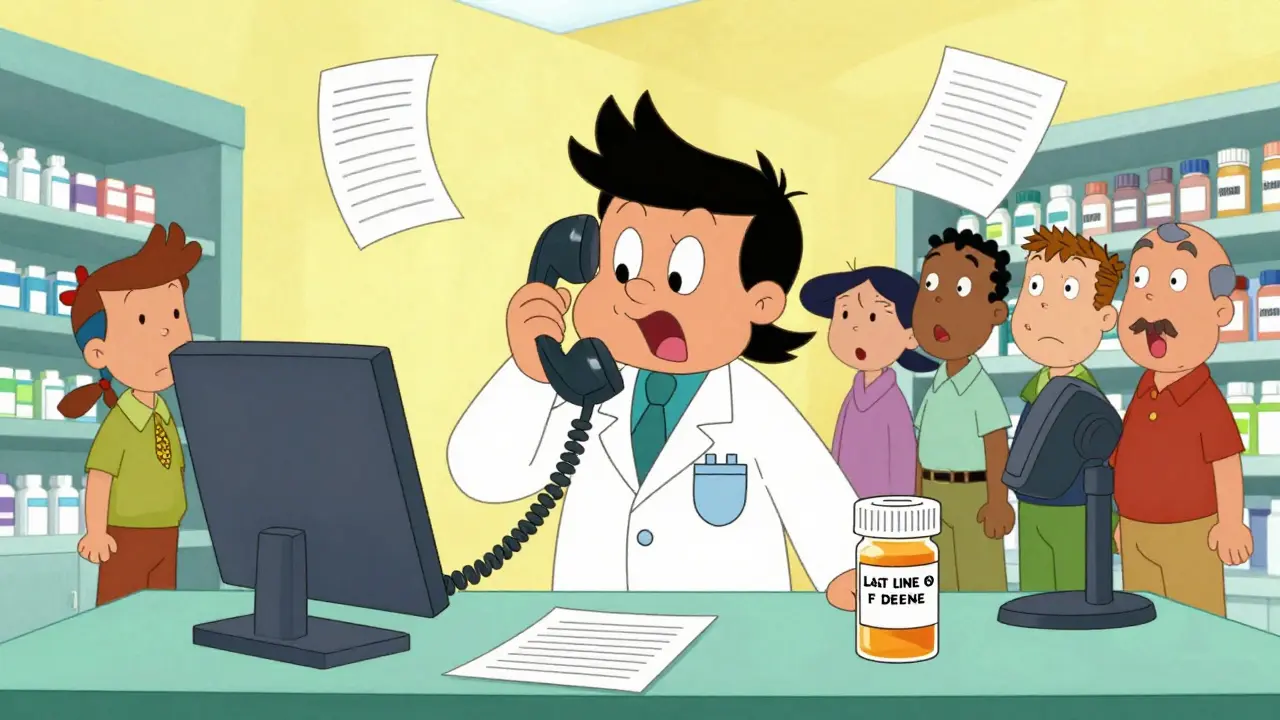
Why do smart professionals make these mistakes? In retail pharmacies, it often comes down to the environment. About 80% of dispensing errors are linked to cognitive failures triggered by the workplace. Think about it: loud noises, constant phone ringing, insurance hurdles, and the pressure to fill 200 scripts in a few hours. These aren't just "human errors"; they are systemic failures where the environment pushes the brain to make a mistake. Hospital errors usually stem from communication breakdowns. Imagine a doctor giving a verbal order during an emergency, which is then misinterpreted by a pharmacist and finally misadministered by a nurse. When staffing levels are low and patient acuity is high, these communication gaps widen. The lack of a "closed-loop" system-where every step is digitally verified-is where the most dangerous gaps exist.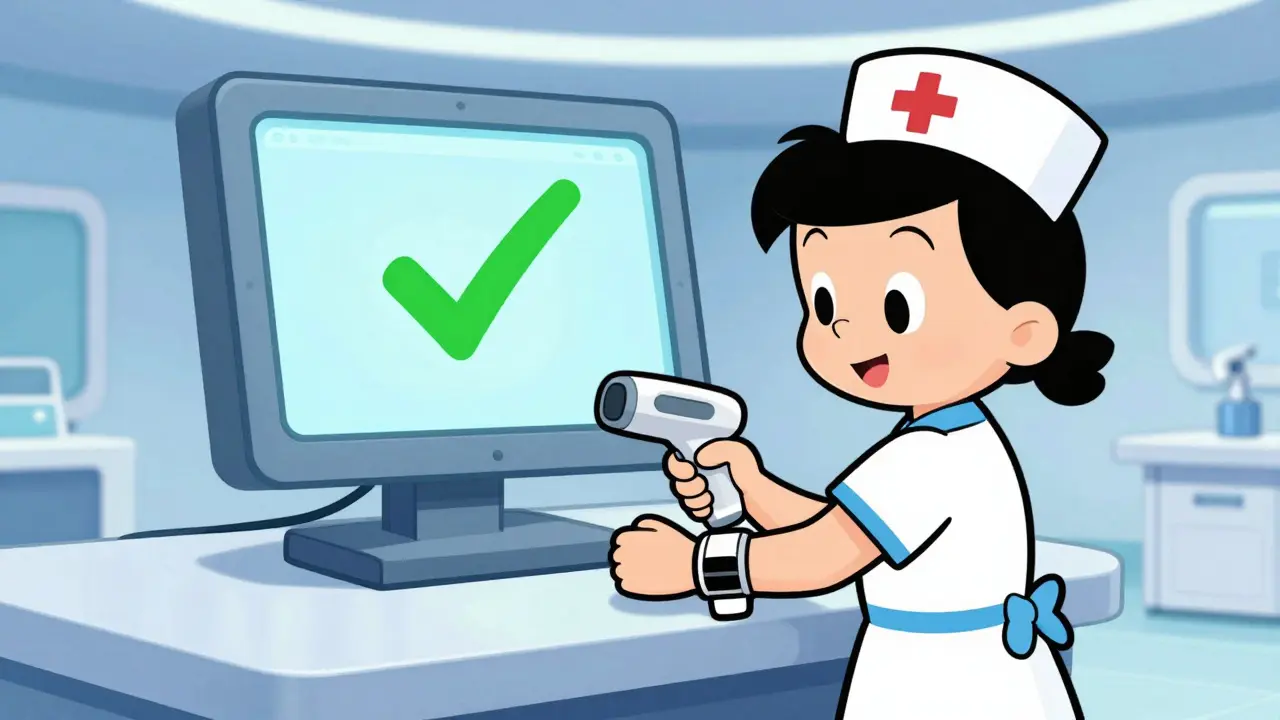
The Financial and Human Cost
We can't ignore the price tag of these mistakes. The Academy of Managed Care Pharmacy (AMCP) estimates that medication misadventures cost the U.S. economy over $177 billion annually. In hospitals alone, treating drug-related injuries costs at least $3.5 billion. But the money isn't the real story. The real story is the 7,000 to 9,000 people who die every year in the U.S. due to these errors. Whether it's a wrong dose of insulin in a pharmacy bottle or a misplaced decimal point in a hospital IV drip, the results can be fatal. The tragedy is that many of these are preventable if the right safety nets are in place.How We're Fixing the Problem
Fortunately, technology is stepping in. Hospitals have seen a massive drop in errors thanks to Barcode Medication Administration (BCMA) systems. By scanning the patient's wristband and the medication, hospitals can reduce errors by up to 86%. Some institutions, like the Mayo Clinic, have integrated their electronic health records directly with the pharmacy, cutting errors by over half. Retail pharmacies are catching up with Clinical Decision Support Systems (CDSS). These are software tools that flag a dose as "unusual" or "dangerous" the moment it's entered, forcing the pharmacist to double-check the order. AI is also entering the fray. CVS Health, for instance, used AI-powered verification to reduce dispensing errors by 37%. Beyond tech, there's a push for a "just culture." This is a shift away from blaming and shaming the individual pharmacist or nurse and instead looking at why the system allowed the mistake to happen. When people aren't afraid to report a "near miss," the whole system learns and gets safer.Which setting is technically "safer" for a patient?
It depends on how you define safety. Hospitals have a higher rate of errors occurring, but they also have more safety nets (like nurses) to catch those errors before they reach the patient. Retail pharmacies have far fewer errors, but once an error happens, it is much more likely to actually be ingested by the patient because there is no one else to check it.
What is a "near miss" in pharmacy?
A near miss is an error that was made but caught before it reached the patient. For example, if a pharmacist puts the wrong pill in a bottle but notices it during the final check, that is a near miss. Tracking these is vital because they show where the system is weak without anyone actually getting hurt.
How can I prevent retail pharmacy errors as a patient?
Since you are the last line of defense, always double-check your medication before leaving the store. Check the name of the drug, the dosage, and the instructions on the label. If the pill looks different than usual (different color or shape), ask the pharmacist why. Don't be afraid to ask for a confirmation of the dose.
Do all hospitals use barcode scanning for meds?
Many do, especially large academic medical centers, but adoption varies. Barcode Medication Administration (BCMA) is considered the gold standard and can reduce errors by up to 86%, but smaller or older facilities may still rely more heavily on manual checks.
What is the most common type of retail pharmacy error?
Transcription errors are among the most frequent, where the instructions or dosage are recorded incorrectly. Common mistakes include incorrect medication, wrong doses, or confusing "twice a week" with "twice a day."




Darius Prorok
April 6, 2026 AT 00:18Basically, retail pharmacies are just understaffed and that's why they mess up. It's not some big mystery.
Del Bourne
April 6, 2026 AT 21:31It is so important to remember that pharmacists are often dealing with an overwhelming number of prescriptions while managing insurance disputes. These systemic pressures are exactly why we see these transcription errors. If you're picking up a new medication, I highly recommend opening the bottle and comparing the pill to the description or a picture online if you're unsure. It only takes a few seconds but it can literally save your life!
Grace Lottering
April 8, 2026 AT 21:26Big Pharma loves these "systemic failures" because it hides the truth. They push these AI tools just to collect more data on us. It's all about control!
Rauf Ronald
April 9, 2026 AT 13:42Spot on about the "just culture" move! When we stop blaming people and start fixing the actual workflow, everyone wins. I've seen this work in clinical settings where reporting a near-miss led to a complete redesign of the medication cart, and the error rate plummeted. Let's get that same energy into the retail side of things! We can actually make this safer if we collaborate across the board!
GOPESH KUMAR
April 10, 2026 AT 22:04The irony is that humans believe they are the masters of medicine while failing at basic arithmetic. We outsource our health to a system that treats patients like numbers in a queue. Whether it is a hospital or a retail shop, the fundamental flaw is the illusion of precision in a chaotic world. People think a barcode scanner is a miracle, but it is just a digital band-aid on a severed limb. The systemic failure is not the error, but the belief that we can automate away human negligence. Truly, we are just gambling with our biology every time we swallow a pill.
Victoria Gregory
April 11, 2026 AT 20:07I totally see where you're coming from with the systemic stuff!!! 💖 Maybe if we just had more kindness and less rush in those stores, things would be way better ✨ a little patience goes a long way for everyone involved!!!! 😊
Nathan Kreider
April 12, 2026 AT 08:52It's really scary to think about, but I'm glad there are ways we can help ourselves. Just taking a moment to check the label can make a huge difference for someone.
Michael Flückiger
April 13, 2026 AT 15:48This is such a wake-up call!!! We absolutely MUST demand better staffing ratios in our pharmacies right now!!! It's just common sense that a tired person makes mistakes!!!!
Laurie Iten
April 13, 2026 AT 18:31the intersection of human error and corporate efficiency is where these tragedies live. we accept a certain level of risk for the sake of convenience and then act surprised when the system breaks. the real question is how much safety we are willing to trade for a faster pickup time