

That burning sensation creeping up your chest? You are not alone. Between thirty and eighty percent of pregnant people deal with heartburn, often getting worse as the baby grows. It feels awful, but you also want to make sure whatever you take is completely safe for your developing child. This guide breaks down exactly which medications-antacids, H2 blockers, and proton pump inhibitors-are considered safe, when to use them, and what to avoid entirely.
Why Heartburn Hits Harder During Pregnancy
You might wonder why this happens if you never had acid reflux before. Two main factors are at play here. First, your body produces higher levels of progesterone. This hormone relaxes smooth muscles throughout your body, including the valve between your stomach and esophagus. When that valve relaxes too much, stomach acid sneaks upward.
Second, physical pressure changes everything. As your uterus expands, it pushes against your stomach, squeezing acid back up into your esophagus. This is why symptoms often start in the second trimester and peak in the third. While uncomfortable, this is a normal physiological change, not a sign that something is wrong with your digestion permanently.
Is heartburn during pregnancy dangerous for the baby?
No, heartburn itself does not harm the fetus. However, severe discomfort can affect your ability to eat, sleep, and maintain hydration, which indirectly impacts maternal health. Treating it safely ensures you stay comfortable and nourished.
First-Line Defense: Antacids
When heartburn first strikes, doctors almost always recommend starting with the simplest option: antacids. These medications work by neutralizing stomach acid immediately. They do not stop acid production; they just cancel out the acid already there. Because they act locally in the stomach and are poorly absorbed into the bloodstream, they pose minimal risk to the fetus.
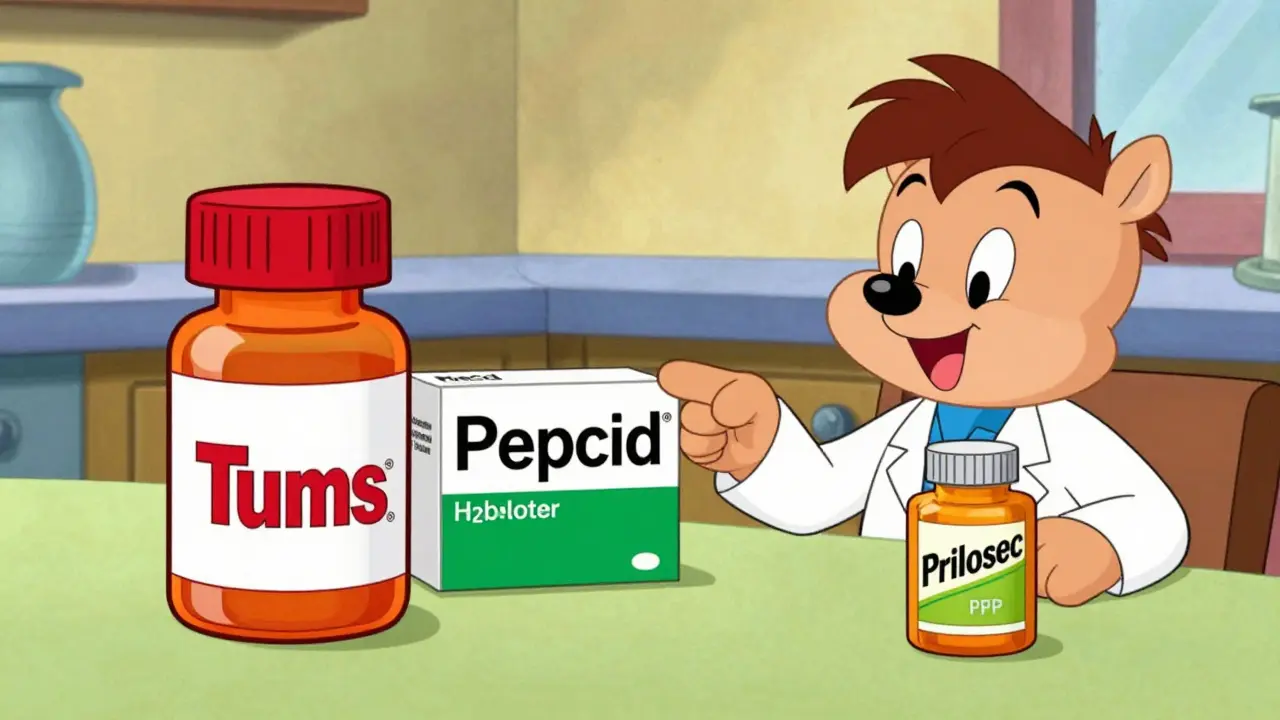
Tums (calcium carbonate) is widely considered the safest choice. Why? Because both you and your baby need calcium. Your growing skeleton requires significant amounts of this mineral, so taking Tums serves a dual purpose: relief and nutrition. Other options like Rolaids (calcium carbonate and magnesium hydroxide) or Mylanta (aluminum hydroxide, magnesium hydroxide, and simethicone) are also generally accepted.
However, not all antacids are created equal. You should avoid those containing sodium bicarbonate, as high sodium intake can contribute to swelling and high blood pressure. Also, be cautious with aluminum-based antacids if you suffer from constipation, a common pregnancy complaint, as aluminum can worsen it. Magnesium-based ones might cause diarrhea. Stick to calcium carbonate unless your doctor advises otherwise.
- Best For: Occasional, mild heartburn.
- Onset: Immediate relief within minutes.
- Duration: Short-lived, usually 1-2 hours.
- Dosing Tip: Chew tablets thoroughly. Do not exceed the recommended daily limit of calcium (usually around 2000mg total from all sources).
Step Up: H2 Blockers
If chewing Tums every hour isn't cutting it, it's time to consider H2 blockers. Unlike antacids, these drugs reduce the amount of acid your stomach produces. They block histamine receptors in the stomach lining, signaling your cells to slow down acid secretion. They take longer to kick in than antacids but last much longer, typically providing relief for 10 to 12 hours.
Famotidine (brand name Pepcid) is the preferred H2 blocker during pregnancy. Extensive observational studies have shown no increased risk of birth defects when used during any trimester. It has been a standard recommendation for decades because its safety profile is robust.
A critical note on history: You may remember Zantac (ranitidine) being a go-to H2 blocker. The FDA withdrew ranitidine from the U.S. market in April 2020 due to concerns about NDMA, a probable carcinogen, forming in the drug over time. Do not use old stock of ranitidine. Famotidine remains the safe, effective alternative.
| Medication Type | Common Brand Names | Safety Profile | Best Use Case |
|---|---|---|---|
| Antacid | Tums, Rolaids | Very Safe (Category A/B equivalent) | Occasional, mild symptoms |
| H2 Blocker | Pepcid (Famotidine) | Safe (Extensively studied) | Frequent symptoms, nighttime relief |
| PPI | Prilosec (Omeprazole) | Generally Safe (Use if needed) | Severe, persistent GERD |
The Heavy Hitters: Proton Pump Inhibitors (PPIs)
For some, even H2 blockers aren't enough. If you have severe gastroesophageal reflux disease (GERD) that interferes with eating or sleeping, your doctor might prescribe a Proton Pump Inhibitor (PPI). PPIs are the most potent acid reducers available. They irreversibly inhibit the enzyme system in your stomach cells that actually creates acid. One dose can keep acid production suppressed for 24 hours or more.
Omeprazole (Prilosec) is the most extensively studied PPI in pregnancy. Large database studies involving hundreds of thousands of pregnancies have not found a significant increase in major birth defects. Lansoprazole (Prevacid) and pantoprazole (Protonix) are also considered acceptable alternatives when prescribed by a physician.
There is some debate in the medical community. A 2019 study published in JAMA Pediatrics suggested a potential association between first-trimester PPI use and childhood asthma. However, correlation does not mean causation, and subsequent reviews have not confirmed a direct causal link. Most experts agree that the benefit of treating severe, untreated GERD outweighs the theoretical risks of PPIs. Untreated severe heartburn can lead to poor nutrition and dehydration, which are definite risks to fetal development.
Key takeaway: Do not self-medicate with PPIs. Always get a prescription and follow-up plan from your OB-GYN or gastroenterologist.
What to Avoid Completely
Not everything on the shelf is safe. Some popular remedies contain ingredients that are harmful during pregnancy.
- Pepto-Bismol: Contains bismuth subsalicylate. Salicylates are related to aspirin. Aspirin use in late pregnancy can cause serious complications, including premature closure of the ductus arteriosus in the baby's heart. Avoid it.
- Aluminum Trisilicate: Some older antacid formulations contain this. It is associated with higher risks and is generally avoided.
- High-Sodium Antacids: As mentioned, these can exacerbate hypertension and edema.

Lifestyle Changes That Actually Work
Medication helps, but lifestyle adjustments are the foundation of managing heartburn. Since hormones and anatomy are driving the issue, mechanical fixes often provide the best long-term relief.
- Eat Smaller, Frequent Meals: A full stomach puts more pressure on the lower esophageal sphincter. Five small meals are better than three large ones.
- Stay Upright After Eating: Gravity is your friend. Wait at least two to three hours after eating before lying down or going to bed.
- Elevate Your Head: Use extra pillows or a wedge pillow to keep your head and chest elevated while sleeping. This prevents acid from flowing back up overnight.
- Identify Trigger Foods: Spicy foods, citrus, tomato-based sauces, chocolate, caffeine, and fatty/fried foods tend to relax the esophageal valve or irritate the stomach lining. Keep a food diary to spot your personal triggers.
- Wear Loose Clothing: Tight waistbands squeeze your stomach. Switch to maternity wear that accommodates your growing belly without compression.
Timing Matters: Trimester Considerations
Your approach to medication should shift slightly depending on how far along you are.
First Trimester: This is the period of organogenesis, where the baby's major organs are forming. Many doctors advise avoiding all non-essential medications during the first 14 weeks if possible. Focus heavily on lifestyle changes and diet. If you must take something, calcium carbonate antacids are the safest bet due to their lack of systemic absorption.
Second and Third Trimesters: Symptoms often intensify. If lifestyle changes fail, introducing an H2 blocker like famotidine is reasonable. If that fails, move to PPIs under supervision. By this stage, the risk of teratogenicity (birth defects) from medication is significantly lower than in the first trimester, making the risk-benefit analysis more favorable for stronger meds.
Can I take antacids and H2 blockers together?
Yes, but timing matters. Antacids can interfere with the absorption of other medications. If you are taking an H2 blocker or PPI, take your antacid at least two hours apart from those doses to ensure maximum effectiveness of both.
Is it safe to use heartburn medication while breastfeeding?
Most heartburn medications are compatible with breastfeeding. Calcium carbonate antacids are very safe. Famotidine passes into breast milk in very small amounts and is generally considered safe. PPIs like omeprazole are also typically considered compatible, but always check with your pediatrician or lactation consultant first.
When should I call my doctor about heartburn?
Call your provider if you experience difficulty swallowing, unintentional weight loss, vomiting blood, black/tarry stools, or if heartburn persists despite using recommended OTC medications. These could be signs of a more serious condition like ulcers or esophagitis.
Does ginger help with pregnancy heartburn?
Ginger is primarily known for helping with nausea and morning sickness. While it is soothing for the stomach, evidence for its effectiveness against acid reflux specifically is limited. It is safe to try ginger tea or chews, but don't rely on it as a primary treatment for severe heartburn.
Are natural remedies like apple cider vinegar safe?
Apple cider vinegar is acidic. While some people claim it balances stomach pH, there is no scientific evidence supporting this for GERD. In fact, adding more acid to an already irritated esophagus can worsen symptoms. Stick to proven, medically vetted treatments like calcium carbonate.
Next Steps and Troubleshooting
If you are currently suffering, start with the basics today. Buy a box of plain calcium carbonate chewables. Adjust your dinner routine to finish eating three hours before bed. Sleep with your head elevated. If you see no improvement in three days, or if the pain is severe enough to wake you up multiple times a night, schedule a visit with your OB-GYN. They can prescribe famotidine or omeprazole if necessary, ensuring you get the rest and nutrition you and your baby need.

Dawn Renee
June 27, 2026 AT 12:34its not just the meds its the big pharma pushing these calcium supplements to keep us dependent on their supply chains while ignoring the real cause which is environmental toxins in our food supply they want you to think its normal but its a slow poison
Divya Prakash
June 27, 2026 AT 18:51The notion that one might casually consume pharmaceutical interventions without consulting a specialist of repute is frankly preposterous and indicative of a societal decline in intellectual rigor regarding maternal health protocols.
Mohit Patil
June 29, 2026 AT 13:09they tell you its safe but have you looked at the long term data or are you just trusting the FDA who clearly has ties to the chemical industry i bet the NDMA was covered up for years before they admitted it
Chandan Sharma
June 30, 2026 AT 10:20One must appreciate the nuanced pharmacological distinctions presented here, particularly the elegant mechanism by which H2 blockers modulate histamine receptors with such precision, a testament to modern medical ingenuity.
Katie Dixon
July 1, 2026 AT 11:55I love how we are so focused on American brands like Tums when there are better natural remedies available elsewhere but sure let's keep buying what the corporations tell us to buy because we are too lazy to research our own heritage medicines
Anna Bartle
July 1, 2026 AT 14:08This is incredibly helpful information!! I always forget about the timing between antacids and other meds. Thanks for sharing this!
Stay strong moms!
Chris Munton
July 1, 2026 AT 16:43It is morally reprehensible that society expects women to suffer through such discomfort without adequate support systems in place, yet we also see a disturbing trend of over-medicalization where every minor ailment is treated with chemical intervention rather than holistic care.
Amrithaa Thayaparan
July 2, 2026 AT 23:39u people r so naive thinking u can just pop pills without consequences its a moral failure to not educate urself properly on the dangers of these synthetic compounds that disrupt ur bodies natural balance
Paul Diamond
July 4, 2026 AT 21:10The philosophical implication of treating physiological symptoms as mere inconveniences to be neutralized rather than signals from the body demanding attention warrants deeper contemplation beyond the clinical scope provided.
Peter Sverla
July 5, 2026 AT 04:56I wonder if the progesterone levels correlate directly with the severity of reflux or if there are other hormonal factors at play that haven't been fully explored in these studies yet.
Sydney Jarrett
July 7, 2026 AT 01:21Let me break down the bioavailability metrics for you because most of you don't understand the pharmacokinetics involved here. The systemic absorption rate of calcium carbonate is negligible compared to PPIs which means the risk profile is fundamentally different and requires a sophisticated understanding of metabolic pathways.
Lorena Suarez
July 7, 2026 AT 03:41i found this really calming to read since i was worried about my baby being affected by my heartburn meds its good to know there are safe options out there
Isis Fleming
July 8, 2026 AT 06:07It is imperative that expectant mothers adhere strictly to the guidelines outlined herein, as deviation may result in unforeseen complications. Please consult your healthcare provider before initiating any new medication regimen.
Ben Murphy
July 9, 2026 AT 11:38You are all missing the point about the ethical implications of self-medicating. It is a profound lack of respect for the sanctity of life to experiment with unverified treatments during gestation.
Fred Stone
July 11, 2026 AT 00:18hey just wanted to say thanks for the info on famotidine i had no idea ranitidine was pulled from shelves so good thing i checked before using my old stash