
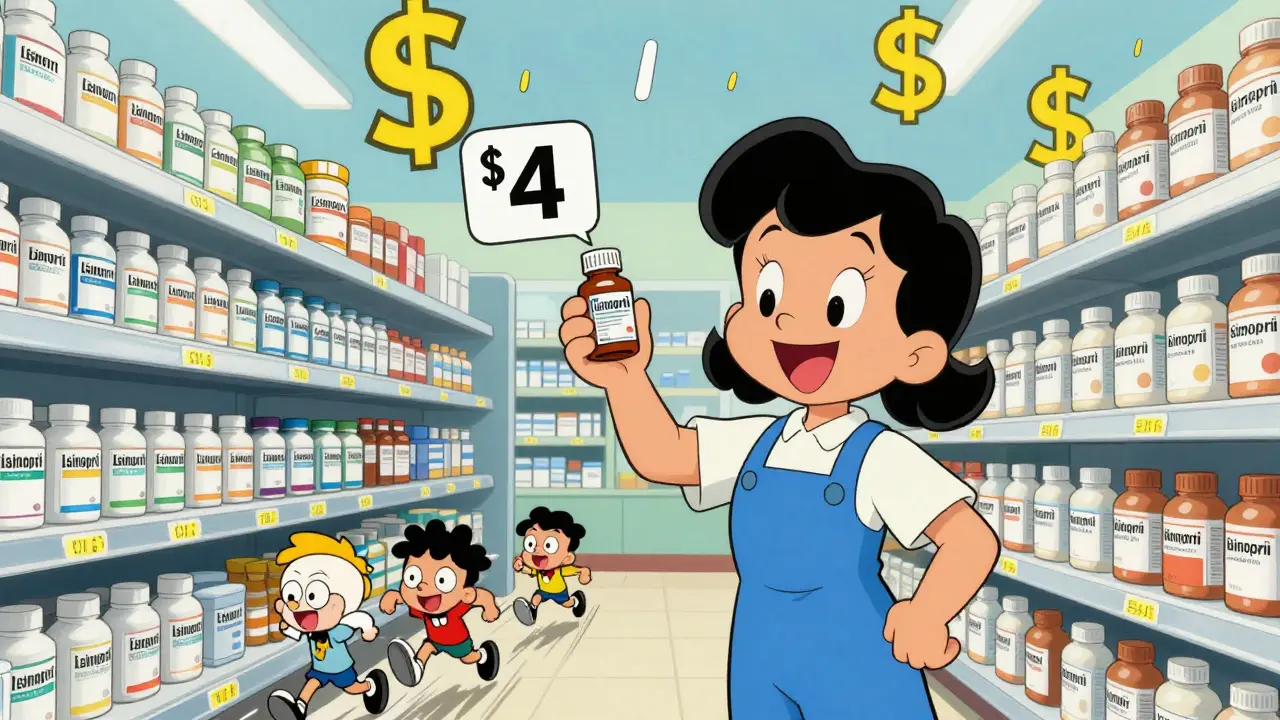
When you walk into a pharmacy in the US and pick up a month’s supply of generic lisinopril, you might pay $4. In Germany, the same pill could cost you €15. That’s not a mistake. It’s the result of two completely different systems-one built for volume and competition, the other for control and negotiation. And while most people assume the US pays more for everything, when it comes to generic drug prices, Americans are getting a deal.
How the US Keeps Generic Drug Prices Low
The US doesn’t have a single government agency setting drug prices. Instead, it has hundreds of private insurers, Pharmacy Benefit Managers (PBMs), and big retail chains like Walmart, CVS, and Costco all competing for volume. This chaos actually works in favor of generic drugs. When a patent expires, dozens of manufacturers rush in to make the same pill. There’s no exclusive deal. No protected market. Just price wars. A 2022 analysis by the U.S. Department of Health and Human Services found that Americans pay, on average, 33% less for generic drugs than people in 33 other wealthy countries. Why? Because the US generic market is built for speed and scale. PBMs negotiate rebates of 35-40% off list prices. Retailers use generics as loss leaders-selling them at or below cost to get you in the door. And with 90% of all prescriptions filled with generics in the US, there’s massive leverage. You don’t see it, but behind the scenes, companies like Teva and Mylan are locked in a race to the bottom. One manufacturer cuts their price by a penny, and the next one drops it further. Some drugs are sold at prices below manufacturing cost. That’s risky. It leads to shortages when no one can profit. But while it’s messy, it works. The system forces prices down faster than anywhere else.Why Europe Pays More for the Same Pills
In Europe, the system is the opposite. Governments step in and set prices. They don’t let manufacturers compete freely. Instead, they use external reference pricing-looking at what other countries pay and setting their own price close to the lowest. France, Germany, and the UK all have centralized agencies that decide what a drug is worth based on its medical value, not how much demand there is. The result? Less competition. Only 41% of prescriptions in Europe are for generics, compared to 90% in the US. That’s because European regulators don’t encourage rapid generic entry. They worry about supply stability, not price drops. And when a generic does enter the market, it doesn’t trigger a price collapse. It gets a modest discount, then stays there. In Germany, for example, a generic drug might be priced at €12. In the US, the same drug might have a list price of $15-but after rebates and discounts, you pay $4. That’s not because the German system is broken. It’s because it’s designed differently. Europe prioritizes predictability over competition.The Brand-Name Paradox
Here’s where it gets confusing. While Americans pay less for generics, they pay way more for brand-name drugs. A 2023 report from the same government agency found that US prices for brand-name drugs are more than four times higher than in other wealthy countries. Why? Because the US is the main source of funding for global drug innovation. Drug companies spend billions on research. They need to recoup that cost. In Europe, governments negotiate hard and cap prices. In the US, there’s no such cap. So companies charge more here to make up for the lower prices elsewhere. Studies show the US funds about two-thirds of all global pharmaceutical R&D. That’s why new drugs often launch in the US first. Companies know they can make money here. This isn’t a conspiracy. It’s economics. The US pays more for innovation, and the rest of the world benefits from lower prices. But now, things are shifting. The Inflation Reduction Act lets Medicare negotiate prices for 10 drugs starting in 2026. For Jardiance, Medicare negotiated $204 per month-compared to $52 on average elsewhere. That’s still higher, but it’s a sign the US is starting to push back.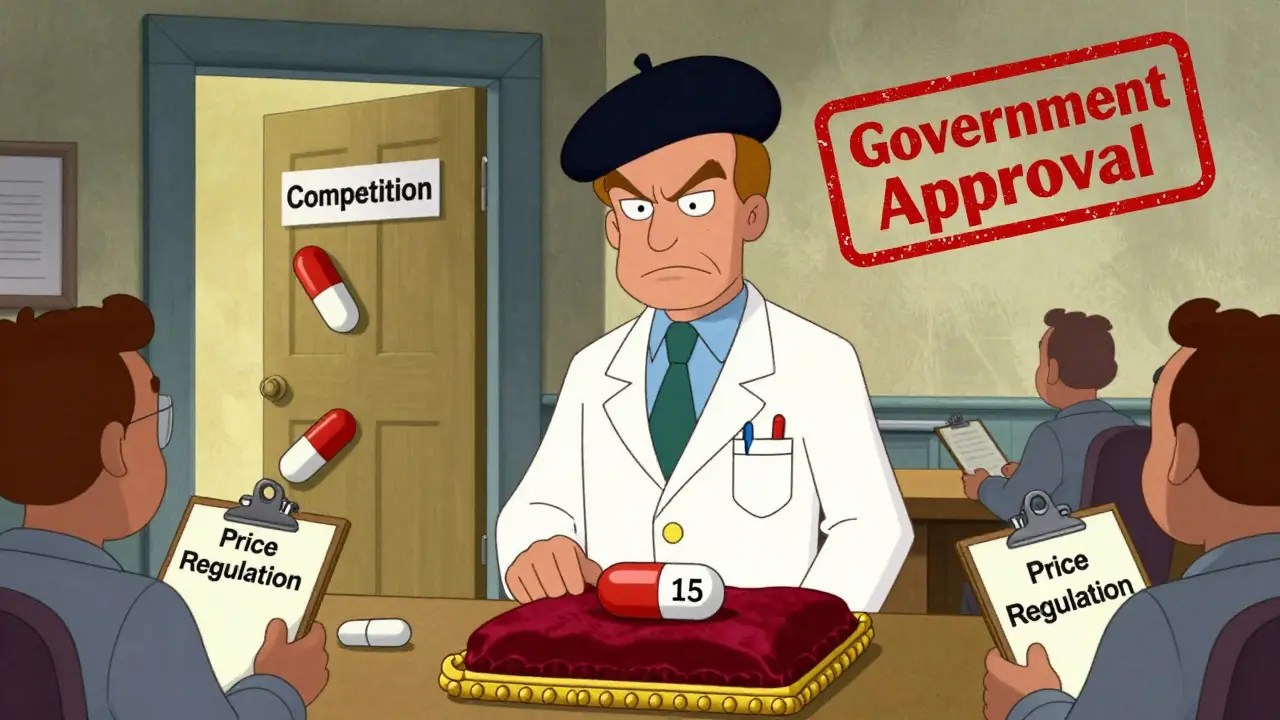
What Happens When Prices Go Too Low?
There’s a dark side to the US system. When generic prices drop too far, manufacturers stop making the drug. Why produce a pill that earns you $0.02 per tablet? When enough companies quit, shortages happen. In 2024, there were over 300 drug shortages in the US, many of them for old, cheap generics like doxycycline and hydrochlorothiazide. Then, one company steps in, buys up the remaining supply, and raises prices. This happened with the antibiotic minocycline. After a shortage, one manufacturer raised the price from $20 to $1,800 for a 30-day supply. It’s not fraud. It’s legal. And it’s a direct result of a system that lets prices fall too low. Europe avoids this because prices never drop that far. Manufacturers have stable margins. They don’t have to choose between making a drug and staying in business.How Patients Experience the Difference
If you’re an American with Medicare, you might pay $0-$10 a month for a generic. If you’re in France, you might pay a flat €15 co-pay, regardless of the drug. Americans are surprised when they travel and find their cheap generics cost triple abroad. Europeans are stunned when they hear how much Americans pay for insulin or cancer drugs. A Reddit user from 2025 wrote: "I paid €15 for generic lisinopril in Germany. Back home, my insurance makes it free." Another said: "My dad’s brand-name heart medication costs $800/month here. In the UK, he’d pay £10. I don’t get how we let this happen." These aren’t outliers. They’re symptoms of two very different systems.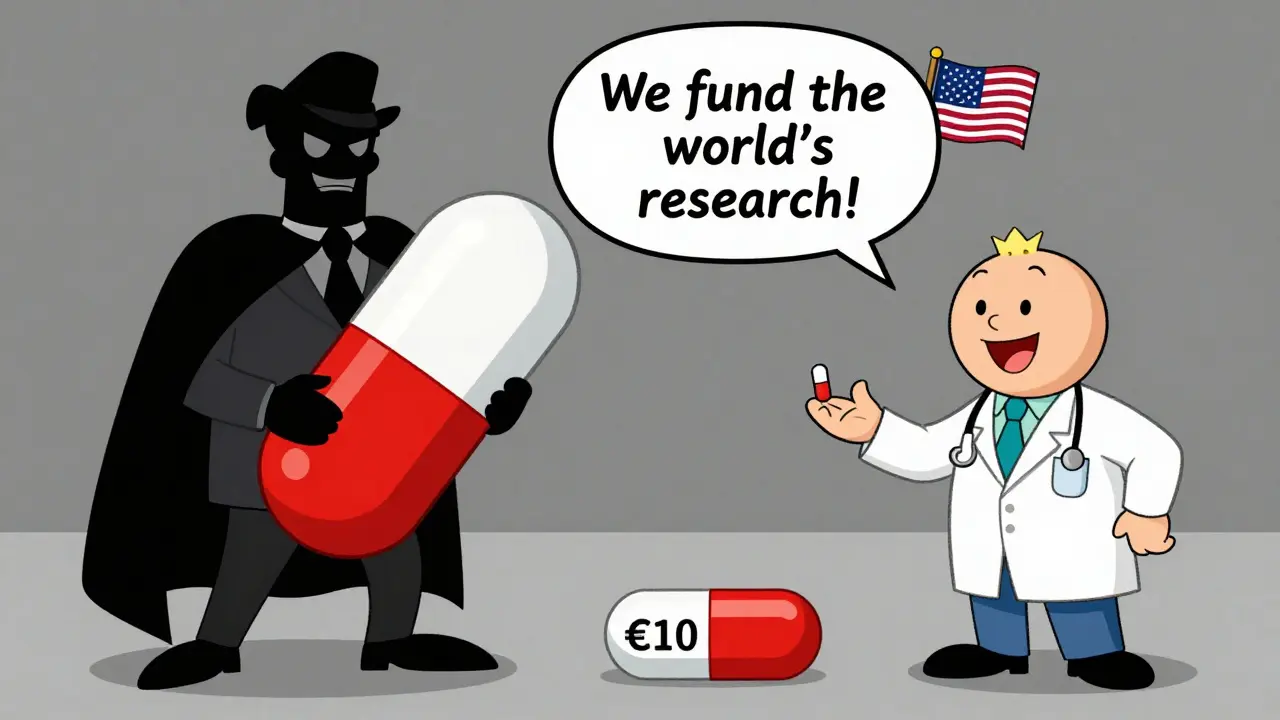
![Buy Generic Claritin (Loratadine) Online Cheap: Safe Canadian Deals, Prices & Alternatives [2025]](/uploads/2025/08/thumbnail-buy-generic-claritin-loratadine-online-cheap-safe-canadian-deals-prices-alternatives.webp)
Milad Jawabra
March 5, 2026 AT 02:34Chris Beckman
March 6, 2026 AT 21:37Levi Viloria
March 7, 2026 AT 17:45Zacharia Reda
March 8, 2026 AT 02:18Matt Alexander
March 8, 2026 AT 02:33Gretchen Rivas
March 9, 2026 AT 19:51Stephen Vassilev
March 10, 2026 AT 14:12Mike Dubes
March 12, 2026 AT 13:54Helen Brown
March 13, 2026 AT 21:29John Cyrus
March 15, 2026 AT 03:50John Smith
March 16, 2026 AT 19:10Sharon Lammas
March 17, 2026 AT 03:33