
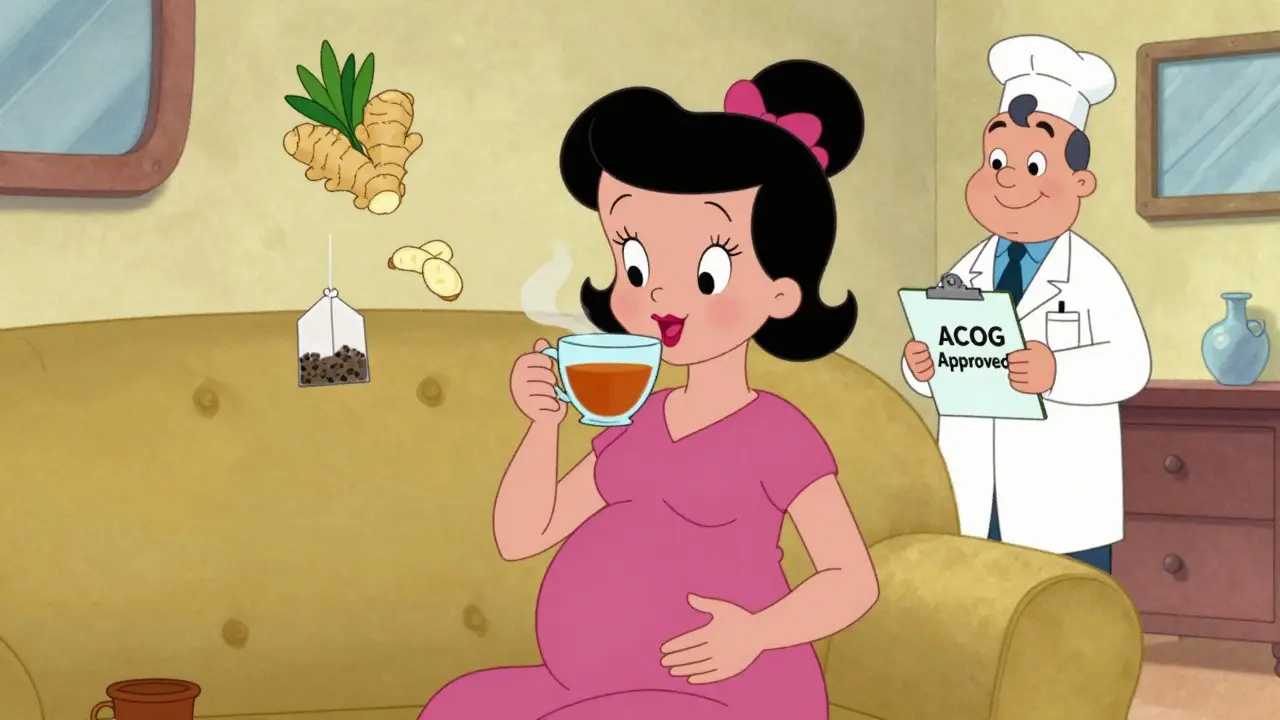
More than 1 in 4 pregnant women take herbal supplements. Not because they’re reckless, but because they’re told these are "natural," "gentle," and "safe." And yet, we don’t really know. Not for most of them.
Why Herbal Supplements Are So Common in Pregnancy
Nausea hits hard in early pregnancy. Up to 80% of women deal with it. Sleep disappears. Anxiety creeps in. Doctors might offer medication, but many women hesitate. They’ve heard about ginger tea, chamomile, raspberry leaf - things that sound harmless, even wholesome. They turn to herbs because they want to avoid pharmaceuticals. They want to do what’s "best" for their baby. It’s not just about symptoms. Culture plays a big role. In Catalonia, nearly half of pregnant women use herbal products. In parts of Asia, the rate jumps to 58%. In Scandinavia, it’s closer to 22%. Family advice, social media, YouTube videos - these often drive decisions more than medical guidance. A Spanish study found that 42% of women started taking herbs without talking to a doctor first.Ginger: The One That Actually Works
If you’re going to take one herbal supplement during pregnancy, make it ginger. It’s the most studied. And the evidence is clear. At doses under 1,000 mg per day, ginger reduces nausea and vomiting as well as some prescription anti-nausea drugs - without the same side effects. The Cleveland Clinic, the American Academy of Family Physicians, and multiple clinical reviews all agree: ginger is safe and effective for morning sickness. Many women report feeling better within days. But even ginger isn’t risk-free. It can interact with blood thinners. If you’re on aspirin, warfarin, or anything that affects clotting, talk to your provider before taking ginger supplements. And don’t overdo it. More than 1,000 mg a day hasn’t been proven safe.The Dangerous Myths: Raspberry Leaf, Chamomile, and Cranberry
Raspberry leaf is the poster child for "pregnancy preparation." Traditional midwives swear it tones the uterus and makes labor smoother. But here’s what the science says: when used to try to induce labor, it’s linked to a higher chance of cesarean delivery. The American Academy of Family Physicians classifies it as "likely unsafe" for labor induction. Why? Because it can trigger contractions - and you don’t want those starting too early. Chamomile? It’s in tea bags, so people assume it’s harmless. But studies show it may increase the risk of preterm birth, low birth weight, and even affect fetal heart development by interfering with ductus arteriosus closure. That’s a blood vessel critical to fetal circulation. One study found it was the second most-used herb among pregnant women in Spain - and we still don’t know the full risks. Cranberry supplements are popular for preventing urinary tract infections (UTIs). They might help. But they’ve also been linked to spotting in the second and third trimesters. That’s not normal. And while antibiotics like nitrofurantoin have their own restrictions, they’re at least tested. Cranberry? Not so much.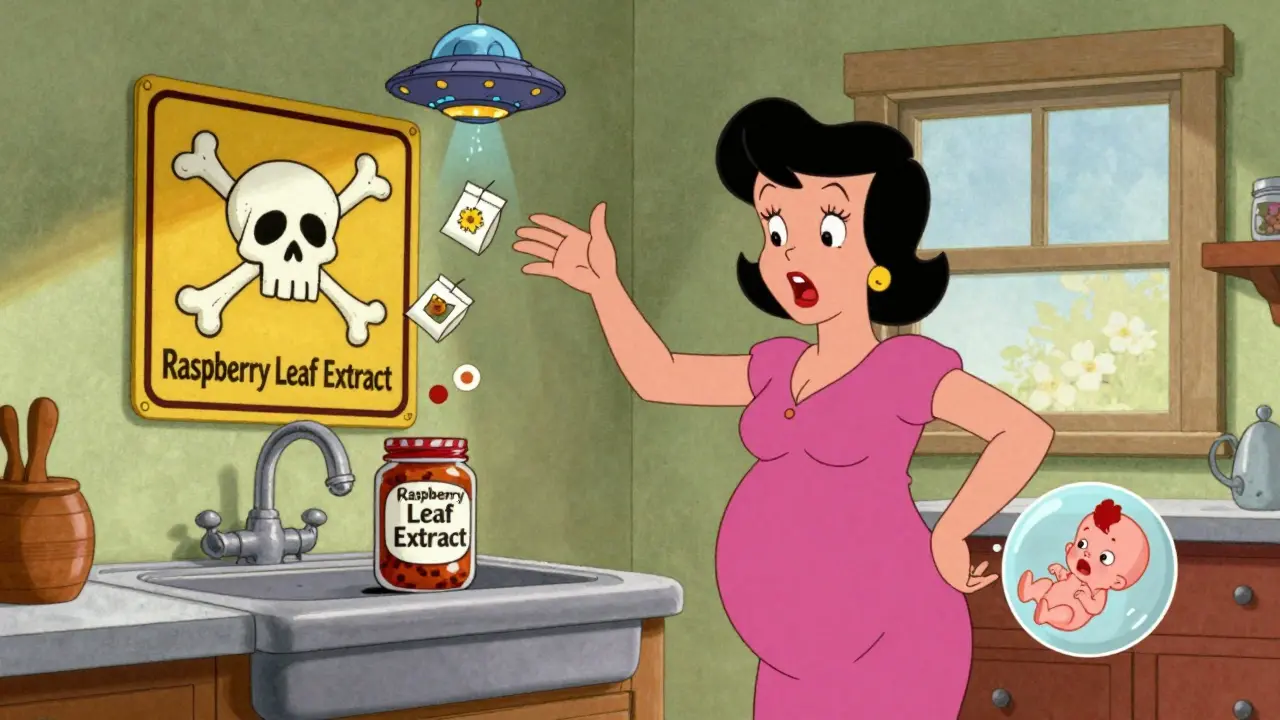
The Bigger Problem: No Regulation, No Consistency
Here’s the hard truth: the FDA doesn’t test herbal supplements the way it tests prescription drugs. They don’t have to prove safety or effectiveness before selling them. That means two bottles of the same "red raspberry leaf" from different brands could contain wildly different amounts of active compounds - or even hidden ingredients. Studies show 20% to 60% of herbal products are mislabeled. Some contain fillers. Others have toxic contaminants. One supplement labeled as "purity tea" was found to contain pennyroyal - a herb known to cause liver damage and miscarriage. And no one knew until it was tested. Even the dose matters. A tea bag might be safe. A concentrated extract? Not necessarily. You can’t assume "natural" means "safe in any form."What Experts Say - And Why You Should Listen
The American College of Obstetricians and Gynecologists (ACOG) says it plainly: don’t take any herbal product without talking to your provider first. The Cleveland Clinic warns pregnant women to avoid most herbal supplements because of uterine-stimulating effects and dangerous interactions. The German Federal Institute for Risk Assessment says women using herbs during pregnancy don’t fit one profile - they’re young, old, educated, not educated. Anyone can be using them. That’s why your OB-GYN or midwife needs to ask. Not once. But every visit. The FDA’s stance is simple: "Natural doesn’t mean safe." And they’ve issued warning letters to supplement companies making false claims about pregnancy safety. In January 2024, three companies got flagged for saying their products were safe for pregnant women - without any proof.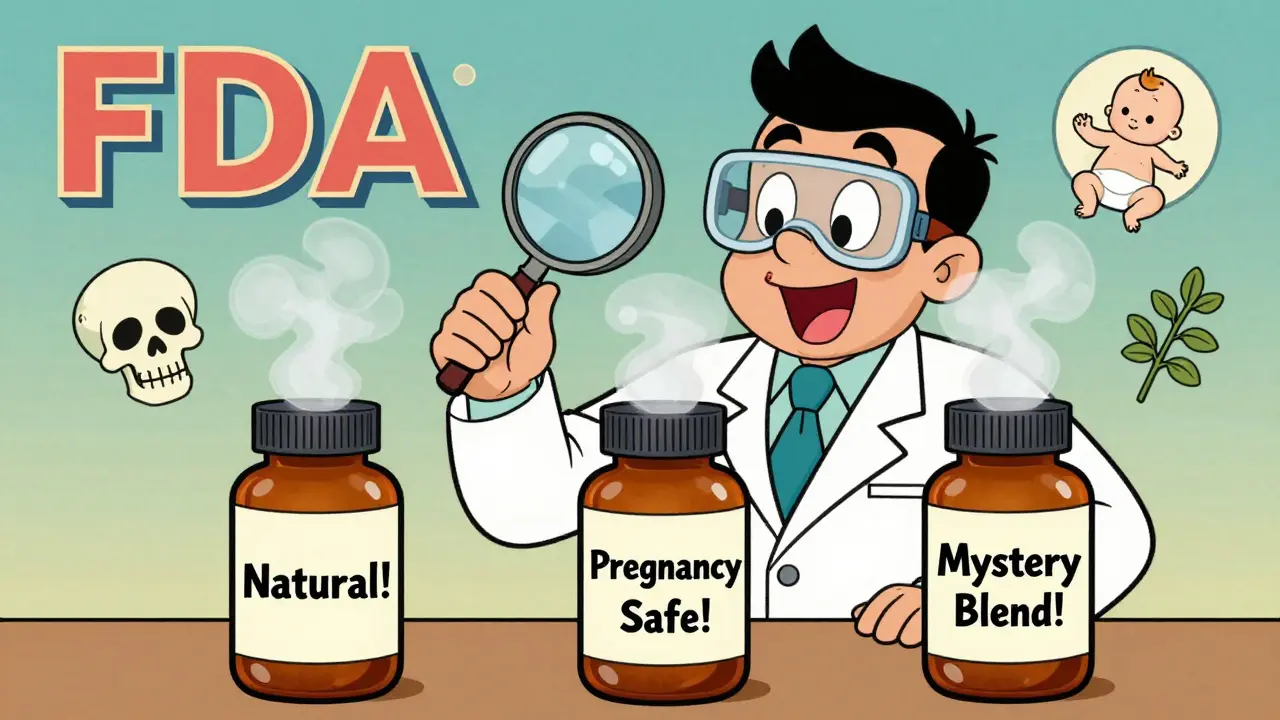
What You Can Do Right Now
If you’re pregnant and taking herbs, stop assuming they’re safe. Start asking questions.- Make a list of every supplement, tea, tincture, or capsule you’re using - even if you think it’s "just a tea."
- Bring that list to your next prenatal appointment. Don’t wait until you’re worried.
- Ask: "Is this safe for me right now? Could it interact with my other meds?"
- Don’t rely on Google, Reddit, or your aunt’s advice. Use trusted sources like MotherToBaby (from the National Organization of Teratology Information Specialists) - they update their fact sheets every quarter.

Evan Smith
January 8, 2026 AT 01:38So let me get this straight - we’re okay with pharmaceuticals that have 20 years of data, but if you put ‘natural’ on a tea bag, suddenly it’s magic? I mean, come on. My grandma used to boil willow bark for headaches - that’s aspirin, folks. Nature doesn’t care if you’re pregnant. It just does its thing.
Joanna Brancewicz
January 8, 2026 AT 19:02ACOG’s stance is non-negotiable. No herbal supplement without provider consultation. Period. The pharmacokinetic variability in botanicals is staggering - even within the same brand, batch-to-batch differences can alter uterine activity. This isn’t anecdote territory. It’s teratology.
Lois Li
January 9, 2026 AT 17:36I took ginger tea during both pregnancies and it helped so much. But I never took capsules - just the fresh root steeped in hot water. I also asked my midwife before trying raspberry leaf tea. She said no until 36 weeks, and even then, only in tiny amounts. I’m glad I listened. My kids are healthy and I didn’t have any weird bleeding.
Ken Porter
January 9, 2026 AT 18:14Why are we even having this conversation? America’s gone soft. If you’re pregnant, take your vitamins and shut up. Stop trusting some yoga mom on Instagram who says chamomile is ‘calming.’ My wife took nothing but prenatal pills and had a perfect delivery. No tea. No herbs. Just science.
swati Thounaojam
January 10, 2026 AT 20:03in india we use tulsi tea and jeera water all the time during pregnancy. no one ever said anything. my mom did it, my grandma did it. why now suddenly dangerous?
Luke Crump
January 11, 2026 AT 01:51What if the real danger isn’t the herbs… but the fact that we’ve outsourced our intuition to a system that doesn’t care if you live or die? The FDA doesn’t test supplements because they’re not profit-driven enough. The real villain isn’t ginger - it’s capitalism pretending to be science.
Manish Kumar
January 11, 2026 AT 12:57Look, I get it. We’re scared. We want to do everything right. But here’s the thing - we’ve been using herbs for thousands of years before the FDA even existed. In Ayurveda, ashwagandha is used to support pregnancy, turmeric for inflammation, fennel for nausea. We’re not talking about some lab-made chemical cocktail. We’re talking about plants that evolved alongside us. The problem isn’t the herbs - it’s that modern medicine refuses to study them properly because it can’t patent them. So we’re stuck in this weird limbo where tradition is dismissed as superstition and pharmaceuticals are treated like gospel - even when they come with a 12-page warning label. Maybe we need to stop seeing this as ‘safe vs unsafe’ and start seeing it as ‘known risk vs unknown risk.’ And honestly? The known risks of pharmaceuticals are often way higher.
Aubrey Mallory
January 11, 2026 AT 14:19Stop romanticizing ‘natural.’ Pennyroyal is natural. Hemlock is natural. Poison ivy is natural. You think your great-grandma knew what was in that ‘herbal tea’ she brewed? She didn’t. She just trusted her gut - and sometimes that gut got people killed. If you’re going to take something during pregnancy, it needs to be vetted, measured, and approved. Not passed down like a family recipe. This isn’t folklore - it’s fetal development. Treat it like the miracle it is - with caution, not nostalgia.
Dave Old-Wolf
January 13, 2026 AT 12:59I just had my first baby and I took ginger and chamomile tea. I didn’t know any of this until I read this post. I’m not mad - I’m just glad I found this. I didn’t take anything beyond tea, and I asked my OB every time. She never said no. But now I’m going back to check what was actually in those tea bags. I didn’t realize how little we know. Thanks for laying it out.
Prakash Sharma
January 14, 2026 AT 16:22Why do Westerners act like they invented pregnancy? We’ve had herbal midwives for centuries in India. If you’re going to ban anything, ban the corporate supplement companies that sell $40 bottles of ‘pregnancy tea’ with no labeling. Not the women who drink tulsi or shatavari because their mothers did. You can’t erase tradition with a FDA warning letter.
Donny Airlangga
January 15, 2026 AT 11:32I’m a nurse and I’ve seen too many women come in panicked because they took something ‘natural’ and then panicked more because they didn’t tell anyone. The guilt is real. Just say something. Your provider isn’t here to judge - they’re here to help you stay safe. I’ve had patients cry because they thought they’d hurt their baby. You didn’t. But now you can fix it. Talk to someone.
Molly Silvernale
January 16, 2026 AT 02:19Nature doesn’t whisper - it screams. And we’ve been deaf to it for centuries. Ginger? A quiet hum of relief. Chamomile? A lullaby with a hidden alarm. Raspberry leaf? A drumbeat calling labor to rise - before it’s ready. The body remembers. The earth remembers. But we? We’ve replaced wisdom with widgets. We’ve turned ancestral knowledge into a marketplace of mistrust - where ‘natural’ is a marketing tactic, not a truth. And now we’re left with babies caught between two worlds: one of ancient rhythm, and one of sterile regulation. Which do we trust? Or - maybe - we need to learn how to listen to both.