Statin Exercise Safety & Symptom Checker
Step 1: Your Medication Profile
Different statins affect muscles differently. Lipophilic statins penetrate muscle tissue more easily.
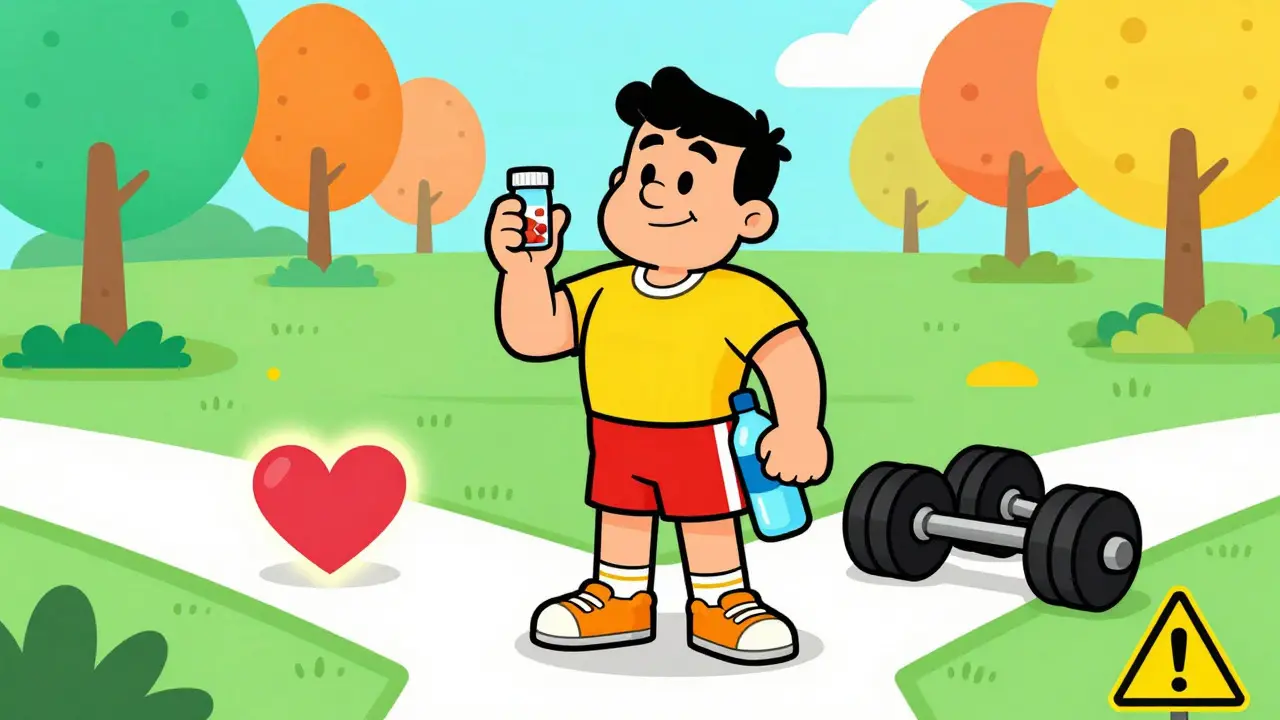
You take your pill to protect your heart. You hit the gym or go for a run to keep it strong. It sounds like a perfect plan, until your legs start screaming at you. For millions of people taking statins, this is the daily dilemma. The fear that exercise might worsen Statin-Associated Muscle Symptoms (SAMS)-the medical term for the aches, pains, and weakness linked to cholesterol medication-is real. But does moving actually make things worse, or is it part of the solution?
The short answer is yes, you can still exercise. In fact, staying active is crucial. However, not all workouts are created equal when you are on these medications. Understanding the difference between moderate movement and high-intensity strain can mean the difference between thriving and stopping your treatment entirely.
Understanding the Muscle Connection
To figure out why your muscles hurt, we have to look at what statins do inside your body. These drugs work by blocking an enzyme called HMG-CoA reductase. This stops your liver from making cholesterol, which is great for your arteries. But there is a catch. That same pathway produces coenzyme Q10 (CoQ10), a molecule your mitochondria need to generate energy.
Research shows that statin therapy can reduce CoQ10 levels in muscle tissue by up to 40% within just 30 days. Without enough CoQ10, your muscle cells struggle to produce energy efficiently during physical activity. This leads to fatigue and soreness. It is not necessarily permanent damage; it is more like running a car with low-grade fuel. The engine runs, but it struggles under heavy load.
This explains why some people feel fine sitting on the couch but ache after a hike. The demand for energy exceeds the supply. Additionally, statins vary in how they travel through the body. Lipophilic statins, such as atorvastatin and simvastatin, dissolve in fat and penetrate muscle tissue easily. Hydrophilic statins, like pravastatin and rosuvastatin, stay mostly in the blood and enter muscle cells less readily. This chemical difference plays a huge role in who experiences pain and who does not.
Moderate vs. Vigorous Exercise
Not all exercise stresses your muscles equally. The key distinction lies in intensity and type. Recent studies, including a pivotal 2023 study published in the Journal of the American College of Cardiology, have clarified this boundary.
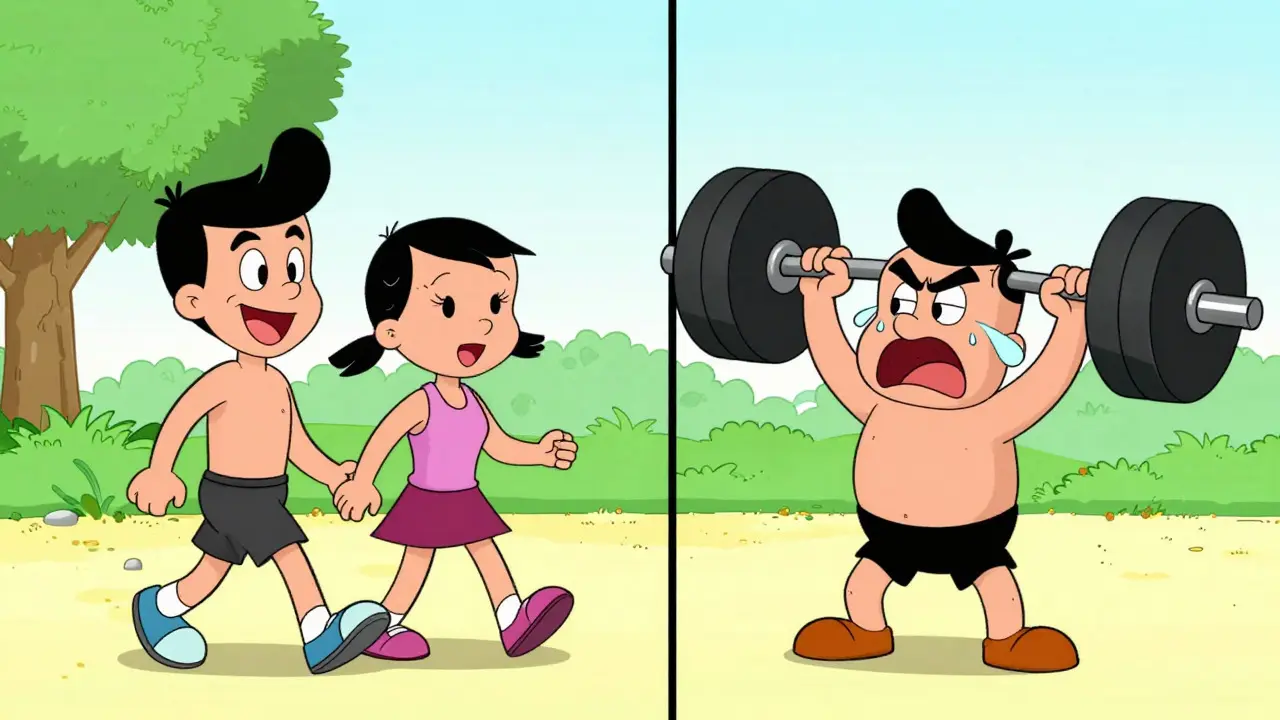
Moderate-intensity exercise is generally safe. This includes brisk walking, light cycling, or swimming at a pace where you can still hold a conversation. The study found no significant increase in creatine kinase (CK)-a marker of muscle injury-in statin users performing moderate cycling compared to those not on statins. Whether you had symptoms before starting the drug or not, moderate movement did not exacerbate muscle damage markers.
Vigorous exercise tells a different story. High-intensity interval training (HIIT), heavy weightlifting, or long-distance running creates micro-tears in muscle fibers. This is normal for anyone, but for statin users, recovery can be slower and more painful. A study of Boston Marathon runners showed significantly higher CK levels in statin users compared to non-users after the race. Eccentric exercises, where muscles lengthen under tension (like lowering a weight or running downhill), are particularly risky. They can cause CK levels to spike dramatically, increasing the risk of myopathy.
| Exercise Type | Intensity Level | Risk Profile | Recommendation |
|---|---|---|---|
| Brisk Walking | Moderate | Low | Safe for most users |
| Cycling (Leisure) | Moderate | Low | Safe for most users |
| Weightlifting (Heavy) | Vigorous/Eccentric | High | Avoid if symptomatic |
| HIIT | Vigorous | High | Use caution; monitor symptoms |
| Long-Distance Running | Vigorous/Endurance | Moderate-High | Gradual buildup required |

Recognizing the Signs of Trouble
Knowing when to push through and when to stop is critical. Many patients confuse general workout soreness with statin-induced issues. Here is how to tell the difference.
Normal exercise soreness, or delayed onset muscle soreness (DOMS), usually appears 24 to 48 hours after a new or intense workout. It feels like stiffness and tenderness in specific muscle groups used during the activity. It resolves with rest and gentle movement within a few days.
Statin-associated muscle pain often presents differently. It may appear shortly after starting the medication or increasing the dose. The pain can be persistent, affecting muscles even when you are resting. It might feel like a deep ache, cramping, or weakness rather than surface-level soreness. If your pain does not improve with rest, or if it spreads to muscles you did not use, talk to your doctor.
In severe cases, statins can cause rhabdomyolysis, a condition where muscle tissue breaks down rapidly and releases proteins into the blood. This is rare but dangerous. Watch for dark urine, extreme weakness, and severe pain. If these occur, seek immediate medical attention. Creatine kinase levels above 1,000 U/L (five times the upper limit of normal) typically warrant pausing exercise and consulting a physician.
Strategies for Better Recovery
If you experience muscle pain, do not give up on exercise or your heart health immediately. There are several strategies to help manage symptoms and improve recovery.
- Start Slow: Begin with 10-15 minutes of moderate activity daily. Increase duration by 5 minutes each week as tolerated. This gradual approach allows your muscles to adapt without overwhelming them.
- Choose Hydrophilic Statins: Ask your doctor about switching to pravastatin or rosuvastatin. These water-soluble options are less likely to penetrate muscle tissue deeply, potentially reducing side effects.
- Consider Dose Adjustment: Taking a lower dose every other day can sometimes maintain cholesterol benefits while reducing muscle exposure to the drug. Studies show this strategy works for many patients.
- Supplement with CoQ10: While research results are mixed, many clinicians recommend 200 mg of CoQ10 daily. Since statins deplete natural CoQ10, replenishing it may help restore mitochondrial function and reduce fatigue.
- Focus on Warm-Ups: Spend extra time warming up before exercise. Gentle dynamic stretching increases blood flow to muscles, preparing them for activity and potentially reducing injury risk.
Hydration also plays a vital role. Dehydrated muscles are more prone to cramps and damage. Ensure you drink plenty of water before, during, and after exercise, especially in hot weather.
When to See a Doctor
Self-management has limits. You should consult your healthcare provider if:
- Pain persists despite modifying your exercise routine.
- You notice unexplained muscle weakness, such as difficulty climbing stairs or lifting objects.
- Your creatine kinase levels are elevated on blood tests.
- You develop dark urine or severe swelling.
Your doctor may order blood tests to check CK levels, thyroid function, and vitamin D levels. Low vitamin D is common in statin users and can contribute to muscle pain. Correcting deficiencies often improves symptoms significantly.
Genetic testing is emerging as another tool. Variants in the SLCO1B1 gene can increase susceptibility to statin-related muscle issues. Knowing your genetic profile might help your doctor choose the safest medication and dosage for you.
Building a Sustainable Routine
The goal is not to avoid exercise but to find a sustainable balance. Consistency matters more than intensity. Thirty minutes of daily walking offers substantial cardiovascular benefits with minimal muscle stress. Incorporating strength training twice a week, focusing on lighter weights and higher repetitions, can maintain muscle mass without triggering excessive damage.
Listen to your body. Some days you will feel great; other days you might feel stiff. Adjust accordingly. On tough days, opt for yoga or tai chi, which emphasize flexibility and balance over power. These activities promote circulation and relaxation without straining muscle fibers.
Remember, the benefits of statins in preventing heart attacks and strokes far outweigh the risks of manageable muscle discomfort for most people. Do not let fear stop you from moving. Instead, let knowledge guide you toward smarter, safer workouts.
Can I still build muscle while taking statins?
Yes, but you may need to adjust your approach. Focus on progressive overload with moderate weights and allow longer recovery periods between sessions. Avoid extreme eccentric movements initially. Monitor your energy levels and pain responses closely.
Does CoQ10 supplementation really help with statin muscle pain?
Evidence is mixed, but many patients report improvement. Since statins lower natural CoQ10 production, supplementing with 200 mg daily may support mitochondrial function. It is generally safe and worth trying under medical supervision.
Which statin causes the least muscle pain?
Hydrophilic statins like pravastatin and rosuvastatin are less likely to cause muscle issues because they do not penetrate muscle tissue as easily as lipophilic statins like atorvastatin or simvastatin. Switching types often reduces symptoms.
How long does it take for statin muscle pain to resolve after stopping exercise?
If the pain is purely exercise-induced, it should resolve within a few days of rest. If it persists beyond a week or occurs without recent exertion, it may be related to the medication itself, requiring a discussion with your doctor about dosage or alternative therapies.
Is it safe to run marathons while on statins?
For many, yes, but caution is advised. Long-distance running places significant stress on muscles. Start with shorter distances, ensure proper hydration, and consider using hydrophilic statins. Monitor CK levels periodically to detect any signs of excessive muscle breakdown.