Imagine sipping a glass of fresh grapefruit juice is a citrus beverage containing furanocoumarins that inhibit CYP3A4 enzymes in the gut with your morning coffee. For most people, it’s just breakfast. But if you’re taking warfarin or certain antidepressants, that innocent drink might be quietly changing how your body processes your medication.
This isn’t just a myth spread on social media. It’s a real pharmacological mechanism involving the Cytochrome P450 (CYP450) is a family of liver enzymes responsible for metabolizing approximately 75% of clinically used drugs. Understanding these interactions can mean the difference between effective treatment and dangerous side effects.
Key Takeaways
- Grapefruit juice irreversibly blocks intestinal CYP3A4 enzymes for up to 72 hours, making timing your meds useless.
- Warfarin users face a moderate risk of increased INR levels due to partial CYP2C9 inhibition by grapefruit components.
- Not all SSRIs are equal; sertraline has a higher interaction risk than escitalopram due to its metabolic pathway.
- Genetic variants in CYP2C9 significantly amplify the risk for warfarin patients consuming grapefruit.
- Only 18% of warfarin prescriptions currently include specific warnings about grapefruit avoidance.
The Engine Room: How CYP450 Works
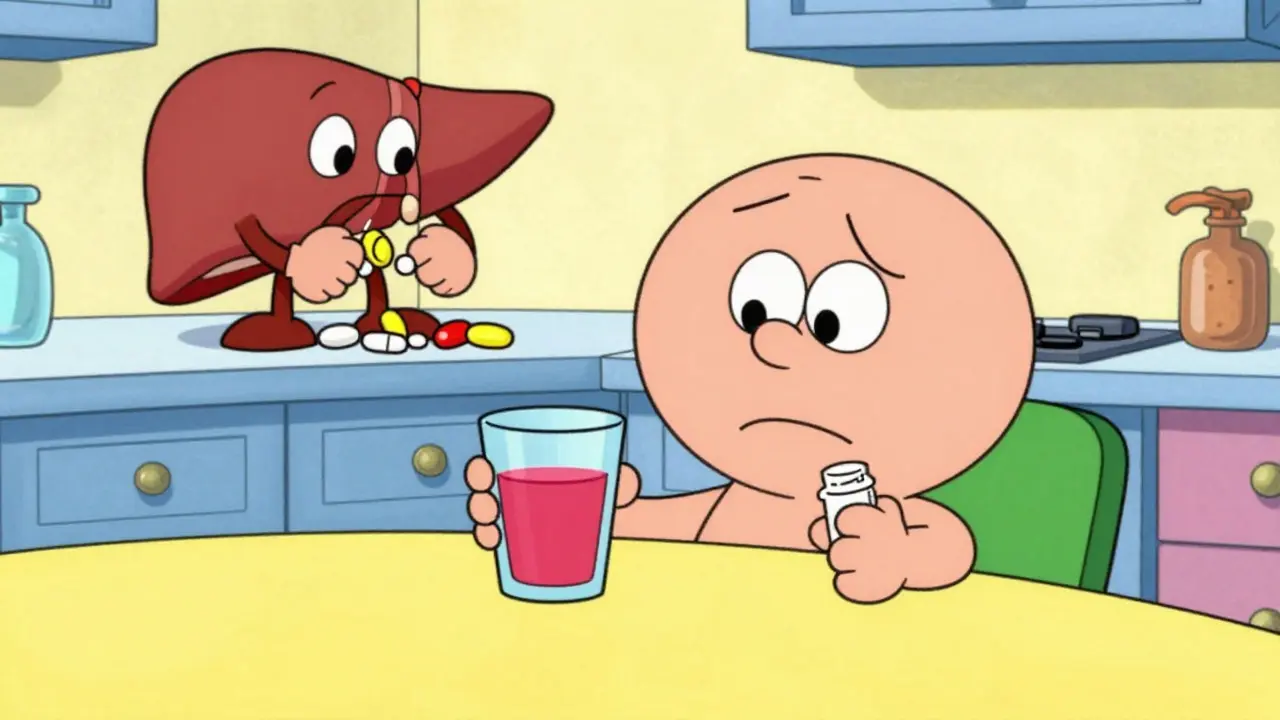
Your liver doesn’t just filter toxins; it actively breaks down drugs so they can be cleared from your system. The CYP450 family is the primary workforce here. Specific isoforms handle specific jobs. CYP3A4 is the heavy hitter, processing everything from statins to some beta-blockers. CYP2C9 handles anticoagulants like warfarin. CYP2D6 deals with many painkillers and antidepressants.
When an external substance inhibits one of these enzymes, the drug stays in your bloodstream longer. This increases its concentration, potentially pushing it past the therapeutic window into toxicity. This is where food enters the picture. Grapefruit contains compounds called furanocoumarins, specifically bergamottin and 6',7'-dihydroxybergamottin (DHB). These aren't just flavorings; they are potent enzyme inhibitors.
Why Grapefruit Is Different From Other Fruits
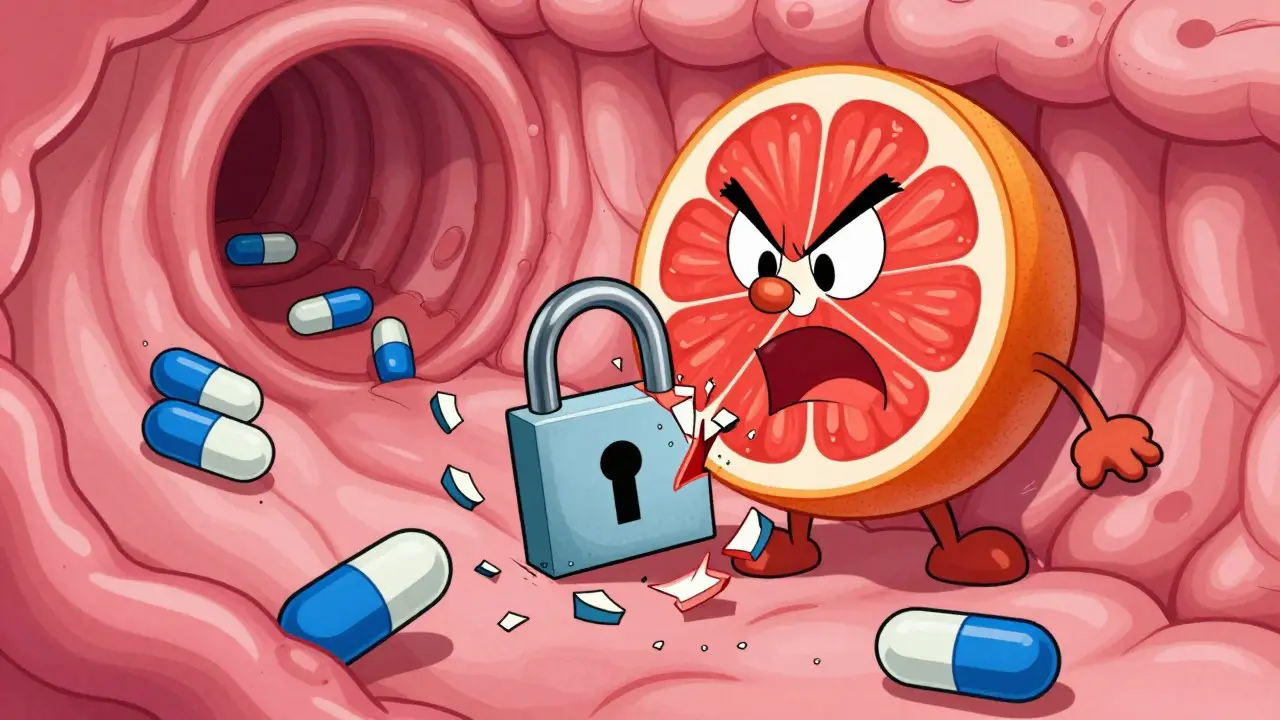
You might wonder why orange juice doesn’t cause the same issue. The key lies in the mechanism. Most food-drug interactions are competitive; the food temporarily blocks the enzyme, and once the food is gone, the enzyme works again. Grapefruit is different. Its furanocoumarins cause mechanism-based inactivation.
Think of it this way: instead of standing in front of a door (competitive inhibition), grapefruit compounds actually break the lock (irreversible inhibition). Once the CYP3A4 enzyme in your intestinal wall is inactivated, your body must synthesize new enzyme protein to restore function. This process takes time. Research shows that consuming just 8 ounces of grapefruit juice decreases intestinal CYP3A4 activity by 47% for 24 to 72 hours.
This means waiting two hours after eating grapefruit before taking your pill won’t help. The enzyme is still damaged. You’d need to wait several days for full recovery, which is impractical for daily medications.
Warfarin and the Bleeding Risk
Warfarin is a narrow therapeutic index anticoagulant primarily metabolized by CYP2C9 is a classic example of a drug where small changes in metabolism matter. Warfarin has a very tight margin between being effective and causing bleeding. It is 99% bound to plasma proteins, meaning only a tiny fraction is free to act at any given moment.
While CYP3A4 is the main target of grapefruit, warfarin is primarily processed by CYP2C9. Does grapefruit affect CYP2C9? Yes, but less potently than CYP3A4. Studies have shown that bergamottin inhibits CYP2C9 activity in human liver microsomes. In clinical practice, this translates to a 'moderate risk' classification. Some patients experience a 15-25% increase in their INR (International Normalized Ratio) after regular grapefruit consumption.
However, the risk isn't uniform. If you have genetic polymorphisms in the CYP2C9 gene (specifically *2 or *3 variants), your baseline enzyme activity is already lower. Adding grapefruit inhibition on top of that creates a perfect storm for elevated INR and bleeding events. This is why personalized medicine matters. A standard warning label might say "avoid grapefruit," but for someone with normal genetics, the risk is much lower than for someone with reduced enzyme capacity.
| Drug Class | Primary Metabolism Pathway | Grapefruit Impact | Clinical Significance |
|---|---|---|---|
| Warfarin | CYP2C9 (80-90%) | Moderate inhibition of CYP2C9 | 15-25% INR increase in sensitive patients |
| Sertraline (SSRI) | CYP2C9, CYP3A4 | Inhibition of CYP3A4 and CYP2C9 | 27-39% increase in plasma concentrations |
| Escitalopram (SSRI) | CYP3A4, CYP2C19 | Weak effect on CYP3A4/CYP2C19 | No clinically significant interaction observed |
| Fluoxetine (SSRI) | CYP2D6 | Very weak effect on CYP2D6 | Rarely clinically significant |
SSRIs: Not All Antidepressants Are Created Equal
Selective serotonin reuptake inhibitors (SSRIs) are among the most prescribed medications in the world. Many patients assume that if one SSRI interacts with grapefruit, they all do. That’s a common misconception. The risk depends entirely on which enzyme metabolizes the specific drug.
Let’s look at the major players:
- Sertraline: Metabolized by CYP2C9 and CYP3A4. Since grapefruit inhibits both, sertraline has the highest potential for interaction among SSRIs. Case reports show plasma levels rising by nearly 40% in chronic grapefruit consumers.
- Fluoxetine & Paroxetine: Primarily metabolized by CYP2D6. Grapefruit has a very weak effect on CYP2D6. Therefore, the interaction risk is minimal.
- Escitalopram: Metabolized by CYP3A4 and CYP2C19. Recent studies involving healthy volunteers found no clinically significant change in blood levels when combined with grapefruit juice.
- Citalopram: Similar to escitalopram, but with slightly higher bioavailability. The risk is considered low to moderate.
So, if you’re on fluoxetine, you likely don’t need to worry about your grapefruit toast. If you’re on sertraline, it’s worth a conversation with your pharmacist.
Real-World Scenarios and Patient Experiences
How does this play out in everyday life? Data from pharmacy forums and patient reviews reveals interesting patterns. Among warfarin users, about 8.7% specifically mention avoiding grapefruit in their online reviews. However, only 32% of those who accidentally consumed it reported noticeable INR fluctuations. Most experienced no immediate symptoms.
For SSRI users, the concern is even lower. Only 2.3% of SSRI users mentioned grapefruit avoidance. When side effects were reported, they were often vague-like increased drowsiness or nausea-which could easily be attributed to other factors.
A notable trend is the rise in grapefruit consumption among health-conscious individuals. USDA data shows a 17% increase in intake from 2019 to 2023. Coupled with an aging population taking more medications, the potential for these interactions is growing. Yet, labeling remains inconsistent. Only 18% of warfarin prescriptions include explicit grapefruit warnings, leaving many patients unaware of the risk.
Practical Steps for Medication Safety
Do you need to give up grapefruit forever? Probably not. But you do need to be strategic. Here’s how to approach this:
- Check Your Specific Drug: Don’t assume all meds interact. Look up your specific SSRI or ask if your warfarin dose is genetically optimized.
- Consider Genetic Testing: For warfarin users, testing for CYP2C9 and VKORC1 variants costs between $250-$400. Knowing your status helps determine if grapefruit is a major risk or a minor one.
- Monitor INR Closely: If you decide to keep eating grapefruit while on warfarin, increase your INR monitoring frequency. Watch for signs of bleeding like bruising, nosebleeds, or dark stools.
- Talk to Your Pharmacist: Pharmacists spend an average of 3.2 minutes counseling patients on grapefruit interactions. Use that time. They can check your full medication list for hidden risks.
- Be Consistent: If you choose to consume grapefruit, do so consistently. Fluctuating intake causes fluctuating drug levels, which is worse than steady-state exposure.
Frequently Asked Questions
Does grapefruit interact with all blood thinners?
No. The interaction is specific to drugs metabolized by CYP3A4 and CYP2C9. Warfarin is affected moderately. Newer anticoagulants like apixaban are primarily metabolized by CYP3A4, so they may also have interactions, but the evidence is less robust than for warfarin. Always check your specific medication's prescribing information.
Can I eat grapefruit if I take sertraline?
It is generally recommended to avoid large amounts of grapefruit if you take sertraline, as it is metabolized by CYP3A4 and CYP2C9. Small, consistent amounts may be manageable, but discuss this with your doctor. If you switch to escitalopram or fluoxetine, the risk drops significantly.
How long does the grapefruit effect last?
The inhibition of intestinal CYP3A4 lasts for 24 to 72 hours after consumption. This means you cannot simply separate the timing of your medication and grapefruit intake. You would need to stop consuming grapefruit for several days to fully reverse the effect.
Are seville oranges or pomelos risky too?
Yes. Pomelos and Seville oranges contain similar furanocoumarins. While grapefruit is the most studied, the same caution applies. Bitter oranges used in marmalade or liqueurs can also pose a risk if consumed in significant quantities.
What should I do if I accidentally ate grapefruit with my warfarin?
Don’t panic. One instance is unlikely to cause a dramatic shift in INR. However, note the date and inform your healthcare provider at your next check-in. If you notice unusual bruising or bleeding, contact them sooner. Consistent accidental consumption over weeks is the bigger concern.