
When a pharmacist swaps a brand-name drug for a generic version, they’re not just saving money-they’re stepping into a legal gray zone. In 2026, over 90% of prescriptions filled in the U.S. are generics, saving patients and insurers billions. But behind every substitution is a hidden risk: professional liability. If a patient has a bad reaction, who’s responsible? The pharmacist? The manufacturer? The doctor? The answer depends on where you live.
Why Generic Substitution Isn’t as Simple as It Looks
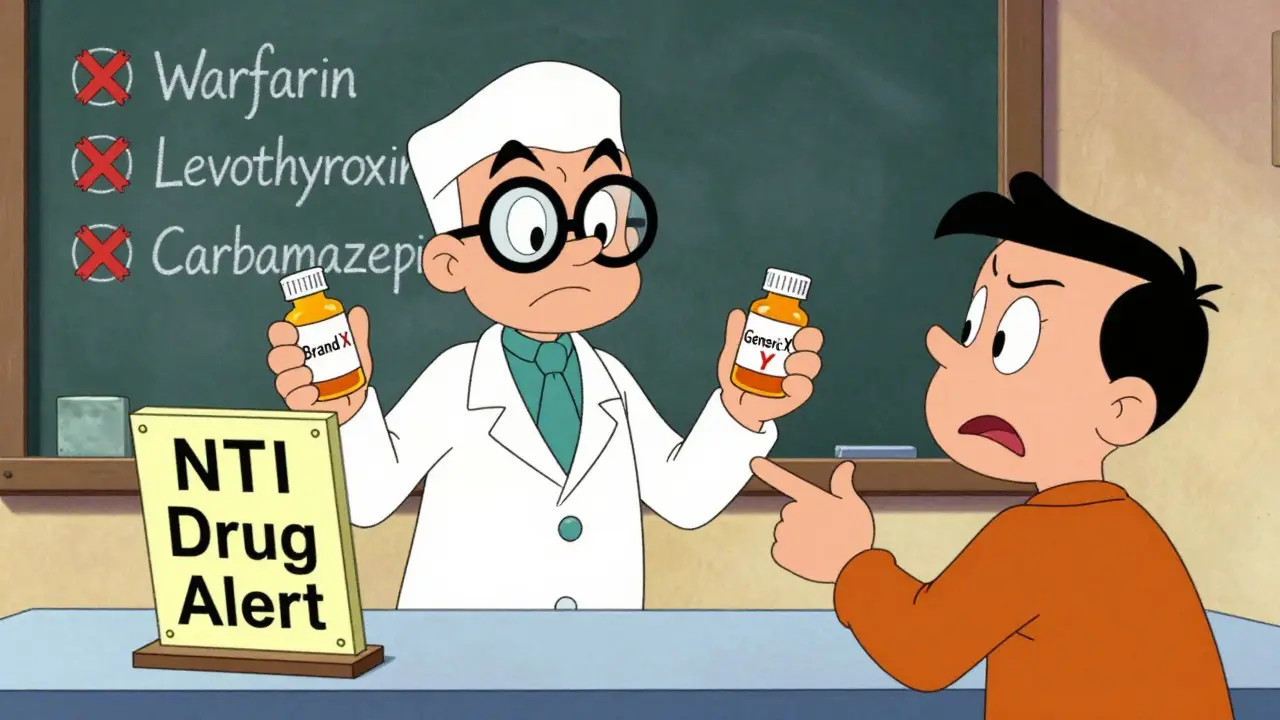
Generic drugs are approved by the FDA based on bioequivalence: they must deliver the same active ingredient at the same rate and extent as the brand-name version. That sounds solid-until you dig deeper. The acceptable range for bioequivalence is 80% to 125% of the brand’s absorption rate. For most drugs, like statins or antibiotics, that’s fine. But for drugs with a narrow therapeutic index-like warfarin, levothyroxine, or antiepileptics-even small differences can be dangerous.A 2017 study in Epilepsy & Behavior found that 18.3% of patients experienced therapeutic failure after switching from brand to generic antiepileptic drugs. One patient might have stable seizures for years, then have a breakthrough seizure after a generic swap because the excipients (inactive ingredients) affected how the drug was absorbed. These aren’t rare cases. On Reddit’s r/pharmacy, over 4,000 users shared stories of hypothyroid symptoms, dizziness, or seizures after switching generics. And 41% of patients in a 2021 Patient Advocacy Foundation survey didn’t even know they’d been switched until they felt something was wrong.
The Legal Maze: Federal Preemption and State Laws
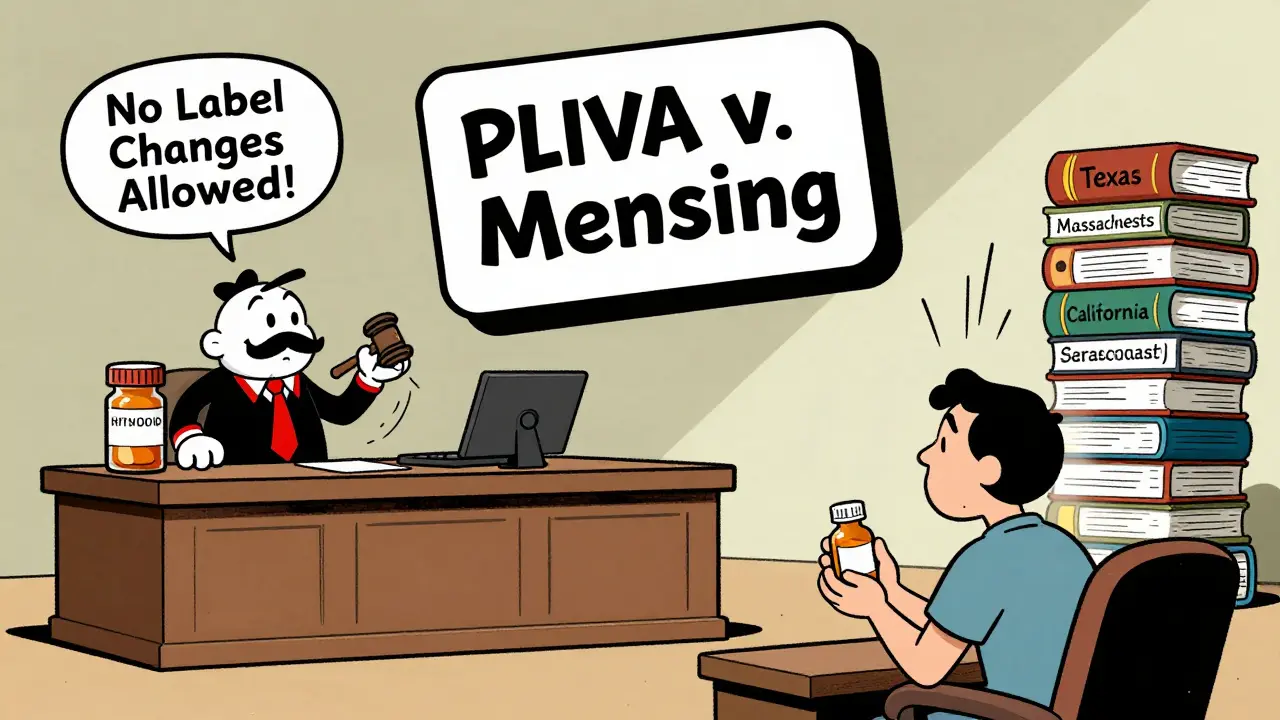
The biggest legal hurdle came in 2011, when the U.S. Supreme Court ruled in PLIVA v. Mensing that generic manufacturers can’t be sued under state law for failing to update warning labels. Why? Because federal law forces them to use the exact same label as the brand-name drug. They can’t change it-even if new safety data emerges. This created a liability gap: if a patient is harmed, they can’t sue the maker of the generic drug, and they can’t sue the brand-name maker because they didn’t produce it.That leaves pharmacists caught in the middle. State laws vary wildly:
- 27 states require pharmacists to substitute when possible.
- 23 states allow substitution but don’t require it.
- 32 states let patients refuse substitution.
- Only 18 states require pharmacists to notify patients directly-beyond just the label.
- 27 states protect pharmacists from greater liability for substituting than if they dispensed the brand.
- 23 states offer no such protection. In Connecticut, pharmacists could be held liable for more if they substitute.
That means a pharmacist in Texas might be shielded by law, while one in Massachusetts could be on the hook for the same action. A 2019 study by the National Community Pharmacists Association found that states with strong liability protections had 32% fewer malpractice claims related to substitution. States without them saw 27% higher claim rates.
What Pharmacists Can Actually Do to Reduce Risk
You can’t control federal preemption. But you can control how you practice. Here’s what works:- Know your state’s law-every year. Laws change. The National Association of Boards of Pharmacy updates its compendium annually. Don’t rely on memory.
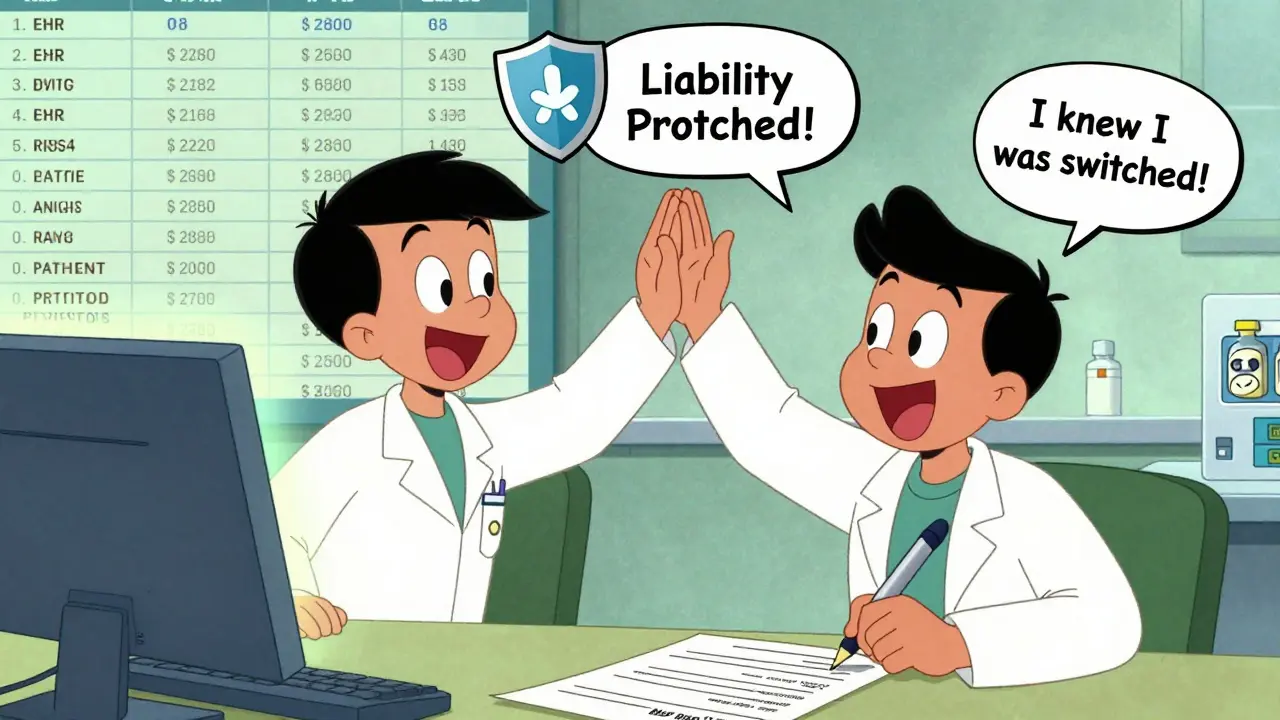
- Use EHR alerts. Set up electronic flags in your pharmacy system for narrow therapeutic index drugs. If warfarin or levothyroxine is prescribed, the system should pop up: “Patient notification required.”
- Get written consent. Even if your state doesn’t require it, use a simple form: “I understand this prescription has been changed from [Brand] to [Generic]. I’ve been told the risks and benefits.” Have the patient sign it. Document it.
- Communicate with prescribers. If a patient has a history of instability on a narrow index drug, call the doctor. Say: “I’m concerned about substitution here. Would you prefer we dispense the brand?” Most will say yes.
- Keep substitution logs. Record the brand name, generic name, lot number, and date. If a problem arises later, you’ll have proof of what was dispensed.
- Train your team. Every tech and pharmacist should know the state rules, the red-flag drugs, and the consent process. A 2022 survey found 74% of pharmacists refused substitutions for high-risk drugs anyway-because they were scared of liability.
- Get supplemental insurance. Standard malpractice policies often exclude substitution-related claims. Ask your insurer for coverage that includes generic substitution liability. It’s not expensive-$150-$300 extra per year.
The Patient Experience: Trust Is Fragile
Patients aren’t mad because generics are cheaper. They’re mad because they weren’t told. A 2022 Johns Hopkins survey found 63% of patients couldn’t name their state’s substitution laws. Many assume the pharmacist is just doing what’s standard. But when they feel worse after a switch, they feel betrayed.GoodRx data shows 82% satisfaction with generics for common drugs like metformin or lisinopril-because patients saw a $327 annual savings. But for drugs like levothyroxine? Satisfaction drops to 51%. That’s not about cost. It’s about control. Patients want to know when they’re being switched. They want to be asked.
What’s Changing? The Future of Liability
In 2023, 11 states introduced the Generic Drug Safety Act. It would require brand-name manufacturers to update labels within 30 days of new safety data-and force generics to adopt those updates within 60 days. That could close the liability gap. The FDA is also testing a pilot program to let generic manufacturers request label changes. So far, only 12% of requests came from generics. Why? Because they still fear legal exposure.Meanwhile, biosimilars (generic biologics) are entering the market. Fourteen states already allow substitution without prescriber approval. But no one has figured out liability for those yet. The same federal preemption rules apply. And the risks? Even higher. These aren’t pills. These are complex proteins. A tiny change in manufacturing can trigger immune reactions.
Bottom Line: Protect Yourself, Protect Your Patients
Generic substitution saves the U.S. healthcare system billions. But it’s not risk-free. Pharmacists are on the front lines-and legally exposed. The answer isn’t to stop substituting. It’s to do it smarter.Use your tools: EHR alerts, consent forms, documentation, and insurance. Talk to patients. Educate them. Give them a choice. Document everything. And never assume that because a drug is “bioequivalent,” it’s safe for everyone.
The system is broken. But you don’t have to be part of the problem. You can be part of the solution.
Can a pharmacist be sued for substituting a generic drug?
Yes, but only under certain conditions. Federal law shields generic manufacturers from liability for labeling issues. However, pharmacists can still be held liable if they violate state substitution laws-such as failing to notify the patient, substituting without permission, or switching a narrow therapeutic index drug without consulting the prescriber. Liability depends on state law and whether proper protocols were followed.
Which drugs are most risky to substitute?
Drugs with a narrow therapeutic index (NTI) are the most risky. These include warfarin (blood thinner), levothyroxine (thyroid hormone), phenytoin and carbamazepine (antiepileptics), and lithium (mood stabilizer). Small changes in blood levels can cause serious harm-like bleeding, seizures, or organ damage. The American Epilepsy Society and FDA both flag these as high-risk for substitution.
Do patients have the right to refuse a generic substitution?
Yes, in 32 states and Washington, D.C., patients have the legal right to refuse substitution. Even if your state requires substitution, the patient can say no. Always ask: “Would you like to keep the brand name, or are you okay with the generic?” Never assume consent. Document their choice.
Is it legal to substitute without telling the patient?
In 32 states, yes-but only if the label is updated. In 18 states, you must give direct notification (verbally or in writing). In 5 states, including California and New York, you must get written consent for NTI drugs. Skipping notification isn’t just unethical-it’s illegal in many places and increases your liability risk.
How can I find out my state’s current substitution laws?
Visit the National Association of Boards of Pharmacy (NABP) website and access their Compendium of State Pharmacy Laws. It’s updated annually and free to use. You can also check with your state board of pharmacy. Don’t rely on old handbooks or what you learned in school-laws change every year.
Should I stop substituting for high-risk drugs altogether?
No-you don’t have to stop. But you should be extra cautious. For drugs like levothyroxine or antiepileptics, always check the prescriber’s preference, get patient consent, and document everything. Many pharmacists choose to dispense the brand for NTI drugs if the patient is stable, even if substitution is allowed. That’s a smart risk-reduction strategy.
What’s the best way to document substitution?
Use your pharmacy system to log: (1) the brand name dispensed, (2) the generic dispensed, (3) the lot number of the generic, (4) whether the patient was notified, (5) whether consent was obtained, and (6) any communication with the prescriber. Store this electronically and back it up. In case of a claim, this documentation is your best defense.


Stephen Rudd
March 8, 2026 AT 06:18Jazminn Jones
March 10, 2026 AT 03:07Mary Beth Brook
March 10, 2026 AT 23:00Janelle Pearl
March 11, 2026 AT 10:26Nicholas Gama
March 12, 2026 AT 14:59Samantha Fierro
March 13, 2026 AT 22:47Peter Kovac
March 14, 2026 AT 19:50Neeti Rustagi
March 15, 2026 AT 17:00APRIL HARRINGTON
March 17, 2026 AT 01:15Ray Foret Jr.
March 18, 2026 AT 10:26Robert Bliss
March 18, 2026 AT 18:53Leon Hallal
March 19, 2026 AT 05:50Katy Shamitz
March 19, 2026 AT 07:48Dan Mayer
March 19, 2026 AT 18:04