
Biosimilar Cost Savings Calculator
Biosimilar medications can save patients and healthcare systems significant amounts of money. Based on FDA-approved pricing data, biosimilars typically cost 15-30% less than their reference biologic drugs. This calculator helps you estimate potential savings for your specific treatment.
When you hear "biosimilar," you might think: Is this just a cheaper copy? Is it safe? Will it even work? These questions come up every time a new biosimilar hits the pharmacy shelf. And for good reason - biologics are complex, expensive drugs used for serious conditions like rheumatoid arthritis, Crohn’s disease, cancer, and psoriasis. But here’s the truth: biosimilar medications aren’t generics. They’re not watered-down versions. They’re scientifically engineered to be nearly identical to their reference biologic - and decades of real-world data prove they work just as well and are just as safe.
What Exactly Is a Biosimilar?
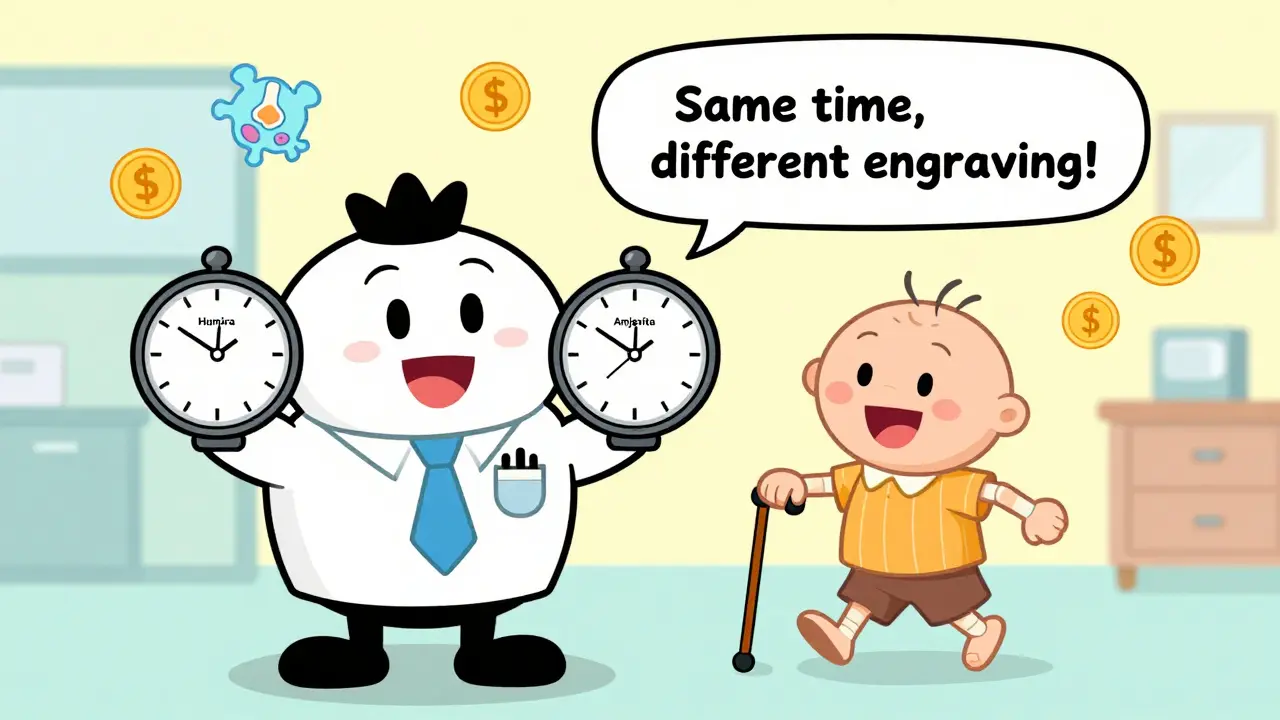
A biosimilar is a biological product that is highly similar to a reference biologic - the original, brand-name drug made from living cells. Think of it like this: a biologic is like a handmade Swiss watch. A biosimilar is another watch built with the same materials, same gears, same precision, and same function. It might have a slightly different engraving on the back, but it tells time just as accurately.
The FDA requires biosimilars to match the reference product in molecular structure, purity, and biological activity. Minor differences in inactive ingredients are allowed - like a different stabilizer - but nothing that affects how the drug works in your body. Unlike generic pills, which are chemically identical copies, biosimilars can’t be exact replicas because they’re made from living organisms. That’s why they go through rigorous testing: analytical studies, animal studies, and clinical trials focused on safety, purity, and potency. But here’s the key point: they don’t need to repeat the full clinical trial program of the original drug. Why? Because the reference product’s safety profile is already well known.
Are Biosimilars Safe? The Data Says Yes
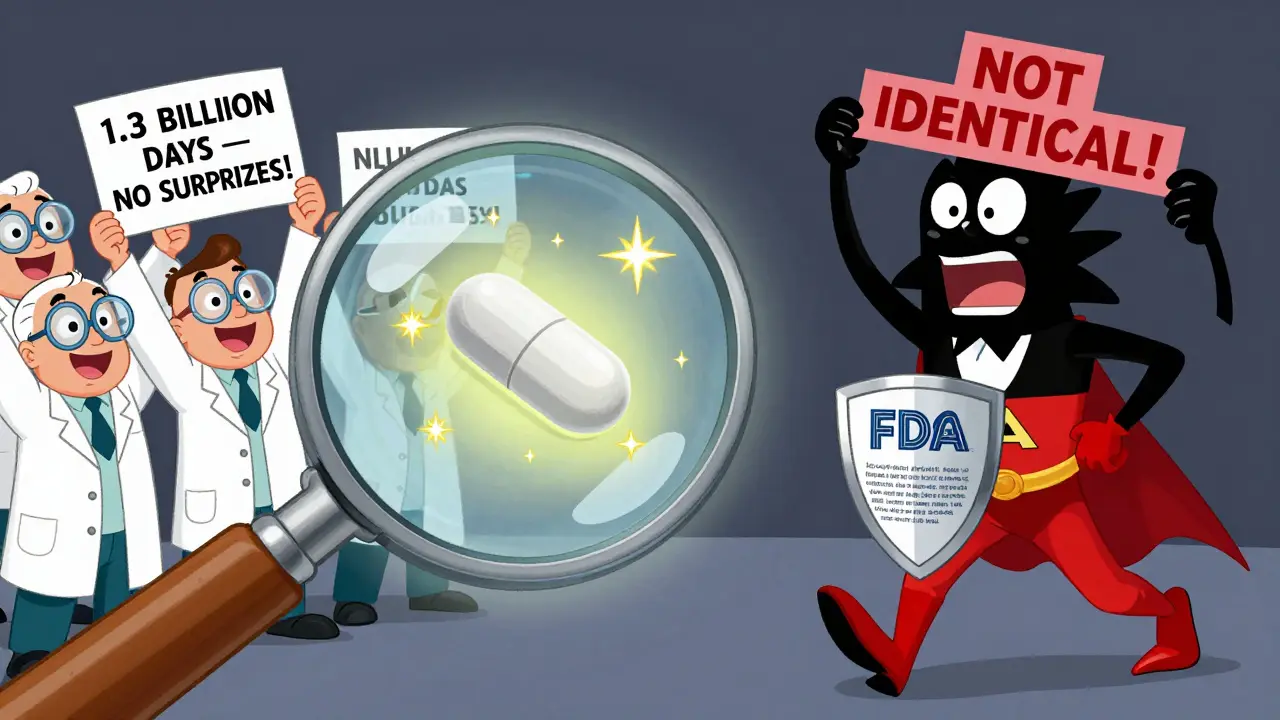
Let’s cut through the noise. The biggest fear around biosimilars is immunogenicity - your body making antibodies against the drug. That can reduce effectiveness or cause side effects like rashes or fever. But here’s what the numbers show: since the first biosimilar was approved in Europe in 2006, over 1.3 billion patient treatment days have been recorded across just eight Sandoz biosimilars. That’s more than a billion days of people using these drugs without safety surprises.
One of the most studied biosimilars is adalimumab - the drug behind Humira. The biosimilar Amjevita has been used in over 1.8 million patient doses. Real-world studies tracking patients for up to 18 years found no increase in serious side effects, hospitalizations, or treatment failures compared to the original. The FDA’s own dashboard states clearly: biosimilars have no clinically meaningful differences in safety, purity, or potency.
Even switching from the original biologic to a biosimilar - and back again - has been studied. ClinicalTrials.gov study NCT03729674 looked at over 2,000 patients switching between reference and biosimilar drugs. Results? No drop in effectiveness. No rise in adverse events. The FDA updated its guidance in February 2024 to reflect this: the risk of switching is insignificant. The European Medicines Agency, the World Health Organization, and regulatory bodies in Canada and Australia all agree.
Do Biosimilars Work as Well as the Original?
Yes - and the evidence isn’t just theoretical. In 2022, a survey of 500 U.S. rheumatologists found that 68% reported positive outcomes when using biosimilars for arthritis. Patients saw the same reduction in joint pain, same improvement in mobility, same rates of disease remission. A 2023 review of 17 studies on biosimilar infliximab (used for Crohn’s and ulcerative colitis) showed identical rates of clinical remission compared to the reference drug.
It’s not just autoimmune diseases. In oncology, 17 biosimilars have been approved for cancer treatment as of early 2024. A 2023 study of biosimilar rituximab in lymphoma patients found no difference in progression-free survival or overall survival. Patients lived just as long. Tumors shrank at the same rate. Side effects like fatigue, nausea, and infection rates were statistically the same.
And here’s something most people don’t realize: biosimilars are held to the same post-market monitoring standards as the original drugs. Every adverse event is tracked. Every case of unexpected reaction is reported. The FDA’s pharmacovigilance system doesn’t treat biosimilars as second-tier. They’re monitored just as closely.
Why Do Some People Still Doubt Them?
Despite the evidence, skepticism lingers. Why? Three reasons: marketing, misinformation, and lack of awareness.
Originator companies spent millions on messaging that says "highly similar, but not identical." That sounds scary - even though the FDA clarifies that "not identical" doesn’t mean "less safe." A 2019 AMA Journal of Ethics article revealed that some pharma campaigns deliberately avoided explaining the term "clinically meaningful difference." Patients were left wondering: if it’s not identical, is it worse?
On patient forums, you’ll find stories like: "I switched and got a rash. I switched back - it went away." But these anecdotes rarely hold up under scrutiny. In one case, the rash turned out to be unrelated to the drug. In another, the patient had changed their diet, stress levels, or other medications around the same time. The FDA’s database shows no pattern of increased adverse events with biosimilars.
Meanwhile, awareness is low. A 2022 Biosimilars Council survey found only 31% of patients had heard of biosimilars. And when they do hear about them, many assume they’re "generic" - which makes them skeptical. Pharmacists report that patients often refuse biosimilars not because of bad experiences, but because they’ve never heard the full story.
Cost Savings Are Real - and Massive
Biosimilars cost 15% to 30% less than their reference biologics. That might not sound like much until you multiply it by millions of doses. From 2015 to 2022, biosimilars saved the U.S. healthcare system $31 billion. Projected savings through 2030? Over $300 billion.
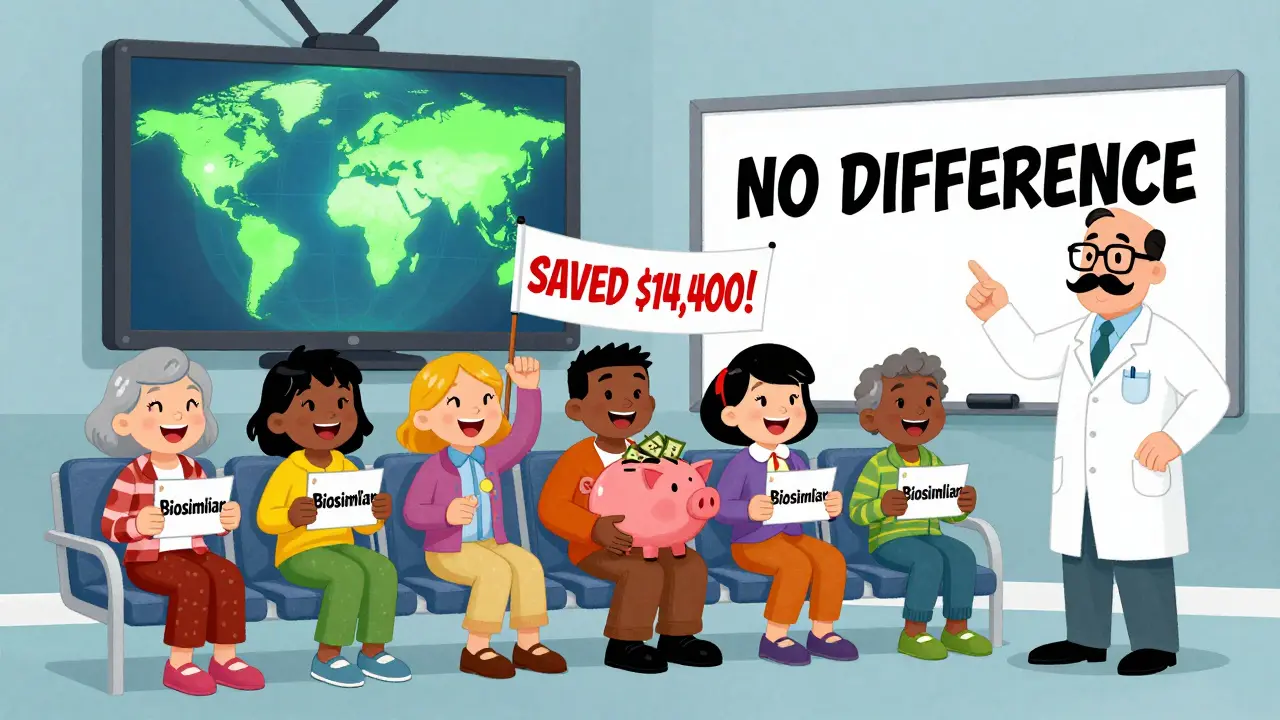
Take adalimumab (Humira). In 2023, four biosimilars entered the market. Within months, the price dropped from over $2,000 per dose to under $1,400. A patient on monthly injections saved $1,200 a month - $14,400 a year. That’s life-changing money for someone without full insurance coverage.
Europe leads in adoption. In countries like Germany and Sweden, over 65% of filgrastim prescriptions are for biosimilars. The U.S. is catching up - but slowly. Patent lawsuits and rebate deals between drugmakers and insurers have slowed the shift. Still, in 2023 alone, the FDA approved 12 new biosimilars - more than in the previous seven years combined.
What Should You Do If Your Doctor Suggests a Biosimilar?
If your provider offers a biosimilar, ask these three questions:
- Is this biosimilar approved for my exact condition? (Some are approved for fewer uses than the original.)
- Has this biosimilar been used by others with my condition? (Ask for data - most clinics now track outcomes.)
- Will my insurance cover it? (Often, they’ll require you to try it first to save costs.)
Don’t assume it’s a downgrade. Many patients report no difference at all. One Reddit user, a pharmacist with five years of experience, said: "I’ve seen zero adverse events from biosimilar switches. But patients refuse because they’ve been scared by ads."
And if you’re already on a biologic? Switching isn’t risky. Multiple studies confirm it’s safe. The FDA says so. The EMA says so. Real-world data says so.
Final Thoughts: Trust the Evidence, Not the Fear
Biosimilars aren’t a gamble. They’re the result of over 15 years of global regulatory oversight, billions of patient days, and hundreds of peer-reviewed studies. They’re not perfect - nothing in medicine is. But they’re not dangerous. They’re not inferior. They’re a proven, safer, more affordable way to treat serious diseases.
The fear around biosimilars isn’t based on science. It’s based on marketing, confusion, and a lack of clear communication. If you’re being offered a biosimilar, ask questions. Read the data. Talk to your doctor. But don’t let uncertainty stop you from a treatment that could save you money - and give you the same results as the original.
Are biosimilars the same as generics?
No. Generics are exact chemical copies of small-molecule drugs, like aspirin or metformin. Biosimilars are complex proteins made from living cells. They’re highly similar to their reference biologic, but not identical - similar to how two handmade watches might differ slightly in engraving but keep perfect time. The approval process for biosimilars is far more rigorous than for generics.
Can I switch from my biologic to a biosimilar safely?
Yes. Multiple studies, including those tracked by ClinicalTrials.gov and reviewed by the FDA, show that switching between a reference biologic and a biosimilar - even multiple times - doesn’t increase the risk of side effects or reduce effectiveness. The FDA updated its guidance in 2024 to confirm that the risk of switching is "insignificant." Real-world data from over 1.3 billion patient treatment days supports this.
Do biosimilars cause more side effects?
No. Large-scale reviews of post-market data, including from Sandoz and the FDA, show no increase in adverse events compared to the original biologic. Immunogenicity - the body making antibodies against the drug - is monitored closely, and studies show no difference in antibody rates between biosimilars and reference products. Anecdotal reports of new side effects after switching are rare and often unrelated to the drug itself.
Why are biosimilars cheaper if they’re so similar?
Because biosimilar manufacturers don’t have to repeat the full clinical trials of the original drug. They rely on the reference product’s existing safety data, which cuts development time and cost. This allows them to offer the drug at 15-30% lower prices. The savings are passed on to insurers and patients - not to the manufacturer’s profit margin.
Are biosimilars approved for all the same uses as the original?
Not always. A biosimilar must prove similarity for at least one condition, but it can be approved for additional uses if the FDA determines the data supports it. This is called "extrapolation." For example, if a biosimilar is proven safe and effective for rheumatoid arthritis, and the mechanism of action is the same in Crohn’s disease, it may be approved for both. Always check the FDA label for approved uses.
Can a pharmacy substitute a biosimilar without my doctor’s approval?
Only if it’s labeled as "interchangeable" and your state allows substitution. The FDA has approved a few interchangeable biosimilars, meaning they can be swapped at the pharmacy without the prescriber’s involvement. But not all biosimilars have this status. Even then, state laws vary - some require the pharmacist to notify your doctor. Always ask if the drug you’re getting is interchangeable.


Natanya Green
February 26, 2026 AT 23:52Michael FItzpatrick
February 27, 2026 AT 05:29Cory L
March 1, 2026 AT 02:09Bhaskar Anand
March 2, 2026 AT 07:19William James
March 2, 2026 AT 21:32David McKie
March 4, 2026 AT 19:42Southern Indiana Paleontology Institute
March 5, 2026 AT 13:50Joanna Reyes
March 6, 2026 AT 04:12Nerina Devi
March 6, 2026 AT 23:22Dinesh Dawn
March 7, 2026 AT 17:48Vanessa Drummond
March 9, 2026 AT 07:43Nick Hamby
March 10, 2026 AT 07:37kirti juneja
March 11, 2026 AT 06:33Haley Gumm
March 11, 2026 AT 13:42Gabrielle Conroy
March 11, 2026 AT 21:49