
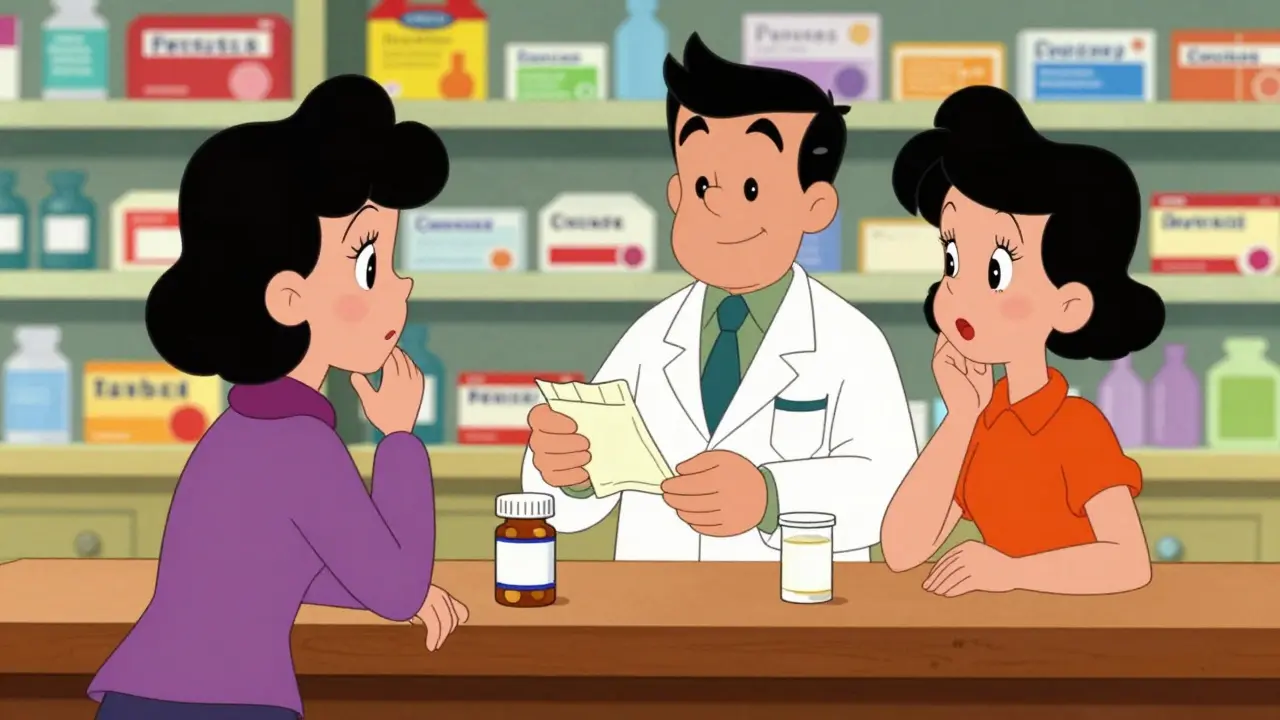
You’ve likely noticed the price difference at the pharmacy counter. One pill costs twenty dollars, while the box next to it says five. That cheaper option is a generic drug. It looks almost identical to the brand-name version. But do you trust it with your health?
This question sits at the heart of modern medicine. When you swap medications, you aren’t just changing brands; you are changing formulations. This creates a natural worry. Will the cheaper version work exactly the same way? Does it put my safety at risk? The answer lies in a scientific concept called Bioequivalence. This is not just marketing jargon. It is the rigorous standard that keeps healthcare affordable without compromising care.
What Is Bioequivalence Really?
Many people assume generic drugs are "copies." In legal terms, they often are chemically similar copies. But in medicine, copying is never simple enough. Bioequivalence is scientifically defined as the absence of a significant difference in the rate and extent to which the active ingredient becomes available at the site of drug action.
Say that again, but simpler. When you take a tablet, your body breaks it down. The drug enters your bloodstream. How fast it gets there and how much of it ends up in your blood matters immensely. If a generic drug dissolves too slowly, it won’t stop your pain or lower your blood pressure in time. If it absorbs too fast, you could get toxic effects.
Regulatory authorities require proof before approval. The U.S. Food and Drug Administration (FDA) and the European Medicines Agency (EMA) demand that generic manufacturers prove their product performs within a very specific range compared to the original brand.
The gold standard rule is the 80-125% confidence interval. For most common medications, the generic drug’s absorption levels must fall between 80% and 125% of the brand-name drug’s levels. This isn’t an exact 100% match. Biology varies wildly from person to person. Even two identical pills taken by one individual can show slight differences due to diet or metabolism. The 80-125% range accounts for normal human variability while ensuring clinical equivalence.
The Science Behind the Approval
Proving this equivalence takes serious effort. Pharmaceutical companies cannot simply guess. They must run human trials. Typically, they recruit healthy volunteers for Pharmacokinetic Studies. These studies measure drug concentration over time.
The most common design involves a crossover method. Volunteers take the brand drug first, wash it out of their system, and then take the generic version days later. Researchers draw blood repeatedly. They track the Area Under the Curve (AUC) and the Peak Concentration (Cmax). AUC tells us total exposure. Cmax tells us how high the spike gets.
If the data shows the generic falls inside the safe zone, it passes. It gets approved under frameworks like the Hatch-Waxman Act, established in 1984. This legislation changed everything. It created the pathway for cheaper alternatives while keeping quality high. Without these laws, patients would rely solely on expensive brand drugs, straining budgets nationwide.
| Parameter | Requirement | Clinical Impact |
|---|---|---|
| AUC (Area Under Curve) | 80-125% | Total drug exposure in body |
| Cmax (Peak Concentration) | 80-125% | Speed of absorption |
| Narrow Therapeutic Index | 90-111% | Stricter limits for sensitive drugs |
When Stricter Standards Apply
The 80-125% rule works for most medicines. However, some drugs have a narrow margin for error. We call these Narrow Therapeutic Index Drugs. Think of warfarin, used for blood clotting, or levothyroid, used for thyroid function.
With these medications, a small change in dosage can mean the difference between life and death. Taking slightly too much warfarin causes dangerous bleeding. Taking too little risks a stroke. Because of this risk, regulators tighten the net. Instead of 80-125%, the acceptable range shrinks to 90-111%. Some agencies push even tighter limits depending on the drug.
This nuance matters for patient advocacy. It explains why some patients report feeling different after switching generics. It is rarely because the product failed the tests. It is often because their specific biology sits right on the edge of sensitivity. Doctors often monitor labs closely during these switches to adjust dosages manually. The test ensures the drug is equivalent, but the doctor ensures the patient stays stable.
Beyond Pills: Complex Drug Products
Not all medicines come in tablets. Inhalers, creams, and injectables pose unique challenges. A cream absorbed through skin behaves differently than a pill swallowed. An inhaler delivers medicine directly to lungs.
For these complex products, simple blood tests sometimes fail to capture the full picture. Regulators now utilize advanced methods like in-vitro dissolution testing and physiological modeling. The FDA launched initiatives in 2022 to handle these Complex Generic Drug Products.
Another category gaining attention is Biosimilars. Unlike small-molecule generic drugs, these are large protein structures derived from living cells. They cannot be exact chemical copies because proteins vary by nature. Approval requires a "totality of evidence" approach. This includes structural comparisons, animal toxicity studies, and human safety assessments. It is a step further than standard bioequivalence testing.
Global Standards and Consistency
The United States leads, but it does not act alone. The European Medicines Agency aligns closely with FDA standards. Most developed nations follow similar paths. This harmonization helps global access.
Data from the Association for Accessible Medicines highlights the scale. In 2020 alone, generic drugs accounted for 90% of prescriptions dispensed in the U.S. yet only 23% of total spending. These drugs saved the American healthcare system approximately $313 billion that year. The math is clear. Widespread use of bioequivalent generics makes healthcare sustainable. Without it, prices would skyrocket, forcing patients to skip necessary treatments.
Different countries have slight variations. Japan, for instance, focuses heavily on fasting state studies. Brazil mandates minimum medical investigations regardless of protocol specifications. International groups like the International Pharmaceutical Regulators Programme work to bridge these gaps. They ensure that a generic made in one region remains safe in another.

Patient Experiences and Data
Statistics tell one story, but patient voices tell another. Surveys generally show high satisfaction. An 87% majority of U.S. patients reported equal effectiveness to brand-name medications in recent studies. This aligns with the science. If the bioequivalence holds, the outcome should hold.
However, anecdotes surface online. Forums occasionally discuss problems after switching. Why do reports of issues exist if the science is solid? Often, these cases stem from unrelated factors. Placebo effect plays a role. Other lifestyle changes coinciding with the switch matter. Sometimes, inactive ingredients differ. The generic might lack a specific dye or filler found in the brand. While the active drug is the same, rare sensitivities to excipients can cause reactions.
Safety systems exist to catch real problems. The FDA tracks adverse events. If a pattern emerges showing systemic failure, the product gets recalled. This happened rarely. Out of millions of prescriptions, confirmed failures remain statistically negligible. The system is designed to protect you when the standard shifts.
The Future of Drug Testing
Technology evolves faster than regulations. Artificial Intelligence is entering the field. Scientists now use PBPK Modeling, or Physiologically-Based Pharmacokinetic modeling. This simulates how drugs move through the human body using computer power.
In 2022, the FDA accepted several submissions using these models instead of extensive clinical trials. This speeds up approvals. It reduces the burden on human volunteers. However, physical verification remains crucial. Computer predictions assist, but they do not replace biological proof entirely.
As of 2023, WHO reported that 134 countries have established bioequivalence requirements. This trend is growing. As global supply chains shift, knowing these standards apply universally gives peace of mind. Whether a prescription fills in Vancouver, London, or Tokyo, the core science remains rooted in patient safety.
Can I safely switch from brand-name to generic drugs?
Yes, for the vast majority of medications. Bioequivalence testing ensures the generic contains the same active ingredient and performs the same way in the body. Always consult your doctor if you manage conditions requiring tight control.
Why do some doctors insist on brand-name drugs?
This may happen with Narrow Therapeutic Index drugs. Some physicians prefer the consistency of a specific manufacturer’s formula to minimize any potential variability in patient outcomes.
Are generic drugs cheaper for a reason?
Generic manufacturers do not repeat the costly initial research and development of the brand drug. They save money on innovation costs, passing savings to consumers while maintaining strict testing standards.
Does the 80-125% rule guarantee safety?
It provides statistical assurance that differences are clinically insignificant. Combined with manufacturing quality controls, this standard reliably predicts patient safety for standard medications.
What happens if a generic fails bioequivalence testing?
The FDA rejects the application. The company cannot market the drug. They must reformulate the product and retest until it meets the required parameters.



Vikash Ranjan
March 30, 2026 AT 13:55The entire system is rigged to prioritize profit over actual patient health.
Michael Kinkoph
March 31, 2026 AT 08:33While your cynicism is noted, it lacks substance regarding regulatory standards. The FDA protocols are incredibly strict; indeed, they require rigorous clinical trials to prove equivalence. Many of us overlook the extensive data required for approval. Manufacturers face severe penalties if they fail to meet specifications. Consequently, the 80-125% rule is not arbitrary but mathematically derived. It accounts for biological variance without compromising efficacy. Please educate yourself before dismissing established medical frameworks. We must trust the science behind these approvals. Ignoring this undermines patient safety globally.
RONALD FOWLER
March 31, 2026 AT 09:23i hear what you mean about profits but the science seems solid enough
just glad there are rules keeping things safe
we all want the same outcome for patients
Kendell Callaway Mooney
April 2, 2026 AT 05:08Generic manufacturers skip the original R&D costs which lowers the price significantly. They still have to prove their drug works the same way. This keeps healthcare affordable for everyone. Patients often worry about inactive ingredients causing issues. These cases are rare but monitored closely. Your doctor can help manage any switch sensitivities.
Jonathan Alexander
April 3, 2026 AT 14:03I remember when my mom switched meds and she felt terrible afterwards. She was convinced the pills were fake despite the label.
We stopped using the cheap version eventually. It ruined our relationship with the pharmacy.
Sometimes the body just knows something is different.
Charles Rogers
April 5, 2026 AT 09:14You clearly missed the point of therapeutic index discussions. Most complaints arise from unrelated health fluctuations. The placebo effect is powerful and deceiving. Perception often overrides statistical reality here. Bioequivalence tests cover standard variability ranges. Yet individuals demand perfection in biological systems. Perfection does not exist in nature or chemistry. We must accept minor differences for survival. Cost savings benefit society as a whole. Wealthier nations access medicine through these laws. Access is a human right fundamentally. Ignoring this fact harms the most vulnerable populations. We cannot afford brand name exclusivity forever. Generic competition drives prices down drastically. Monopolies create financial ruin for families daily. History proves generic drugs save lives constantly. We must stop fearing progress for comfort.
Cameron Redic
April 6, 2026 AT 00:15Fake news circulating on forums distorts real data. People share anecdotes instead of evidence. This misinformation spreads rapidly online.
William Rhodes
April 7, 2026 AT 08:44We need to look at the bigger picture of global health! Every dollar saved allows more research! Progress relies on accessible medication for all! We cannot let fear dictate public policy anymore!
Biraju Shah
April 9, 2026 AT 00:24Strict monitoring of narrow therapeutic index drugs is non-negotiable. Physicians must adjust dosages when switching formulations. Patient advocacy groups should push for transparency here. Safety margins matter more than convenience for these specific cases.
Marwood Construction
April 9, 2026 AT 18:47The utilization of physiologically-based pharmacokinetic modeling represents a significant advancement. Artificial intelligence facilitates faster submission reviews now. Computer simulations assist regulators in decision making processes.
Dan Stoof
April 10, 2026 AT 16:43This technology sounds absolutely amazing!!! Imagine saving so much time!! It will change everything in medicine soon!! We should celebrate this innovation!!!