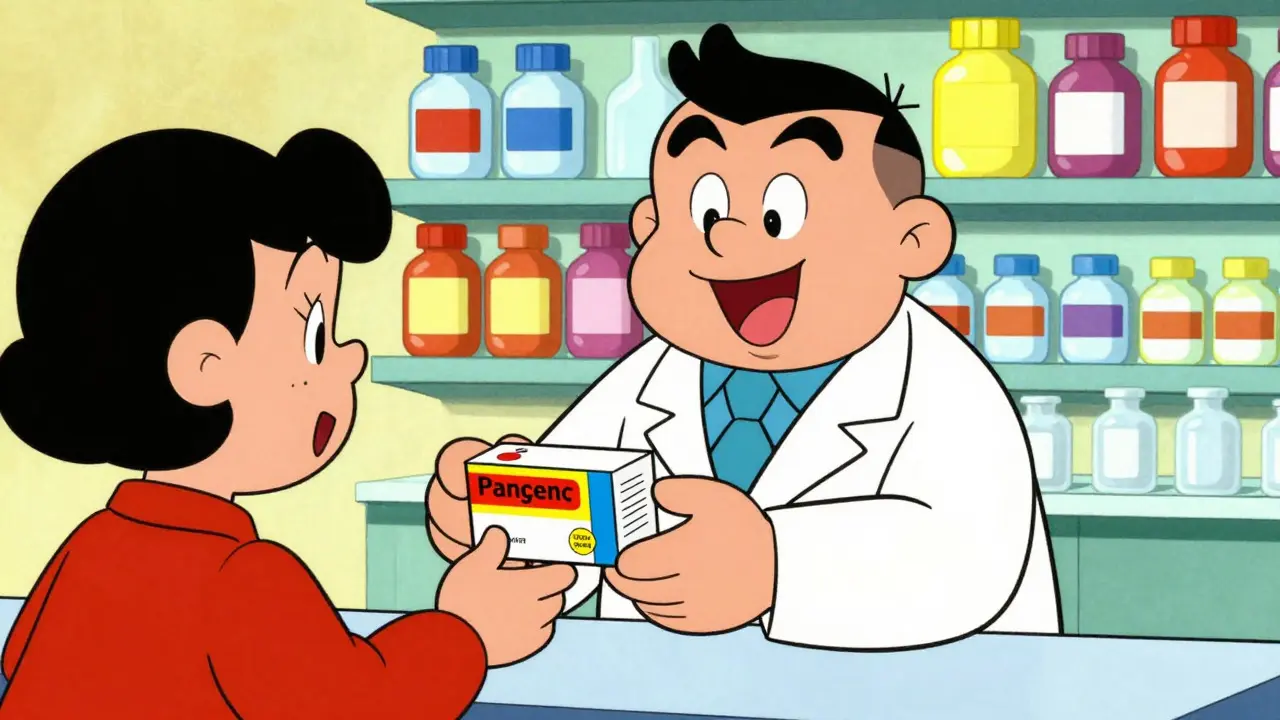
You walk into a pharmacy with a prescription for a brand-name medication. The pharmacist hands you a box with a different name and a fraction of the price. It looks different, it costs less, but is it really the same medicine? This is where Therapeutic Equivalence Codes come in. These codes are the FDA's secret language for telling pharmacists exactly which generic drugs can safely replace their brand-name counterparts.
If you've ever wondered why your doctor prescribed one thing but you got another, or why some generics get swapped automatically while others require a phone call to your doctor, the answer lies in these letters and numbers. Understanding this system isn't just for pharmacists; it empowers you to know what you're taking and why.
What Are Therapeutic Equivalence Codes?
At its core, a therapeutic equivalence (TE) code is a rating assigned by the U.S. Food and Drug Administration (FDA). It tells us whether a generic drug product can be substituted for a brand-name drug with the full expectation that it will produce the same clinical effect and safety profile.
This system lives inside a publication known as the Orange Book officially titled 'Approved Drug Products with Therapeutic Equivalence Evaluations'. Published since 1980, following the Hatch-Waxman Amendments of 1984, the Orange Book is the bible for generic drug approval in the United States. When the FDA approves a new generic drug via an Abbreviated New Drug Application (ANDA), they assign it a TE code based on three critical factors:
- Pharmaceutical Equivalence: Does the generic have the same active ingredient, strength, dosage form, and route of administration as the brand?
- Bioequivalence: Does the generic release the drug into the bloodstream at the same rate and extent as the brand?
- Safety and Efficacy: Will it work the same way and cause the same side effects under the conditions specified in the labeling?
The goal is simple: ensure patient safety while allowing cost-effective generic competition. According to recent data, about 90% of generic drugs in the U.S. market carry an 'A' rating, meaning they are fully substitutable.
Decoding the Letters: A vs. B Ratings
The TE code uses a letter-based system. The first letter is the most important part because it determines if a pharmacist can swap the drug without asking your doctor. Let's break down what these letters actually mean for your health.
| First Letter | Meaning | Substitution Status | Common Examples |
|---|---|---|---|
| A | Regarded as therapeutically equivalent | Generally substitutable without physician intervention | AB, AB1, AB2, AC |
| B | Not regarded as therapeutically equivalent OR requires further investigation | Usually not substitutable; may require physician approval | BC, BD, BX, BT |
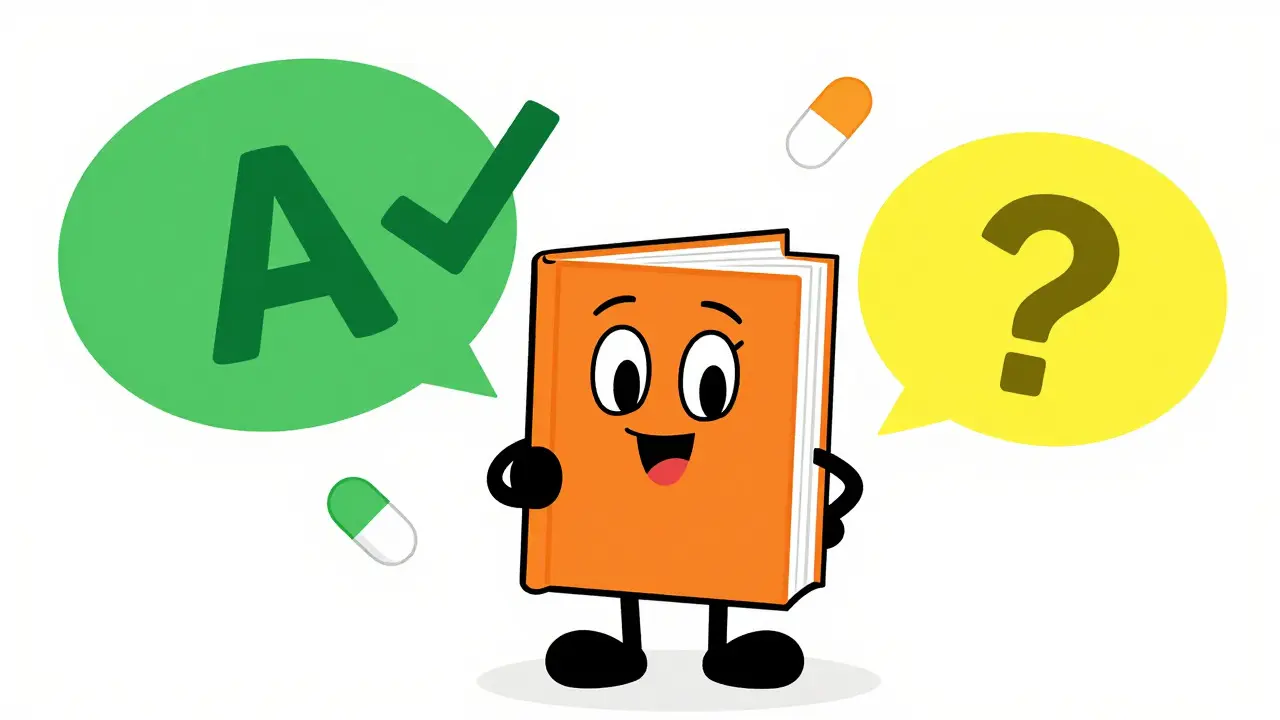
The 'A' Codes: The Green Light
When you see an 'A' as the first letter, it’s a green light. These products are considered therapeutically equivalent to other pharmaceutically equivalent products. The most common code you’ll encounter is AB.
An AB code means the generic has met all necessary bioequivalence requirements. It works just like the brand-name drug. Sometimes you'll see suffixes like AB1, AB2, AB3, or AB4. This happens when there are multiple reference listed drugs (RLDs) for the same strength. For example, if two different brand names exist for the same drug, the FDA assigns specific numbers to link the generic to the correct reference. To you, the patient, this distinction rarely matters clinically, but it ensures regulatory precision.
The 'B' Codes: The Yellow or Red Light
A 'B' rating is more complex. It doesn't necessarily mean the drug is bad or unsafe. Instead, it means the FDA needs more information to determine therapeutic equivalence, or there are documented issues that prevent automatic substitution. Here are some common B-codes and what they signify:
- BC: Extended-release dosage forms where bioequivalence hasn't been fully established yet.
- BD: Active ingredients with documented bioequivalence problems.
- BX: Insufficient data to determine therapeutic equivalence. This is often seen with older generics or very niche drugs.
- BT: Topical products with bioequivalence issues.
- BN: Aerosol-nebulizer drug delivery systems.
Dr. Duxin Sun, a professor of pharmaceutics, has noted that current TE codes for topical, inhaled, and complex injectable products may not adequately reflect therapeutic equivalence because standard bioequivalence measures aren't always sufficient for these complex formats. So, a 'B' rating often signals complexity rather than failure.
Why Do Some Generics Get a 'B' Rating?
If a generic drug is safe and effective, why wouldn't it get an 'A'? The answer usually lies in the complexity of the drug product. Simple pills-immediate-release solid oral dosage forms-are easy to test. Scientists can run blood tests to prove the generic enters your system at the same speed and amount as the brand.
But what about creams, inhalers, eye drops, or extended-release capsules? These are called "complex generics." Measuring how much drug gets absorbed from a cream applied to skin is much harder than measuring a pill dissolved in stomach acid. Because traditional bioequivalence studies are difficult to conduct for these products, the FDA often assigns a 'B' rating until more robust evidence is provided.
For instance, a generic version of a topical steroid might receive a BT code. Even if it feels the same and contains the same ingredients, proving it penetrates the skin identically to the brand requires specialized testing. Until that proof is complete, it stays in the 'B' category. This protects patients from potential variability in treatment outcomes.
How Pharmacists Use TE Codes Daily
Behind the counter, pharmacists rely heavily on these codes. In 49 U.S. states, laws permit the automatic substitution of 'A'-rated generics without needing to call the prescribing physician. This process saves time and money. According to industry surveys, pharmacists spend an average of 2.7 minutes per prescription verifying TE status, contributing to billions in annual healthcare savings.
However, confusion does happen. A survey revealed that 42% of physicians expressed confusion about how to interpret 'B' codes. Sometimes, a pharmacist might refuse to substitute a 'B'-rated product even if it would be appropriate for the patient, simply to avoid liability or administrative hassle. Conversely, some prescribers write "Dispense As Written" (DAW) on prescriptions, forcing the pharmacy to dispense the brand name regardless of the TE code, often due to insurance formularies or specific patient sensitivities.
If you receive a 'B'-rated generic, it’s worth asking your pharmacist why. Is it because of a lack of data, or is there a specific reason it shouldn't be used? In many cases, especially with chronic conditions, sticking to a consistent manufacturer (whether brand or generic) can help maintain stable blood levels, particularly for narrow-therapeutic-index drugs like warfarin or levothyroxine.
The Future of Therapeutic Equivalence Ratings
The landscape of generic drugs is changing. As patents expire on more complex biologics and novel delivery systems, the FDA faces increasing pressure to refine its TE code system. The agency released draft guidance in 2022 proposing updates to address challenges with complex drug products. They aim to reduce the number of 'B'-rated products for complex generics by 30% by 2027 through enhanced evaluation methodologies.
This evolution includes incorporating more real-world evidence alongside traditional bioequivalence studies. For patients, this means fewer ambiguities and more confidence in generic alternatives over time. The FDA continues to update the Orange Book monthly, ensuring that the latest scientific consensus guides substitution practices.
Frequently Asked Questions
Does a 'B' rated generic mean it is unsafe?
Not necessarily. A 'B' rating indicates that the FDA lacks sufficient data to declare it therapeutically equivalent to the brand-name drug, or that there are specific bioequivalence concerns. It does not mean the drug failed safety tests, but rather that more evidence is needed to confirm it performs identically to the reference product in all aspects.
Can I ask my doctor to prescribe a specific generic manufacturer?
Yes. While state laws vary, many allow physicians to specify a particular generic manufacturer by writing "Dispense As Written" or "Brand Medically Necessary" on the prescription. This is common for patients who experience side effects with one generic formulation but do well with another.
What is the difference between pharmaceutical equivalence and therapeutic equivalence?
Pharmaceutical equivalence means two drugs contain the same active ingredient, strength, dosage form, and route of administration. Therapeutic equivalence goes a step further, requiring that they also demonstrate bioequivalence and produce the same clinical effect and safety profile. All therapeutically equivalent drugs are pharmaceutical equivalents, but not all pharmaceutical equivalents are therapeutically equivalent.
Why do some generic drugs look different from the brand name?
Generic manufacturers use different inactive ingredients (fillers, binders, dyes) to create their pills. These differences can change the color, shape, or size of the tablet. As long as the active ingredient and bioavailability are the same, these cosmetic differences do not affect the drug's therapeutic performance.
Are over-the-counter (OTC) drugs included in the TE code system?
No. The FDA's therapeutic equivalence coding system applies only to multisource prescription products. Over-the-counter drugs are evaluated under different monographs and regulations, so you won't find TE codes for common OTC medications like ibuprofen or acetaminophen in the Orange Book.
How often is the Orange Book updated?
The FDA updates the Orange Book monthly. These updates include new approvals, changes in patent status, and revisions to therapeutic equivalence ratings as new data becomes available. Pharmacists and healthcare providers should check the online database regularly for the most current information.