Steroid Acne Treatment Finder
Select the statements that best describe your current breakout. The more accurate your selection, the better the recommendation.
The bumps feel itchy rather than just painful or tender.
All bumps look identical in size and shape (monomorphic).
Breakouts are primarily on chest, upper back, or shoulders.
You see blackheads, whiteheads, or mixed lesion types.
Bumps are red, swollen, and painful to touch.
Recommended Protocol
Topical Treatment Plan
Lifestyle Adjustments
- Sweat Management: Shower immediately after exercise. Wear loose, breathable fabrics.
- Sun Protection: Use non-comedogenic SPF 30+ daily (steroids increase photosensitivity).
- Gentle Cleansing: Avoid harsh scrubs. Use mild, fragrance-free cleansers only.
Note: If symptoms persist after 8-12 weeks of consistent treatment, consult a dermatologist for prescription options like oral antibiotics or isotretinoin.
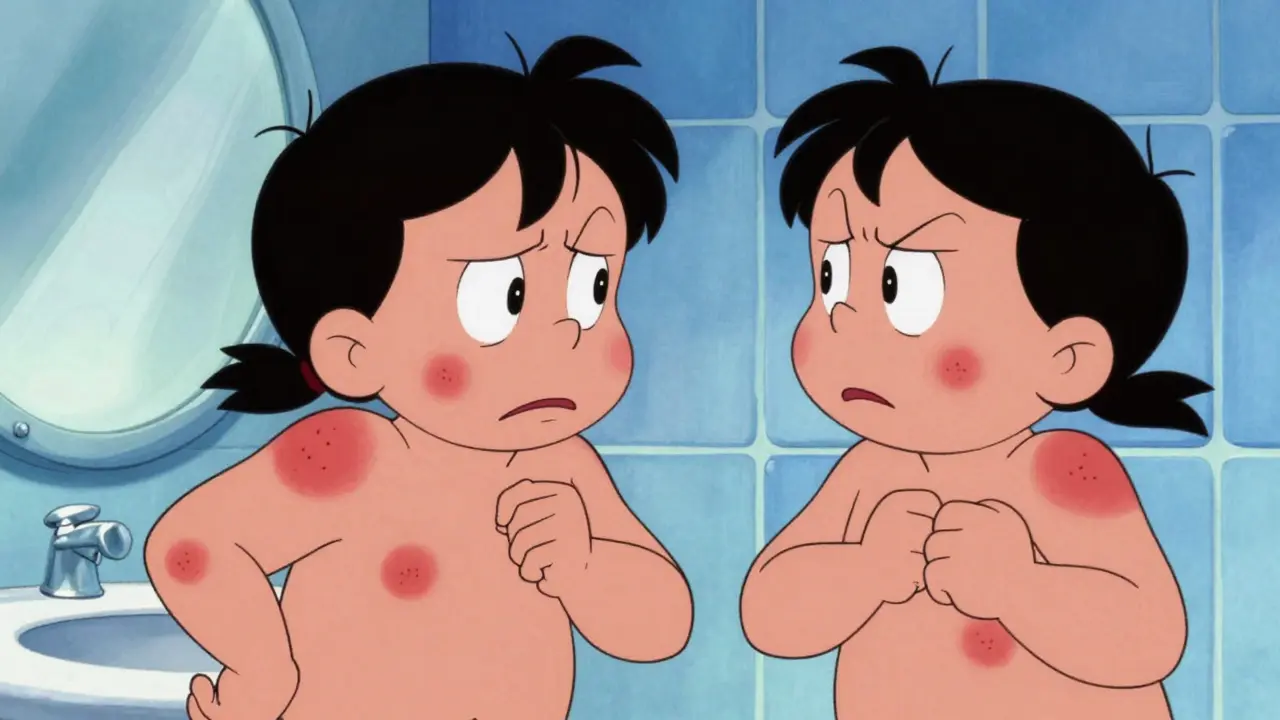
You take a medication to heal your lungs or calm an autoimmune flare-up, but suddenly your chest is covered in identical red bumps. It’s frustrating, confusing, and often misunderstood. This isn’t just regular acne; it’s steroid-induced acne, a specific reaction triggered by corticosteroids or anabolic steroids that causes uniform, inflammatory breakouts distinct from common acne vulgaris. Unlike the mixed bag of blackheads, whiteheads, and cysts you might get during puberty, steroid acne looks like a wave of uniform, reddish papules marching across your upper back, chest, and sometimes face.
If you are on high-dose prednisone for asthma, managing multiple sclerosis, or recovering from an organ transplant, this breakout can feel like a cruel twist. You’re trying to heal, yet your skin is rebelling. The good news? You don’t always have to stop your life-saving medication to clear your skin. With the right topical strategies and lifestyle tweaks, you can manage these lesions effectively without compromising your primary health treatment.
Why Steroids Trigger Breakouts (And How They Differ)
To fix the problem, you first need to understand why it’s happening. Steroid acne was clinically documented in the early 1970s, but the mechanism only became clearer recently. Corticosteroids affect how your skin cells communicate with bacteria. Specifically, they alter the expression of Toll-like receptor 2 (TLR2), a protein that helps the immune system recognize pathogens and regulate inflammation on the skin surface. When TLR2 signaling changes, the natural Propionibacterium acnes bacteria on your skin trigger stronger inflammatory responses than usual.
There are two main types of steroid acne, and treating them differently matters:
- Corticosteroid Acne: Caused by prescription meds like prednisone, methylprednisolone, or topical steroid creams used heavily on large areas. It typically appears as dense clusters of red bumps and whiteheads, mostly on the trunk (chest and back).
- Anabolic Steroid Acne: Linked to performance-enhancing drugs. These lesions are often larger, deeper, and more prone to scarring. They frequently appear on the face, shoulders, and back.
A critical distinction: about 30-40% of what looks like steroid acne is actually Malassezia folliculitis, a fungal infection caused by yeast overgrowth in hair follicles triggered by immunosuppression from steroids. If your bumps are intensely itchy, all the same size, and lack blackheads, you likely have yeast, not bacteria. Standard acne treatments won’t touch this-you need antifungals.
Topical Solutions That Actually Work
When you can’t stop your steroid dose, your skincare routine becomes your frontline defense. Here is what dermatologists recommend based on clinical evidence.
1. Retinoids: The Gold Standard
Topical tretinoin is a vitamin A derivative that accelerates cell turnover and prevents pore clogging, proven effective for steroid-induced comedones. Landmark studies show that applying 0.05% tretinoin solution once or twice daily can clear dense aggregates of steroid acne within two to three months. It works even while you continue taking steroids. Start slowly-every other night-to avoid irritation, then build up to nightly use. Pair it with a gentle moisturizer to protect your skin barrier.
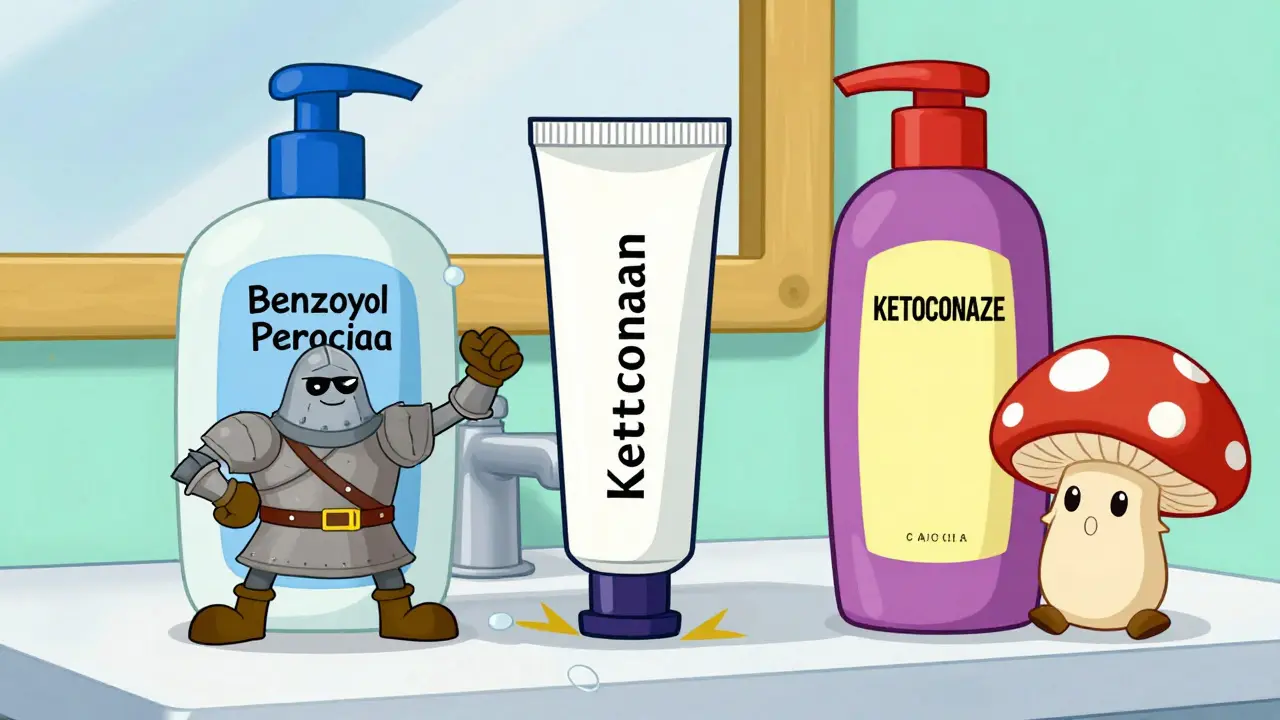
2. Benzoyl Peroxide for Bacterial Control
If your acne is inflamed and bacterial, benzoyl peroxide (BPO) helps kill P. acnes. Use a 5% wash on your chest and back in the shower. Leave it on for 2-3 minutes before rinsing. This reduces resistance risk compared to leaving it on all day. Avoid combining high-strength BPO with tretinoin at the exact same time, as they can deactivate each other or cause excessive dryness. Use BPO in the morning and tretinoin at night.
3. Antifungals for Yeast Acne
If your breakout is itchy and uniform, try Ketoconazole shampoo or Selenium sulfide shampoo, which are medicated shampoos containing antifungal agents that reduce Malassezia yeast populations on the skin. Apply 2% ketoconazole or 2.5% selenium sulfide to affected areas (chest/back) after showering. Let it sit for 5-10 minutes, then rinse. Do this 2-3 times a week. Most patients see improvement within two weeks.
| Treatment | Best For | Application Frequency | Key Benefit |
|---|---|---|---|
| Tretinoin 0.05% | Uniform red bumps, whiteheads | Nightly (start every other night) | Clears comedones, prevents new blockages |
| Benzoyl Peroxide 5% | Inflamed, painful pimples | Morning (wash-off) | Kills bacteria, reduces inflammation |
| Ketoconazole 2% | Itchy, same-sized bumps (yeast) | 2-3x weekly (leave-on) | Treats underlying fungal cause |
| Salicylic Acid 2% | Mild congestion, oily skin | Daily (wash or leave-on) | Exfoliates inside pores |
Lifestyle Adjustments to Reduce Flare-Ups
Your daily habits play a bigger role than you think. Steroids thin the skin and disrupt its barrier, making it more sensitive to external triggers. Here’s how to adapt:
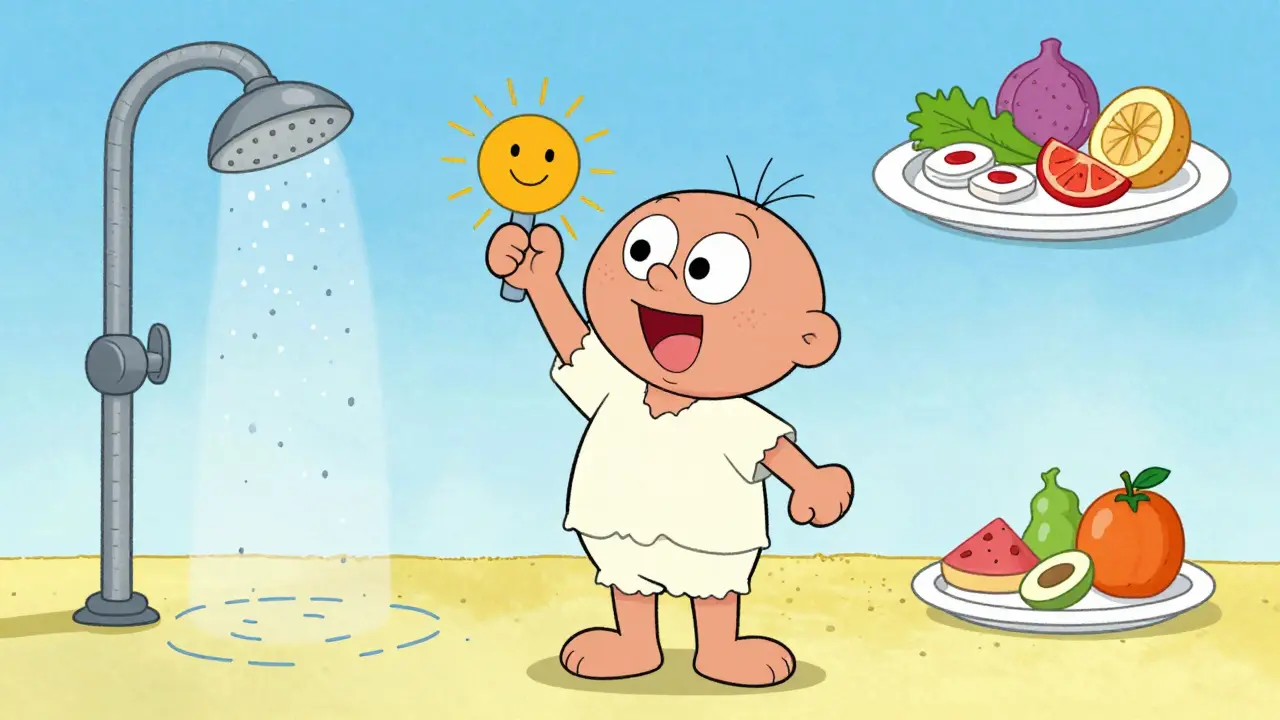
- Sweat Management: Sweat traps bacteria and yeast against the skin. Shower immediately after exercise. Wear loose, breathable fabrics like cotton or moisture-wicking synthetics. Tight gym clothes create a warm, humid environment perfect for folliculitis.
- Sun Protection: Steroids make your skin photosensitive. Many acne treatments (like tretinoin) also increase sun sensitivity. Use a non-comedogenic, oil-free sunscreen (SPF 30+) daily. Sunburn worsens inflammation and delays healing.
- Gentle Cleansing: Skip harsh scrubs or loofahs. Physical exfoliation irritates steroid-thinned skin and spreads bacteria. Use a mild, fragrance-free cleanser. Over-washing strips natural oils, causing your skin to produce more sebum-a vicious cycle.
- Dietary Awareness: While diet doesn’t cause steroid acne, high-glycemic foods (sugar, white bread) and dairy can worsen inflammation. Focus on whole grains, lean proteins, and vegetables to support overall healing.
When to See a Dermatologist
Some cases require prescription strength. If topicals aren’t working after 8-12 weeks, or if your acne is severe and scarring, talk to your doctor. Options include:
- Oral Antibiotics: Doxycycline or minocycline can reduce inflammation quickly. However, they should only be used short-term (3-4 months) to prevent antibiotic resistance.
- Oral Isotretinoin: For severe, resistant cases, isotretinoin is highly effective. But caution: if you use anabolic steroids, isotretinoin can paradoxically worsen acne into a dangerous condition called acne fulminans. Always disclose steroid use to your prescriber.
- Hormonal Therapy: For women, spironolactone or oral contraceptives may help if hormones contribute to the breakout.
Never stop prescribed corticosteroids abruptly without medical supervision. The goal is management, not necessarily cessation of the underlying treatment.
Realistic Expectations and Timeline
Steroid acne takes time to resolve. Even with perfect treatment, expect visible improvement in 6-8 weeks, with full clearance taking up to 3 months. If you stop the steroid medication, the acne usually clears within 4-8 weeks on its own. Patience is key. Consistency with your topical routine matters more than switching products every week.
How long does steroid acne last?
If you stop taking steroids, steroid acne typically resolves within 4 to 8 weeks. If you must continue steroid therapy, it can persist indefinitely without treatment. With consistent topical therapy like tretinoin, significant improvement usually occurs within 6 to 12 weeks.
Can I use my regular acne cream for steroid acne?
Regular acne creams often work, but steroid acne responds best to retinoids like tretinoin. Over-the-counter adapalene (Differin) is a good starting point. However, if your acne is itchy and uniform, it might be fungal (Malassezia), requiring an antifungal shampoo instead of standard acne meds.
Does prednisone cause permanent acne scars?
Steroid acne itself rarely causes deep scarring unless picked at or left untreated for long periods. However, anabolic steroid acne is more aggressive and has a higher risk of scarring. Early intervention with tretinoin or oral antibiotics reduces scarring risk significantly.
Is steroid acne contagious?
No, steroid acne is not contagious. It is a physiological reaction to medication. However, if it is actually Malassezia folliculitis (fungal), the yeast is naturally present on everyone’s skin and not considered contagious in typical social interactions.
Can topical steroid creams cause acne?
Yes, prolonged use of potent topical steroids on the face or body can lead to steroid-induced acne or perioral dermatitis. This is why doctors warn against using strong steroid creams on the face for more than a few days without supervision.
What should I avoid when treating steroid acne?
Avoid harsh physical scrubs, picking at lesions, and using heavy, oil-based moisturizers that clog pores. Also, avoid combining too many active ingredients (like benzoyl peroxide and tretinoin) at the same time, which can damage your skin barrier and worsen irritation.