
Medication-Induced Dysosmia Checker
Step 1: Select Your Medication Class
Based on the article's risk assessment data.
Step 2: Check Symptoms & Timeline
Select all experiences that apply to you currently:
Assessment Result
*This tool is for informational purposes only based on the provided article. It does not constitute medical advice. Consult a doctor before stopping any medication.
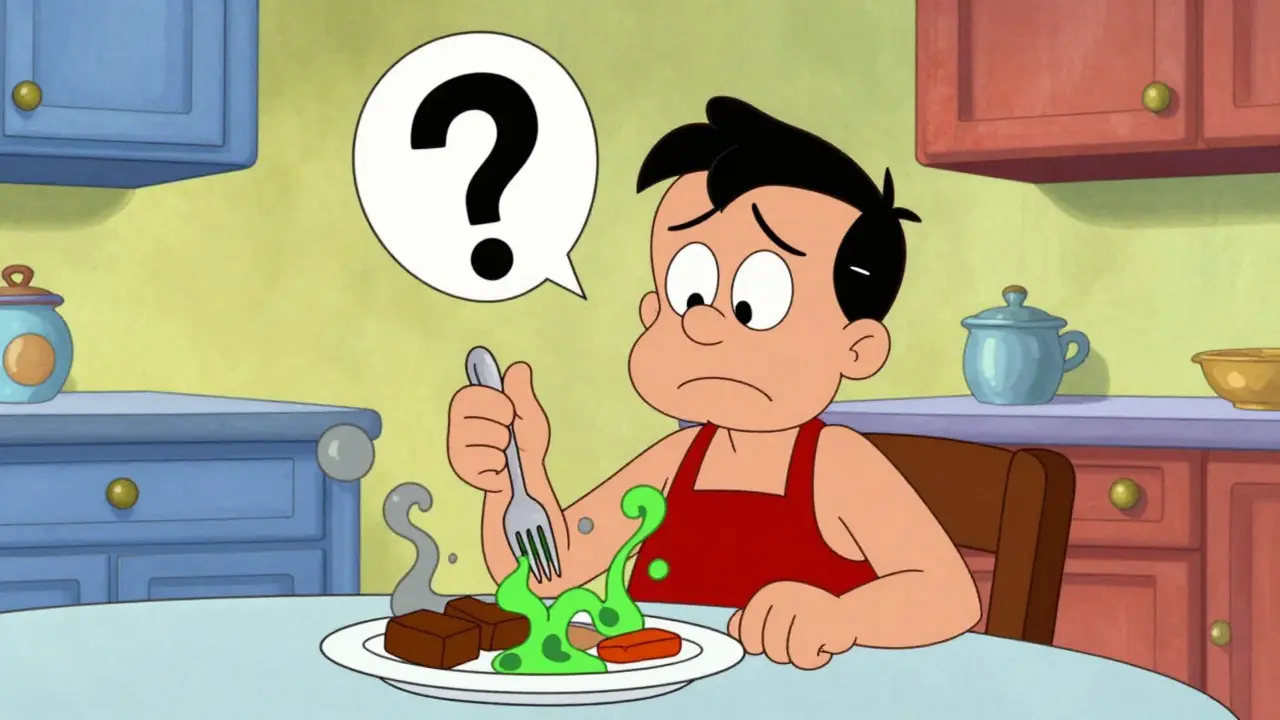
Have you ever taken a bite of your favorite meal and suddenly tasted metal, rot, or burning plastic? It’s a jarring experience that makes eating feel like a chore. If this is happening to you, it might not be your food-or even your brain-playing tricks on you. It could be your medicine.
This condition is called dysosmia, which is a distortion in the perception of odors where familiar smells are perceived as unpleasant, distorted, or phantom scents appear without a source. While many people know about loss of smell (anosmia), dysosmia is different. The smell is still there, but it’s wrong. And increasingly, doctors are linking these strange sensory shifts directly to common medications.
Key Takeaways
- Dysosmia affects over 500 known medications, with antibiotics and cardiovascular drugs being the most common culprits.
- Symptoms often start within 7-14 days of beginning a new prescription and can include metallic tastes or phantom smells like smoke or garbage.
- Most cases resolve within three months of stopping the offending drug, but some require specific interventions or time for nerve regeneration.
- Clinicians rarely ask about smell changes during routine check-ups, leading to underdiagnosis and unnecessary worry for patients.
- Zinc supplementation is popular online but lacks robust evidence for treating medication-induced cases and may cause copper deficiency if overused.
What Exactly Is Dysosmia?
To understand why your nose is acting up, we first need to define what’s happening biologically. Dysosmia isn’t just a bad day at the grocery store. It is a neurological signal error. When odor molecules enter your nose, they bind to receptors in your olfactory epithelium. Normally, this sends a clear message to your brain: “This is coffee,” or “This is fresh bread.”
In dysosmia, that signal gets scrambled. According to foundational research by Schiffman and Nagle, this happens through two main mechanisms. First, the receptors might fail to turn off properly, causing a persistent, abnormal signal (like a light switch stuck in the ‘on’ position). Second, the drugs might inhibit the normal activation of receptors, leading to a distorted interpretation of the scent.
You might experience parosmia, where pleasant smells become foul, such as flowers smelling like sewage, or phantosmia, where you smell odors that aren't present, like cigarette smoke or burning hair. These experiences are real, not imagined. They stem from how certain chemicals in your blood interact with the delicate cells responsible for smell and taste.
The Culprits: Which Medications Cause Smell Distortion?
It’s not just one type of pill. Over 500 medications have been documented to potentially cause chemosensory disturbances. However, some classes of drugs are significantly more likely to trigger these issues than others.
| Medication Class | Common Examples | Mechanism of Action | Risk Level |
|---|---|---|---|
| Antibiotics | Azithromycin, Clarithromycin, Doxycycline, Levofloxacin | Zinc chelation; reduces calcium/magnesium availability for cell turnover | Very High |
| Cardiovascular Drugs | Midodrine, ACE Inhibitors | Alters neural signaling pathways involved in sensory processing | Moderate to High |
| Neurological Agents | Carbamazepine, Baclofen | Direct interaction with G-proteins and ion channels in olfactory neurons | Moderate |
| Endocrine Medications | Carbimazole, Tolbutamide | Hormonal fluctuations affecting receptor sensitivity | Low to Moderate |
Antibiotics are particularly notorious. A Japanese analysis cited in MedLink Neurology found that azithromycin carries a relative risk of 2.3 for inducing smell disorders, while levofloxacin sits at 2.5. Why? Many of these antibiotics work by chelating zinc or reducing divalent cations like calcium and magnesium. Zinc is crucial for the turnover of taste and smell cells. When the drug binds to zinc, those cells can’t regenerate properly, leading to distorted signals.
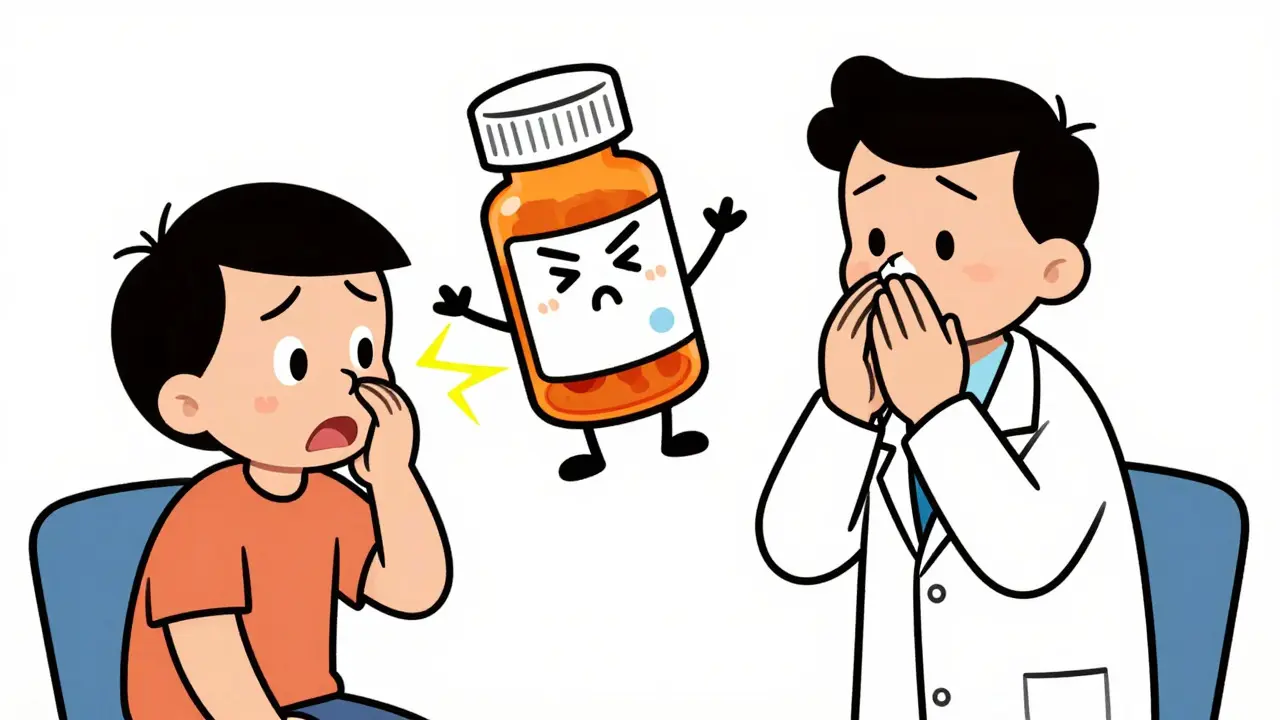
If you’ve recently started a course of antibiotics and noticed your food tasting like bile or metal, this connection is highly probable. Symptoms often emerge within 7 to 14 days of starting treatment.
Why Doctors Might Miss This Side Effect
Here’s the frustrating part: most doctors don’t ask. Dr. Devyani Lal, an otolaryngologist at the University of Arizona, noted that dysosmia is vastly underdiagnosed because clinicians rarely inquire about smell changes during routine medication reviews.
When you complain that food tastes weird, a doctor might assume it’s a digestive issue, a dental problem, or even stress. Few consider that the beta-blocker for your heart or the antibiotic for your sinus infection is rewriting your sensory map. This gap in care means many patients suffer in silence, wondering if they’re going crazy.
Furthermore, there is no mandatory reporting requirement for smell disturbances in most national pharmacovigilance systems. Unlike severe allergic reactions or liver toxicity, a distorted sense of smell is often dismissed as a minor nuisance rather than a significant adverse drug reaction. This lack of data perpetuates the cycle of under-recognition.
The Physical and Emotional Toll
It’s easy to underestimate how much smell contributes to our quality of life. But when your senses betray you, the impact is profound. Studies show that up to 30% of patients with medication-induced dysosmia report significant weight loss. Why? Because eating becomes painful.
Imagine trying to enjoy a steak that smells like rotten eggs, or drinking water that tastes like copper. You stop eating. Or you eat bland, nutrient-poor foods just to avoid the sensory assault. One patient reported losing 15% of their body weight in four months after azithromycin treatment. Another lost 8 pounds in three weeks due to a metallic taste induced by levofloxacin.
Beyond nutrition, there’s the anxiety factor. Phantom smells like gas leaks or smoke can trigger panic attacks. The constant uncertainty-“Is that real, or is it my meds?”-creates a low-level background stress that drains energy and mood.

What Can You Do About It?
If you suspect your medication is causing dysosmia, don’t just stop taking it cold turkey. Instead, follow these steps:
- Document the Timeline: Note exactly when you started the new medication and when the smell changes began. This temporal link is critical for diagnosis.
- Consult Your Prescriber: Bring up the symptom specifically. Use terms like “distorted smell” or “metallic taste.” Ask if the drug is known to cause chemosensory side effects.
- Explore Alternatives: In many cases, switching to a different class of medication (e.g., changing from a macrolide antibiotic to a penicillin-based one) resolves the issue without compromising treatment.
- Consider Diagnostic Testing: If symptoms persist, a specialist may use the University of Pennsylvania Smell Identification Test (UPSIT) to assess the severity of the dysfunction.
Most cases resolve within three months of discontinuing the offending drug. However, 22% of cases require specific interventions. Some experts suggest zinc supplementation, but proceed with caution. Dr. Thomas Hummel warns that indiscriminate zinc use can lead to copper deficiency, which causes its own set of neurological problems. Always consult a doctor before adding supplements.
Future Outlook and Research
The landscape is slowly changing. The Global Chemosensory Research Consortium launched a registry in 2023 to track these cases, enrolling over 1,200 patients across 14 countries. This data will help identify high-risk drugs and predict who is most susceptible.
Regulatory bodies are also waking up. The European Medicines Agency plans to require smell and taste assessments in Phase III clinical trials for antibiotics and cardiovascular drugs. This means future medications will be screened for these side effects before they reach the market.
For now, awareness is your best tool. By understanding that dysosmia is a recognized, physiological side effect-not a psychological quirk-you can advocate for better care and faster relief.
How long does medication-induced dysosmia last?
In approximately 78% of cases, symptoms resolve within three months of stopping the causative medication. However, for about 22% of patients, the distortion can persist longer, sometimes requiring specific medical interventions or waiting for natural nerve regeneration, which can take up to a year in severe cases.
Can zinc supplements fix smell distortion from meds?
Zinc is often suggested because some antibiotics deplete zinc levels, which are vital for smell cell health. However, evidence for zinc as a universal cure is weak. Taking too much zinc can cause copper deficiency, leading to other health issues. It should only be used under medical supervision after testing for actual deficiency.
Which antibiotics are most likely to cause dysosmia?
Macrolides like azithromycin and clarithromycin, as well as fluoroquinolones like levofloxacin and moxifloxacin, carry the highest risk. Tetracyclines like doxycycline are also common triggers. These drugs interfere with zinc and calcium metabolism in the olfactory epithelium.
Is dysosmia permanent?
Rarely. Most medication-induced cases are temporary. Permanent damage usually occurs only if the underlying neurological condition was misdiagnosed or if the patient continued taking the offending drug for years without intervention. Early recognition and cessation of the drug lead to full recovery in the majority of patients.
Should I stop my medication immediately if I notice smell changes?
Not necessarily. Suddenly stopping essential medications like blood pressure or seizure drugs can be dangerous. Contact your doctor first. They may switch you to an alternative medication with a lower risk of chemosensory side effects, allowing you to maintain your health while resolving the smell issue.
Does dysosmia affect taste as well?
Yes, closely. Much of what we perceive as "taste" is actually smell. When dysosmia occurs, it often presents as dysgeusia (distorted taste). Patients frequently report metallic, bitter, or rotten flavors in food, even though their basic taste buds (sweet, salty, sour, bitter, umami) may still function normally.
Are there any tests to confirm medication-induced dysosmia?
There is no single blood test. Diagnosis is primarily clinical, based on the timeline of medication use and symptom onset. Specialists may use the University of Pennsylvania Smell Identification Test (UPSIT) to measure the severity of the impairment and rule out other neurological causes like Parkinson's or Alzheimer's disease.




Simon-Pierre Bouchard
August 12, 2026 AT 13:04Oh great, so the antibiotics that were supposed to save me from a sinus infection are now making my morning coffee taste like a battery acid bath. Thanks for nothing, big pharma. I guess I should have just let the bacteria win.
Ella Mentry
August 13, 2026 AT 06:18I literally cannot believe you all are complaining about this when it is clearly a spiritual cleansing process your body is undergoing because you eat too much processed garbage. My cousin had this and she started eating only raw kale and suddenly her aura was purple again. You need to detox your chakras before blaming the pills. It is obvious you are emotionally blocked and that is why your nose is lying to you. Stop whining and start meditating in a sauna with essential oils of frankincense and myrrh. Trust me I am basically a nurse.
Saher Ghattas
August 13, 2026 AT 09:36The olfactory epithelium degradation is merely a symptom of systemic heavy metal toxicity induced by the fluoridated water supply which synergizes with the zinc-chelating properties of macrolide antibiotics to create a bio-feedback loop of sensory distortion. The pharmaceutical industry knows this but suppresses the data because if people realized their sense of smell was being hijacked to mask the scent of industrial runoff they would revolt. It is a controlled demolition of the chemosensory cortex via pharmacological intervention designed to keep the populace docile and dependent on synthetic flavor enhancers. Wake up.
Marc-Alexandre Rizzo
August 14, 2026 AT 01:10It is fascinating how our biology can betray us so quietly. We trust these white pills to heal us, yet here we are, navigating a world where roses smell like sewage. It is a vivid reminder that our perception is fragile. Perhaps we should treat our senses with more reverence, acknowledging that they are delicate instruments rather than reliable reporters of reality. When the signal scrambles, it forces us to pause and question what we take for granted. It is not just about the medicine; it is about the disconnect between expectation and experience. A colorful chaos indeed.
Gary Browne
August 15, 2026 AT 14:08I took azithromycin last year and every time I brushed my teeth it tasted like copper pennies. I thought I was going insane. Turns out it was just the drug messing with my zinc levels. Doctors never mentioned it. They just said it would pass. It took four months to go away. Don't ignore it if it happens to you.
Christina Thygesen
August 16, 2026 AT 07:37it really makes you think about how connected everything is in our bodies i mean who knew a pill for an infection could change how you smell your own home it feels like losing a part of yourself even if its just temporary i hope everyone reading this talks to their doctor soon
Minal Aditi
August 18, 2026 AT 06:34How quaint that you attribute this neurological glitch to mere chemistry. Is it not possible that the universe is simply trying to tell you that your current path is rotten? The metallic taste is the iron of fate biting back at your complacency. You sit there discussing zinc levels while ignoring the profound existential crisis manifesting through your nostrils. It is hilarious really. Keep taking your little pills and pretending you are in control. The smoke you smell is the burning bridge of your denial.
Diane Nash
August 18, 2026 AT 21:00One must consider the broader implications of such physiological disruptions. The integrity of one's sensory experience is paramount to mental well-being. To dismiss dysosmia as a minor inconvenience is to overlook the intricate tapestry of human perception. We ought to advocate for more rigorous clinical trials that encompass these often-overlooked side effects. It is imperative that patients are informed of the potential for such distortions prior to initiating treatment. Knowledge empowers the individual to make informed decisions regarding their health regimen.
Alli Crumley
August 20, 2026 AT 09:37Let us delve into the epistemological ramifications of olfactory deception. When the semiotic link between odorant and object is severed, one enters a state of radical uncertainty. The pharmaceutical agents act as ontological disruptors, challenging the very foundation of sensory realism. It is not merely a 'side effect' but a fundamental alteration of one's phenomenological landscape. One must ask: if a rose smells of decay, does the rose still possess beauty? The answer lies not in the flower, but in the fractured neural pathways of the observer. 🌹🤔
Marc H
August 20, 2026 AT 16:46Oh, brilliant! So I spend three weeks smelling like a burnt-out engine because I took a simple antibiotic for a toothache. Just what I needed to top off my already miserable existence. I suppose I should be grateful it isn't permanent, or maybe I should just move to a desert where nothing smells anyway. Typical. Absolutely typical.
Darcy Galway
August 22, 2026 AT 03:26This is very common in many cultures where traditional medicine uses herbs that also affect smell. But modern pills do it faster. It is sad because food brings people together. If you cannot enjoy the meal, you lose connection with family. Please tell your doctor. Do not suffer alone. It will get better. Stay strong.