
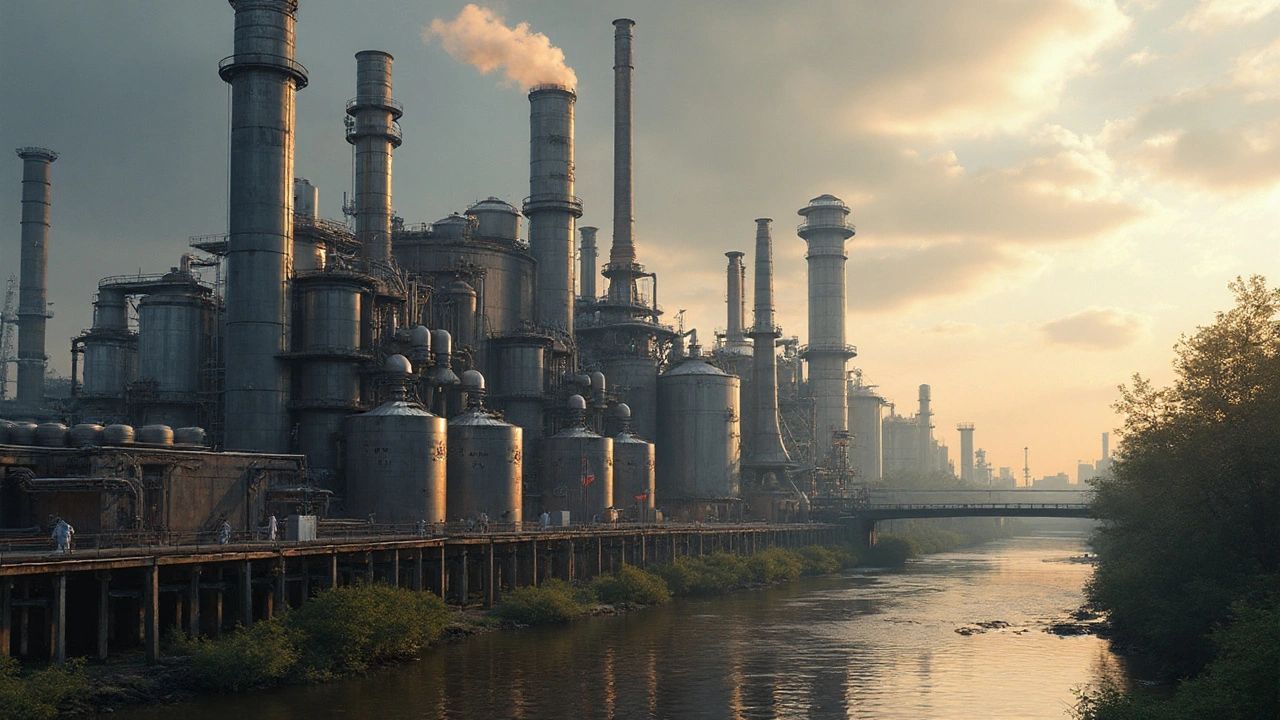
Simvastatin is a synthetic statin medication that lowers LDL cholesterol by inhibiting HMG‑CoA reductase. The drug saves millions of lives, but its manufacturing can strain ecosystems. This article walks through the production steps, pinpoints the biggest environmental impact sources, and shows how the industry can shift toward greener practices.
Why Simvastatin Production Matters
Every year, global demand for Simvastatin exceeds 2billion tablets. That volume translates into a massive supply chain of raw chemicals, energy, and waste streams. Understanding the scale helps stakeholders see why even modest improvements can cut tons of emissions.
Key Players in the Production Chain
Statins are a class of drugs that reduce blood cholesterol via the HMG‑CoA reductase pathway. While Simvastatin is one of the most widely prescribed, it shares a common manufacturing backbone with other statins. The chain includes:
- Raw‑material suppliers (e.g., lactone precursors, solvents)
- Active Pharmaceutical Ingredient (API the chemically pure drug substance used in final tablets) manufacturers
- Formulation plants that blend API with excipients
- Packaging facilities
Each node adds energy use, emissions, and waste, creating a cumulative footprint.
How Simvastatin Is Made: A Step‑by‑Step Snapshot
- Fermentation or chemical synthesis of the lactone precursor.
- Hydrolysis and esterification to create the active hydroxy acid form.
- Purification using high‑boiling solvents (e.g., methanol, ethyl acetate).
- Crystallization and drying to obtain the API powder.
- Blending with fillers, binders, and lubricants for tablet compression.
- Coating and packaging.
Key environmental hot spots appear in steps 2‑4, where large volumes of organic solvents and energy‑intensive heating are used.
Environmental Hotspots Identified by Life Cycle Assessment a systematic analysis of environmental impacts from raw material extraction to disposal
Recent LCA studies (e.g., European Medicines Agency 2023 report) reveal four main contributors:
- Energy consumption: Boilers and reactors demand up to 1,200kWh per kilogram of API.
- Solvent emissions: Volatile organic compounds (VOCs) from methanol and toluene can reach 400kg per tonne of product.
- CO₂ release: Combined furnace and electricity use emit roughly 5tCO₂ per tonne of Simvastatin API.
- Wastewater load: Effluents contain residual solvents, salts, and by‑products, requiring advanced treatment.
Understanding these numbers helps companies set realistic reduction targets.
Measuring the Carbon Footprint the total greenhouse‑gas emissions linked to a product’s life cycle
Carbon accounting typically follows the GHG Protocol scopes:
- Scope1: Direct emissions from on‑site combustion of natural gas.
- Scope2: Indirect emissions from purchased electricity.
- Scope3: Upstream and downstream emissions, including raw‑material transport and end‑of‑life disposal.
The pharmaceutical industry’s average Scope3 emissions can dominate the total, especially for imported solvents. For Simvastatin, Scope3 often accounts for more than 60% of the total carbon footprint.
Green Chemistry: Turning the Tide
Green Chemistry a design philosophy that minimizes hazardous substances and energy use in chemical processes offers concrete pathways to cut Simvastatin’s impact. Below are three proven techniques:
- Solvent‑free reactions: Using melt‑phase synthesis or supercritical CO₂ replaces toxic organic solvents, cutting VOC emissions by up to 90%.
- Biocatalysis: Enzyme‑mediated esterifications operate at 30‑40°C, slashing energy use and improving selectivity, which reduces waste.
- Process intensification: Continuous flow reactors shorten reaction times, improve heat transfer, and lower batch‑related waste.
Adopting any of these methods can also lower production costs over time, as waste disposal fees decline.
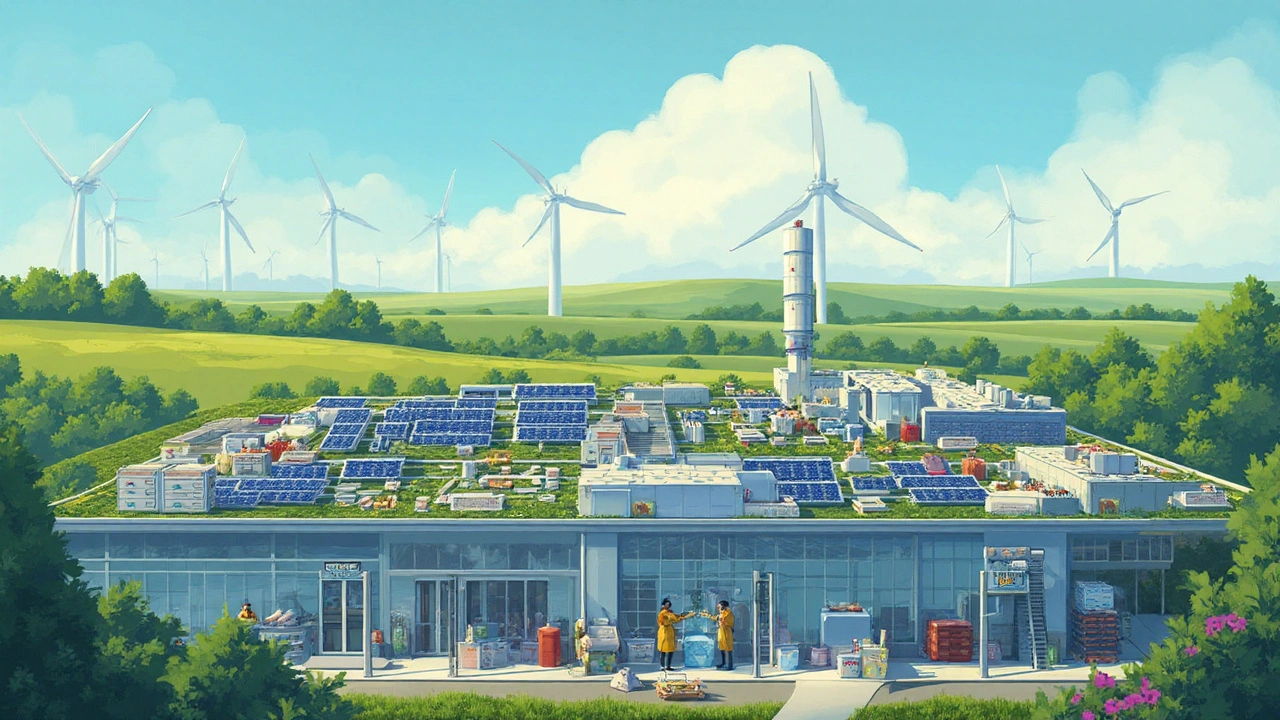
Side‑by‑Side Comparison: Traditional vs. Green Manufacturing
| Attribute | Traditional | Green Approach |
|---|---|---|
| Energy Use (kWh/kg API) | 1,200 | ≈650 (continuous flow) |
| Solvent Toxicity | High (methanol, toluene) | Low (water, supercritical CO₂) |
| CO₂ Emissions (t/ton API) | 5.0 | 3.2 (renewable electricity) |
| Waste Generation (kg/ton API) | 200 | ≈80 (higher selectivity) |
| Water Usage (m³/ton API) | 1,500 | 1,000 (recycling loops) |
The table highlights that a shift to greener chemistry can slash energy demand by ~45% and waste by more than half.
Wastewater Treatment: From Burden to Resource
Wastewater Treatment processes that remove contaminants from industrial effluents before discharge is another lever. Modern plants use membrane bioreactors combined with advanced oxidation (e.g., UV/H₂O₂). This not only meets EPA limits but also recovers solvents for reuse, reducing raw‑material demand.
Regulatory Landscape and Industry Guidelines
Regulators worldwide push for greener pharma. The U.S. EPA’s Clean Water Act imposes strict limits on VOCs, while the EU’s EMA guidelines encourage LCA reporting for new drugs. The WHO’s “Pharmaceuticals in the Environment” technical series (2022) recommends a 30% reduction target for carbon intensity by 2030.
Practical Steps for Manufacturers
Companies can follow a phased roadmap:
- Audit the current process: Use LCA tools to map emissions and waste.
- Set measurable targets: E.g., 20% cut in solvent use within 2years.
- Pilot green technologies: Start with a small batch using biocatalysis.
- Invest in continuous flow reactors: Scale up successful pilots.
- Upgrade wastewater treatment: Install membrane systems to recycle solvents.
- Report progress: Publish sustainability data aligned with EMA/WHO guidelines.
These actions not only improve environmental performance but also boost brand reputation and can lower operating costs.
Future Outlook: Sustainable Pharma as a Business Advantage
Consumer awareness is rising; patients now ask about the carbon footprint of their prescriptions. Investors are also scrutinizing ESG metrics. Companies that embed green chemistry into Simvastatin production will likely enjoy market share growth, regulatory goodwill, and lower risk of fines.
Related Concepts
Understanding Simvastatin’s environmental profile touches on several broader topics, including pharmaceutical waste management, industrial ecology, renewable energy integration, and closed‑loop manufacturing. Exploring these adjacent areas can deepen insights into how the entire health sector can move toward sustainability.

Frequently Asked Questions
What are the main sources of CO₂ emissions in Simvastatin production?
The biggest contributors are furnace‑driven heating for reactions, electricity for solvent recovery, and the transportation of raw chemicals. Together they make up roughly 70% of the product’s carbon footprint.
Can green chemistry actually lower the cost of Simvastatin?
Yes. Although initial investment for new equipment (e.g., flow reactors) can be high, the reduction in solvent purchases, waste disposal fees, and energy consumption often leads to a net cost saving within 3‑5 years.
How does wastewater treatment help reduce environmental impact?
Modern treatment removes residual solvents and recovers them for reuse, cutting both raw‑material demand and toxic discharge. Membrane bioreactors also lower energy use compared to conventional activated sludge systems.
Are there regulatory incentives for greener Simvastatin manufacturing?
Many jurisdictions offer tax credits or expedited review for facilities that meet strict emission thresholds or demonstrate ESG compliance. The EU’s EMA also provides a “green label” for pharmaceuticals with verified low‑impact LCA results.
What role do enzymes play in greener Simvastatin synthesis?
Enzymes catalyze esterification steps at ambient temperatures, eliminating the need for high‑heat reactors and reducing by‑product formation. This leads to higher yields and less solvent waste.

Jaspreet Kaur
September 23, 2025 AT 01:01you ever think about how we treat medicine like it just appears outta nowhere like a magic spell from the sky but behind every pill is a whole factory burning through solvents and electricity just to keep us from dying of heart attacks
Gina Banh
September 23, 2025 AT 16:34the solvent waste numbers are insane. 400kg per tonne? that’s not pollution that’s a crime scene. if we can send rockets to mars we can stop dumping methanol into rivers for a cholesterol pill
Deirdre Wilson
September 25, 2025 AT 11:29i never realized how much water goes into making one tiny pill. 1500 cubic meters? that’s like filling an olympic pool just to make enough for one person’s yearly dose. wild
Damon Stangherlin
September 26, 2025 AT 03:46this is so important. i work in pharma and honestly most people dont even think about this stuff. small changes like biocatalysis can make a huge difference. just gotta start somewhere right? 😊
Ryan C
September 27, 2025 AT 20:12Scope3 emissions account for 60%? lol you’re underestimating. its more like 72% when you factor in shipping from india and china + the coal power used to run the solvent distillers. 📊
Dan Rua
September 28, 2025 AT 21:39love this breakdown. the table alone should be mandatory reading for every pharma exec. green chemistry isn’t just eco-friendly-it’s just smarter business. 👍
Mqondisi Gumede
September 29, 2025 AT 15:22why are we even making this drug at all? in africa we dont even have clean water but you want us to care about methanol emissions? first fix the hospitals then lecture us on green pills
Douglas Fisher
September 30, 2025 AT 23:21That’s… really important… I mean, the fact that we’re talking about 5 tons of CO2 per tonne of API… it’s… staggering… and the wastewater… I mean, the solvents… they’re not just disappearing… they’re in the soil… and the groundwater… and… we’re… just… accepting this…
Albert Guasch
October 2, 2025 AT 23:21It is imperative to underscore that the adoption of continuous flow reactor technology, coupled with the strategic implementation of supercritical carbon dioxide as a solvent medium, represents a paradigmatic shift in pharmaceutical manufacturing efficacy and environmental stewardship. The quantifiable reductions in energy expenditure and waste generation are not merely incremental-they are transformational.
Ginger Henderson
October 4, 2025 AT 00:58so you’re telling me we should spend millions to make a cholesterol pill less bad… but we can’t just… not make it? 🤔