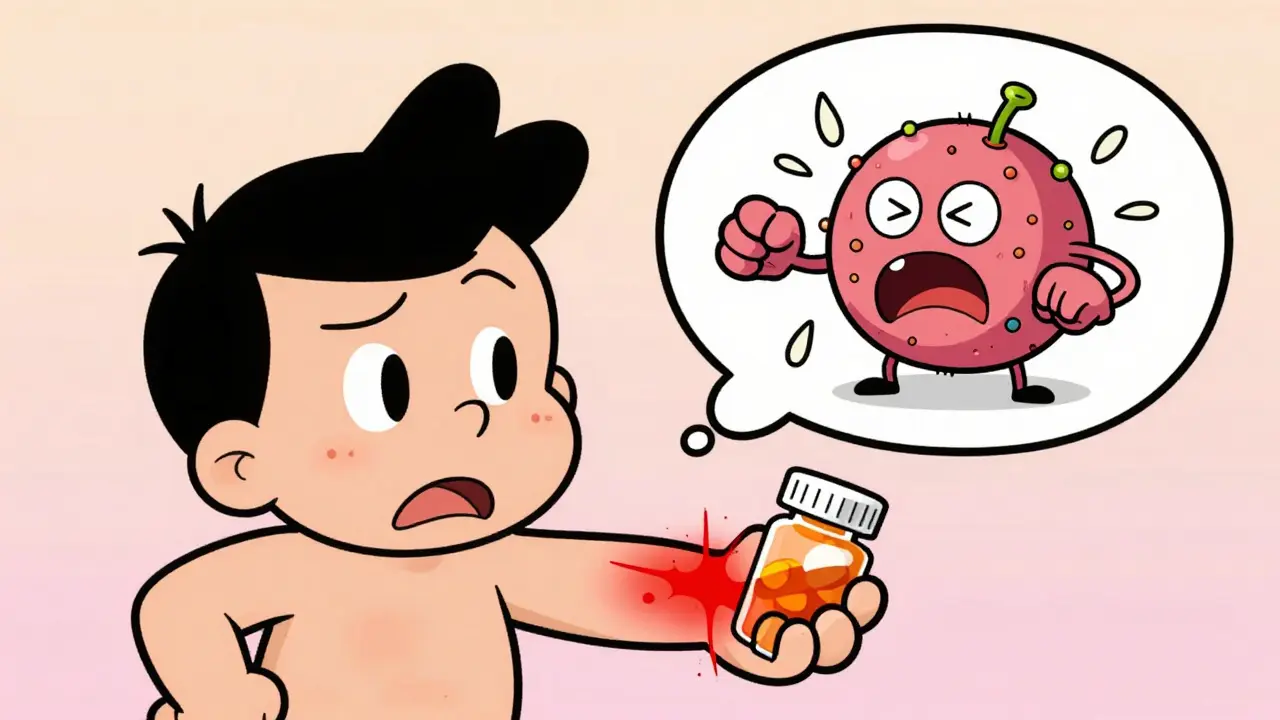
Many people think they’re allergic to a drug because they got a rash or felt sick after taking it. But drug allergy isn’t just any bad reaction-it’s your immune system overreacting to a medication. And it’s not as common as you might think. About 10% of people in the U.S. say they have a drug allergy, but studies show more than 90% of those labels are wrong. That’s not just a mistake-it can lead to worse health outcomes, higher costs, and unnecessary use of stronger antibiotics.
What Does a Real Drug Allergy Look Like?
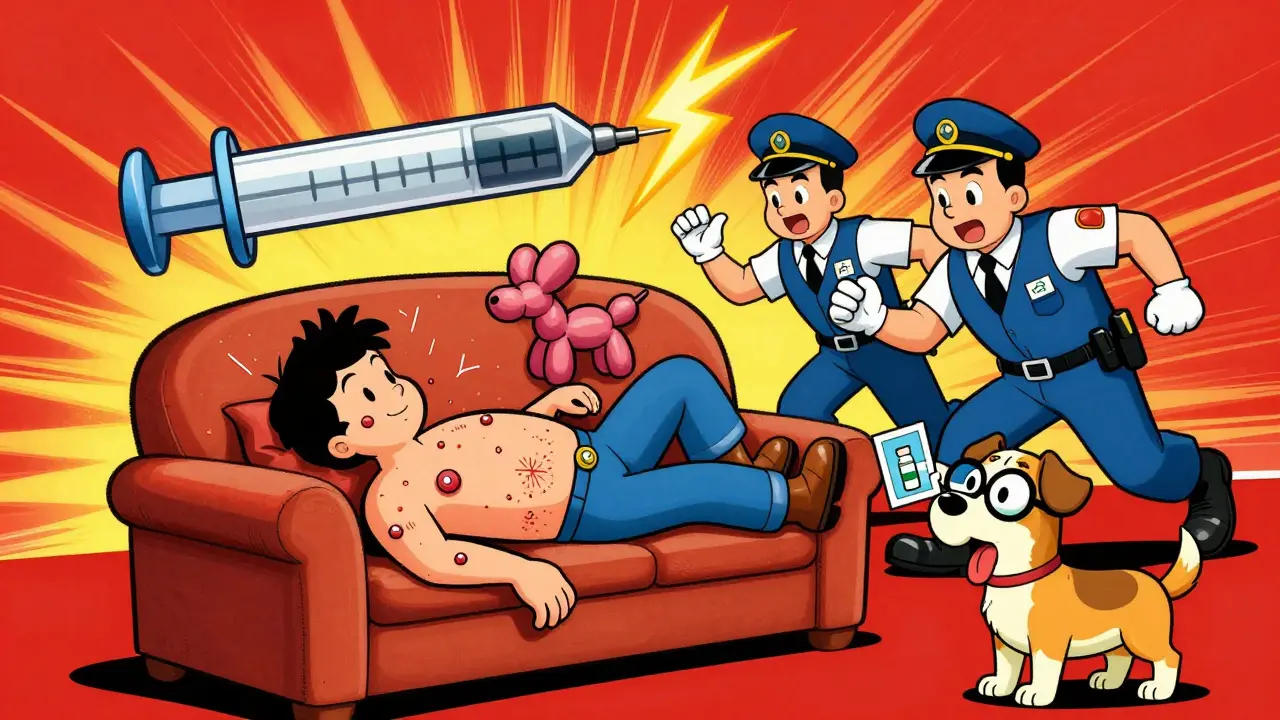
A true drug allergy triggers your immune system, which means your body treats the medicine like an invader. This isn’t the same as a side effect, like nausea from antibiotics or dizziness from blood pressure pills. Those are pharmacological reactions. Allergies are different-they involve antibodies, histamine, and sometimes life-threatening responses. The most common sign? A skin rash. But not all rashes are allergies. A mild, itchy, flat red spot that shows up days after starting a pill? That’s often a delayed drug exanthem. It’s not usually dangerous, but it still needs to be checked. If the rash turns into raised, red, swollen welts-like hives-that’s a stronger signal your immune system is involved. Other key symptoms include:- Itching, especially all over the body
- Swelling of the lips, tongue, or face
- Coughing, wheezing, or trouble breathing
- Nausea, vomiting, or diarrhea
- Dizziness or fainting
Timing Matters: When Do Symptoms Show Up?
Drug reactions don’t all happen the same way. When they show up tells doctors a lot.- Immediate reactions (within 1-6 hours): These are often IgE-mediated and can turn serious fast. Think hives, swelling, trouble breathing, or a sudden drop in blood pressure. This is the classic setup for anaphylaxis.
- Delayed reactions (days to weeks): Rashes that appear 3-10 days after starting a drug are common with antibiotics like penicillin or sulfa drugs. These can also include fever, swollen lymph nodes, or joint pain.
- Serum sickness-like reactions (1-3 weeks): You might get a rash, fever, achy joints, and swollen glands. This is rare but serious.
- Severe skin reactions (SJS/TEN): These are medical emergencies. Blisters, peeling skin, mouth sores, and high fever can develop. If more than 10% of your skin starts to detach, you’re in critical condition.
Anaphylaxis: The Emergency You Can’t Ignore
Anaphylaxis isn’t just a bad reaction. It’s a full-body crisis that can kill in minutes. It happens when your immune system floods your body with chemicals that cause your airways to close, your blood pressure to crash, and your organs to start shutting down. Signs you’re having anaphylaxis:- Widespread hives or flushing
- Swelling of the throat or tongue
- Wheezing or gasping for air
- Feeling lightheaded, confused, or passing out
- Nausea, vomiting, or a sense of impending doom
What About Penicillin? Most People Are Wrong
Penicillin is the most commonly reported drug allergy. But here’s the twist: over 90% of people who say they’re allergic to penicillin aren’t. They had a rash as a kid, or their mom said they were allergic, or they got sick after taking it once-and now it’s stuck in their chart. The problem? If you’re labeled penicillin-allergic, doctors avoid the safest, cheapest, most effective antibiotic. Instead, they give you something broader, more expensive, and more likely to cause C. diff infections or antibiotic resistance. The good news? You can get tested. Skin tests for penicillin are accurate and safe when done by an allergist. If the skin test is negative, you might get a small oral dose under supervision. If you tolerate it, your allergy label gets removed. This isn’t just about saving money. It’s about better care. If you think you’re allergic to penicillin, ask your doctor about a referral to an allergist. It’s one of the few drug allergies with a reliable test.When to Call Your Doctor (Not the ER)
Not every reaction needs 911. But you still shouldn’t ignore it. Call your doctor if you develop:- A new rash after starting a medication
- Itching that doesn’t go away
- Swelling that lasts more than a day
- Fever, swollen glands, or joint pain that started after a new drug
- You’ve had more than one reaction to different drugs
- You had a severe reaction like swelling or breathing trouble
- You’re being prescribed a drug you think you’re allergic to
What About DRESS Syndrome?
DRESS-Drug Rash with Eosinophilia and Systemic Symptoms-is rare but dangerous. It can show up weeks after you start a drug. You might get a rash, fever, swollen lymph nodes, and liver problems. Sometimes your white blood cell count spikes. Common culprits: anticonvulsants like carbamazepine, allopurinol (for gout), and some antibiotics. If you’re on one of these drugs and suddenly feel awful-fever, rash, fatigue, yellow eyes, swollen glands-go to your doctor right away. Blood tests can help confirm DRESS. Stopping the drug is critical. Left untreated, it can damage your liver, kidneys, or heart.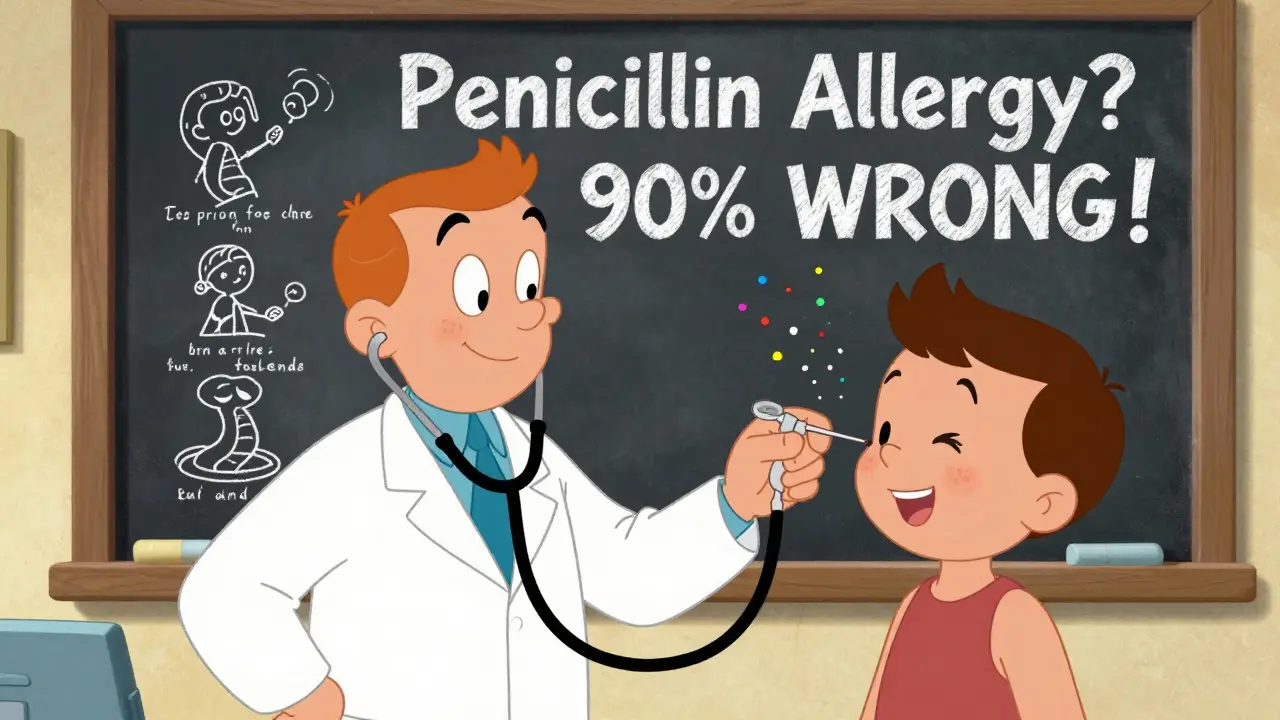
What You Can Do Now
You don’t need to wait for a reaction to act.- Keep a list of all medications you’ve taken and any reactions you’ve had. Include the name, date, symptoms, and what happened after.
- Share this list with every doctor you see. Don’t assume they’ll check your old records.
- If you’ve been told you’re allergic to a drug, ask: “Was this tested?” If not, ask about a referral to an allergist.
- Wear a medical alert bracelet if you’ve had anaphylaxis or a severe reaction.
- Carry an epinephrine auto-injector if your doctor has prescribed one.
Why Mislabeling Hurts Everyone
When you’re wrongly labeled allergic to penicillin, it doesn’t just affect you. It affects your care, your insurance, and even public health. Hospitals use broader antibiotics more often, which leads to more resistant infections. More people get C. diff. More people stay in the hospital longer. The CDC estimates that over 1.3 million emergency visits each year in the U.S. are due to adverse drug reactions. Not all are allergies-but many are misdiagnosed as such. Getting the diagnosis right isn’t just personal. It’s a public health priority.Final Thought: Don’t Guess. Get Checked.
If you think you have a drug allergy, don’t assume. Don’t panic. Don’t ignore it. Write it down. Take a photo. Talk to your doctor. Ask about testing. Especially if it’s penicillin. Your immune system doesn’t lie. But your memory might. And a wrong label can cost you more than just a pill-it can cost you your health.How do I know if my rash is a drug allergy or just a side effect?
A side effect happens because the drug affects your body in a predictable way-like nausea from antibiotics or dizziness from blood pressure meds. A drug allergy is your immune system reacting. Signs it’s an allergy: hives, swelling, trouble breathing, itching all over, or symptoms that appear suddenly and involve more than one body system. Side effects usually don’t include swelling or breathing issues unless it’s an overdose. If you’re unsure, take a photo and talk to your doctor.
Can I outgrow a drug allergy?
Yes, especially with penicillin. Many people lose their sensitivity over time, even if they had a reaction as a child. Studies show more than 90% of people labeled penicillin-allergic can safely take it again after proper testing. Other drug allergies may also fade, but you should never assume it’s gone without getting tested by an allergist.
Is there a blood test for drug allergies?
For most drugs, no. Skin tests are the gold standard-but only for penicillin and a few others. Blood tests can sometimes help with severe delayed reactions like DRESS syndrome, where your body shows signs of inflammation or organ involvement. But they’re not reliable for diagnosing common rashes or hives. Don’t rely on a blood test alone to rule out or confirm a drug allergy.
What should I do if I have a reaction and can’t see a doctor right away?
If symptoms are mild-like a rash or itching-stop the medication and take a clear photo. Write down the drug name, when you took it, and what happened. Avoid taking it again until you’ve been evaluated. If symptoms are severe-trouble breathing, swelling, dizziness-call 911 immediately. Don’t wait. Even if you feel better after an antihistamine, you still need emergency care for possible anaphylaxis.
Can I take other drugs if I’m allergic to one?
Usually, yes. Drug allergies are specific to one drug or a very similar group. Being allergic to penicillin doesn’t mean you’re allergic to all antibiotics. But some drugs cross-react-like sulfa drugs or certain painkillers. Always tell your doctor about your history. An allergist can help determine which drugs are safe for you.
Are there any drugs that are more likely to cause allergies?
Yes. Penicillin and related antibiotics are the most common. Others include sulfa drugs, NSAIDs like ibuprofen and aspirin, anticonvulsants (for seizures), and chemotherapy drugs. Even some vaccines can trigger reactions, though these are rare. If you’ve had a reaction to one, ask your doctor if you’re at risk for others in the same class.