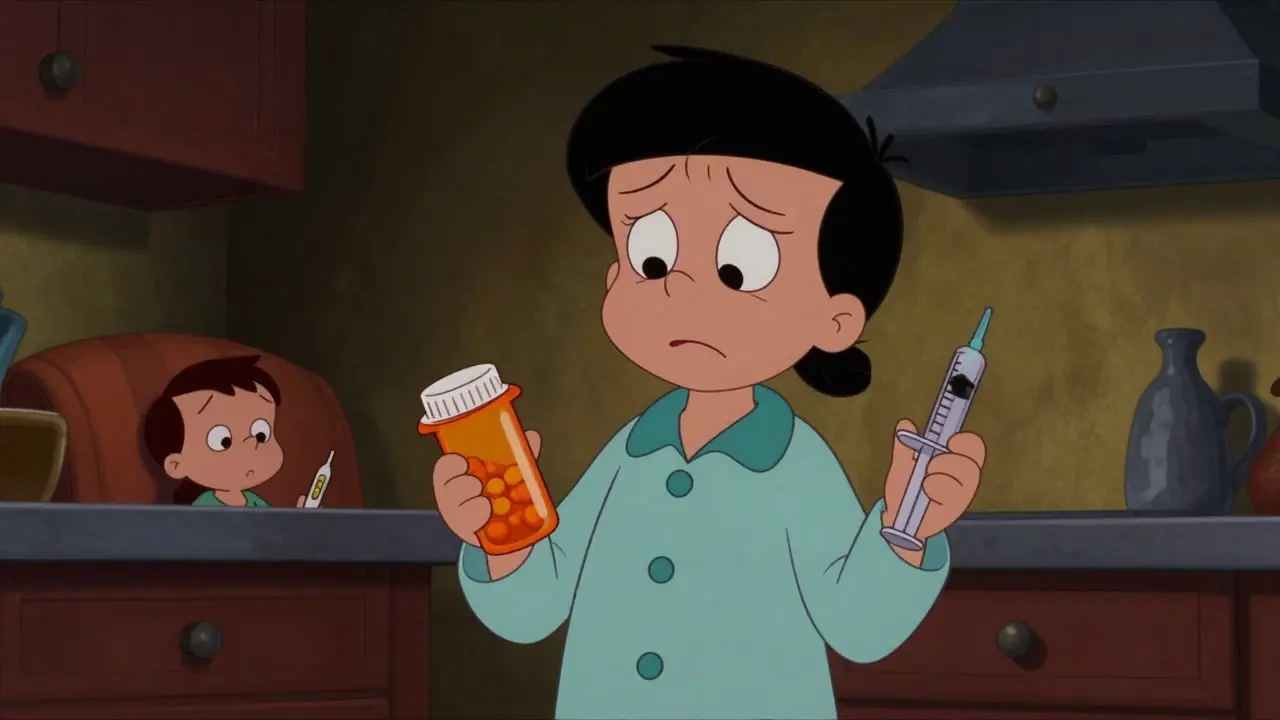
Imagine it’s 2 AM. Your three-year-old has a fever of 103°F. You’re exhausted, scared, and rushing to measure out the liquid acetaminophen. You grab the syringe, look at the bottle, and pour what you think is the right amount. But was it? For millions of parents and caregivers, this scenario plays out regularly. The stakes are incredibly high because pediatric medication errors are mistakes in prescribing, dispensing, or administering drugs to children that can lead to serious harm or death. Unlike adults, children aren't just "small adults." Their bodies process drugs differently, requiring precise calculations based on weight rather than fixed doses.
The numbers are stark. According to data from the US Pharmacopeia (USP), pediatric patients experience medication errors at a rate of 31%, compared to just 13% for adults. In emergency departments (EDs), where time pressure mounts and verbal orders fly, these errors can happen in seconds. This article breaks down why these mistakes occur, looks at real-world case lessons, and offers practical steps to keep your child safe.
Why Children Are More Vulnerable to Dosing Mistakes
To understand the risk, we first need to look at the biology. A child’s liver and kidneys are still developing. This means they metabolize and eliminate drugs slower or faster than an adult, depending on their age and the specific medication. Because of this physiological variability, doctors rarely use standard pill sizes for kids. Instead, they rely on weight-based dosing, which calculates the exact milligram amount per kilogram of body weight.
This calculation introduces a layer of complexity that simply doesn’t exist in most adult care. If a doctor prescribes 10 mg/kg of amoxicillin, and the child weighs 15 kg, the dose is 150 mg. But if the pharmacy dispenses a liquid suspension that contains 250 mg per 5 mL, the caregiver must then calculate how many milliliters equal 150 mg. That’s two layers of math before the medicine even touches the child’s lips. Add in fatigue, stress, or poor lighting, and the margin for error widens significantly.
Furthermore, many medications used in pediatrics are off-label, meaning they haven’t been specifically tested or approved by the FDA for children. Clinicians often have to extrapolate data from adult studies, adding another variable to an already complex equation. The lack of standardized pediatric formulations-like chewable tablets or pre-measured packets-forces reliance on liquid suspensions, which are notoriously difficult to measure accurately without the right tools.
Anatomy of a Pediatric Emergency Room Error
Emergency rooms are chaotic environments. When a child arrives with a severe asthma attack or a high fever, the team moves fast. This speed, combined with the unique vulnerabilities of pediatric patients, creates a perfect storm for mistakes. Research published in the *Journal of Emergency Medicine* highlights several common error types:
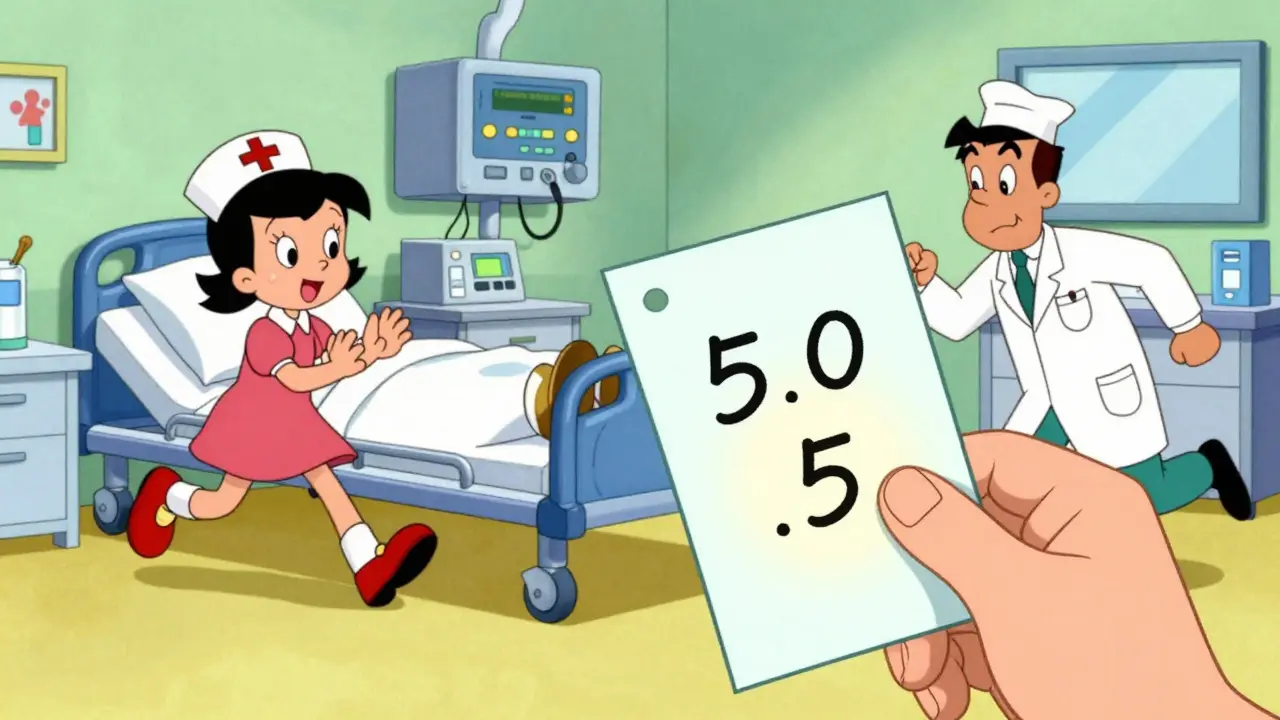
- Wrong Dose (13% of events): Often due to decimal point errors. Writing "5.0 mg" instead of "50 mg" or vice versa can be catastrophic.
- Wrong Medication (4% of events): Confusing similarly named drugs, such as hydroxyzine and hydromorphone, has led to tragic outcomes in the past.
- Wrong Rate or Time (3% of events): Administering an IV drip too quickly can cause fluid overload or cardiac issues in small bodies.
- Calculation Errors (20-35% of cases): Simple math mistakes when converting weight from pounds to kilograms or calculating the final volume.
A critical factor here is the "near miss." Studies show that 30% of potential errors are intercepted before they reach the patient. These are the times when a nurse double-checks a label, a pharmacist catches a typo, or a parent questions a strange-tasting syrup. While near misses don’t cause immediate harm, they signal a broken system. If the safety net fails next time, the result could be a preventable adverse drug event (ADE).
In one documented case, a mother administered 5 mL of liquid acetaminophen to her 10 kg child, thinking she was giving 5 mg/kg. However, she had confused the concentration. She ended up giving a 10-fold overdose. Fortunately, she called poison control immediately, but the incident highlights how easily confusion between milligrams (mg) and milliliters (mL) can occur. This confusion is not just a parent problem; it happens in hospitals too, where rapid verbal orders can be misheard.
The Role of Liquid Formulations and Measuring Devices
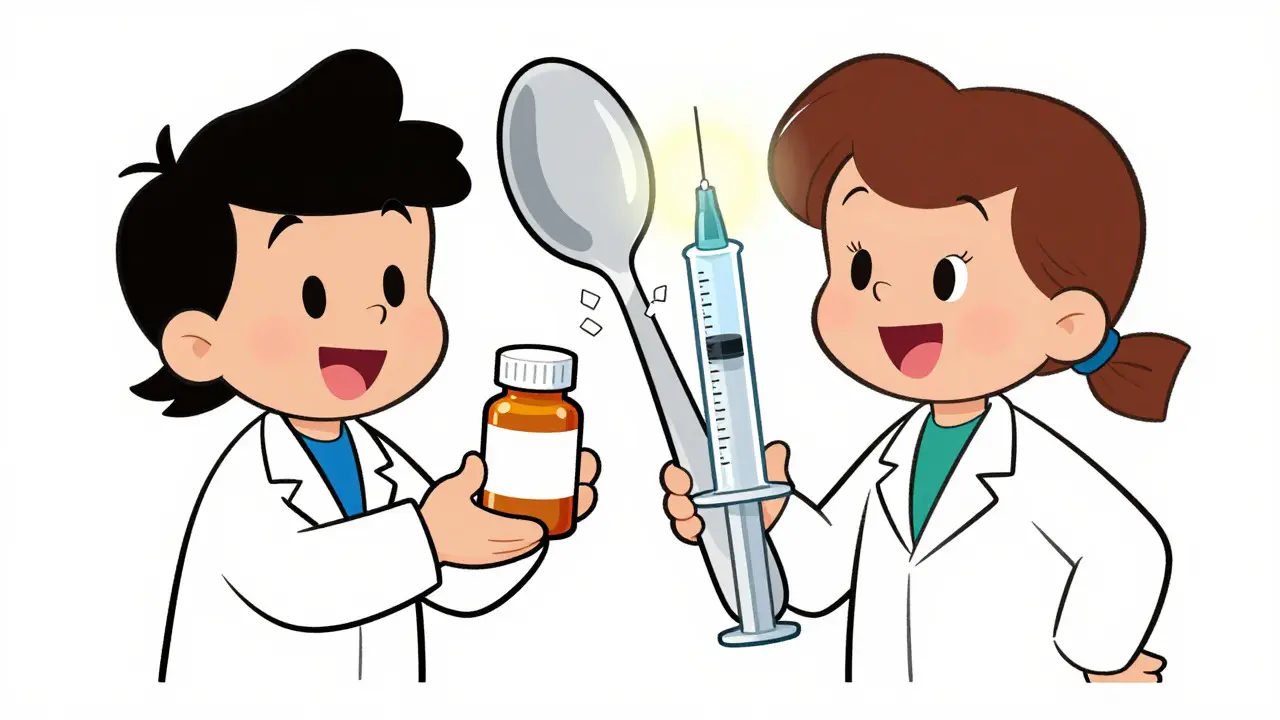
If there is one villain in the story of pediatric medication errors, it is the household teaspoon. It is inaccurate, inconsistent, and dangerous. A standard kitchen teaspoon can vary in volume by up to 20%. For a child needing a precise dose of antibiotics, that variance is unacceptable.
Liquid medications account for 60-80% of outpatient dosing errors. Why? Because parents often use the cup that comes with the medicine, which may have markings that are hard to read, or worse, they use no device at all. A study in *JAMA Network Open* found that using standardized measuring devices, like oral syringes or dosing cups with clear mL markings, reduced errors by 35-45%.
Another major issue is concentration. Many over-the-counter pain relievers come in different strengths. Infant acetaminophen might be 80 mg per 0.8 mL, while children’s acetaminophen is 160 mg per 5 mL. If a parent switches bottles without adjusting the volume, they could accidentally give their child half the needed dose or double it. This is why experts always advise checking the box for the concentration every single time you administer medication.
| Error Source | Frequency in Errors | Primary Cause | Mitigation Strategy |
|---|---|---|---|
| Weight Calculation | 10-31% | Pounds vs. Kilograms conversion | Use digital scales; verify weight in EMR |
| Liquid Measurement | 60-80% of home errors | Using teaspoons; unclear markings | Use oral syringes; check concentration |
| Duplicate Dosing | 15-25% | Multiple caregivers; poor communication | Shared logbook; clear discharge instructions |
| Decimal Point | Significant in EDs | Verbal orders; handwriting | Read back orders; avoid trailing zeros |
Case Lessons: What We Can Learn From Real Incidents
Learning from mistakes is crucial. Let’s look at two composite cases based on reported incidents to understand how systemic failures happen.
Case 1: The Decimal Disaster
A 4-year-old boy was admitted to the ER for dehydration. The physician ordered "0.5 mg" of midazolam for sedation during a procedure. Due to a verbal order miscommunication and a handwritten note that looked like "5 mg," the nurse administered ten times the intended dose. The child experienced respiratory depression and required intubation.
Lesson: Never use trailing zeros (e.g., write 0.5, not .5) and never use leading zeros without the zero (e.g., write 5, not 5.). Always read back verbal orders clearly.
Case 2: The Home Antibiotic Mix-Up
A mother was prescribed amoxicillin for her son’s ear infection. The prescription said "10 mL twice daily." She didn’t realize the pharmacy had changed the concentration from the previous year’s prescription. Last year, it was 250 mg/5 mL; this year, it was 400 mg/5 mL. She gave the same volume, resulting in an 80% higher dose.
Lesson: Always check the concentration on the new bottle. Don’t assume the volume stays the same if the strength changes. Ask the pharmacist to explain the dose in terms of weight if you’re unsure.
These cases highlight that errors are rarely the fault of a single person. They are usually the result of a chain of small failures: a rushed doctor, a tired nurse, a confusing label, and a stressed parent. Breaking any link in that chain can prevent harm.
Strategies to Reduce Medication Errors at Home and in Hospitals
So, what can you do? Whether you’re a parent or a healthcare provider, there are proven strategies to reduce risk.
For Parents and Caregivers:
- Invest in the Right Tools: Buy an oral syringe or a dosing cup with clear mL markings. Throw away the old plastic spoons. Keep the device with the medicine so you don’t mix them up.
- Check the Concentration: Every time you pick up a bottle, read the label. Look for "mg per mL." If it looks different from last time, call the pharmacist.
- Use the Teach-Back Method: When the doctor or pharmacist explains the dose, repeat it back to them. Say, "So I’m giving 5 mL of this red liquid twice a day for five days, correct?" This simple step has been shown to lower error rates by 25%.
- Keep a Log: If multiple people are caring for the child, use a notebook or a phone app to record when each dose was given. Duplicate dosing is a common and dangerous error.
For Healthcare Providers:
- Standardize Weight-Based Protocols: Use electronic medical records (EMRs) with built-in pediatric dosing calculators. By 2023, 68% of children’s hospitals had implemented these, but community ERs often lag behind.
- Double-Check High-Alert Meds: Drugs like insulin, heparin, and opioids should always be verified by a second clinician before administration.
- Simplify Discharge Instructions: Use pictograms and plain language. Avoid medical jargon. A study showed that simplified instructions reduced errors from 64.7% to 49.2%.
- Encourage Questions: Create a culture where nurses and pharmacists feel safe questioning a doctor’s order without fear of retribution.
The Future of Pediatric Medication Safety
The landscape is improving, but challenges remain. The American Academy of Pediatrics (AAP) has identified medication safety as a top priority since 2015. New initiatives aim to develop standardized metrics for tracking outpatient errors, which have historically been underreported. Currently, incident reports capture only 10-30% of actual errors, meaning many mistakes go unnoticed until they cause harm.
Technology is playing a bigger role. Smart pumps that automatically adjust infusion rates based on weight, and barcoding systems that scan both the patient’s wristband and the medication vial, are becoming more common. However, access to these technologies varies widely. Children in safety-net hospitals or those served by Medicaid-enrolled families still face higher error rates, partly due to resource limitations and social determinants of health.
Ultimately, preventing pediatric medication errors requires a partnership between clinicians, pharmacists, and families. It’s about slowing down, double-checking, and asking questions. In a world that values speed, taking an extra 90 seconds to verify a dose can save a life.
What is the most common type of pediatric medication error?
The most common errors involve wrong dosing, particularly due to miscalculations based on weight or confusion between milligrams (mg) and milliliters (mL). Liquid formulation errors are also extremely frequent, accounting for 60-80% of home dosing mistakes.
Why are children more prone to medication errors than adults?
Children require weight-based dosing, which involves complex calculations. Their developing organs metabolize drugs differently, and many medications are not specifically formulated for them, leading to reliance on liquid suspensions that are harder to measure accurately.
How can parents prevent dosing mistakes at home?
Parents should use calibrated oral syringes instead of kitchen spoons, always check the medication concentration on the label, keep a written log of doses, and use the "teach-back" method with healthcare providers to confirm understanding.
What is a "near miss" in pediatric medication safety?
A near miss is a medication error that is intercepted before it reaches the patient. For example, a pharmacist catching a dosage error on a prescription before dispensing it. About 30% of potential errors are near misses, highlighting the importance of safety checks.
Are electronic medical records (EMRs) helping reduce errors?
Yes, EMRs with pediatric-specific dosing calculators and alerts have significantly reduced calculation errors. By 2023, 68% of children's hospitals had implemented these tools, though adoption is slower in community emergency departments.