
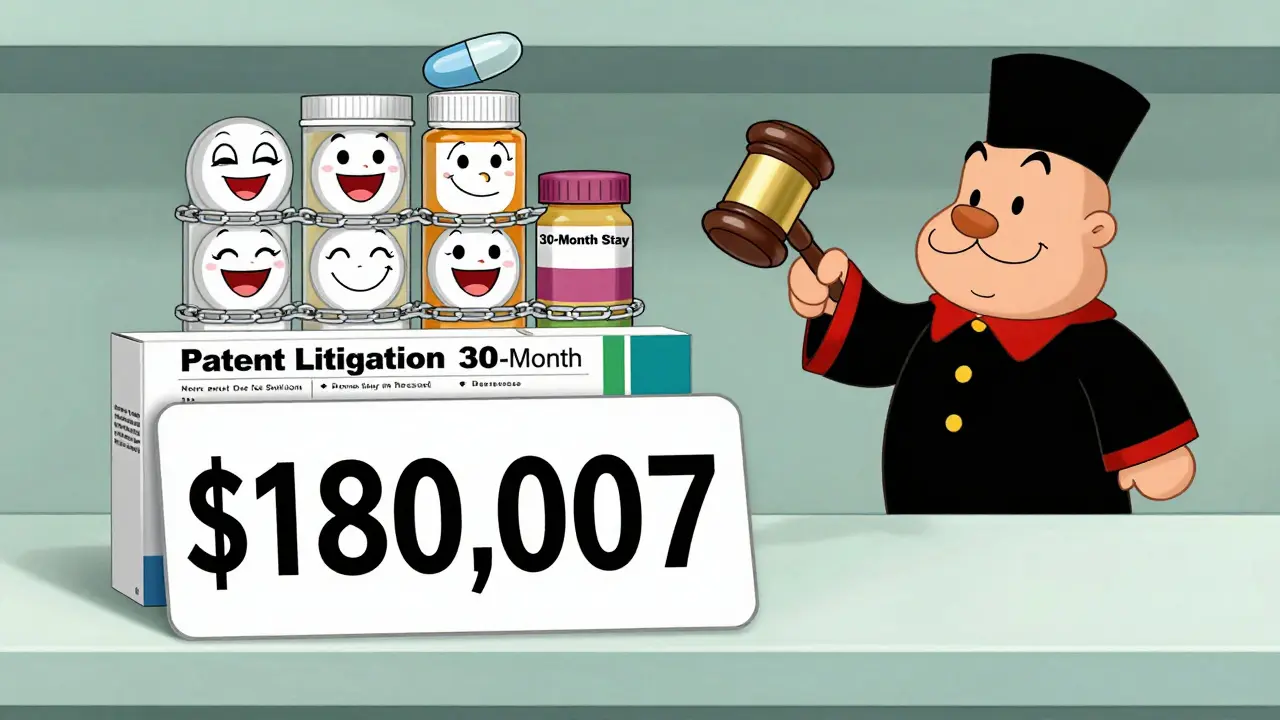
When a new brand-name drug hits the market, it often comes with a price tag that leaves patients struggling to afford it. But there’s a simpler, cheaper version waiting in the wings-the generic drug. Yet, even after the FDA approves it, that generic might not show up on pharmacy shelves for years. Why? Because of patent litigation.
How the system was supposed to work
The Hatch-Waxman Act of 1984 was meant to strike a balance: reward innovation while letting generics enter the market quickly. Under this law, generic manufacturers can file an Abbreviated New Drug Application (ANDA) with a Paragraph IV certification, essentially saying: "This patent is invalid or we don’t infringe it." That triggers a 45-day window for the brand-name company to sue. If they do, the FDA is forced to pause approval for up to 30 months. That pause isn’t a delay-it’s a guaranteed extension of monopoly.Here’s the catch: the 30-month clock doesn’t start when the patent expires. It starts when the generic company files its challenge. And most challenges happen as soon as they’re allowed-four years after the brand drug’s approval. So instead of generics arriving at the 7- to 10-year mark, they’re held up until 11 or even 12 years after the original drug launched. That means patients pay high prices for years longer than Congress intended.
The real timeline: approval vs. launch
The FDA approves generic drugs long before they reach pharmacies. A 2021 study from the NIH found that generics get approved, on average, 11.5 years after the brand drug hits the market. But the 30-month stay expires after just 7.7 years. So what’s happening in those extra 3.2 years? More lawsuits.Brand-name companies don’t just file one patent and call it a day. They build patent thickets-a web of overlapping patents covering everything from the active ingredient to the pill coating, the delivery device, even the manufacturing process. About 72% of these secondary patents were filed after the FDA approved the original drug. That’s not innovation-it’s a legal shield.
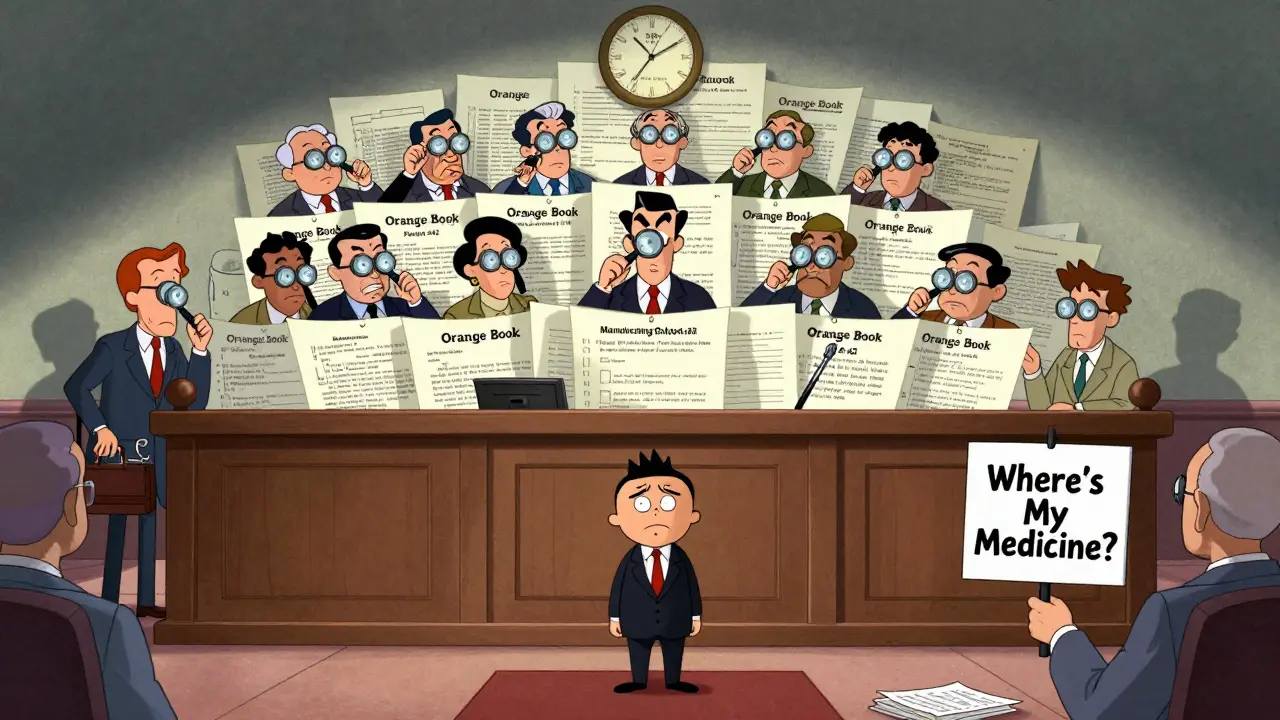
One drug might have 20, 30, even 50 patents listed in the FDA’s Orange Book. And here’s the kicker: about 15% of those listings are wrong. The patent numbers are outdated. The expiration dates are off. Generic makers can’t always tell what’s real and what’s just noise. So they wait. Or they sue. And every lawsuit adds months, sometimes years, to the timeline.
Pay-for-delay: the secret deals
Sometimes, the brand-name company doesn’t even bother going to court. Instead, they cut a deal: "We’ll pay you not to compete." These are called pay-for-delay agreements. The FTC calls them anticompetitive. Courts have called them illegal. And yet, they still happen.In 2010, the FTC found that 24% of patent settlements included payments from brand companies to generics to delay launch. In one high-profile case, AbbVie paid generic makers hundreds of millions to hold off on launching a cheaper version of Humira. The result? Patients paid $1.2 billion more in 2023 alone because the generic couldn’t enter the market.
These deals are hard to prove, harder to stop. The brand company doesn’t write "pay to delay" on the contract. They call it a "licensing fee" or "marketing support." But the timing speaks for itself: the generic launches the day after the payment stops.
Who pays the price?
Patients aren’t just waiting-they’re rationing. A primary care doctor in Chicago told STAT News about patients skipping insulin doses because the generic was approved but delayed 18 months. On Reddit, pharmacists share stories of patients choosing between buying their medication or paying rent.Employers are feeling it too. The Business Group on Health reported that delayed generic entry for just one drug-Humira-cost large companies over $1.2 billion in 2023. Pharmacy benefit managers (PBMs) now build 24- to 36-month delay windows into their forecasts. They know the system is broken. They just don’t know how to fix it.
Generic manufacturers aren’t immune. Teva’s 2023 annual report said patent litigation delayed key products and cost them $850 million in lost revenue. Defending a single patent case can cost $3 million to $10 million. Only the biggest generic companies can afford to play this game. Smaller ones? They walk away.
The human cost of delay
When a drug patent expires, generic versions typically capture 90% of prescriptions. That’s the power of competition. But when litigation drags on, that 90% never materializes. Patients pay $180,007 for a drug that could cost $2,000. That’s not just expensive-it’s life-threatening.Insulin, cancer drugs, heart medications: these aren’t luxury items. They’re necessities. And every month of delay means more people skip doses, more hospitalizations, more deaths. The Association for Accessible Medicines estimates that patent delays cost consumers $15-20 billion annually. That’s money that could go toward housing, food, or care-not corporate profits.
What’s being done?
The FTC is pushing back. In 2023, they challenged over 100 patents linked to Big Pharma. The CREATES Act was passed in 2023 to stop brand companies from blocking generic samples-a tactic used to delay approval. And bills like the Protecting Consumer Access to Generic Drugs Act are trying to cap the number of patents that can be listed in the Orange Book and ban serial litigation.But reform is slow. The system is designed to favor the status quo. Brand companies have teams of 50+ patent lawyers. Generic makers? They’re outgunned. And while the U.S. drags on, countries like Canada and the UK get generics to market in months, not years.
What’s next?
Biosimilars-the biologic cousins of generics-are entering the scene. But they’re even more complex. Patent litigation for biosimilars takes 25% longer than for small-molecule generics. That means more delays, more cost, more pain.Will things change? Maybe. Bernstein Research predicts a 15-20% drop in delays over the next five years. But without real legislative action, the system will keep working the same way: patients lose. Corporations win. And the price? It’s not just dollars. It’s lives.
Why do generic drugs take so long to launch after FDA approval?
Even after the FDA approves a generic drug, it can’t hit the market if the brand-name company files a patent lawsuit. That triggers a 30-month automatic stay, and many companies file multiple lawsuits one after another. The average delay between FDA approval and actual launch is 3.2 years, and in some cases, it’s much longer.
What is a Paragraph IV certification?
A Paragraph IV certification is a legal statement made by a generic drug manufacturer when filing an Abbreviated New Drug Application (ANDA). It says the generic company believes the brand’s patent is either invalid or that their product doesn’t infringe it. This triggers the brand company’s right to sue, which can delay the generic’s market entry by up to 30 months.
Can generic companies launch before winning the lawsuit?
Yes-but it’s risky. This is called "launching at risk." A generic company can start selling the drug before the court rules, but if they lose the case, they may have to pay millions in damages. Only companies with deep pockets and strong legal teams take this gamble.
What are patent thickets and how do they delay generics?
Patent thickets are clusters of overlapping patents covering different aspects of a drug-like its formula, delivery method, or manufacturing process. Many are filed years after the original patent. Generic companies must challenge each one, which leads to multiple lawsuits, delays, and legal costs. About 72% of these secondary patents were filed after the FDA approved the original drug.
Are pay-for-delay deals still happening?
Yes, though they’re under more scrutiny. The FTC has been actively challenging these deals since 2010. But they’re still common because they’re disguised as licensing agreements or marketing payments. Courts have ruled them illegal, but proving them takes time and resources most generic companies don’t have.



Serena Petrie
March 14, 2026 AT 21:59mir yasir
March 15, 2026 AT 13:33Stephanie Paluch
March 17, 2026 AT 02:59tynece roberts
March 18, 2026 AT 06:04Hugh Breen
March 18, 2026 AT 20:59Byron Boror
March 19, 2026 AT 11:54Lorna Brown
March 20, 2026 AT 06:48Rex Regum
March 21, 2026 AT 20:30Kelsey Vonk
March 22, 2026 AT 09:02Emma Nicolls
March 23, 2026 AT 05:52Katherine Rodriguez
March 24, 2026 AT 00:09