

Imagine buying a high-end electric vehicle only to find out a month later that a critical component was installed incorrectly due to a glitch in the assembly line. For the consumer, it's a nightmare. For the brand, it's a disaster. In the world of brand psychology, the gap between a company's promise of "perfection" and the reality of a manufacturing defect is where trust dies. Today, this tension is peaking. With 95% of executives viewing quality assurance as mission-critical, the fear isn't just about a broken part-it's about the systemic failure of a brand's reputation.
The modern factory is no longer just a place where things are made; it's a high-stakes environment where microscopic errors lead to macroscopic losses. When we talk about "manufacturing fears," we aren't just talking about a few bad batches. We're talking about a global struggle to maintain precision while moving at breakneck speeds. If you've ever wondered why some brands maintain a "legendary" status for reliability while others struggle with constant recalls, the answer lies in how they handle the hidden anxieties of the shop floor.
The Hidden Costs of Quality Anxiety
Fear in manufacturing usually manifests as a obsession with rework. According to a 2025 report from ZEISS Industrial Quality Solutions, about 38% of manufacturers identify the cost of rework and iterations as their biggest headache. When a company is terrified of shipping a defective product, they over-inspect. This creates a paradox: the more they fear a mistake, the slower they move, and the higher their costs climb.
This anxiety is fueled by a brutal reality: material costs are skyrocketing. About 44% of manufacturers cite rising material expenses as their top concern. When raw materials are expensive and lead times are long, a single mistake isn't just a quality issue-it's a financial blow. This creates a high-pressure environment where workers are expected to hit "aerospace-grade precision" at "consumer electronics speed," a combination that often leads to burnout and more mistakes.
| Metric | Fragmented Approach | Integrated System | Improvement |
|---|---|---|---|
| Rework Costs | Baseline | 22% Lower | Significant Cost Reduction |
| Time-to-Market | Baseline | 18% Faster | Faster Deployment |
| Defect Rates | Higher (Manual) | 27% Fewer Deviations | Predictive Accuracy |
| Labor Costs | Baseline | 43% Lower (than manual) | Operational Efficiency |
The Tech Gap: Tooling vs. Talent
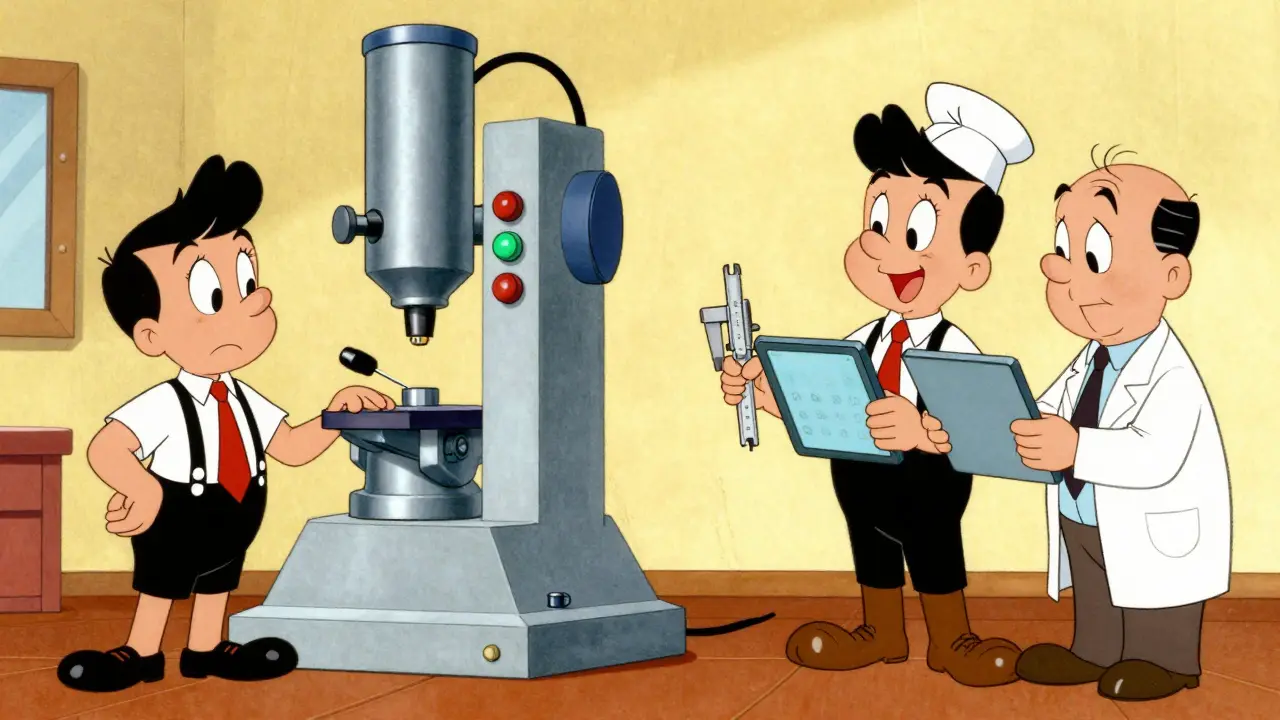
Many companies try to "buy" their way out of fear. They invest millions in Metrology is the scientific study of measurement, used in manufacturing to ensure parts meet exact specifications technology, thinking a fancy machine will solve a human problem. But as Robert Jenkins of the Midwest Manufacturing Consortium pointed out, throwing money at "shiny new technologies" without training staff is a recipe for failure. There's a stark example of an electronics manufacturer that spent $2.3 million on automated inspection but saw error rates climb by 40% because the staff didn't know how to use the tools.
The real fear isn't the lack of technology; it's the Skills Gap . Nearly 47% of manufacturers are struggling to find people who understand both old-school quality methods and new digital tools. This creates a "quality solution gap" where the leadership knows what needs to be done, but the people on the floor are overwhelmed by the complexity of the software.
Moving from Reactive to Predictive Quality
The shift that separates industry leaders from the rest is the move toward Predictive Quality Analytics is the use of AI and data to forecast potential product deviations before they actually occur during the manufacturing process . Instead of checking a part after it's made (reactive), they use AI to predict when a machine is about to drift out of alignment (predictive). Early adopters are seeing 41% fewer customer-reported defects. This changes the brand psychology from "I hope we didn't mess up" to "I know it's right."
This is especially critical in high-stakes sectors. In aerospace and medical devices, the adoption of these technologies is 35% higher than in general manufacturing. When a failure can mean a lost aircraft or a faulty implant, the fear of failure is the primary driver for innovation. They use Cyber-Physical Systems to blend physical machinery with digital monitoring, ensuring that any deviation is caught in milliseconds, not days.

The Trust Chain: Suppliers as Extensions
You can't have a quality product if your suppliers are sending you junk. Many brands treat their suppliers like vendors-a transactional relationship. But the most resilient companies treat their suppliers as extensions of their own operation. By sharing forecasts and communicating openly, these companies achieve 31% greater supply chain resilience. When you trust your supplier's quality process, the "fear" of the unknown disappears from your incoming materials.
This integration extends to the cloud. We are seeing a massive move toward Quality Management Systems (QMS) , with cloud-based versions capturing 68% of new deployments. Why? Because a manager in Vancouver needs to see the same quality data as a technician in a plant in Ohio in real-time. Data silos are the enemy of trust; a shared, cloud-based truth is the cure.
Closing the Quality Loop
Ultimately, the goal is to link quality metrics directly to the customer experience. By 2026, the trend is for companies to stop looking at quality as a checklist and start looking at it as a driver of customer loyalty. If you can prove your quality is consistent, you can charge a premium. According to Deloitte, manufacturers who treat quality as a core business function are projected to have 28% higher profit margins by 2030.
To avoid the "quality trap," companies should follow a phased implementation: start with cross-functional teams (quality engineers, IT, and production managers), focus on the most time-consuming inspection bottlenecks first, and prioritize staff training over the hardware itself. The technology is the tool, but the people are the safeguard.
Why is rework such a significant concern for manufacturers?
Rework is costly because it consumes double the labor and materials for a single part. With rising material costs (a top concern for 44% of manufacturers), every scrapped part directly eats into profit margins. Furthermore, rework creates production bottlenecks that delay shipments, potentially idling entire assembly lines in just-in-time environments.
How does AI help in reducing manufacturing defects?
AI-powered systems enable predictive quality analytics, which identify patterns that lead to defects before they happen. For example, AI can detect microscopic vibrations in a machine that signal a part will be slightly off-spec, allowing technicians to adjust the machine in real-time. Some automotive suppliers have reported defect detection improvements of 37% after implementing AI-enhanced software.
What is the "skills gap" in quality assurance?
The skills gap is the lack of personnel who are proficient in both traditional quality control (like manual calipers and gauges) and modern digital tools (like 3D metrology and data analytics). About 47% of manufacturers cite a lack of skilled personnel as a major challenge, making it difficult to fully utilize expensive new technology investments.
Why are cloud-based QMS becoming the industry standard?
Cloud-based Quality Management Systems allow for real-time data sharing across different geographic locations. This eliminates "data silos" where different departments have conflicting information. They provide the scalability needed for companies to maintain the same quality standards across multiple global plants.
Do advanced quality systems actually improve time-to-market?
Yes. Integrated quality systems reduce the need for multiple iterations and corrective cycles. Data shows that companies with integrated approaches get products to market about 18% faster because they identify and fix issues during the design and early production phases rather than at the end of the line.




Lando Neal
April 30, 2026 AT 07:01This is actually a really refreshing take on the whole manufacturing struggle!!! I love seeing how the focus is shifting toward the human element and not just the machines!!!
Elizabeth Holden
April 30, 2026 AT 22:01lol you think ai fixes it but its just more ways to mess up... the real probelm is the ppl in charge dont know what they are doing and just buy stuff to look smart
J. Walter Jenkem
May 2, 2026 AT 18:41It is a good point about the skills gap. We should probably focus more on mentorship to bridge that divide.
Kelly Feehely
May 3, 2026 AT 09:21Wake up people!!! These "predictive analytics" are just a way for corporations to monitor every single move workers make in real-time!! It's not about quality, it's about total surveillance of the shop floor so they can fire anyone who slows down for a second!! Absolute garbage!!
Preety Singh
May 3, 2026 AT 15:36The conceptualization of quality as a psychological driver is acceptable
One must possess a certain intellectual rigor to appreciate the systemic failure described here
The banal obsession with rework is simply a symptom of mediocre leadership
Srinivas Komakula
May 4, 2026 AT 13:59The integration of Cyber-Physical Systems is merely a facade for deeper, algorithmic manipulation of the supply chain...!! These cloud-based QMS are designed for centralized data harvesting, creating a panopticon of industrial metrics...!! The so-called "trust chain" is actually a tether of dependency, orchestrated by globalist conglomerates to ensure absolute hegemony over the means of production...!!
Kartik Agarwal
May 5, 2026 AT 16:43We need to emphasize the interoperability between legacy systems and these new AI layers. If the API integration isn't seamless, the predictive analytics are just noise. I've seen too many projects fail because they ignored the middleware requirements in favor of a flashy dashboard.
Seema Karanje
May 7, 2026 AT 12:30STOP MAKING EXCUSES ABOUT SKILLS GAPS!!! Train your people or hire new ones!!! Either you want quality or you want a disaster, there is no middle ground here!!! GET IT DONE!!!
Jimmy Crocker
May 8, 2026 AT 10:40I find it rather quaint that people think a simple phased implementation will solve such a deep-seated cultural issue in modern industry, especially when you consder that most executives wouldn't know a caliper from a corn dog, and they're the ones signing the checks for the software that the floor workers then hate because it was designed by someone who has never seen a piece of steel in their life...
princess lovearies
May 8, 2026 AT 16:48It's interesting how fear can actually push us to be better if we channel it right. Maybe the anxiety of making a mistake is just a signal that we care about the people who will actually use the product in the end. Just a thought.
Alexa Mack
May 9, 2026 AT 04:59I wonder if this applies to small artisan shops too, or if it's only for the big factories. It seems like the human touch is what people actually want these days, even if it means it's not "perfect" in a robotic way. But then again, nobody wants their car brakes to be "artisan" and fail on the highway.