
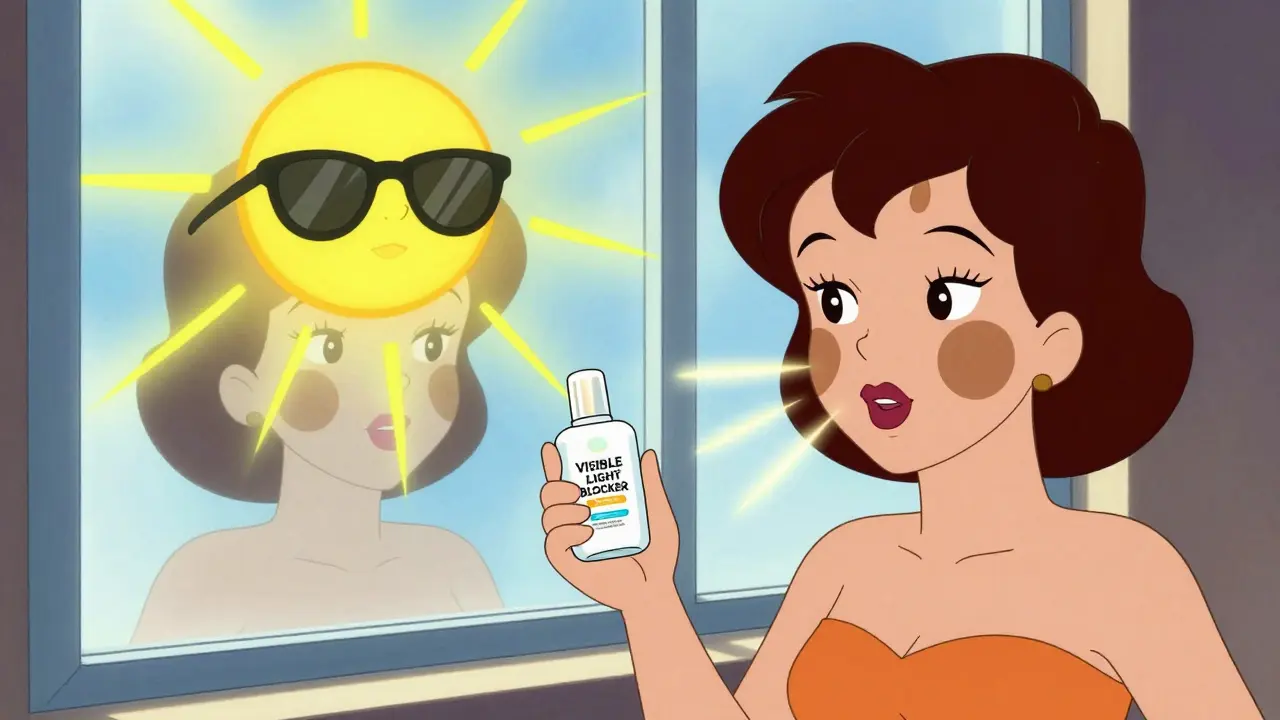
Dark spots on your face that won’t go away? You’re not alone. Millions of people deal with hyperpigmentation, but not all dark spots are the same. Two of the most common types-melasma and sun damage-look similar but need completely different approaches. Mistake one for the other, and your treatment could make things worse.
What’s Really Going On With Your Skin?
Hyperpigmentation means your skin is making too much melanin, the pigment that gives skin its color. But why? And where? That’s where the difference matters.Melasma shows up as large, patchy brown or gray-brown areas, usually on the cheeks, forehead, nose, or upper lip. It’s symmetrical-both sides of your face look the same. It’s most common in women, especially those with medium to darker skin tones (Fitzpatrick types III-VI). Hormones play a big role. Pregnancy, birth control pills, and hormone replacement therapy can trigger it. Even visible light from windows or screens can make it worse. Studies show visible light contributes to 25-30% of melasma cases, which is why regular sunscreen isn’t enough.
Sun damage, or solar lentigines, looks like small, well-defined brown spots. They show up on sun-exposed areas: face, hands, shoulders, arms. These aren’t caused by hormones. They’re caused by years of UV exposure. By age 60, about 90% of fair-skinned people have them. Unlike melasma, they don’t spread in patches. They’re isolated spots that get darker with more sun.
There’s also post-inflammatory hyperpigmentation (PIH), which happens after acne, eczema, or a cut heals. PIH shows up where the inflammation was-not necessarily where the sun hit. It’s more common in darker skin tones and can get worse with lasers if not handled carefully.
Why Sunscreen Alone Won’t Fix Melasma
Most people think SPF 30 is enough. It’s not-especially for melasma.Standard sunscreens block UV rays, but melasma is also triggered by visible light and heat. That’s why mineral sunscreens with iron oxides are critical. Iron oxides block visible light, which regular chemical sunscreens don’t touch. Harvard Medical School’s Dr. Kourosh says, “The sun is stronger than any medicine I can give you.” That’s not hyperbole. Without proper protection, even the best treatments fail.
Studies show melasma patients who skip daily sunscreen-even indoors-have recurrence rates over 80% within a year. Windows don’t block visible light. Your desk by the window? Your car ride? That’s enough to reactivate melanocytes. You need SPF 50+ with zinc oxide and iron oxides. Apply a quarter teaspoon to your face. Reapply every two hours if you’re outside. Most people use half the amount they should. That’s why 70% of melasma treatments fail before they even start.
Topical Treatments That Actually Work
Not all creams are created equal. Here’s what dermatologists actually prescribe-and why.- Hydroquinone (4%): This is the gold standard for melasma. It blocks the enzyme tyrosinase, which makes melanin. Used alone, it works for about 40% of people. But when combined with tretinoin and a corticosteroid (a triple combo), success jumps to 50-70% in 12 weeks. Limit use to 3 months. Long-term use can cause ochronosis-a rare but permanent blue-black discoloration.
- Tretinoin (0.025-0.1%): This retinoid speeds up skin cell turnover. It doesn’t lighten pigment directly, but it helps flush out the dark cells faster. Used nightly, it can reduce melasma by 25-40% over 3-6 months. It also helps other topicals penetrate better.
- Vitamin C (10-20% L-ascorbic acid): A powerful antioxidant. It neutralizes free radicals from UV and visible light and reduces oxidized melanin. It’s gentle enough for daily use and pairs well with hydroquinone. Look for stable formulations in dark bottles.
- Tranexamic acid (5%): Originally a blood thinner, it’s now used topically for melasma. It blocks plasmin, which triggers melanocyte activity. In clinical trials, it reduced melasma by 45% in 12 weeks with no major side effects.
- Cysteamine cream (10%): A newer option. In Phase 3 trials, it showed 60% improvement in melasma after 16 weeks with less irritation than hydroquinone. Not yet widely available, but promising.
Don’t use hydroquinone and tretinoin every day. That’s a recipe for irritation. Most dermatologists recommend alternating nights: hydroquinone Monday, Wednesday, Friday; tretinoin Tuesday, Thursday, Saturday. Sunday? Just moisturizer and sunscreen.
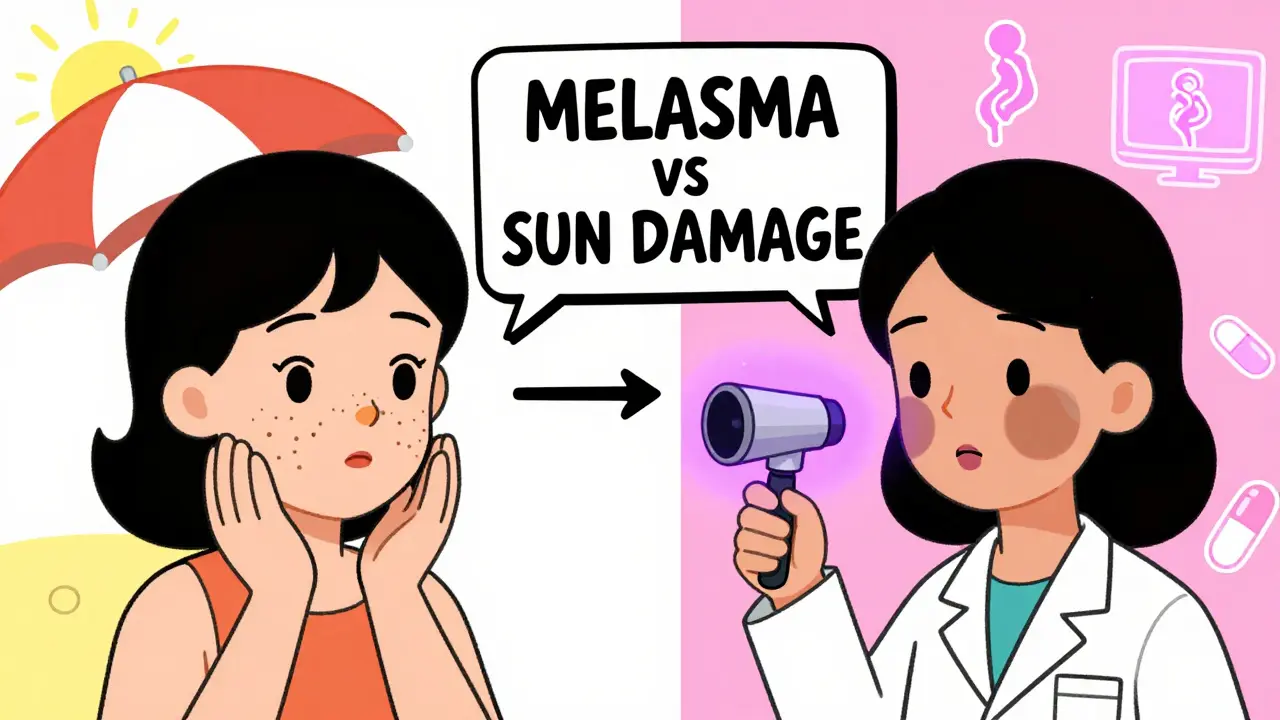
Laser and Light Therapies: Use With Caution
IPL (intense pulsed light) and lasers are popular. But they’re not safe for everyone.For sun damage, IPL works great. It targets the pigment, heats it up, and the spot darkens before flaking off in 3-5 days. Most people need 1-2 sessions. Results last years-if you protect your skin.
For melasma, IPL is risky. Heat from the light can trigger more melanin production. Studies show 30-40% of melasma patients get worse after IPL. That’s why dermatologists insist on a “melanocyte rest” first. Use topical treatments for 8-12 weeks to calm the skin before even considering laser. Only then, and only with low-energy settings, should you proceed. Even then, recurrence rates drop from 60% to 25%.
Chemical peels (glycolic, lactic, or trichloroacetic acid) can help melasma too-especially when done every 4-6 weeks alongside topicals. But in darker skin tones, peels carry a risk of PIH if not done by an experienced provider.
Why Melasma Is So Hard to Treat
Melasma isn’t just a skin problem. It’s a system problem.It responds to hormones, light, heat, stress, and even thyroid function. That’s why treatment takes months-not weeks. And why it comes back. The Mayo Clinic reports that 80% of melasma patients see it return within a year if they stop their regimen. That’s not failure. That’s biology.
Success rates for melasma? Around 40-60% improvement in six months. For sun damage? 75-90% in 2-3 months. That’s a huge gap. And it’s not because patients aren’t trying. It’s because melasma is stubborn. It hides deep in the skin, waiting for the next trigger.
That’s why maintenance is non-negotiable. Even after spots fade, you need to keep using sunscreen, vitamin C, and maybe a low-dose retinoid or tranexamic acid. Think of it like brushing your teeth-stop, and the problem comes back.

What’s New in 2026
The field is changing fast.Hydroquinone is under FDA review for possible over-the-counter status-with strict safety labeling. That could make it easier to access, but also risk misuse. Meanwhile, non-hydroquinone options are growing. Niacinamide, kojic acid, and azelaic acid are showing solid results with fewer side effects. They’re great for sensitive skin or as maintenance after hydroquinone.
Genetic testing for hyperpigmentation? It’s coming. Dr. Pearl Grimes predicts we’ll soon be able to test for genetic markers that predict who responds to which treatment. That means no more trial and error.
And the market? It’s booming. The global hyperpigmentation treatment market hit $12.7 billion in 2022 and is growing 6.8% a year. But most people start with OTC products. Eighty-five percent of melasma patients try creams from the drugstore before seeing a dermatologist. Many are disappointed. OTC products often have less than 2% hydroquinone-or none at all. They’re not strong enough.
Realistic Expectations and What to Avoid
Here’s what actually works:- Use a mineral sunscreen with iron oxides every single day-rain or shine, indoors or out.
- Apply hydroquinone 4% with tretinoin and a corticosteroid on alternating nights, not daily.
- Use vitamin C every morning under sunscreen.
- Wait at least 8 weeks before expecting results. Don’t switch products every month.
- Don’t get laser treatments for melasma unless your dermatologist says you’re ready.
- Don’t use multiple actives at once. That’s how irritation starts.
And here’s what doesn’t work:
- Spot treating only. Melasma is systemic. Treat your whole face.
- Skipping sunscreen because it’s cloudy. UV and visible light penetrate clouds.
- Using lemon juice or apple cider vinegar. These are acidic and can burn your skin, leading to worse pigmentation.
- Waiting until spots get darker to act. The earlier you start, the better the outcome.
Adherence is the biggest hurdle. Only 35% of patients stick to their regimen for the full 3-6 months. That’s why so many think “it doesn’t work.” It does-if you give it time and protect your skin.
Final Thought
Hyperpigmentation isn’t just cosmetic. It affects confidence, mood, and quality of life. But it’s treatable. The key isn’t finding the miracle cream-it’s understanding your type, sticking to the plan, and protecting your skin like your life depends on it. Because for melasma, it kind of does.Can melasma go away on its own?
Sometimes, yes-but only if the trigger is removed. Melasma caused by pregnancy often fades after delivery. Melasma from birth control may improve if you stop taking it. But if sun exposure continues or hormones remain imbalanced, it won’t go away on its own. Most cases require active treatment and lifelong sun protection.
Is hydroquinone safe to use long-term?
No. Hydroquinone should be used for no more than 3 months at a time due to the risk of ochronosis, a rare but permanent darkening of the skin. After 3 months, take a break for at least 2-3 months before restarting. Many dermatologists switch to non-hydroquinone options like tranexamic acid or niacinamide for maintenance.
Why does my skin look darker after starting tretinoin?
It’s a common side effect called “purging.” Tretinoin speeds up skin cell turnover, bringing deeper pigment to the surface faster. This can make spots look darker for 2-6 weeks before they begin to fade. Keep using it and protect your skin from the sun. If irritation is severe, reduce frequency to every other night until your skin adjusts.
Can I use vitamin C and niacinamide together?
Yes, and you should. Vitamin C is an antioxidant that reduces melanin oxidation, while niacinamide blocks pigment transfer to skin cells. Together, they’re more effective than either alone. Use vitamin C in the morning under sunscreen, and niacinamide (5%) at night. They’re gentle and compatible.
How do I know if my dark spots are melasma or just sun damage?
Melasma is symmetrical, blurry-edged, and often on the cheeks, forehead, or upper lip. Sun damage spots are smaller, rounder, and scattered on sun-exposed areas like the nose, hands, or shoulders. If you’re unsure, see a dermatologist. They can use a Wood’s lamp to see how deep the pigment is. Melasma goes deeper and glows under the light.
What’s the cheapest effective treatment for melasma?
The most cost-effective approach is a triple-combination cream (hydroquinone, tretinoin, corticosteroid) prescribed by a dermatologist, paired with a mineral sunscreen containing iron oxides. Generic versions cost $30-$60 per tube and last 2-3 months. Over-the-counter products are cheaper but rarely strong enough. Skipping sunscreen to save money is the most expensive mistake-you’ll pay for it in wasted treatments and recurring spots.
Can men get melasma?
Yes, but it’s rare-only about 10% of melasma cases occur in men. When it does, it’s often linked to hormonal imbalances, stress, or heavy sun exposure. Men are also more likely to ignore early signs, leading to delayed treatment. The same rules apply: sun protection, topical treatment, and patience.

TooAfraid ToSay
January 14, 2026 AT 01:31Susie Deer
January 15, 2026 AT 06:28says haze
January 16, 2026 AT 19:42Alvin Bregman
January 17, 2026 AT 22:00Allison Deming
January 19, 2026 AT 12:16Dylan Livingston
January 20, 2026 AT 12:49Andrew Freeman
January 21, 2026 AT 18:51Sarah -Jane Vincent
January 22, 2026 AT 22:47Henry Sy
January 24, 2026 AT 12:34Anna Hunger
January 25, 2026 AT 02:17Jason Yan
January 25, 2026 AT 15:54shiv singh
January 27, 2026 AT 10:43Robert Way
January 27, 2026 AT 22:04Sarah Triphahn
January 27, 2026 AT 22:44Vicky Zhang
January 28, 2026 AT 00:09