
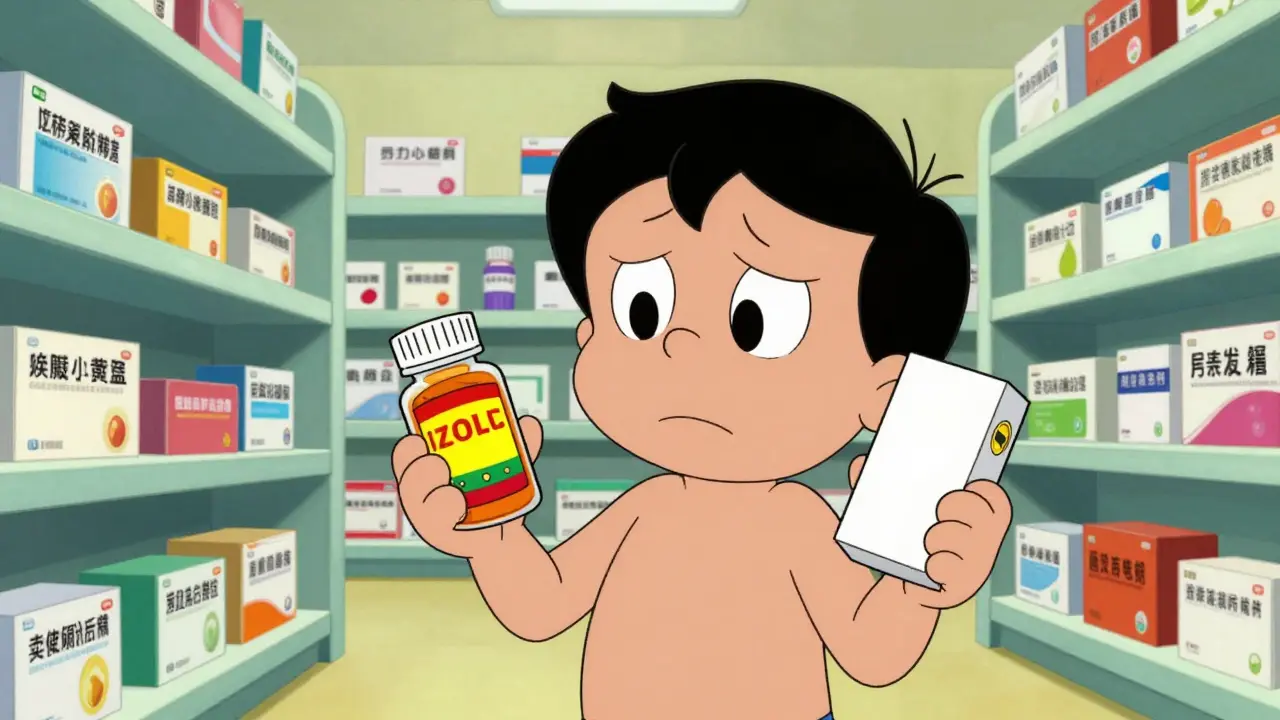
Walking into a pharmacy or opening a mail-order package, you might notice something odd. The pill bottle looks familiar, but the name on the label is missing. Instead of the big, bold brand name you recognize, there’s a different company logo and a plain white box. Is it a mistake? A counterfeit? Or is it an authorized generic, which is a version of a brand-name drug marketed by a third party with permission from the original manufacturer?
Authorized generics are a unique part of the pharmaceutical landscape. They aren’t traditional off-brand copies approved through separate pathways. Instead, they are the exact same medication as the brand-name product-same ingredients, same manufacturing facility, same quality standards-but sold under a different label at a lower price. For patients and pharmacists, knowing how to spot them is crucial for avoiding confusion and ensuring trust in your medication.
What Exactly Is an Authorized Generic?
To understand what you’re looking at, you first need to know where these drugs come from. An authorized generic is created when the holder of a brand-name drug’s patent (the New Drug Application or NDA) grants permission to another company to market that same drug. This usually happens during the period when the first generic competitor has exclusivity rights, allowing the brand owner to stay in the game without waiting years for full competition.
The key difference lies in the regulatory path. Traditional generics must prove they are bioequivalent to the brand drug through an Abbreviated New Drug Application (ANDA). Authorized generics skip this step because they are the brand drug. They are manufactured using the original NDA. According to FDA data from late 2023, there were 147 active authorized generic products representing about 3.2% of the generic market volume. They offer a middle ground: cheaper than the brand, but identical in composition.
Spotting the Differences in Packaging and Labeling
You can identify an authorized generic by looking closely at the physical packaging. Since trademark laws prevent generics from copying the brand’s look exactly, authorized generics have distinct visual cues. Here is what to check:
- Absence of Brand Name: The most obvious sign is that the brand name (like Lyrica or Protonix) will not appear on the primary label. Instead, you’ll see the generic chemical name (e.g., pregabalin or pantoprazole).
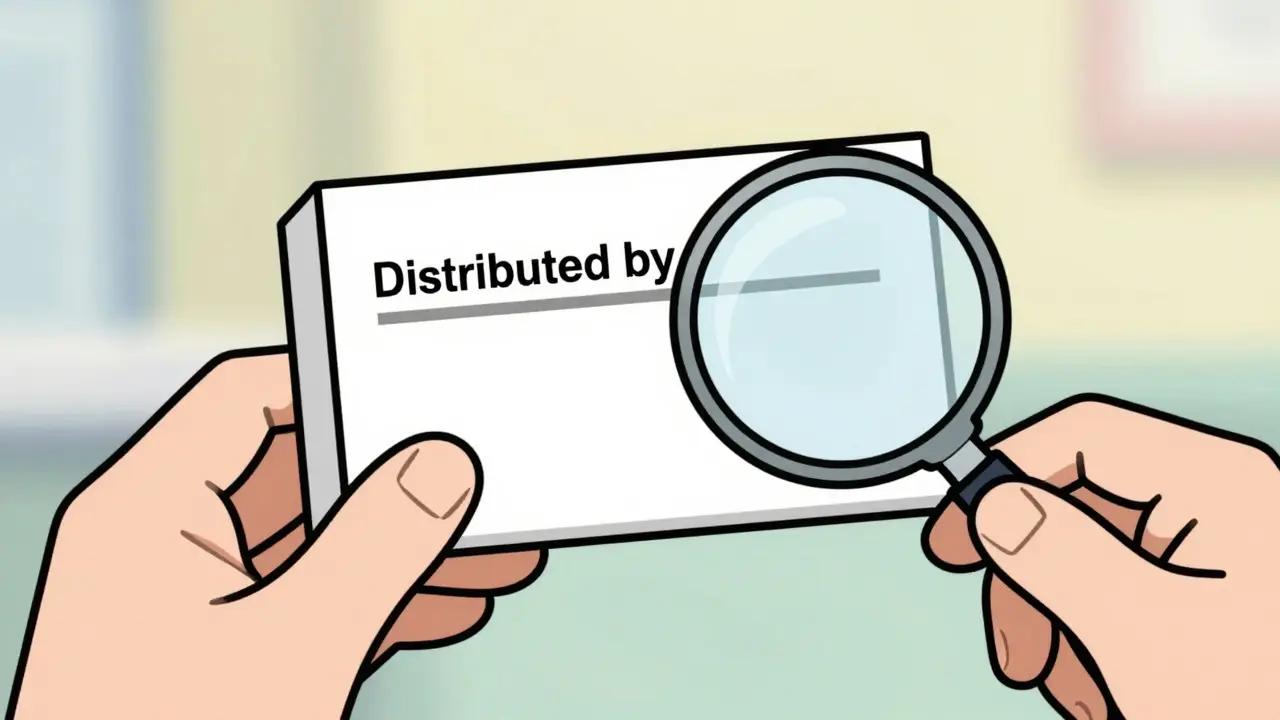
- Different Manufacturer Info: Look for phrases like "Distributed by" followed by a company name that isn’t the brand owner. For example, Pfizer’s Lyrica might be distributed by Greenstone LLC. The manufacturer listed is often a subsidiary or partner, not the main brand corporation.
- Plain Design: Expect simpler, more clinical packaging. Promotional claims, colorful branding, and marketing slogans found on brand boxes are stripped away. The focus is strictly on safety and usage information required by federal law.
- Pill Appearance: While the ingredients are identical, the pills themselves might look different. They may have different colors, shapes, or markings compared to the brand version. This is due to trademark restrictions, not formulation changes.
If you hold the box up to the light, you won’t find holograms or security seals specific to the brand. It looks utilitarian. That’s normal. The goal is to distinguish it legally while maintaining therapeutic identity.
The NDC Code: Your Best Identification Tool
If the packaging confuses you, the National Drug Code (NDC) won’t. The NDC is a three-segment number printed on every prescription label and box. It is the most reliable way to verify if you have an authorized generic.
| NDC Segment | Brand-Name Drug | Authorized Generic | Traditional Generic |
|---|---|---|---|
| Labeler Code (Who markets it) | Brand Company ID | Distributor/Subsidiary ID (Different) | Generic Manufacturer ID (Different) |
| Product Code (Strength/Form) | Specific Product ID | Identical to Brand | Different Product ID |
| Package Code (Size/Type) | Specific Package ID | Identical to Brand | Different Package ID |
Notice the pattern. In an authorized generic, the product code and package code match the brand-name drug exactly. Only the labeler code changes. This confirms that the substance inside is the same; only the entity selling it is different. Traditional generics, however, will have completely different numbers across all three segments because they are distinct formulations approved separately.
Why Confusion Happens: The Pharmacist Perspective
Even professionals struggle with this. A 2021 survey noted that nearly 37% of pharmacists initially misidentified authorized generics as traditional generics. Why? Because the packaging format often mimics standard generic boxes. If you’re a patient, this means your pharmacist might double-check the system before handing over your meds. Don’t be alarmed if they ask questions or take a few extra minutes.
Common pitfalls include:
- Mistaking them for counterfeits: Seeing a different company name on a familiar drug can trigger alarm bells. Remember, authorized generics are legal and FDA-regulated.
- Confusing therapeutic equivalence: Some patients worry that "generic" means "weaker." With authorized generics, this is impossible. They are chemically identical to the brand. Studies show 92.6% of patients report identical outcomes between brand and authorized generic versions.
- Ignoring the footer text: Sometimes, labels include subtle cues like "AG" or "Authorized Generic" in small print at the bottom. Many people overlook this detail.

How to Verify an Authorized Generic Yourself
You don’t need to be a regulatory expert to confirm what you’re taking. Here is a simple checklist to use when you receive your medication:
- Check the FDA List: The FDA publishes a quarterly list of authorized generics. You can search this public database online. Look for the drug name and the distributor listed on your box.
- Compare the NDC: Find the NDC on your new box. Compare the last two segments (product and package codes) with the old brand box. If they match, it’s likely an authorized generic.
- Ask Your Pharmacist: Pharmacists have access to databases like First Databank or Medi-Span that flag authorized generics. Ask them directly: "Is this an authorized generic or a traditional generic?" They can explain the source.
- Look for 'Distributed By':** Check the fine print. If it says "Manufactured by [Brand Company]," it’s the brand. If it says "Distributed by [Other Company]," it’s likely an authorized generic or traditional generic. Cross-reference with the NDC to be sure.
Verification systems in pharmacies now cover over 98% of these cases automatically. If your insurance switched you from brand to a cheaper option that looks slightly different, it’s probably an authorized generic. It’s a cost-saving move that doesn’t compromise your health.
Regulatory Updates and Future Changes
The rules around these drugs are evolving. The MODERN Labeling Act of 2020 introduced changes affecting how labeling updates occur for certain generics, though authorized generics still follow the NDA holder’s annual reporting cycle. This means their safety information stays current alongside the brand.
Looking ahead, the FDA plans to integrate specific authorized generic identifiers into the National Drug Code Directory by mid-2024. This update aims to reduce the 8.3% error rate currently seen in dispensing discrepancies. Until then, manual verification remains the gold standard. As the market grows-with authorized generics capturing nearly 13% of generic revenue in 2022-you’ll see them more often, especially in specialty pharmaceuticals.
Understanding these labels empowers you. You know that despite the different logo or plain box, the medicine inside is the trusted formula prescribed by your doctor. It’s just wearing a different hat to save you money.
Are authorized generics safe?
Yes, authorized generics are considered safe. They contain the exact same active and inactive ingredients as the brand-name drug and are manufactured in the same facilities. They undergo the same rigorous FDA quality controls because they are marketed under the original New Drug Application (NDA).
How do I tell the difference between an authorized generic and a traditional generic?
The best way is to check the National Drug Code (NDC). An authorized generic will have the same product and package codes as the brand-name drug, but a different labeler code. A traditional generic will have completely different NDC numbers across all segments. Additionally, authorized generics are chemically identical to the brand, while traditional generics must only prove bioequivalence.
Why does my authorized generic look different from the brand?
Trademark laws prevent generic versions, including authorized ones, from copying the brand’s appearance exactly. This includes pill color, shape, and markings. However, the internal composition remains identical. The packaging is also plainer to reflect its non-promotional status.
Where can I find a list of authorized generics?
The U.S. Food and Drug Administration (FDA) maintains a publicly accessible Quarterly Authorized Generic List. This list is updated four times a year and provides details on active products, distributors, and corresponding brand names.
Do authorized generics cost less than brand-name drugs?
Yes, authorized generics typically cost 15-25% less than the brand-name equivalent. However, they are usually priced 5-15% higher than traditional generics. They offer a middle-ground pricing option for patients who want brand-quality medication at a reduced cost.
Rebekah Korak
May 4, 2026 AT 18:33The very notion of an 'authorized generic' is a philosophical paradox that reveals the deep-seated corruption within the modern capitalist structure of healthcare. It is a simulacrum, a copy without an original in the truest sense, yet it claims the authority of the brand while shedding its responsibility. One might ponder if the identity of a drug is defined by its chemical composition or by the social contract implied by its branding. When we strip away the logo, do we also strip away the trust? This is not merely a matter of pharmacology but of epistemology. How can we know what we take if the labels are lies wrapped in legalities? The consumer is left in a state of perpetual uncertainty, forced to question the reality of their own medication. It is a Kafkaesque nightmare played out in pharmacy aisles across the nation. We are told it is the same, yet it looks different. We are told it is cheaper, yet the cost is paid in confusion and doubt. The system demands we accept this contradiction as normal. But is it normal? Or is it a sign of a society that has lost its grip on truth? The authorized generic is a mirror reflecting our own willingness to be deceived for the sake of convenience. It challenges us to define value beyond price. Is the brand name just a marketing tool or a guarantee of quality? The line blurs until it disappears entirely. We are left with pills that are identical in substance but distinct in spirit. Can a pill have a spirit? Perhaps it can, if the spirit is the intent of the manufacturer. And what is that intent? Profit, always profit. The authorized generic is the ultimate expression of this intent. It maximizes revenue while minimizing risk. It is clever, yes, but is it ethical? I leave you to decide. The answer is likely more complex than you think. It requires a deep dive into the history of pharmaceutical regulation. It requires understanding the FDA's role. It requires questioning everything we thought we knew about medicine. Are you ready for that journey? Probably not. Most people just want their pills. They don't want to think. They don't want to question. They just want relief. And so the authorized generic thrives in the shadows of indifference. It is the silent killer of critical thinking. Beware of the plain box. It hides more than just a different label. It hides a shift in power. A shift away from the patient and toward the corporation. Remember this. Always remember this.
Lando Neal
May 6, 2026 AT 03:45This is really interesting stuff!! I never realized there was such a specific distinction between authorized generics and traditional ones! The NDC code tip is super helpful!!! I am going to check my boxes right now!!! It makes me feel better knowing that the ingredients are exactly the same!!! Thanks for sharing this info!!!
Srinivas Komakula
May 6, 2026 AT 20:49You are being deliberately misled by the regulatory capture mechanisms inherent in the current pharmaceutical framework; the term 'authorized generic' is a euphemism designed to obscure the fact that the same multinational conglomerates are engaging in price discrimination strategies under the guise of market competition. The FDA's approval process is not a validation of safety but a rubber stamp for corporate interests, allowing them to fragment their product lines to maximize shareholder value at the expense of consumer transparency. The NDC codes are manipulated to create artificial distinctions that serve no therapeutic purpose other than to justify differential pricing structures within insurance formularies. You believe you are getting a deal, but you are actually participating in a sophisticated scheme of rent-seeking behavior where the brand owner extracts additional surplus from patients who are unaware of the underlying economic dynamics. The 'plain white box' is not a sign of utility but a symbol of the commodification of health, reducing complex biological interventions to mere inventory units. The lack of holographic seals is not an oversight but a deliberate removal of security features that would otherwise allow independent verification of authenticity, thereby forcing reliance on centralized databases controlled by the very entities profiting from the confusion. This is not innovation; it is exploitation disguised as efficiency. The bioequivalence data is irrelevant because the issue is not pharmacokinetics but the erosion of trust in the supply chain. The government complicity is evident in the failure to mandate clear labeling that distinguishes between true generics and these hybrid products. You are being gaslit by the industry into accepting inferior information architecture as standard practice. Wake up to the reality that your medication is part of a larger financial engineering project. The 'middle ground' pricing is a myth constructed to pacify consumers while margins expand. There is no middle ground; there is only the top and the bottom, and you are being pushed downward. The authorized generic is a Trojan horse for further consolidation of power in the hands of a few key players. Do not trust the distributor names; they are shell companies created specifically to evade liability and track consumer preferences. The entire system is rigged against the individual patient. You are a data point, not a human being. Recognize this truth before it is too late. The next step will be even more subtle forms of control. Stay vigilant. Question everything. Especially the quiet changes in your medicine cabinet.
Preety Singh
May 7, 2026 AT 15:36One simply does not need to engage with such pedestrian details unless one possesses the requisite intellectual capacity to understand the nuances of pharmaceutical law. The average consumer lacks the sophistication to appreciate the elegance of the NDC system. It is beneath them. They prefer the comfort of ignorance. Let them have their confusion. It serves no one to educate the masses on matters they cannot comprehend. The authorized generic is a luxury for the informed elite. If you cannot decipher the labeler code perhaps you should reconsider your career choices. Ignorance is bliss indeed.
Seema Karanje
May 8, 2026 AT 01:58STOP COMPLAINING AND START CHECKING YOUR LABELS! You have the power to verify your medication RIGHT NOW! Do not let fear stop you! Take action today! Check the FDA list! Call your pharmacist! Demand answers! You are stronger than the big pharma companies! Fight back by being informed! Get moving!
J. Walter Jenkem
May 9, 2026 AT 01:41I appreciate the clarity provided in this post. It helps to have a shared understanding of these terms. Let us work together to ensure everyone feels comfortable asking their pharmacists about these differences. We are all in this together.
Mark Koepsell
May 9, 2026 AT 15:53The NDC comparison is the most reliable method. Focus on the product and package codes matching the brand. Ignore the marketing hype.