
Antihistamine-Alcohol Risk Estimator
This calculator estimates your risk of dangerous drowsiness when mixing antihistamines and alcohol. Based on data from the National Institute on Alcohol Abuse and Alcoholism, it shows how different combinations increase your impairment.
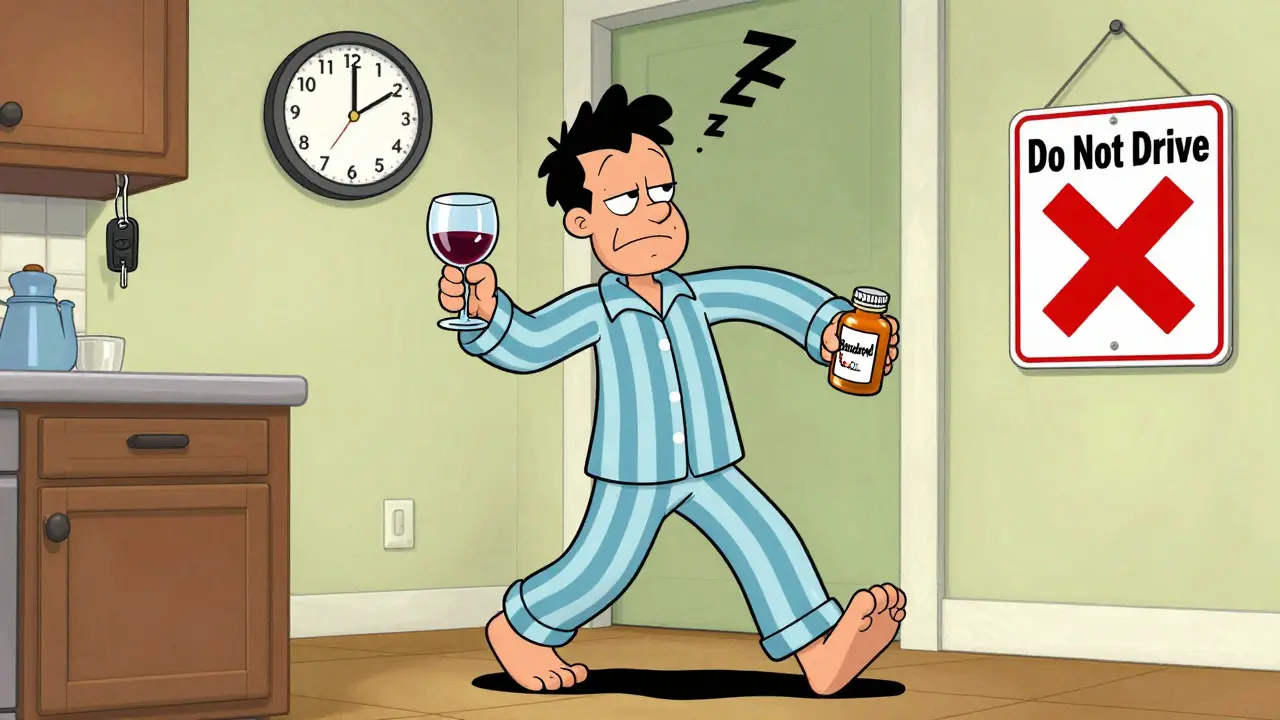
Many people don’t realize that taking an antihistamine with a drink can turn a simple evening into a serious safety risk. If you’ve ever felt unusually sleepy after taking Benadryl and having a beer, you’re not imagining it. The combination doesn’t just make you tired-it can slow your reactions enough to make driving dangerous, increase your risk of falling, or even cause breathing problems. This isn’t a myth. It’s a well-documented, life-threatening interaction backed by decades of research and real-world hospital data.
Why Antihistamines and Alcohol Make You Extra Drowsy
Both antihistamines and alcohol slow down your central nervous system. They do it in different ways, but together, they amplify each other. Alcohol boosts the effect of GABA, a brain chemical that calms nerve activity. At the same time, it blocks NMDA receptors, which normally keep your brain alert. First-generation antihistamines like diphenhydramine (the active ingredient in Benadryl) work by blocking histamine in the brain-a chemical that helps you stay awake. When both are present, your brain gets hit with double the calming signal.Studies show that mixing alcohol with diphenhydramine can reduce reaction time by 47% more than alcohol alone. That’s not just feeling sluggish-it’s like having a blood alcohol level above the legal driving limit, even if you’ve only had one drink. The National Institute on Alcohol Abuse and Alcoholism found that this combination can increase drowsiness by up to 300% compared to either substance by itself. For someone already tired or older, this isn’t just inconvenient. It’s a medical emergency waiting to happen.
Not All Antihistamines Are the Same
There are two main types of antihistamines: first-generation and second-generation. The difference matters a lot when alcohol is involved.First-generation antihistamines-like diphenhydramine (Benadryl), chlorpheniramine (Chlor-Trimeton), and doxylamine (Unisom)-cross easily into the brain. About half of people who take them feel drowsy even without alcohol. When you add even a small amount of alcohol, that number jumps to 60% or higher. These are the ones most often linked to falls, car crashes, and hospital visits.
Second-generation antihistamines-like loratadine (Claritin), cetirizine (Zyrtec), and fexofenadine (Allegra)-were designed to stay out of the brain. Alone, they cause drowsiness in only 6-15% of users. But alcohol changes that. When combined with alcohol, drowsiness rates for Claritin rise to 30-35%. For Zyrtec, it jumps to 40-45%. That means even the "non-drowsy" options aren’t safe with a drink.
The liver processes both alcohol and antihistamines using the same enzyme system (CYP3A4 and CYP2D6). Alcohol slows down how fast your body breaks down antihistamines. That means the drug stays in your system longer-up to 40% longer-making the drowsiness last longer and get worse. You might think you’re fine after a few hours, but your body is still processing both substances.
Real People, Real Consequences
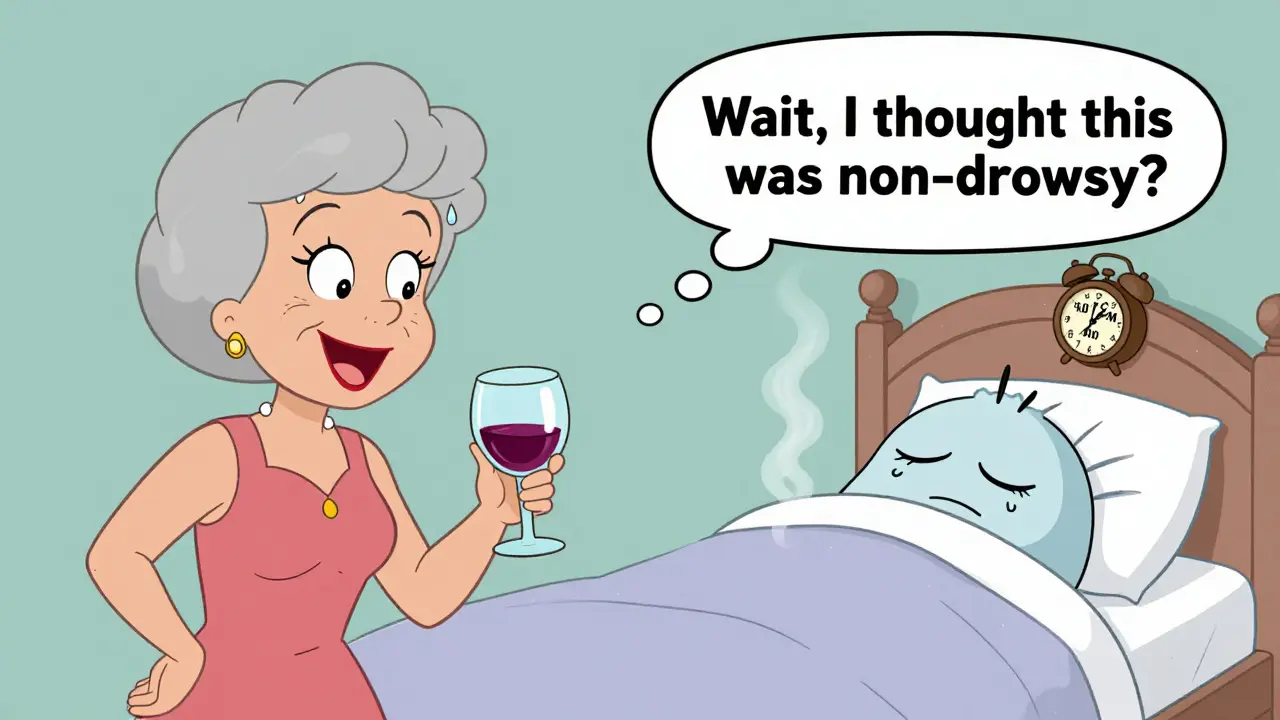
Behind the statistics are real stories. On Reddit’s r/Allergies, nearly 80% of users who mixed antihistamines with alcohol reported feeling far more tired than expected. Over a third said they nearly fell asleep while driving. One user wrote: "Took Benadryl for a rash, had two glasses of wine. Woke up in the passenger seat with no memory of how I got there."Drug review sites show similar patterns. On BuzzRx, 65% of negative Benadryl reviews mentioned dangerous alcohol interactions. Phrases like "passed out unexpectedly" and "couldn’t wake up the next morning" appear over and over. Even Claritin and Zyrtec users aren’t immune: 41% of negative Claritin reviews mention unexpected sleepiness after drinking. Older adults are especially vulnerable. A 2022 study found people over 65 experience 2.3 times more CNS depression from this combo than younger adults. That means confusion, memory lapses, and falls become far more likely-even with just one drink.
It’s Not Just Allergy Pills
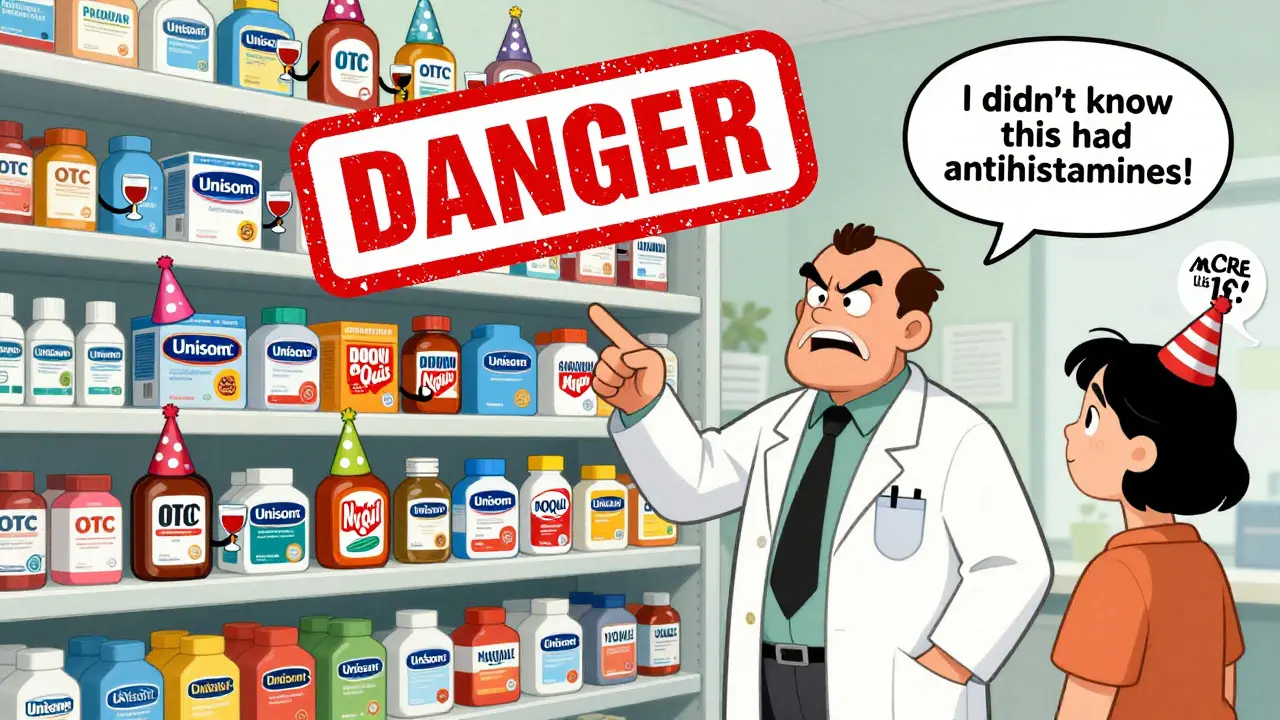
Here’s the part most people don’t know: diphenhydramine is hiding in plain sight. It’s in 72 different over-the-counter products. That includes:- 34 sleep aids (like Unisom and ZZZQuil)
- 18 cold and flu remedies (like NyQuil and DayQuil Severe)
- 20 motion sickness tablets (like Dramamine)
If you’re taking any of these and having a drink, you’re still combining antihistamines with alcohol-even if you didn’t think of it that way. The FDA requires strong warning labels on prescription antihistamines, but OTC products only say "may cause drowsiness." They don’t mention alcohol at all. That’s a gap that’s costing people their safety.
Who’s at Highest Risk?
Some groups face much higher danger:- Adults 65+: Slower metabolism, weaker balance, and more sensitivity to CNS depressants make falls and confusion common. A 2022 study found a 75% higher risk of hip fractures in this group after mixing these substances.
- People who drive or operate machinery: Reaction times drop so much that even one drink with a single Benadryl tablet can push you over the legal BAC limit for driving (0.08%).
- Women: Emergency visits for this interaction have risen 48% among women since 2018, likely due to higher OTC medication use.
- People taking multiple medications: If you’re on other sedatives, painkillers, or anxiety meds, the risk multiplies.
There’s no safe amount. One drink with one pill can be enough. There’s no "just this once" exception.
What Should You Do Instead?
If you need allergy relief and plan to drink, here’s what actually works:- Switch to nasal sprays: Flonase (fluticasone) or Nasacort (triamcinolone) work locally in your nose. They don’t enter your bloodstream in significant amounts, so they don’t interact with alcohol.
- Try leukotriene blockers: Singulair (montelukast) is a daily pill that helps with allergies and asthma. It has no known interaction with alcohol.
- Wait it out: If you’ve taken a first-generation antihistamine, wait at least 12-16 hours before drinking. For second-generation, wait 8-12 hours. But even then, your body may still be processing the drug.
- Use non-medication options: Saline nasal rinses, air purifiers, and avoiding allergens can reduce symptoms without drugs.
And if you’re having a serious allergic reaction-like swelling, trouble breathing, or anaphylaxis-take your antihistamine anyway. Then call 911. In a life-or-death situation, the risk of not treating it far outweighs the risk of alcohol. But afterward, tell your doctor what you drank.
Why This Problem Is Getting Worse
The allergy medication market has grown 4.7% every year since 2018, fueled by longer pollen seasons and more people using OTC drugs. Yet awareness hasn’t kept up. A 2023 Consumer Reports survey found that 63% of antihistamine users regularly drink alcohol within 12 hours of taking their medication. Only 28% knew it was risky.Emergency visits for this interaction have jumped 37% since 2018. The biggest increases? Adults 50-64 (up 52%) and women (up 48%). These aren’t just numbers. They’re people who thought they were being careful-until they weren’t.
Pharmaceutical companies are working on third-generation antihistamines like bilastine, which show almost no drowsiness even with alcohol in European trials. But these aren’t available in the U.S. yet-and won’t be for years. Until then, the advice stays the same: don’t mix them.
The truth is simple: no antihistamine is truly safe with alcohol. Not Benadryl. Not Zyrtec. Not Claritin. Not even the "non-drowsy" ones. The risk may be lower with some, but it’s never zero. And when it comes to your safety, "lower" isn’t good enough.
Can I have one drink with Benadryl?
No. Even one drink with Benadryl can cause extreme drowsiness, slowed reaction time, and impaired coordination. Studies show this combination can make you as impaired as someone with a blood alcohol level of 0.12-0.15%, which is well above the legal driving limit. The risk isn’t worth it.
Is Zyrtec or Claritin safe with alcohol?
Not really. While Zyrtec and Claritin cause less drowsiness on their own, alcohol still increases the risk. Zyrtec users report drowsiness in 40-45% of cases when combined with alcohol. Claritin users see rates jump to 30-35%. These aren’t "safe" options-they’re just less risky than Benadryl. The safest choice is to avoid alcohol entirely.
How long should I wait after taking antihistamines before drinking?
For first-generation antihistamines like Benadryl, wait at least 12-16 hours. For second-generation ones like Claritin or Zyrtec, wait 8-12 hours. But because alcohol slows how your body clears these drugs, waiting doesn’t eliminate risk-it just reduces it. If you’re unsure, skip the drink.
What if I accidentally mixed them?
If you feel extremely drowsy, confused, dizzy, or have trouble breathing, seek medical help immediately. Don’t wait. Call 911 or go to the nearest emergency room. Even if you feel fine, avoid driving or operating machinery for the rest of the day. Your reaction time and judgment are still impaired.
Are there allergy medicines that don’t interact with alcohol?
Yes. Nasal corticosteroids like Flonase and Nasacort don’t enter your bloodstream significantly, so they don’t interact with alcohol. Leukotriene blockers like Singulair also have no known interaction. However, these take days to work, so they’re not for sudden symptoms. They’re best for long-term allergy control.
MARILYN ONEILL
January 22, 2026 AT 02:58Steve Hesketh
January 22, 2026 AT 21:18shubham rathee
January 23, 2026 AT 10:58Sangeeta Isaac
January 23, 2026 AT 18:36Alex Carletti Gouvea
January 25, 2026 AT 10:30Coral Bosley
January 26, 2026 AT 09:34Dee Monroe
January 26, 2026 AT 10:09Ben McKibbin
January 28, 2026 AT 05:04Melanie Pearson
January 28, 2026 AT 18:28Uju Megafu
January 30, 2026 AT 14:01Barbara Mahone
January 31, 2026 AT 06:57Kelly McRainey Moore
February 1, 2026 AT 07:47Amber Lane
February 1, 2026 AT 13:20