Serotonin Syndrome Risk & Symptom Checker
Select the opioid medication you are considering taking while currently using an SSRI antidepressant.
Check any symptoms you are currently experiencing. This helps estimate severity.
Evaluation Complete
Disclaimer: This tool is for educational purposes only and does not constitute medical advice. Always consult a healthcare professional before changing medications.
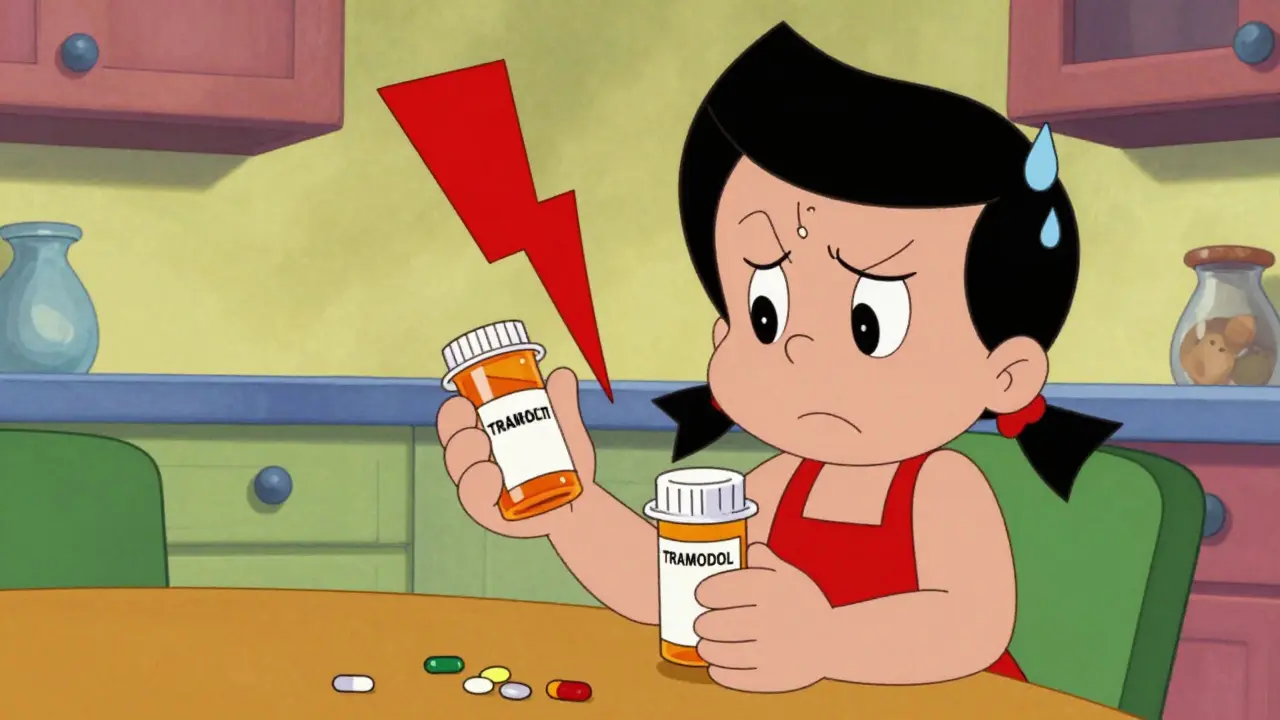
You take your morning antidepressant without a second thought. It’s part of your routine, just like coffee or brushing your teeth. But what happens when you need pain relief after a surgery or an injury? If your doctor prescribes an opioid, specifically certain types like tramadol is a synthetic opioid pain medication that also inhibits serotonin reuptake, you might be walking into a dangerous trap. The combination of Selective Serotonin Reuptake Inhibitors (SSRIs) and specific opioids can trigger Serotonin Syndrome is a potentially life-threatening condition caused by excessive accumulation of serotonin in the central nervous system. This isn’t a rare side effect; it’s a serious medical emergency that requires immediate recognition and prevention.
The risk stems from how these drugs interact with your brain's chemistry. SSRIs work by blocking the Serotonin Transporter (SERT) is the protein responsible for removing serotonin from the synaptic cleft to regulate neurotransmitter levels, keeping serotonin levels high to improve mood. Some opioids do the exact same thing. When you combine them, serotonin levels spike beyond safe limits, leading to hyperstimulation of receptors. Understanding which combinations are dangerous and how to spot the early warning signs could save your life or the life of someone you care about.
Understanding the Mechanism Behind the Danger
To understand why this interaction is so severe, we have to look at the biology. Your brain relies on a delicate balance of neurotransmitters. Normally, after serotonin is released into the space between nerve cells (the synapse), SERT acts like a vacuum cleaner, sucking it back up to be recycled or broken down. SSRIs block this vacuum. They force serotonin to stay active longer.
Most people assume all opioids are just painkillers. They aren't. While traditional opioids like morphine primarily bind to mu-opioid receptors to dull pain, some modern opioids have a dual mechanism. Tramadol is an atypical opioid that weakly binds to opioid receptors while significantly inhibiting serotonin and norepinephrine reuptake is the most common culprit. It doesn't just block pain; it actively prevents serotonin from being cleared away. When you add this to an SSRI, you effectively break the brain's primary braking system for serotonin. The result is a flood of neurotransmitter activity that causes the physical symptoms associated with toxicity.
Not all opioids carry this weight. The British Journal of Pharmacology notes that opioids vary wildly in their affinity for serotonin pathways. Codeine, morphine, oxycodone, and buprenorphine generally show little to no inhibition of SERT in laboratory studies. This distinction is critical because it means not every prescription for pain poses the same threat. However, even "safe" opioids can become risky if combined with other serotonergic agents, creating a complex web of potential interactions.
Identifying High-Risk Combinations
If you are taking an SSRI, knowing which pain medications to avoid is your first line of defense. The FDA has flagged several specific combinations as high-risk based on adverse event reporting data. Here is how the major players stack up against each other:
| Opioid Type | SERT Inhibition | Risk Level with SSRIs | Key Notes |
|---|---|---|---|
| Tramadol | High | Very High | Strongest SERT inhibition among common opioids; highest volume of reported cases. |
| Methadone | Moderate to High | High | Long half-life increases duration of risk; often used in addiction treatment alongside antidepressants. |
| Pethidine (Meperidine) | Moderate | High | Less commonly prescribed now due to neurotoxic metabolites, but still carries significant SS risk. |
| Fentanyl | Low (in vitro) | Moderate | Does not inhibit SERT directly but has affinity for 5-HT1A/2A receptors; clinical cases exist. |
| Morphine / Oxycodone | Negligible | Low | Preferred alternatives for patients on SSRIs; minimal impact on serotonin transport. |
It is important to note that Fluoxetine is an SSRI with a long half-life and an active metabolite that persists in the body for weeks presents a unique challenge. Because fluoxetine and its metabolite norfluoxetine stay in your system for 4 to 16 days, the risk window extends far beyond the last dose. If you stop fluoxetine and immediately start tramadol, you are still at risk. In contrast, sertraline has a much shorter half-life of about 26 hours, clearing the system faster and reducing the overlap period.
Recognizing the Symptoms Early
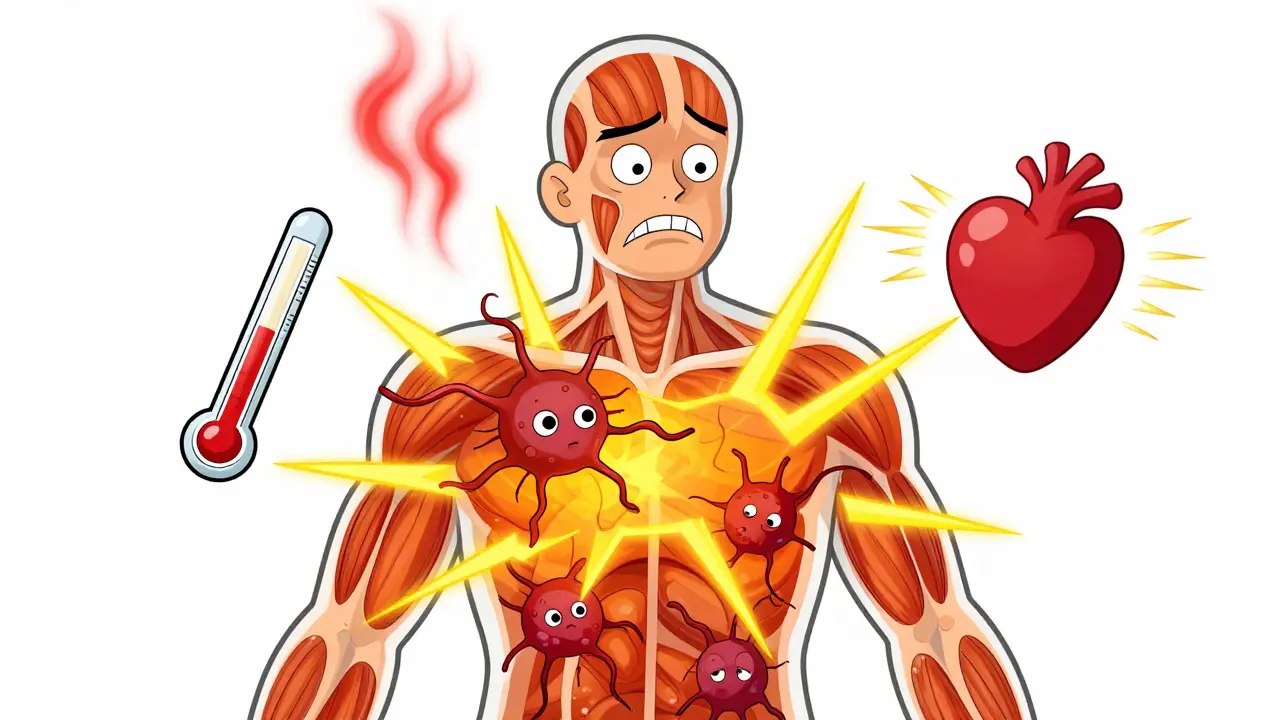
Serotonin syndrome can develop rapidly, often within hours of starting a new medication or increasing a dose. The Mayo Clinic emphasizes that early detection is vital because the condition can progress from mild discomfort to life-threatening crisis quickly. You cannot rely on a single symptom, but a cluster of specific signs should raise immediate alarm bells.
The Hunter Criteria, widely accepted by clinicians, identify spontaneous clonus (rapid, rhythmic muscle contractions) as a key diagnostic feature. For patients, however, the signs are often less technical and more visceral. Watch for:
- Mental Status Changes: Agitation, anxiety, confusion, or restlessness that feels sudden and unprovoked.
- Autonomic Instability: Rapid heart rate (tachycardia), high blood pressure, dilated pupils, sweating (diaphoresis), and shivering.
- Muscle Hyperactivity: Tremors, muscle rigidity, twitching (myoclonus), and loss of coordination (ataxia).
- Gastrointestinal Issues: Nausea, vomiting, and diarrhea.
In severe cases, core body temperature can skyrocket above 106°F (41.1°C), leading to seizures, irregular heartbeat, and kidney failure. Mortality rates approach 10% in untreated severe cases. A 2020 study in the Journal of Emergency Medicine found that nearly 44% of serotonin syndrome cases were initially misdiagnosed as other conditions, such as neuroleptic malignant syndrome or anticholinergic toxicity. This delay in correct diagnosis worsens outcomes. If you feel "burning from inside" or experience uncontrollable muscle spasms after taking pain meds, seek emergency care immediately.
Prevention Strategies for Patients and Providers
Prevention is far more effective than treatment. Since you cannot always control which doctor prescribes what-especially in hospital settings where multiple specialists may be involved-you must be an active participant in your own safety.
1. Maintain a Complete Medication List
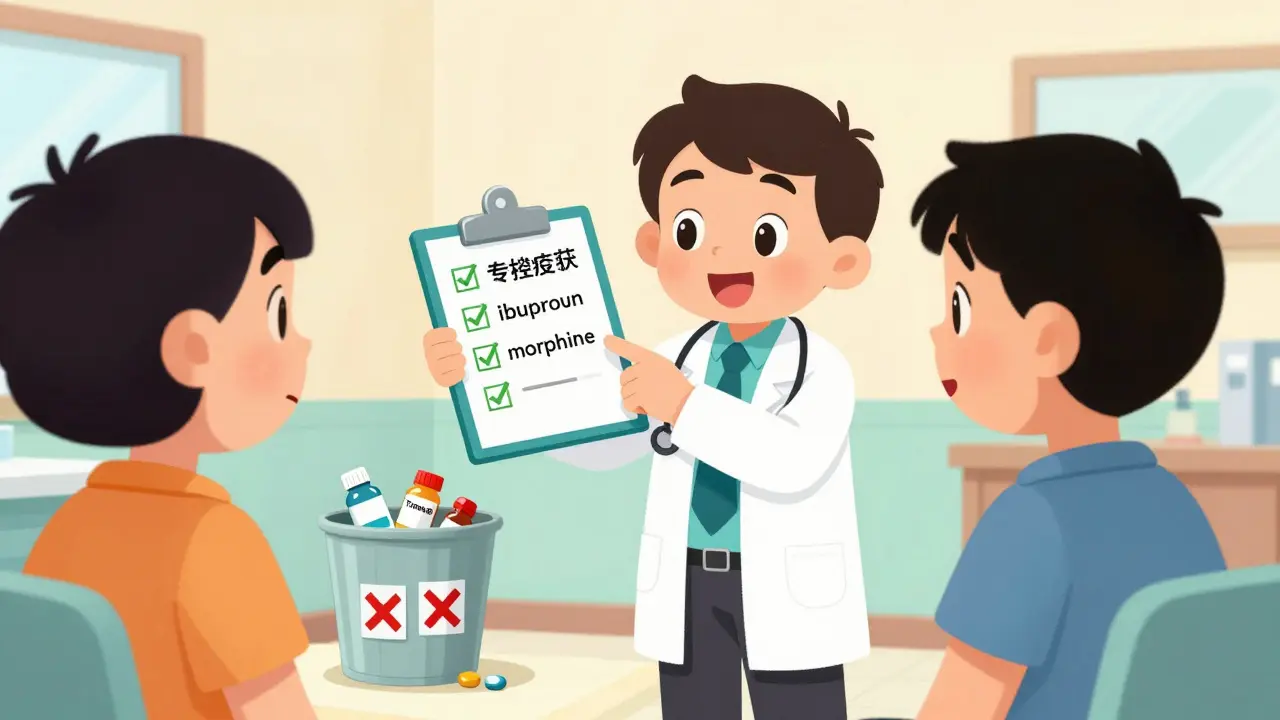
Never assume your new provider knows what your primary care doctor prescribed. Carry a list that includes all prescriptions, over-the-counter drugs, and supplements. Specifically highlight SSRIs, SNRIs, and MAOIs. Many people forget that migraine medications like triptans or anti-nausea drugs like ondansetron also increase serotonin levels, adding to the cumulative risk.
2. Ask About Safer Alternatives
If you are on an SSRI and need pain management, ask your doctor if morphine, oxycodone, or hydromorphone are appropriate alternatives. These opioids have negligible effects on serotonin transport. According to Medsafe guidelines, these are safer choices for patients requiring concurrent therapy. If tramadol is suggested, question whether it is necessary given your psychiatric history.
3. Monitor the First 72 Hours
The American Society of Health-System Pharmacists recommends close monitoring during the first three days of combining any new serotonergic agent. If you must take a higher-risk combination, start with lower doses and watch for early signs like jitteriness or mild tremors. Do not ignore these signals as "just side effects."
4. Utilize Technology
Electronic health records (EHRs) are improving, but they are not perfect. Kaiser Permanente implemented clinical decision support tools that reduced inappropriate tramadol-SSRI prescriptions by over 87%. While you can't install this software in your local clinic, you can use reputable drug interaction checkers online before leaving the pharmacy. Look for warnings labeled "Contraindicated" or "Major Interaction."
Treatment and Management Protocols
If serotonin syndrome occurs, time is critical. The cornerstone of treatment is immediate discontinuation of all serotonergic agents. Supportive care is essential and may include:
- Benzodiazepines: Used to control agitation, tremors, and muscle rigidity.
- Cooling Measures: External cooling blankets or ice packs to manage hyperthermia.
- Fluid Resuscitation: Intravenous fluids to maintain hydration and blood pressure.
- Cyproheptadine: An antihistamine that acts as a serotonin antagonist. It is typically dosed at 12 mg initially, followed by 2 mg every 2 hours as needed for severe cases.
Severe cases may require intubation and mechanical ventilation if respiratory distress occurs. The good news is that with prompt recognition and removal of the offending agents, most patients recover fully. However, the window for intervention is narrow.
Special Considerations for Vulnerable Populations
Certain groups face amplified risks. Older adults, particularly those over 65, take significantly more medications on average, increasing the chance of polypharmacy errors. The American Geriatrics Society Beers Criteria explicitly lists tramadol as potentially inappropriate for older adults taking SSRIs. Additionally, patients with renal failure or liver cirrhosis metabolize drugs slower, causing concentrations to build up to toxic levels even at standard doses.
Genetics also play a role. Individuals who are "poor metabolizers" of the cytochrome P4502D6 enzyme process certain drugs differently, leading to higher plasma levels. A 2023 study in the Pharmacogenomics Journal showed these individuals have a 3.2 times higher risk of developing serotonin syndrome. While genetic testing is not yet routine, understanding your family history and personal reaction to medications can provide clues.
Can I take ibuprofen or acetaminophen with my SSRI?
Yes. Ibuprofen (NSAIDs) and acetaminophen (Tylenol) do not affect serotonin levels and are generally considered safe alternatives for pain relief in patients taking SSRIs. However, NSAIDs can increase the risk of stomach bleeding when combined with SSRIs, so discuss this with your doctor if you have a history of gastrointestinal issues.
How long does serotonin syndrome last?
With prompt treatment and discontinuation of the causative drugs, symptoms usually resolve within 24 to 96 hours. However, if long-acting drugs like fluoxetine or methadone were involved, symptoms may persist longer due to the extended half-life of these substances.
Is fentanyl safe to use with SSRIs?
What is the difference between serotonin syndrome and neuroleptic malignant syndrome?
Both conditions involve fever and muscle rigidity, but they have different causes. Serotonin syndrome is caused by excess serotonin (often from antidepressants/opioids) and features hyperreflexia and clonus. Neuroleptic malignant syndrome is caused by antipsychotic medications and features "lead-pipe" rigidity and hyporeflexia. Confusing the two delays proper treatment.
Should I stop my SSRI if I need pain medication?
Do not stop your SSRI abruptly without consulting your psychiatrist. Stopping suddenly can cause withdrawal symptoms and relapse of depression/anxiety. Instead, work with both your prescribing doctors to find a pain management strategy that avoids high-risk interactions, such as using non-serotonergic opioids or non-opioid analgesics.