
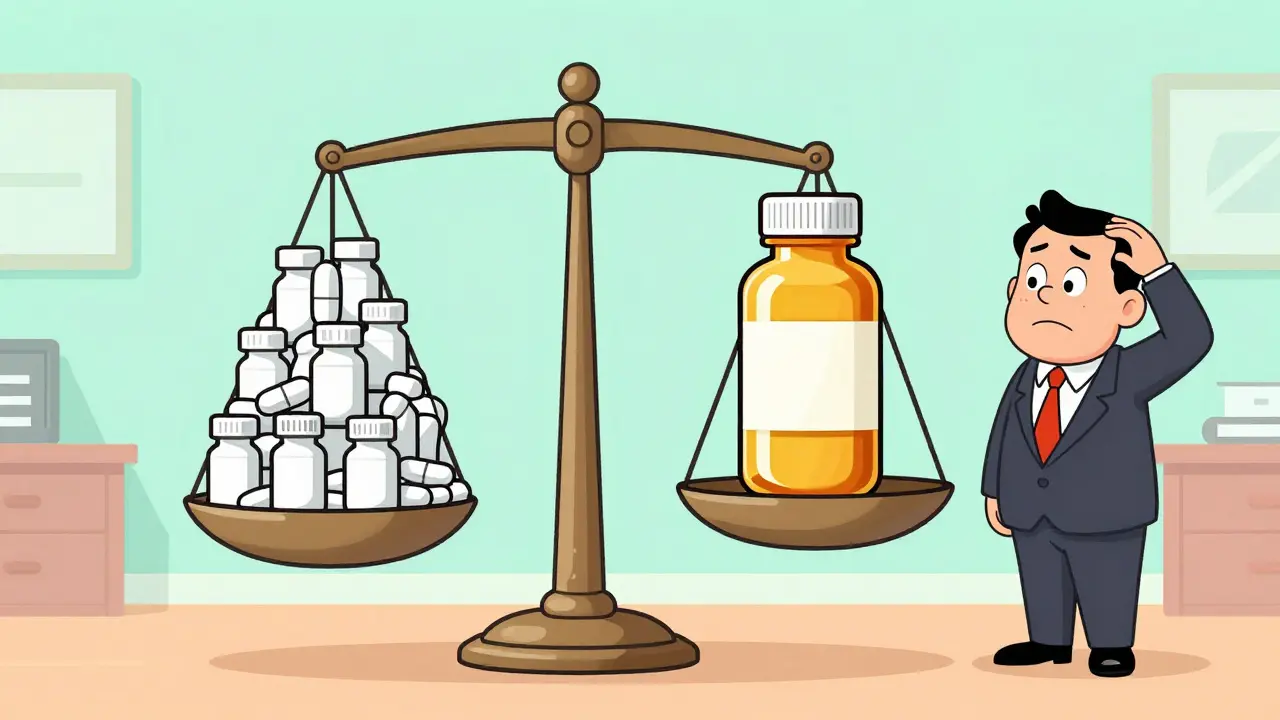
Imagine a system where a few medications take up the vast majority of the budget, while the medications most people actually use cost almost nothing. That is the paradox of the current Medicaid landscape. While generic drugs make up nearly 85% of all prescriptions filled, they only account for about 16% of total spending. It sounds like a win, but for state governments, it is a constant battle to keep those costs from creeping up and to ensure that a sudden shortage doesn't leave thousands of patients without essential care.
State governments are essentially acting as massive purchasing cooperatives. Their goal is simple: get the lowest possible price without sacrificing quality or access. But they can't just name their price; they have to navigate a complex web of federal laws and market pressures. The core problem is that while generics are cheaper than brand-name drugs, the pricing is volatile, and the supply chain is fragile.
Quick Summary: State Cost-Control Tactics
- Federal Rebates: Using the MDRP to secure mandatory discounts from manufacturers.
- Price Caps: Implementing MAC lists to limit how much the state pays for a generic.
- Substitution Rules: Mandating that pharmacists dispense the generic version when available.
- Legislative Action: Creating Affordability Boards to penalize price gouging on off-patent drugs.
- PBM Oversight: Forcing Pharmacy Benefit Managers to be transparent about actual drug costs.
The Federal Foundation: The Medicaid Drug Rebate Program
Before a state can implement its own quirky rules, it has to follow the federal blueprint. The Medicaid Drug Rebate Program is a federal system established by the Omnibus Budget Reconciliation Act of 1990 (OBRA '90) that requires drug manufacturers to give rebates to states in exchange for having their drugs covered by Medicaid . If a manufacturer doesn't play ball, their drug simply isn't covered, which is a nightmare scenario for any pharmaceutical company.
For generic drugs, the math is pretty rigid. Manufacturers typically pay a base rebate equal to 13% of the Average Manufacturer Price (AMP) or the difference between the AMP and the "best price"-whichever one is higher. Because this is a formula set in stone by federal law, states have very little room to negotiate individual deals for generics, unlike the brand-name world where supplemental rebates are common. This means states have to get creative with other tools to find more savings.
Practical Tools for Lowering Costs
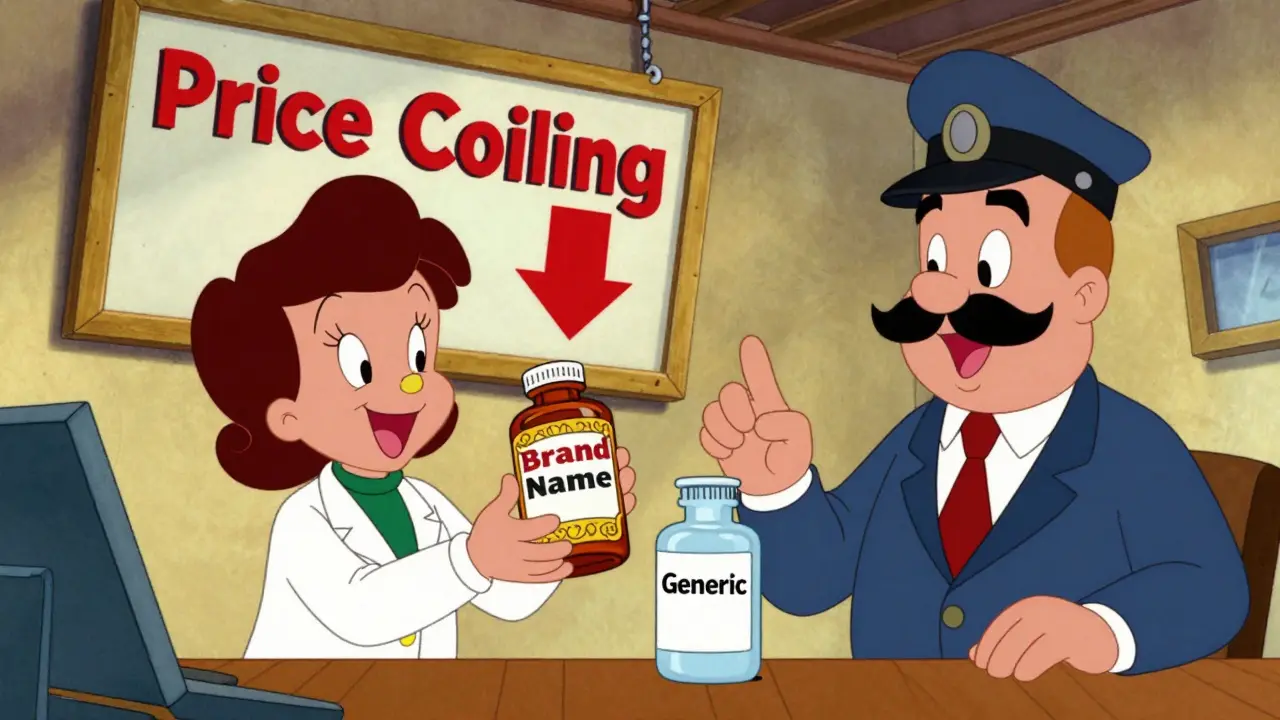
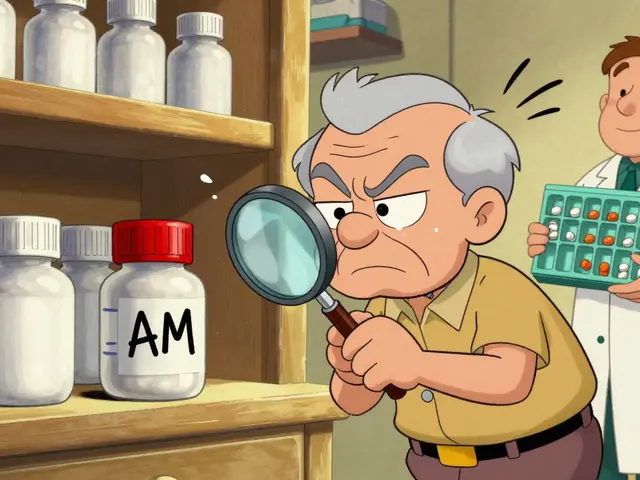
Since federal rebates only go so far, states use a variety of "boots-on-the-ground" policies to keep spending in check. One of the most common is the Maximum Allowable Cost (or MAC list), which is a ceiling price that Medicaid will pay for a specific generic drug, regardless of what the pharmacy paid for it . As of 2024, 42 states use these lists. The problem? If the market price for a drug spikes above the MAC limit, pharmacies might refuse to stock it because they'd lose money on every sale.
Beyond price ceilings, states employ a few other heavy-hitting strategies:
- Mandatory Generic Substitution: 49 states require pharmacists to swap a brand-name prescription for a generic equivalent unless the doctor specifically writes "do not substitute." This is the single most effective way to drive down costs instantly.
- Therapeutic Class Utilization: 37 states group drugs with similar effects together and only cover the most cost-effective option in that class.
- Preferred Drug Lists: Some states create a "gold list" of generics that are easier to get approved, steering doctors toward cheaper, equally effective options.
| Strategy | Primary Goal | Adoption Rate (Approx.) | Main Risk |
|---|---|---|---|
| MAC Lists | Capping reimbursement | 42 States | Pharmacy claim rejections |
| Generic Substitution | Increasing generic volume | 49 States | Minimal (clinical oversight) | Reducing variety/cost | 37 States | Limited patient choice |
| MDRP Rebates | Direct manufacturer discounts | All 50 States | Rigid federal formulas |
Combating Price Gouging and PBM Influence
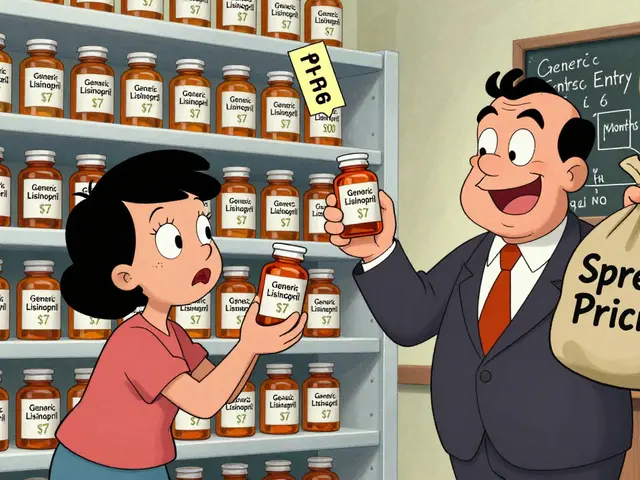
In recent years, states have realized that some generic drugs-especially old ones with no competition-can actually be more expensive than new brand-name drugs because a single company decides to hike the price. To stop this, Prescription Drug Affordability Boards (PDABs) are state-level bodies that review drug prices and can set upper payment limits or penalize manufacturers for unjustified price increases . Maryland led the way in 2020 by penalizing companies that raised generic prices without providing new clinical data to justify the cost.
Then there are the Pharmacy Benefit Managers (or PBMs), which are third-party administrators that manage prescription drug programs for insurers and state Medicaid agencies . PBMs like OptumRx and Magellan act as middlemen. For a long time, they operated in a "black box," where states didn't actually know the real cost of the drugs. To fix this, 27 states implemented new transparency laws in 2024, requiring PBMs to disclose the actual acquisition costs of generics.
The Danger of Over-Optimization: Shortages and Access
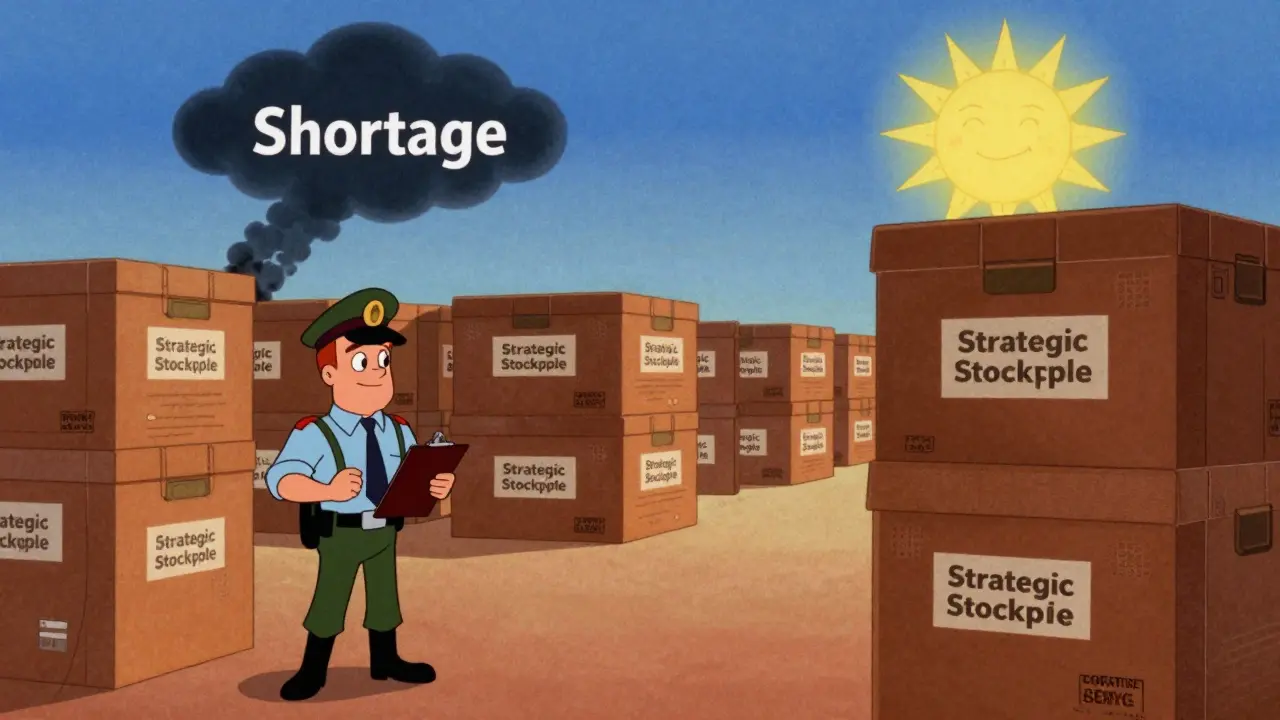
There is a fine line between saving money and breaking the supply chain. If a state pushes prices too low via MAC lists or aggressive rebates, manufacturers might decide that making a certain drug simply isn't profitable anymore. When a company exits a market, you get a shortage. In 2023, 23 states saw critical generic shortages lasting an average of 147 days. This is where the Medicaid generic policies can backfire: if the cheapest drug isn't available, the state ends up paying for a more expensive alternative, erasing all the savings.
To fight this, states are shifting from just "cutting costs" to "building resilience." About 12 states introduced laws in 2024 to create strategic stockpiles of essential generics. It's a shift in philosophy-from seeing drugs as a cost to be minimized to seeing them as a critical infrastructure to be protected.
Looking Ahead: New Challenges and the GLP-1 Effect
The future of cost containment is getting complicated. While generics usually keep budgets stable, the rise of new, high-cost treatments is putting pressure on the whole system. A prime example is the emergence of GLP-1 medications for obesity. With annual costs around $12,000 per patient, these drugs are a budget-breaker. Some states are already implementing strict prior authorization rules to ensure these are only used when absolutely necessary.
We are also seeing a trend toward multi-state collaboration. Oregon and Washington, for example, have formed a purchasing pool to negotiate supplemental rebates for high-volume generics. By teaming up, small states gain the leverage of a giant, forcing manufacturers to offer better deals that they wouldn't give to a single state agency.
What is the difference between a brand-name rebate and a generic rebate in Medicaid?
Brand-name rebates are often more flexible and can include "supplemental rebates" negotiated by the state. Generic rebates are strictly formulaic, based on the Average Manufacturer Price (AMP) and the "best price" given to other purchasers, leaving states with less room to negotiate individual deals.
Do MAC lists actually save money for the state?
Yes, they cap the amount the state pays, preventing pharmacies from overcharging for cheap generics. However, if the MAC limit is set too low, pharmacies may stop stocking the drug, which can lead to patient access issues and drug shortages.
Why are states creating Drug Affordability Boards (PDABs)?
PDABs are a response to "price gouging" on off-patent generic drugs. When a drug loses its patent but only one or two companies make it, those companies can hike prices without competition. PDABs allow states to set upper payment limits or fine companies for unjustified price hikes.
How do PBMs affect the cost of generic drugs?
PBMs manage the drug lists and negotiate prices. While they can lower costs, their lack of transparency has historically hidden how much of the rebate money actually reaches the state versus how much the PBM keeps as a fee. New transparency laws are aimed at fixing this.
Will these policies ever lead to a total lack of generics?
There is a real risk. The Congressional Budget Office has warned that if pricing interventions are too aggressive, manufacturers may exit unprofitable markets. This would reduce competition and could actually increase overall costs by forcing states to use more expensive alternatives.
Next Steps for State Agencies
Depending on the state's current budget health, the approach usually falls into two camps. For those in a budget crisis, the focus is on aggressive reimbursement modification-tightening MAC lists and expanding therapeutic class restrictions. For states with more stability, the move is toward supply chain security, such as investing in stockpiling and diversifying their generic sources to avoid the 147-day shortage average seen in recent years.
Quinton Bangerter
April 20, 2026 AT 05:49Imagine actually believing that
Tanya Rogers
April 22, 2026 AT 05:33The sheer naivety of suggesting that state-level
Don Drapper
April 23, 2026 AT 14:32The sheer incompetence displayed by the PBMs is an absolute travesty of the highest order!
It is utterly abhorrent that these middlemen have operated in a shroud of secrecy while bleeding the public treasury dry!
One must conclude that the systemic failure of oversight is not merely a mistake, but a calculated assault on fiscal sanity!
The audacity of these corporations to obfuscate actual acquisition costs is a grotesque violation of the public trust!
We are witnessing a theatrical performance of greed where the citizens are the unwitting victims!
The implementation of transparency laws is a mere pittance compared to the devastation already wrought!
It is a catastrophic collapse of professional ethics!
How dare these entities prioritize their margins over the very lives of the disenfranchised!
The formal structure of these agreements is a labyrinth designed specifically to entrap the unwary!
I find the entire arrangement to be an insult to the concept of governance!
The dramatic irony of calling these
caesar simpkins
April 24, 2026 AT 10:47Man, that whole section on the supply chain breaking is just heart-wrenching.
It's absolutely wild that we've reached a point where saving a few bucks on a MAC list could literally mean someone doesn't get their meds for five months.
Just a total nightmare scenario for the people at the bottom.
Really puts things into perspective on how fragile this whole house of cards is.
dallia alaba
April 25, 2026 AT 01:42It's worth noting that the shift toward strategic stockpiling is a huge step in the right direction for public health.
By diversifying sources and keeping a reserve, states can mitigate the volatility of the generic market.
This approach transforms the pharmacy benefit from a simple procurement exercise into a genuine security strategy, which is exactly what's needed when dealing with essential life-saving medications.
Brigid Prosser
April 25, 2026 AT 04:01This is a proper mess of a system, isn't it?
Absolute chaos trying to balance the books while keeping people healthy.
Love to see states teaming up though, that's a cracking way to actually put some pressure on the big pharma suits!
anne camba
April 26, 2026 AT 22:43The paradox of value... the way we assign cost to the essence of survival... it's almost poetic in its cruelty...
The MAC lists are just artificial barriers in a fluid market...
Valorie Darling
April 27, 2026 AT 21:36lol imagine thinking an affordability board actually does anything except give bureaucrats another excuse to meet for lunch... total joke
Akshata Kembhavi
April 29, 2026 AT 02:31It's really interesting to see how different countries handle this. In India, the focus on generics is so huge that the whole culture of medicine is different.
The idea of a state acting as a purchasing cooperative is something that could really work well if the transparency is there.
Aman Tomar
April 29, 2026 AT 10:36I am truly moved by the struggels of the patients who face these shortajes.
It is deeply distressing to think that a simple formula in a federal law could lead to such dire consequences for the poor.
The hope for a more resillient system is the only thing keeping the faith alive in this complex web of medicane.
Olushola Adedoyin
April 30, 2026 AT 18:19Wake up people! The "shortages" are just a smokescreen!
They create these fake gaps in the supply chain to force the states into these "strategic stockpiles" which are just warehouses for their control!
It's a total scam to keep us dependent on the grid!
The PBMs are just puppets for the shadow banks!
Pure madness!
Bob Collins
May 1, 2026 AT 01:41Fair point on the stockpiling, but we shouldn't forget that the human element is often ignored in these MAC lists.
If the pharmacists are struggling to keep the lights on, the patients are the ones who suffer first.
We need a more balanced approach that doesn't just treat medicine like a commodity on a spreadsheet.