
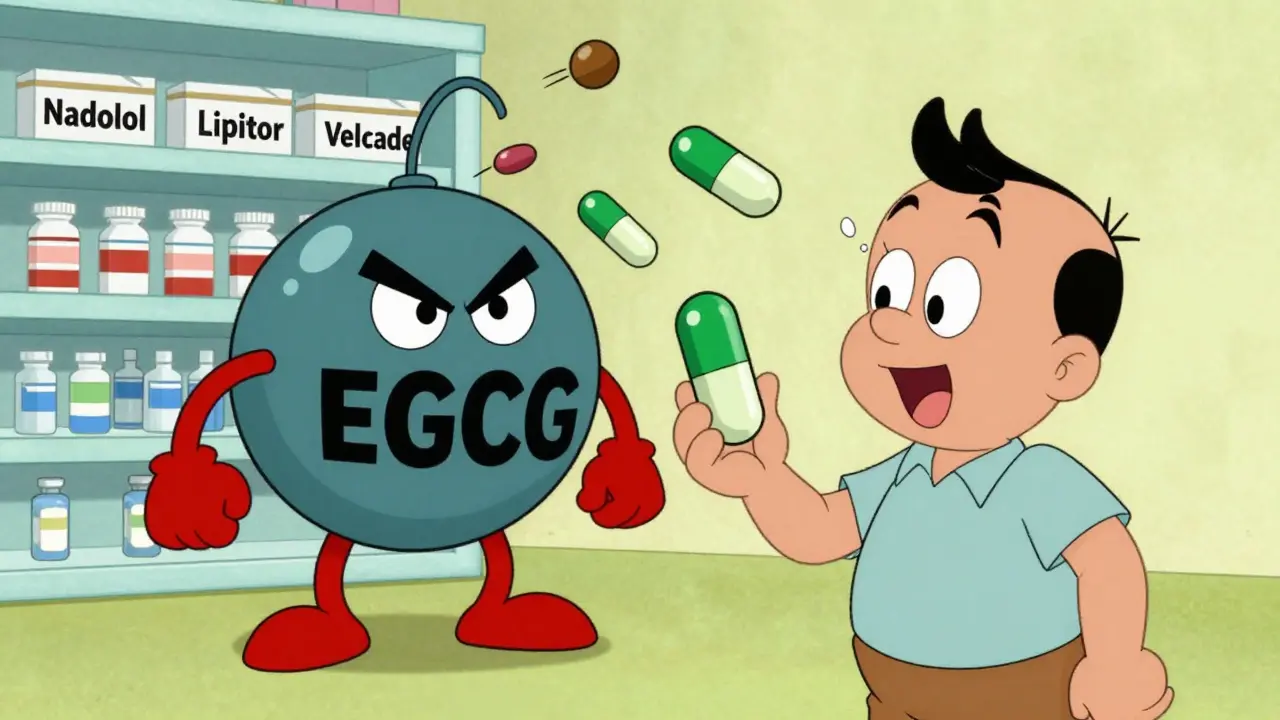
Many people turn to green tea extract for its supposed health perks-antioxidants, weight loss support, heart health. But what most don’t realize is that this popular supplement can quietly interfere with medications you’re taking, sometimes with serious consequences. If you’re on any kind of prescription drug, especially for heart conditions, cancer, or mental health, green tea extract isn’t just harmless tea-it’s a potential wildcard in your treatment plan.
How Green Tea Extract Interferes With Drugs
Green tea extract isn’t just caffeine and water. It’s concentrated. A single capsule can contain 250 to 500 mg of EGCG (epigallocatechin gallate), the main active compound. That’s five to ten times more than what you’d get from drinking a cup of brewed tea. And EGCG doesn’t just float around your body-it actively blocks the systems your body uses to absorb and break down medications.
Two main mechanisms are at play. First, EGCG inhibits transporter proteins like P-glycoprotein and OATPs. These are like bouncers at the door of your intestinal cells and liver, deciding which drugs get in and out. When EGCG shuts them down, your body can’t absorb drugs properly. Second, the caffeine in green tea extract acts like a stimulant. If you’re already taking something that speeds up your heart or nervous system, the combo can push your body into overdrive.
Unlike some herbal supplements that have one or two known interactions, green tea extract plays both sides. It messes with absorption AND adds stimulant effects. That’s why it interferes with more drugs than ginkgo or milk thistle-over three times as many, according to a 2015 review in Current Pharmaceutical Design.
High-Risk Medications to Avoid With Green Tea Extract
Some drugs are especially vulnerable. Here are the ones that show up most often in clinical reports:
- Nadolol (Corgard) - A beta-blocker used for high blood pressure and heart rhythm issues. Green tea extract can slash its absorption by up to 83%. Patients have reported their blood pressure spiking after starting green tea supplements, even when they took the pill correctly.
- Atorvastatin (Lipitor) and Rosuvastatin (Crestor) - Cholesterol-lowering statins. Studies show green tea extract reduces absorption by 30-40% for atorvastatin and up to 25% for rosuvastatin. This means your cholesterol might not drop as expected, and you could be at higher risk for heart events without realizing why.
- Bortezomib (Velcade) - A chemotherapy drug for multiple myeloma. EGCG binds directly to bortezomib, making it 50% less effective. MD Anderson Cancer Center reported a 15% treatment failure rate among patients who kept taking green tea supplements during therapy.
- 5-Fluorouracil - Used for colon and breast cancer. Green tea extract slows down how fast your body breaks it down, causing drug levels to spike by 35-40%. That can lead to severe toxicity: vomiting, mouth sores, low blood cell counts.
- Imatinib (Gleevec) - A targeted therapy for leukemia and certain sarcomas. Green tea reduces its bioavailability by 30-40%. Patients have relapsed after starting green tea supplements, even when they thought their cancer was under control.
- Lisinopril - An ACE inhibitor for blood pressure. Green tea extract can reduce its absorption by about 25%, leading to uncontrolled hypertension.
- Beta-agonists (like albuterol) - Used for asthma. The caffeine in green tea extract can amplify the heart-racing side effect. One case study showed heart rates jumping 20-30 beats per minute when patients combined the two.
- Warfarin (Coumadin) - A blood thinner. While not directly proven to interact with EGCG, green tea extract has been linked to unexpected INR spikes and drops. Cleveland Clinic’s internal data found 18% of unexplained INR fluctuations in warfarin patients were tied to green tea use.
Why Supplements Are Riskier Than Tea
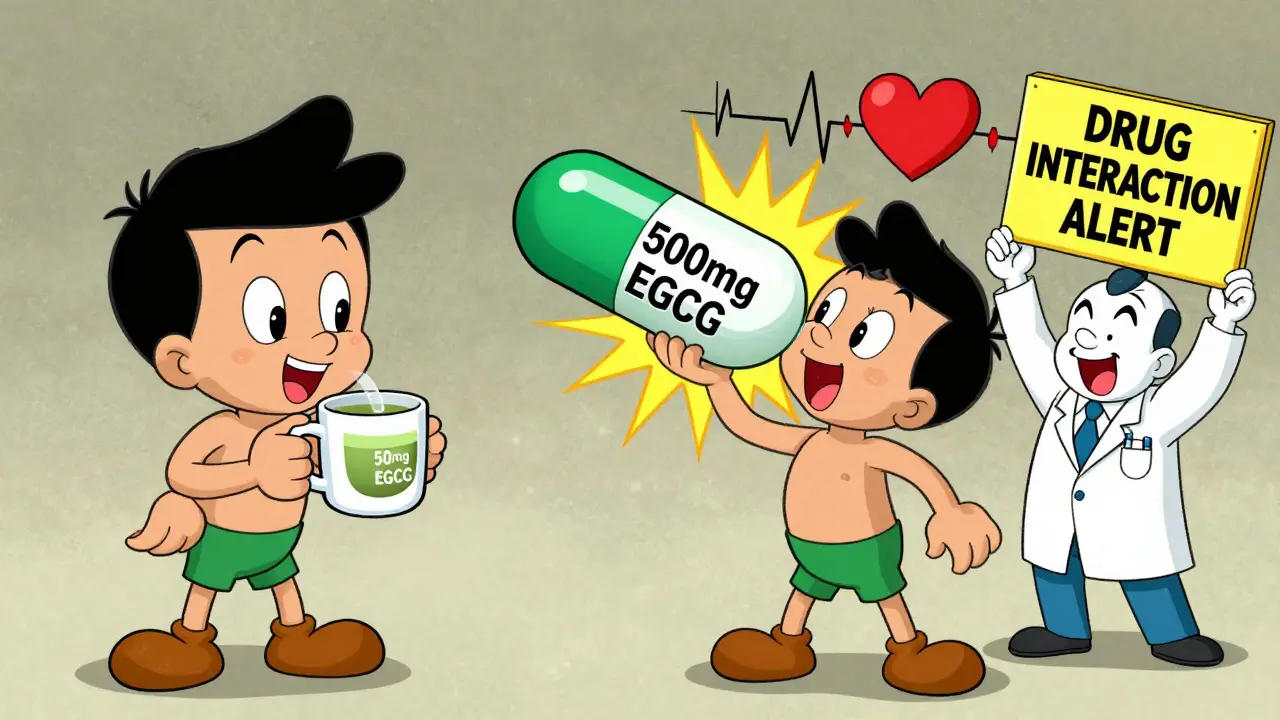
Drinking two cups of green tea a day is generally low risk. But supplements? That’s a different story. Most green tea extract capsules deliver 250-800 mg of EGCG. Brewed tea? Around 50-100 mg per 8-ounce cup. That’s why people who think they’re being healthy by popping pills are often the ones ending up in the ER with drug toxicity or treatment failure.
And here’s the kicker: supplement labels rarely warn you. A 2021 FDA survey found only 12% of green tea extract products mention drug interactions, even though the agency says they should. Many consumers assume “natural” means “safe.” Reddit threads and Drugs.com forums are full of stories from people who didn’t realize their green tea pills were causing their blood pressure to climb or their chemo to stop working.
What You Should Do
If you’re taking any prescription medication, here’s what to do:
- Check your meds. If you’re on any of the drugs listed above-especially bortezomib, statins, beta-blockers, or chemotherapy-stop green tea extract immediately. Talk to your pharmacist or doctor before restarting.
- Don’t assume “natural” is safe. Just because it comes from a plant doesn’t mean it won’t interfere with your drugs. EGCG is a potent bioactive compound. It’s not a vitamin. It’s a pharmacological agent.
- Separate timing. If your doctor says it’s okay to keep taking green tea extract (rare, but possible for low-risk meds), take it at least four hours apart from your medication. That reduces interaction risk by about 60%, according to UCSF’s 2022 protocol.
- Stick to brewed tea. If you want the taste and mild benefits, drink tea instead of taking pills. Limit to two cups a day (under 100 mg caffeine). That’s much safer than concentrated extracts.
- Tell your provider. Don’t wait for them to ask. Bring up all supplements you take-green tea, turmeric, fish oil, melatonin-during every medication review. Many doctors don’t ask, but you should tell.
What’s Being Done About It?
The FDA is finally paying attention. In 2023, they issued 17 warning letters to green tea supplement makers for failing to label interaction risks. Only 29% of products complied by early 2023. The European Medicines Agency added 12 new green tea-drug interactions to their database in January 2023, including one with the blood thinner dabigatran (Pradaxa).
Meanwhile, the supplement market keeps growing. Global sales hit $2.17 billion in 2022, and it’s projected to keep rising as more cancer survivors and aging adults reach for “natural” options. But without stricter labeling or pre-market testing (thanks to the outdated DSHEA law from 1994), the risk stays high.
Bottom Line
Green tea extract isn’t the villain. But it’s not harmless, either. If you’re on medication, especially for heart disease, cancer, or mental health, the risks far outweigh the benefits of taking concentrated supplements. The science is clear: EGCG interferes with how your body handles drugs. Caffeine adds another layer of danger.
Drinking tea? Fine. Taking pills labeled “green tea extract”? That’s when you need to pause, check your meds, and talk to a professional. Your treatment could depend on it.
Can I still drink green tea if I’m on medication?
Yes, if you stick to brewed tea-no more than two cups a day. That provides about 50-100 mg of EGCG and under 100 mg of caffeine, which is generally low-risk for most medications. Avoid drinking it right before or after taking pills. Wait at least two hours. But if you’re on bortezomib, warfarin, or certain chemotherapy drugs, even brewed tea may need to be limited. Always check with your doctor.
Is green tea extract safer than caffeine pills?
No. Green tea extract contains caffeine, but it also has EGCG, which interferes with drug absorption. Caffeine pills only affect your nervous system. Green tea extract does both. So while caffeine pills can raise your heart rate, green tea extract can make your blood pressure medication stop working. It’s a double threat.
I’ve been taking green tea extract with my statin. Should I stop?
Yes. Studies show green tea extract reduces absorption of atorvastatin and rosuvastatin by 25-40%. That means your cholesterol may not be under control, even if your numbers looked good last time. Stop the supplement, wait a week, then get your lipid panel checked again. Your doctor may need to adjust your dose.
Are there any green tea extracts that don’t interact with drugs?
Not currently. All commercial green tea extracts contain EGCG, the compound responsible for interactions. Some brands claim to be “decaffeinated” or “standardized,” but they still contain EGCG. Even if caffeine is removed, the drug-blocking effect remains. There’s no safe version on the market yet.
Why don’t supplement labels warn about these interactions?
Because under U.S. law (DSHEA, 1994), supplements don’t need FDA approval before being sold. Manufacturers aren’t required to prove safety or test for drug interactions. Only 12% of green tea extract products include interaction warnings, even though the FDA recommends it. The burden is on you to know the risks.
What should I tell my pharmacist about green tea extract?
Tell them you’re taking it, how much (e.g., “500 mg EGCG daily”), and when you take it. Ask: “Does this interact with any of my prescriptions?” Pharmacists have access to databases like Natural Medicines Comprehensive Database that flag these interactions. Many will spot the risk before you even ask.
Can green tea extract cause liver damage?
Yes. High-dose green tea extract has been linked to rare cases of liver injury, especially in people taking it for weight loss. The FDA has issued warnings about this since 2012. Symptoms include yellow skin, dark urine, nausea, and abdominal pain. If you’re taking more than 800 mg EGCG daily, get your liver enzymes checked annually.
I feel fine taking green tea extract with my meds. Why should I stop?
Because you might not feel anything until it’s too late. Many interactions don’t cause immediate symptoms. For example, green tea extract can lower your statin levels just enough to let your cholesterol creep up over months-no warning signs, just a silent increase in heart attack risk. Or it can make your chemo less effective, leading to cancer progression. The damage is often invisible until it’s advanced.

Napoleon Huere
January 26, 2026 AT 19:14So we're basically saying that if you're on meds, your grandma's herbal remedy is now a bioactive landmine? That's wild. We treat aspirin like candy but get freaked out when someone takes a plant extract? The irony is that we've turned nature into a pharmacological puzzle while ignoring the real issue: our system lets untested crap fly off shelves with zero accountability. It's not green tea extract that's dangerous-it's the fact that we let corporations profit off ignorance.
Shweta Deshpande
January 26, 2026 AT 23:15Oh my goodness, this is so important!! I just started taking a green tea supplement because my friend said it helps with bloating and energy, but I'm also on lisinopril for my blood pressure. I had no idea this could be risky!! Thank you for laying it all out like this-it feels like a lightbulb just turned on. I'm going to stop the pills today and switch back to drinking one cup of tea in the morning. Natural doesn't mean harmless, and I'm so glad I read this before something bad happened. Sending hugs to everyone reading this-you're not alone in figuring this out!!
Robin Van Emous
January 28, 2026 AT 13:44...I get it... you're saying EGCG blocks transporters... and caffeine adds stress... and labels don't warn you... and doctors don't ask... and supplements aren't regulated... and people die quietly... but... what if... I just... drink tea?... like... two cups... maybe... with breakfast?... please... tell me... it's okay...?
James Nicoll
January 28, 2026 AT 19:16So let me get this straight-your body’s a vending machine, and EGCG is the guy who jams the coin slot while the caffeine kicks the machine? Genius. We’ve got a whole industry selling ‘natural wellness’ while the FDA watches like a bored librarian. Meanwhile, people are popping pills like candy because ‘it’s green, so it’s good.’ I’d rather have a drug that’s been tested than a plant extract that’s been marketed by someone who thinks ‘antioxidant’ means ‘magic fairy dust.’
Uche Okoro
January 30, 2026 AT 12:54The pharmacokinetic interference mediated by EGCG is a well-documented phenomenon, particularly concerning the inhibition of P-glycoprotein and OATP1B1/1B3 transporters, which significantly alter the bioavailability of substrates such as statins, beta-blockers, and tyrosine kinase inhibitors. The concurrent adrenergic stimulation from caffeine exacerbates cardiovascular risk, particularly in polypharmacy cohorts. The absence of mandatory labeling under DSHEA constitutes a systemic failure in risk communication, not merely a regulatory gap. This is not anecdotal-it's clinical pharmacology in real time.
shivam utkresth
January 31, 2026 AT 07:02Bro, I used to take green tea extract like it was my new best friend-until my uncle, who’s a pharmacist in Mumbai, looked at my meds list and went ‘WHAT THE HELL ARE YOU DOING?’ I thought I was being healthy, but turns out I was sabotaging my cholesterol meds. Now I drink chai with cardamom instead. Tastes better, doesn’t mess with my body, and my mom says it’s ‘good for the soul.’ Sometimes the old ways are the safest ways, ya know?
John Wippler
February 1, 2026 AT 05:29Let me tell you something-I’ve been coaching cancer survivors for years, and I’ve seen too many people think ‘natural’ = ‘safe.’ It’s not. Green tea extract is a potent compound that doesn’t care if you’re trying to heal. It just does its job-blocking absorption, messing with metabolism, and quietly undermining your treatment. But here’s the good news: you’re not powerless. You can ask. You can check. You can switch to tea. You can tell your doctor. You can protect yourself. One small step. One conversation. One decision. That’s how you take back control. You’ve got this.
Aurelie L.
February 2, 2026 AT 05:15I stopped green tea extract after my INR went from 2.1 to 5.8. No warning. No label. Just a trip to the ER. Now I drink one cup of tea. That’s it. No more supplements. Ever.
Joanna Domżalska
February 3, 2026 AT 12:40So you’re telling me the reason my cholesterol didn’t drop is because I drank tea? Not my diet? Not my genetics? Not my lazy doctor? It’s the green tea extract? Wow. What a convenient scapegoat. Maybe the real problem is that your meds are overprescribed and you’re just blaming a plant because it’s easier than admitting you don’t want to change your lifestyle. Also, tea is just caffeine with extra steps.
Josh josh
February 4, 2026 AT 20:56so i was takin green tea pills for like 6 months and i never knew they could mess with my blood pressure med... i thought it was just a chill supplement... turns out i was basically doing a drug experiment on myself... lesson learned... switched to brewed tea... no more pills... life’s good
bella nash
February 6, 2026 AT 00:19It is imperative to acknowledge the pharmacodynamic and pharmacokinetic interactions between epigallocatechin gallate and various pharmaceutical agents, particularly those metabolized via hepatic cytochrome P450 pathways or transported by ATP-binding cassette transporters. The absence of standardized dosing and regulatory oversight in the dietary supplement industry presents a significant public health concern. Patients must be educated regarding the potential for unintended therapeutic compromise.
SWAPNIL SIDAM
February 7, 2026 AT 20:33I used to take green tea extract every morning like it was holy water. Then my cousin got hospitalized because his chemo stopped working. He didn’t even know he was taking it. That day, I threw away every capsule I had. I don’t care how ‘natural’ it is-if it can kill your treatment, it’s not a supplement. It’s a silent enemy. I drink tea now. Two cups. No more. And I tell everyone I know. This isn’t just advice-it’s a life-saving rule.
Geoff Miskinis
February 9, 2026 AT 12:54How quaint. We’ve elevated a mildly bioactive compound to the level of a public health crisis because Americans can’t be trusted to read a label. Meanwhile, in Europe, they regulate this stuff like it’s a prescription drug. The real tragedy isn’t green tea extract-it’s the cultural infantilization of the consumer. If you can’t be trusted to understand a 100-word warning, perhaps you shouldn’t be allowed to take supplements at all. But then again, who am I to judge? I’m just a pretentious elitist, right?