
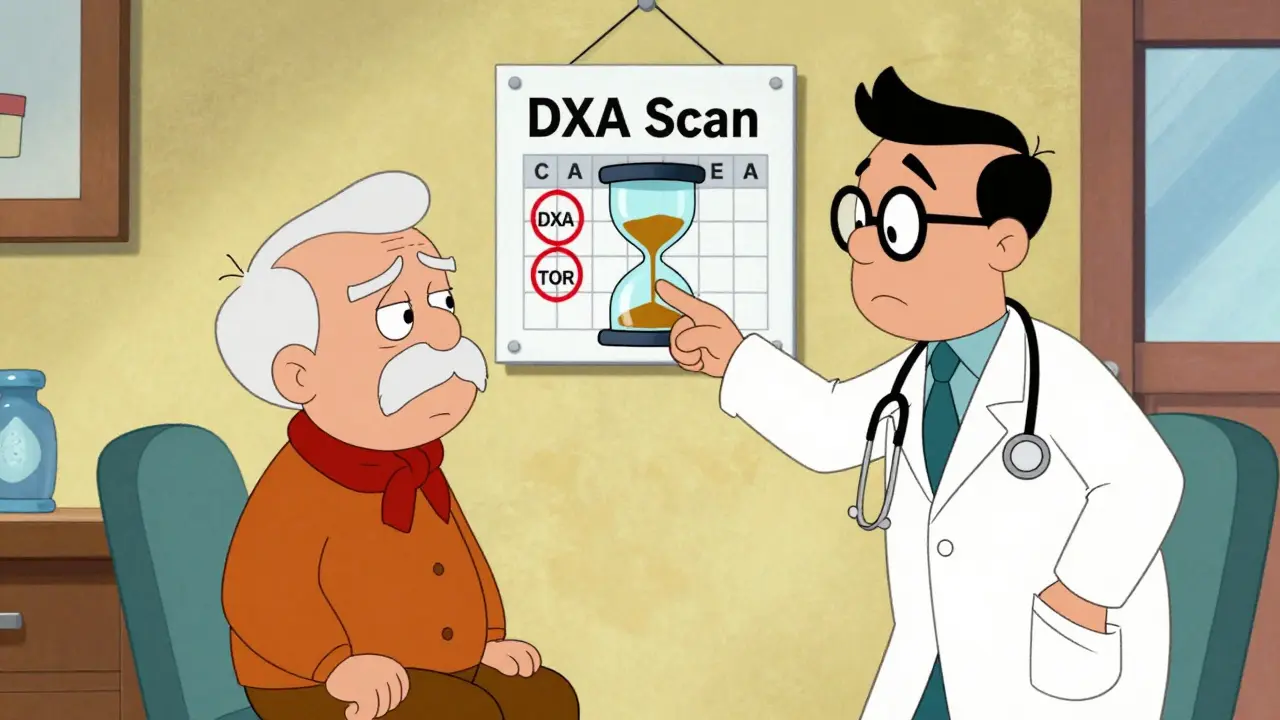
Waiting two years to find out if your osteoporosis medication is working feels like an eternity. For decades, doctors relied solely on Dual-energy X-ray Absorptiometry (DXA scans) to track bone density changes. The problem? Bone mineral density shifts so slowly that you might stay on a drug that isn't helping-or worse, one you aren't taking-just to see a change in the numbers.
Enter Bone Turnover Markers (BTMs are biochemical byproducts released into the blood or urine during bone formation and resorption, providing a real-time snapshot of skeletal metabolism). These simple blood tests offer a faster, more sensitive look at how your bones are responding to treatment. You can see results in as little as three months. This shift from annual guesswork to quarterly precision is changing how we manage bone health.
What Exactly Are Bone Turnover Markers?
Your bones are not static structures; they are living tissue that constantly breaks down and rebuilds itself. This process is called bone remodeling. When old bone is broken down, it releases specific fragments into your bloodstream. When new bone is formed, other proteins are released. BTMs measure these fragments.
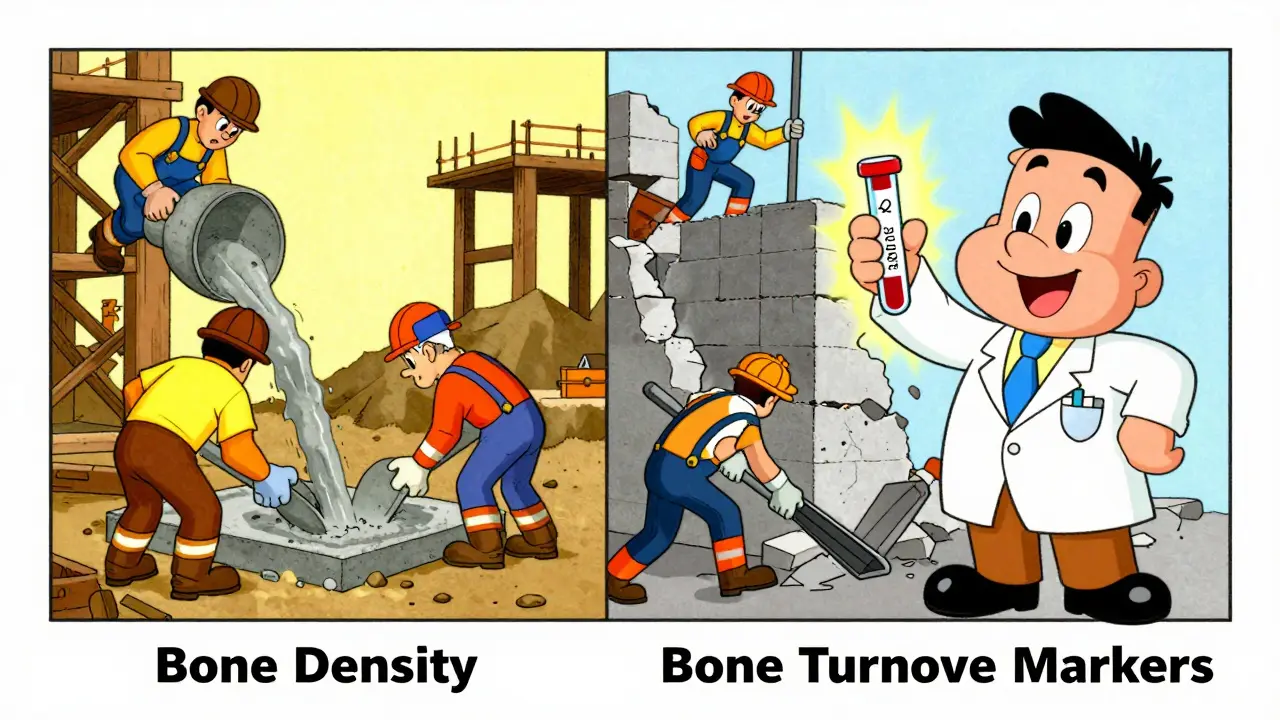
Think of it like watching construction workers. DXA scans tell you how much concrete is in the building once a year. BTMs tell you how fast the workers are pouring cement or demolishing walls right now. There are two main types of markers:
- Formation Markers: These indicate new bone growth. The gold standard here is Procollagen Type I N-terminal Propeptide (PINP or P1NP). It is a fragment released when new collagen is made.
- Resorption Markers: These indicate bone breakdown. The reference marker is Beta-isomerized C-terminal Telopeptide of Type I Collagen (beta-CTX-I or CTX). It comes from the breakdown of existing collagen.
In 2023, major global health organizations, including the International Osteoporosis Foundation (IOF) and the European Society for Clinical and Economic Aspects of Osteoporosis (ESCEO), agreed that PINP and beta-CTX-I are the best markers for clinical use because they are the most stable and accurate.
Why BTMs Beat DXA Scans for Early Monitoring
The biggest advantage of BTMs is speed. If you start an antiresorptive drug like a bisphosphonate (e.g., alendronate or zoledronic acid), you want to know if it’s slowing down bone loss. With a DXA scan, you have to wait 12 to 24 months to see a statistically significant change. That’s too long to leave things to chance.
With BTMs, you get feedback in 3 to 6 months. Here is why that matters:
- Catching Non-Adherence Early: Many patients stop taking their meds due to side effects or forgetfulness. If your BTM levels don’t drop, your doctor knows immediately that the drug isn’t working, likely because it wasn’t taken correctly. No need to wait another year to realize this.
- Identifying True Non-Responders: Some people simply do not respond well to certain medications. BTMs can flag this early, allowing your doctor to switch therapies before you suffer a fracture.
- Cost Savings: Staying on ineffective medication wastes money and exposes you to unnecessary risks. Studies suggest BTM monitoring can save $1,200 to $1,800 per patient annually by avoiding wasted prescriptions.
However, BTMs do not replace DXA scans. They complement them. DXA remains the gold standard for diagnosing osteoporosis and assessing long-term fracture risk. BTMs are the interim check-in that keeps you on track between those big-picture scans.
How to Prepare for Accurate Testing
This is where many patients stumble. BTMs are incredibly sensitive to daily habits. If you don’t follow strict pre-analytical protocols, your results will be useless noise. You cannot just walk into the lab at noon after lunch and expect accurate data.
To get reliable results, you must follow these rules:
- Fasting is Mandatory: Especially for beta-CTX, you must fast overnight. Eating increases CTX levels by 20-30%. So, no breakfast before your blood draw.
- Timing Matters: Bone turnover follows a circadian rhythm. Beta-CTX levels fluctuate significantly throughout the day, with up to a 40% variation. You should have your blood drawn between 8:00 AM and 10:00 AM. PINP is more stable but still benefits from morning collection.
- Avoid Recent Meals: Even if fasting, ensure you haven’t eaten late the night before. Postprandial spikes can skew results.
- Standardize Your Routine: Try to take the test at the same time of day each quarter. Consistency reduces biological variability.
If you skip the fast or show up at 2 PM, your doctor might think your treatment is failing when it’s actually just a timing error. Always remind your lab staff that you are testing for bone markers so they note the fasting status.
Interpreting Your Results: What Do the Numbers Mean?
Looking at a BTM report can feel confusing. You won’t just see "normal" or "abnormal." You need to look at the change from your baseline. Here is how experts interpret the data:
| Marker | Least Significant Change (LSC) | Antiresorptive Response Goal | Anabolic Response Goal |
|---|---|---|---|
| PINP (Formation) | 20% | Decrease >35% | Increase 70-100% |
| Beta-CTX (Resorption) | 25% | Decrease >30% | N/A (Not primary marker) |
The Least Significant Change (LSC): This is the minimum change needed to prove a real biological effect, not just lab error. For PINP, any change under 20% is considered noise. For CTX, it’s 25%. If your result moves less than this, nothing has changed clinically.
Antiresorptive Therapy (e.g., Bisphosphonates, Denosumab): These drugs slow bone breakdown. You want to see a drop in resorption markers. A decrease of more than 30% in CTX within 3-6 months indicates a good response. If CTX drops less than 30%, you are likely a non-responder or non-adherent.
Anabolic Therapy (e.g., Teriparatide, Abaloparatide): These drugs build new bone. You want to see a spike in formation markers. PINP should increase by 70-100% within the first few months. If it doesn’t jump, the drug may not be working effectively for you.
Special Considerations for Kidney Disease
If you have Chronic Kidney Disease (CKD), standard BTMs can be misleading. Your kidneys help clear these markers from your blood. If kidney function is impaired, markers like total PINP and beta-CTX-I can accumulate, making levels appear artificially high regardless of bone activity.
In CKD patients, doctors often switch to alternative markers that are less dependent on kidney clearance:
- Bone Alkaline Phosphatase (BALP): A formation marker that is more stable in renal disease.
- Tartrate-Resistant Acid Phosphatase 5b (TRACP5b): A resorption marker that provides clearer insights in CKD patients.
- Intact PINP: Sometimes preferred over total PINP in moderate renal impairment.
Always inform your healthcare provider about your kidney function status before ordering BTM tests. Reference ranges for CKD patients differ significantly from the general population.

Insurance Coverage and Cost
One barrier to using BTMs has been cost. However, coverage is improving. In the United States, Medicare covers PINP (CPT code 83970) and CTX (CPT code 83935) testing for osteoporosis monitoring since 2020. Reimbursement rates hover around $28-$33 per test. Private insurers are increasingly following suit, recognizing the long-term savings of preventing fractures.
Despite this, adoption varies. In Europe, up to 60% of clinics use BTMs routinely. In the US, only about 25-35% do. If your insurance denies coverage, ask your doctor to appeal citing the 2023 IOF/ESCEO consensus guidelines, which recommend BTMs as a standard part of care.
When Should You Get Tested?
You don’t need BTMs every month. The optimal schedule, according to Mayo Clinic Laboratories and expert consensus, looks like this:
- Baseline: Test PINP and/or CTX before starting any new osteoporosis medication. This gives you a personal benchmark.
- 3-Month Check: Repeat the test 3 months after starting treatment. This is the critical window to assess early response and adherence.
- Annual Follow-up: If the 3-month result shows a good response, you can usually monitor less frequently, perhaps annually, alongside your DXA scan.
- DXA Scan: Continue DXA scans every 1-2 years for long-term bone density assessment.
This hybrid approach gives you the best of both worlds: rapid feedback on medication effectiveness and long-term structural safety.
Can I take my osteoporosis medication on the day of the BTM test?
It depends on the medication. For weekly oral bisphosphonates, try to avoid taking the pill on the morning of the test if possible, as it can cause a temporary spike in markers. For monthly injections like denosumab or zoledronic acid, timing is less critical for single-point measurements, but consistency is key. Always ask your doctor for specific instructions based on your regimen.
Do vitamin D levels affect bone turnover markers?
Yes. Severe vitamin D deficiency can lead to secondary hyperparathyroidism, which increases bone turnover. This can elevate BTM levels independently of your osteoporosis treatment. Ensure your vitamin D levels are optimized before interpreting BTM results to avoid false alarms.
Are bone turnover markers covered by all insurance plans?
Coverage is expanding but not universal. Medicare covers them in the US, and many private plans follow suit. However, some insurers may require prior authorization. Check with your provider or ask your doctor’s office to verify coverage codes 83970 (PINP) and 83935 (CTX) before scheduling the test.
What if my BTM results are normal but my DXA scan shows low bone density?
This is common. BTMs measure activity (turnover), while DXA measures mass (density). You can have low bone density from past damage but currently low turnover (meaning your bones are stable). Or, you can have high turnover with normal density (meaning you are losing bone rapidly). Both metrics provide different pieces of the puzzle. Treat the high turnover to prevent further loss.
How does age affect bone turnover marker levels?
BTM levels generally decline with age in healthy individuals, but in osteoporosis, they may remain elevated due to increased remodeling. Reference ranges vary by age, sex, and ethnicity. For example, Asian populations tend to have lower baseline CTX levels than Caucasian populations. Always compare your results to age-matched reference intervals provided by your lab.