
What Exactly Is Nonallergic Rhinitis?
You wake up every morning with a runny nose, stuffy sinuses, and constant sneezing. You’ve tried antihistamines, avoided pollen, cleaned your home top to bottom-but nothing helps. If this sounds familiar, you might have nonallergic rhinitis. Unlike allergic rhinitis, where your immune system overreacts to pollen or pet dander, nonallergic rhinitis has no allergy trigger. It’s not caused by IgE antibodies, skin tests come back negative, and your body isn’t fighting anything foreign. Instead, your nasal passages are overly sensitive to everyday things: cold air, strong smells, spicy food, even changes in the weather.
This condition affects 17-23% of adults in Western countries, and it gets more common as you age. By the time you’re over 65, about 1 in 5 people deal with it daily. Many are misdiagnosed with allergies for years before getting the right answer. The symptoms are the same: congestion, dripping nose, postnasal drip, sneezing. But the cause? Totally different.
What Triggers Nonallergic Rhinitis? (And How Much It Takes)
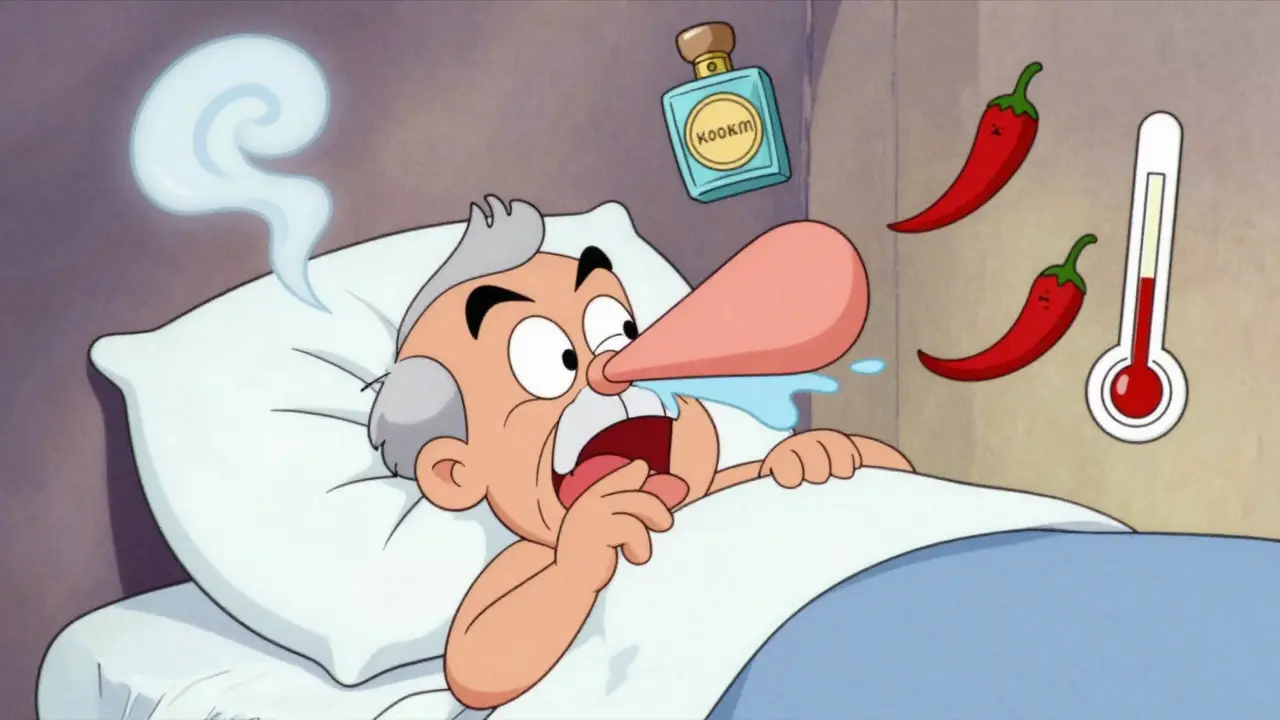
The triggers aren’t allergens-they’re irritants. And they hit at surprisingly low levels. You don’t need to be surrounded by smoke or chemicals. Just a whiff of perfume, a sudden drop in temperature, or a bite of hot curry can set off a reaction.
- Environmental irritants: Tobacco smoke at just 0.05 mg/m³ (about the level near a smoker in a hallway) can trigger symptoms. Wildfire smoke? As little as 15 µg/m³ of PM2.5 particles does it. Perfumes activate receptors at concentrations as low as 0.1 parts per million-less than a single spray in a small room.
- Weather changes: A temperature shift of more than 5°C in an hour (like stepping out from a warm house into a chilly morning) can cause nasal blood vessels to swell. Humidity changes over 20% in a short time do the same. Barometric pressure drops of just 5 mmHg (common before a storm) are enough to make your nose feel blocked.
- Food and drink: Spicy foods with capsaicin (think chili peppers) trigger rhinorrhea at 0.5 ppm. Alcohol? Blood alcohol levels above 0.02% (about one drink for most people) can cause a runny nose within minutes. This is why many older adults get watery eyes and nose after wine or soup.
- Medications: ACE inhibitors (like lisinopril) cause symptoms in 20% of users within weeks. Beta-blockers (like metoprolol) affect 15%. Even over-the-counter NSAIDs like ibuprofen can trigger it in 10-15% of people who are sensitive.
- Occupational exposure: Flour dust at 2 mg/m³ (common in bakeries), latex particles above 2 µg/m³, or chemical fumes from cleaning products can turn a workday into a nasal nightmare.
These aren’t guesses. These are measured thresholds from controlled studies. Your nose isn’t being dramatic-it’s reacting to real physiological changes in nerve signaling and blood flow.
The Real Science Behind Why Your Nose Acts Up
It’s not inflammation like in allergies. It’s a wiring problem. Your autonomic nervous system-the one that controls things like heart rate and digestion-gets out of sync in your nose. The parasympathetic side (the “rest and digest” part) goes into overdrive, while the sympathetic side (the “fight or flight” part) doesn’t push back hard enough.
Researchers found that TRPV1 receptors, which sense heat and chemicals, are 3.2 times more active in people with nonallergic rhinitis. These receptors are like tiny alarms in your nasal lining. When they detect something unusual-a cold breeze, a whiff of perfume, a spicy bite-they send a signal that makes blood vessels swell and mucus pour out. It’s a false alarm, but your body doesn’t know that.
Nasal secretions show neutrophils (a type of white blood cell), not eosinophils like in allergies. That’s why antihistamines often don’t work-they’re targeting the wrong cells. The problem isn’t histamine. It’s nerve misfiring and blood vessel overreaction.
Subtypes You Might Not Know About
Nonallergic rhinitis isn’t one thing. It’s at least eight different subtypes, each with its own cause and pattern.
- Vasomotor rhinitis: The most common-makes up 60-70% of cases. Triggered by weather, smells, stress. Often lifelong.
- Gustatory rhinitis: Runny nose after eating. Especially common after age 65. Hot soup, curry, or even just a bite of chocolate can trigger it.
- Hormonal rhinitis: Affects 20-30% of pregnant women, usually starting in the second trimester. Also seen in people with thyroid issues or during puberty.
- Drug-induced rhinitis: Caused by medications like blood pressure pills, NSAIDs, or even some antidepressants.
- Occupational rhinitis: Happens only at work. Common in bakers, cleaners, farmers, or anyone exposed to dust or chemicals.
- Senile rhinitis: Affects 25-30% of people over 70. Nasal tissues thin out, blood vessels become more reactive.
- NARES (Nonallergic Rhinitis with Eosinophilia Syndrome): Rare. About 5-10% of cases. Has eosinophils in secretions but no allergy trigger.
Knowing your subtype helps you target treatment. If it’s gustatory, avoiding spicy foods helps. If it’s drug-induced, switching meds might be the answer.

How to Manage It-Without Relying on Antihistamines
Most people try antihistamines first. They don’t work well here. The real solutions are simpler, cheaper, and more effective.
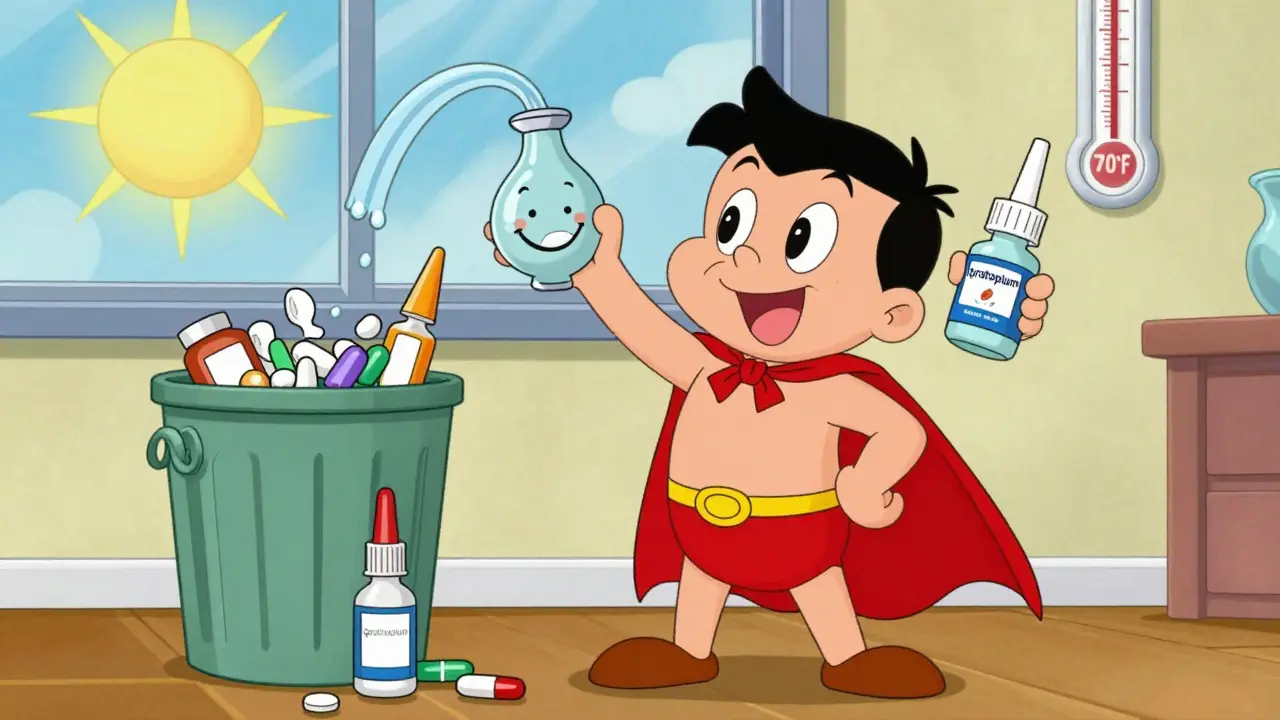
- Saline nasal irrigation: Use isotonic (0.9%) or hypertonic (3%) saline twice a day. It flushes out irritants and reduces swelling. Studies show 60-70% of users get relief. Twice-daily use works 45% better than once-daily. A neti pot or squeeze bottle works fine-just use distilled or boiled water.
- Trigger avoidance: If perfume sets you off, switch to fragrance-free products. If cold air is the problem, wear a scarf over your nose in winter. If spicy food triggers it, eat slower or avoid very hot dishes. Simple changes cut symptoms by 25-50%.
- Intranasal corticosteroids: Fluticasone (Flonase) or mometasone (Nasonex) reduce inflammation and swelling. They take 2-4 weeks to work fully but are the most effective long-term treatment. About 50-60% of users see major improvement. Side effects? Minor nosebleeds in 15-20% of users.
- Ipratropium bromide nasal spray (Atrovent): This is the secret weapon for runny nose. It blocks nerve signals that cause mucus production. Works in 48 hours. Reduces dripping by 70-80%. No sedation. No dependency. Only downside? You have to spray it every day. It doesn’t help with congestion, just the drip.
- Azelastine nasal spray: An antihistamine that works *topically* in the nose. Helps a bit-30-40% symptom reduction-but not as much as for allergies. Some people hate the bitter taste.
Combining saline + corticosteroid + ipratropium gives the best results. One study showed 75% of patients achieved 70% symptom relief using this trio.
What Doesn’t Work (And Why)
Don’t waste time or money on things that won’t help.
- Oral antihistamines: Like cetirizine or loratadine. They’re useless here. Your body isn’t releasing histamine.
- Allergy shots: No benefit. You’re not allergic.
- Decongestant sprays (oxymetazoline): They feel great at first-but if you use them more than 3-5 days in a row, you get rebound congestion. This is called rhinitis medicamentosa. It turns your nose into a drug-dependent mess. Getting off them takes 7-10 days of pure discomfort, but corticosteroids help you through it.
- Essential oils or nasal rinses with herbal extracts: These can irritate your nose even more. Stick to plain saline.
Doctors misdiagnose nonallergic rhinitis as allergic rhinitis 30-40% of the time. That means people are taking antihistamines daily for years, spending hundreds on useless meds, and still suffering.
When to See a Specialist
If you’ve had symptoms for more than 3 months and allergy tests are negative, it’s time to see an ENT or allergist. The diagnostic process isn’t complicated:
- Negative skin prick test or blood test for IgE (confirms no allergy)
- Nasal endoscopy to rule out polyps or structural issues
- Review of medications and symptom diary
Keep a symptom diary for 4-6 weeks. Track:
- Temperature and humidity (use a phone app)
- What you ate or drank
- Where you were (work, home, outside)
- Medications taken
- Severity of symptoms (1-10 scale)
This helps spot patterns you’d never notice otherwise. One patient found her nose ran every time she walked into her office-turns out, the HVAC system was blowing out chemical fumes from new carpet.
What’s Coming Next
There’s real hope on the horizon. Researchers are developing drugs that block TRPV1 receptors-the same ones that make you feel spicy heat. A new TRPV1 antagonist called BCT-100 showed 55% symptom reduction in trials. It’s under review by the European Medicines Agency.
Other ideas: tiny devices that zap the nerves in your nose with mild electrical pulses. Early tests at Johns Hopkins showed 45% improvement. It’s not mainstream yet, but it’s coming.
For now, the best tools are the ones we already have: saline, steroids, and ipratropium. They’re cheap, safe, and backed by solid science.
Real People, Real Results
On patient forums, the most common success story? Ipratropium. One user wrote: “I used to need tissues every 10 minutes. After two days of Atrovent, I could go a whole day without wiping my nose. It felt like a miracle.”
Another said: “I stopped using decongestant spray after 10 years. It took two weeks of misery, but now I’m on saline and Flonase-and I haven’t had a stuffy nose in months.”
The frustration? Most people don’t know this condition exists. They think they’re just “allergic to everything.” But once they get the right diagnosis, life changes. Sense of smell returns. Sleep improves. No more waking up with a soaked pillow.
Bottom Line
Nonallergic rhinitis isn’t in your head. It’s in your nerves. It’s not an allergy. It’s not a cold. It’s a chronic, misunderstood condition that responds well to the right treatment-if you know what it is. Skip the antihistamines. Start with saline. Talk to your doctor about ipratropium and nasal steroids. Track your triggers. You don’t have to live with a constantly dripping nose. There’s a better way.


Kamlesh Chauhan
January 8, 2026 AT 07:13Poppy Newman
January 9, 2026 AT 05:47Jessie Ann Lambrecht
January 9, 2026 AT 20:35Rachel Steward
January 10, 2026 AT 19:55Antihistamines were a placebo for the placebo era. The real fix? Reduce exposure, reset your autonomic nervous system, and stop treating your nose like a broken radio. You wouldn’t give a dog benadryl for a thunderstorm phobia - why do it to yourself?
Aparna karwande
January 10, 2026 AT 21:58Sai Ganesh
January 11, 2026 AT 20:45Paul Mason
January 12, 2026 AT 23:58steve rumsford
January 13, 2026 AT 13:02Elen Pihlap
January 13, 2026 AT 16:20